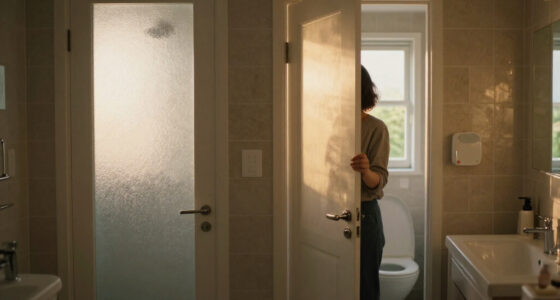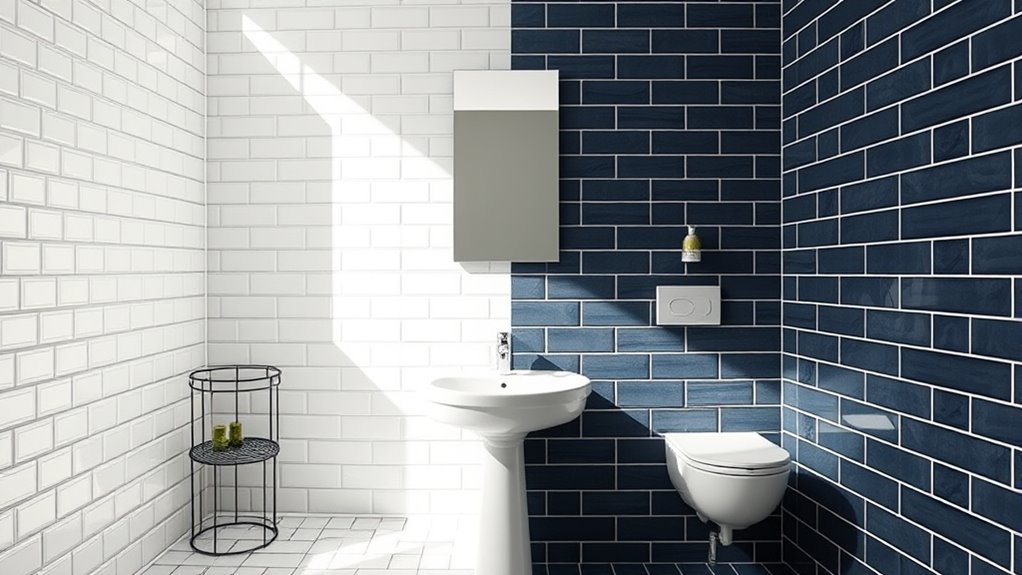

Choosing light colors in a small bathroom makes the space feel larger, brighter, and more open since they reflect more light. Dark shades, on the other hand, absorb light and can make the room seem smaller or cozier, especially if not well lit. To balance dark tones, add good lighting and reflective surfaces. Want to discover how to create the perfect vibe with color choices? Continue exploring for tips that can transform your space.

Get home appliances delivered free with Prime
- Fast, free delivery on millions of items
- Prime Video, Amazon Music and more included
- Member-only deals all year
Key Takeaways
- Light colors reflect more light, making small bathrooms appear larger and more open.
- Dark shades absorb light, potentially making a space feel smaller and more enclosed.
- Light hues create an illusion of depth, enhancing perceived room size, while dark colors can add contrast with proper lighting.
- Using reflective surfaces with dark colors helps counteract space-shrinking effects in small bathrooms.
- The choice depends on desired atmosphere; light colors promote freshness and spaciousness, dark colors add sophistication with strategic lighting.

When it comes to designing a small bathroom, choosing between light and dark colors can considerably impact the space’s appearance and feel. Your choice influences both color psychology and visual perception, shaping how you experience the room daily. Light colors tend to promote a sense of openness and airiness. They reflect more light, making a cramped space feel larger and more inviting. Think soft whites, pale blues, or gentle beiges—these hues create an illusion of depth, helping your small bathroom appear more spacious. The psychological effect of light colors often conveys calmness and cleanliness, which is especially desirable in a bathroom setting. When you opt for lighter shades, you’re encouraging a bright, fresh atmosphere that feels less cluttered, even if storage is limited.
On the other hand, dark colors can add a sense of sophistication and coziness when used thoughtfully. Deep navy, charcoal gray, or rich emerald can lend your bathroom a luxurious vibe. However, because dark shades absorb more light, they can make a small room seem even smaller if not balanced properly. To counteract this, you might pair dark walls with ample lighting or lighter fixtures and accessories. Dark colors also influence visual perception by providing contrast and depth, which can make features like tiles or fixtures stand out vividly. The psychological impact of darker hues can evoke feelings of intimacy and warmth, but if overused, they might make the space feel enclosed or oppressive. Additionally, incorporating light-reflecting surfaces can help mitigate this effect and enhance the perception of space.
Your goal should be to balance these psychological and perceptual effects. If you desire an expansive, airy feel, sticking with light colors is usually the best route. They emphasize natural light and make the space appear larger. Alternatively, if you want a cozy, dramatic vibe, dark colors can work well if complemented with strategic lighting and reflective surfaces. Remember, the key is not just choosing a shade but understanding how it interacts with the room’s size, lighting, and your personal style. By considering how color psychology influences mood and how visual perception shapes the sense of space, you can create a small bathroom that feels both functional and inviting. Ultimately, your color choices should reflect your personality while enhancing the room’s spatial qualities.
Frequently Asked Questions
How Do Color Choices Affect Bathroom Humidity Levels?
Color choices can influence bathroom humidity levels through moisture absorption. Light colors often reflect more heat and moisture, helping keep humidity levels manageable, while dark colors absorb more heat, potentially increasing moisture retention. Your understanding of color psychology guides you to select hues that promote a dry, comfortable environment. By choosing wisely, you can reduce excess moisture, preventing mold and mildew, ensuring your bathroom stays fresh and healthy.
Can Dark Colors Hide Bathroom Stains Better Than Light Colors?
Dark colors act like a shield, hiding bathroom stains better than light hues. You’ll find that stain visibility diminishes, making your space look cleaner longer. This means you won’t need to clean as often, saving you time and effort. However, remember that deep shades can also show water spots or soap scum more prominently. Choosing dark colors helps conceal imperfections, but regular cleaning remains essential for a fresh, inviting bathroom.
Do Color Choices Impact Bathroom Lighting Efficiency?
Your color choices can impact bathroom lighting efficiency by affecting lighting enhancement and color contrast. Light colors reflect more light, making the space appear brighter and more open, while dark colors absorb light, potentially reducing brightness. By choosing colors with good contrast and reflective qualities, you can optimize lighting, making your bathroom feel more inviting and functional. So, consider how your color selections influence light reflection and contrast for the best lighting outcome.
How Do Color Schemes Influence Bathroom Resale Value?
Color schemes substantially influence your bathroom’s resale value by appealing to potential buyers’ preferences. Light, neutral colors often make spaces seem larger and more inviting, boosting appeal. Consider paint durability and the right color psychology to create a timeless, attractive look. Bright, calming shades can evoke serenity, while durable paint ensures longevity. Your choice can make your bathroom stand out positively, encouraging buyers to see it as a functional, appealing space.
Are Certain Colors More Suitable for Small Bathrooms With Windows?
Think of your small bathroom as a mirror in a funhouse—colors that reflect natural light can make it feel twice as spacious. Light, airy shades like soft whites, pastels, or light neutrals work best, enhancing window reflections and amplifying natural light. Dark colors absorb light and can make the space feel cramped, so stick to brighter hues to maximize openness and create a welcoming atmosphere.
Conclusion
Now, picture your small bathroom as a cozy retreat—bright with airy whites that bounce sunlight around, making it feel endless and open. Or, imagine deep, moody hues that create a warm, intimate cave you can retreat into after a long day. Whether you choose light or dark, your color choice shapes the space’s mood and perception. So, pick what feels right, and let your bathroom become a reflection of your style and comfort.
Fall yard work Picks
leaf blowers
As an affiliate, we earn on qualifying purchases.