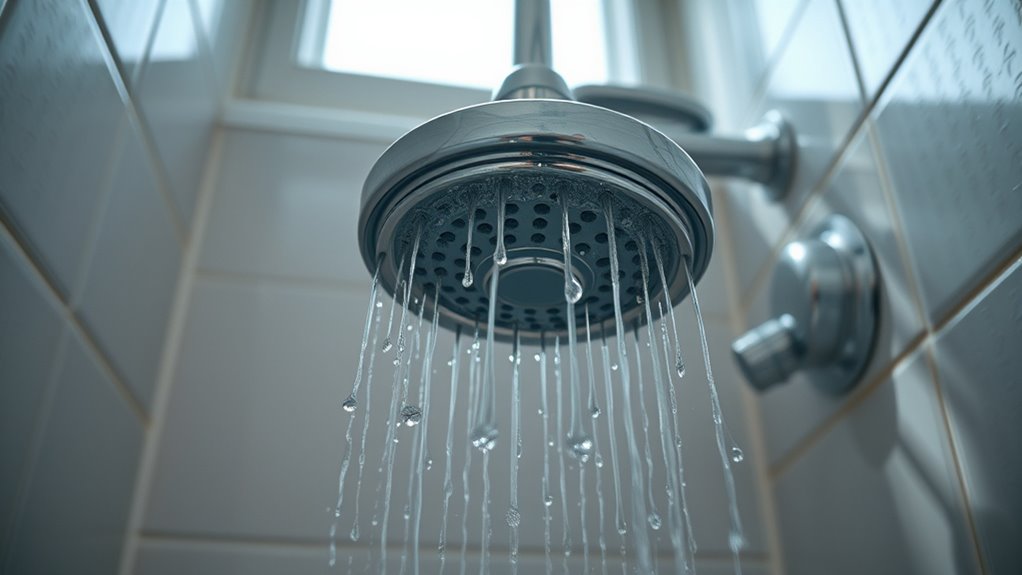

To improve low water pressure in your small apartment shower, start by checking for clogs or mineral buildup. Unscrew your showerhead and soak it in vinegar to dissolve deposits. Inspect for leaks or pipe corrosion, and clear any obstructions. Regular maintenance, like cleaning filters and fixing leaks early, can also help. If these steps don’t work, exploring more solutions can help you restore steady water flow efficiently.

Get home appliances delivered free — and shop member deals
- Fast, free delivery on millions of items
- Access to Prime Big Deal Days deals on October 6–7
- Prime Video, Amazon Music and more included
Key Takeaways
- Check and clean your showerhead for mineral buildup or clogs to restore water flow.
- Inspect for leaks around fixtures and repair any to prevent pressure loss.
- Consider replacing old, corroded pipes to improve overall water pressure.
- Use water-saving fixtures like aerators to enhance flow without sacrificing pressure.
- Regularly flush your plumbing system to clear debris and maintain consistent water pressure.

If you’re living in a small apartment, low water pressure in your shower can be incredibly frustrating. It can make your daily routine feel less invigorating and more like a chore. Fortunately, there are practical steps you can take to improve the situation, often without needing to call in a plumber. The key is understanding how plumbing maintenance and water conservation play a role in maintaining ideal water flow. Small apartments typically have limited plumbing infrastructure, which means that even minor clogs or buildup can considerably impact water pressure. Regular plumbing maintenance, such as cleaning showerheads and inspecting for leaks, can help keep water flowing smoothly. Starting with a simple showerhead upgrade or cleaning can often make a noticeable difference. Mineral deposits and debris tend to accumulate over time, restricting water flow. Unscrewing your showerhead and soaking it in vinegar can dissolve these deposits, restoring better pressure. When doing so, make sure to check for any mineral buildup and clear out any obstructions you find. Additionally, understanding the importance of plumbing system health can help you identify issues before they become major problems. Water conservation is another factor to think about. Many small apartment residents unknowingly contribute to low water pressure by using excessive water or running multiple fixtures simultaneously. Being mindful of water use not only helps conserve this precious resource but also reduces strain on your plumbing system. Installing water-saving showerheads or aerators can help regulate water flow and improve pressure without sacrificing comfort. These fixtures mix air into the water stream, providing a steady, strong spray while reducing overall water consumption. By conserving water, you lessen the burden on your apartment’s plumbing, which can help prevent pressure drops caused by overuse or pipe issues. If you’re experiencing persistent low pressure, it might be time to evaluate your plumbing system more thoroughly. Check for leaks around fixtures, as even small leaks can decrease water pressure over time. If your pipes are old or corroded, they might need replacement to restore proper flow. Regular maintenance, such as flushing the system or cleaning filters, can prevent buildup that hampers water pressure. Remember, addressing low pressure isn’t just about comfort; it’s also about maintaining the health of your plumbing system. Neglecting small issues can lead to more serious problems down the line. Incorporate water conservation habits into your routine—like taking shorter showers and fixing leaks promptly—to reduce unnecessary stress on your pipes. This proactive approach will help keep your water pressure steady, ensuring you enjoy a satisfying shower experience every day.
showerhead with mineral deposit removal
As an affiliate, we earn on qualifying purchases.
As an affiliate, we earn on qualifying purchases.
Frequently Asked Questions
Can Water Pressure Issues Be Fixed Without Professional Help?
Yes, you can fix water pressure issues yourself with some DIY fixes and plumbing maintenance. Start by checking for clogged aerators or showerheads and clean them to improve flow. You can also inspect for leaks or buildup in your pipes, and flush out your water heater if sediment has accumulated. These simple steps often resolve pressure problems without needing professional help, saving you time and money.
How Does Showerhead Type Affect Water Pressure?
Think of your showerhead as the conductor of a symphony—its design directs water flow to create a satisfying shower. Different showerhead types, like rain or high-efficiency models, notably impact water flow. A low-pressure showerhead might stifle your water flow, while a high-pressure one boosts it. Choosing the right showerhead design can make a big difference, helping you enjoy a stronger, more invigorating shower without needing professional help.
Are There Eco-Friendly Solutions to Improve Water Flow?
Yes, you can improve water flow with eco-friendly fixtures and water-saving devices. Installing low-flow showerheads or eco-friendly fixtures helps increase water pressure without wasting water. These devices are designed to maximize flow while conserving resources, making your shower more effective and environmentally friendly. Plus, they’re easy to install and cost-efficient, helping you enjoy a better shower experience while reducing your water footprint.
Will Replacing Pipes Increase Water Pressure?
Replacing pipes can definitely lead to a pressure increase in your shower. Old, corroded, or clogged pipes restrict water flow, so upgrading them removes these barriers. When you opt for pipe replacement, you improve water efficiency and flow rate, resulting in a noticeable pressure boost. Keep in mind, choosing the right pipes and professional installation guarantees the pressure increase is both effective and long-lasting.
How Often Should I Inspect My Apartment’s Plumbing System?
You should inspect your plumbing system at least once a year to catch potential issues early. Regular plumbing maintenance helps prevent low water pressure and costly repairs. Don’t wait for problems to worsen—an annual inspection schedule keeps your pipes clear and functioning smoothly. Even if everything seems fine, periodic checks save you time and money, ensuring your apartment’s plumbing stays reliable and efficient.
As an affiliate, we earn on qualifying purchases.
Conclusion
Dealing with low water pressure in your small apartment shower can be frustrating, but with some simple steps, you can turn the tide in your favor. Regularly checking for clogs, cleaning the aerator, and inspecting the pipes can make a big difference. Remember, patience is key—you don’t want to throw the baby out with the bathwater. With a little effort, you’ll have your shower flowing smoothly again, making every rinse feel like a gust of fresh air.
showerhead filter for low water pressure
As an affiliate, we earn on qualifying purchases.
As an affiliate, we earn on qualifying purchases.
As an affiliate, we earn on qualifying purchases.
Fall yard work Picks
leaf blowers
As an affiliate, we earn on qualifying purchases.