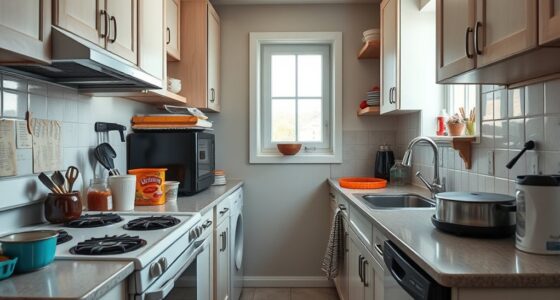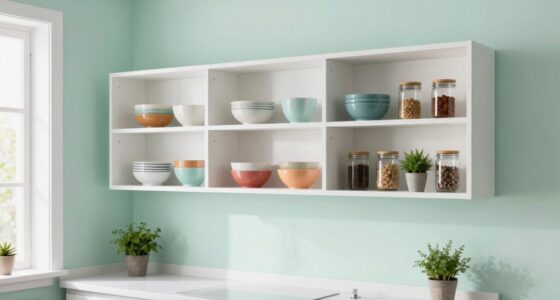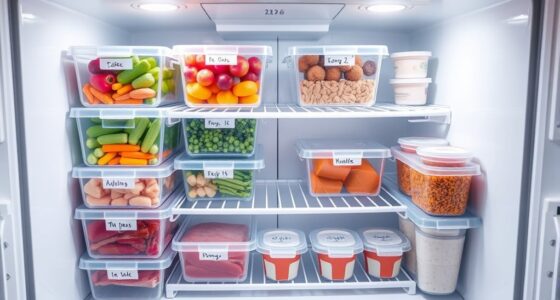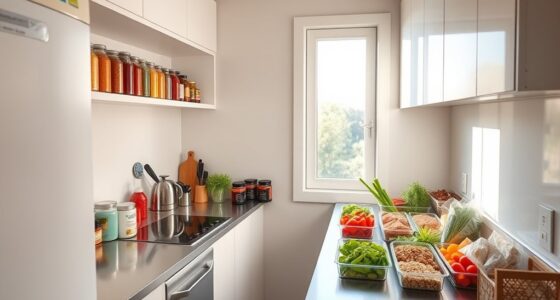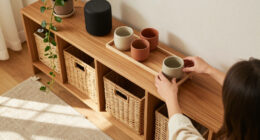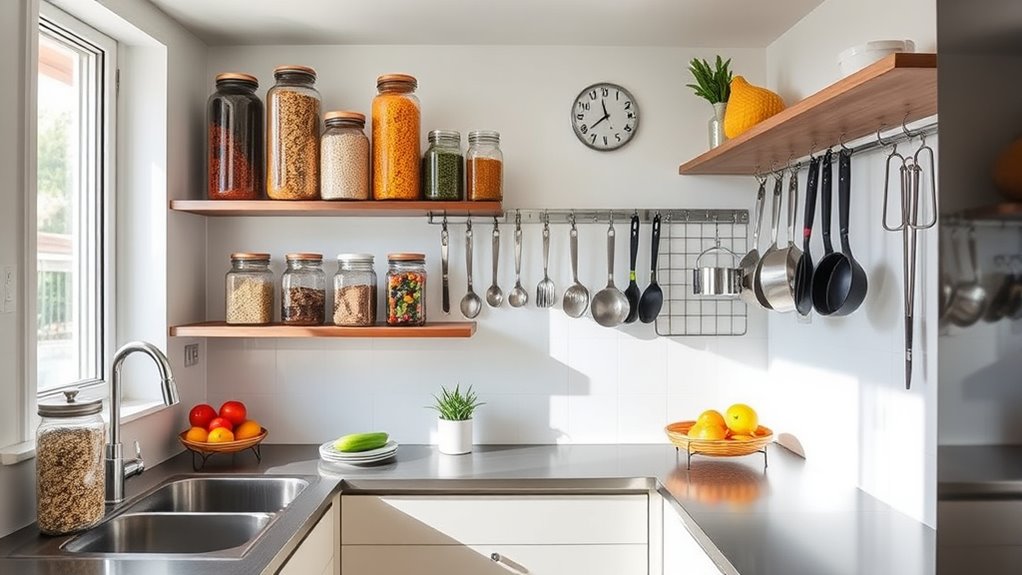
In a kitchen without a pantry, you can maximize space by using underused areas like the tops of cabinets or appliances to store heavier items. Install floating or open shelves for easy access to canned goods, spices, and snacks. Repurpose furniture such as dressers or bookcases as makeshift pantries, or utilize vertical storage like hanging racks and pegboards. Clever organization with baskets and clear containers also helps keep everything visible and accessible. If you’re enthusiastic to learn more, keep exploring these practical storage ideas.

Get home appliances delivered free — and shop member deals
- Fast, free delivery on millions of items
- Access to Prime Big Deal Days deals on October 6–7
- Prime Video, Amazon Music and more included
Key Takeaways
- Install floating or open shelves on walls for easy access to frequently used groceries.
- Repurpose furniture like bookcases or carts as makeshift pantries for extra storage space.
- Use vertical storage solutions such as stackable bins or tiered racks to maximize limited space.
- Mount magnetic strips or over-the-door racks to organize spices, cans, and small items efficiently.
- Utilize hidden spaces like above cabinets or inside cabinets for less-used grocery items.
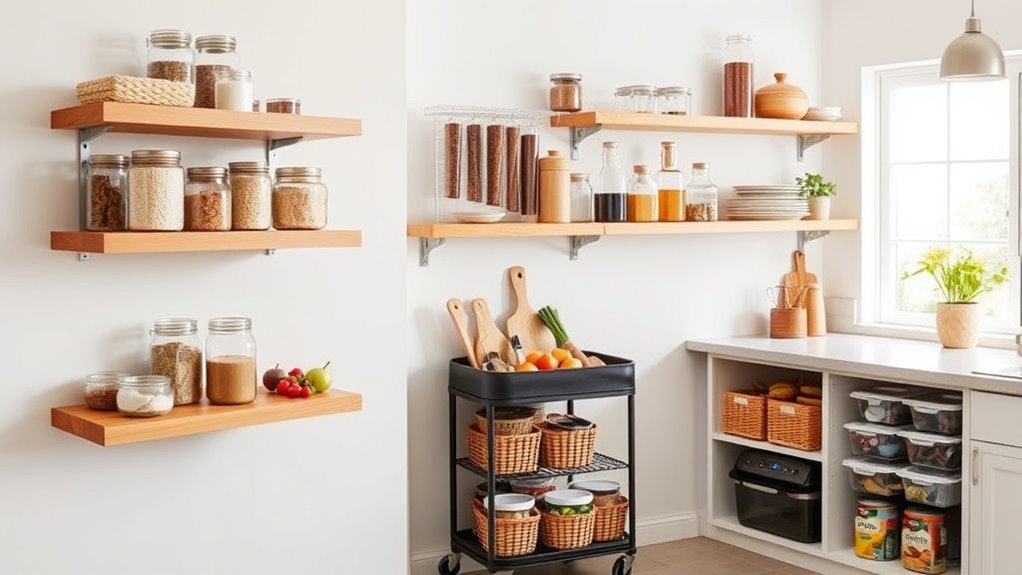
When your pantry runs low or you need to switch things up, exploring pantry alternatives can save the day. If your kitchen lacks a dedicated pantry, don’t worry—you have plenty of options for small space storage that can keep your groceries organized and accessible. The key is to get creative with how you utilize every inch of your kitchen, turning underused areas into functional storage spots. DIY shelving options are especially helpful because they allow you to customize your storage solutions without breaking the bank. You can install open shelves on empty walls or above countertops to hold canned goods, spices, or snacks. Floating shelves are stylish and easy to set up, and they make grabbing items quick and convenient.
Another effective approach is repurposing furniture for storage. An old bookcase, a sturdy cart, or even a vintage dresser can become a dedicated food storage area. By organizing items into clear containers or baskets, you keep everything neat and visible. Incorporate small baskets or bins on shelves to separate different types of groceries, making it simple to find what you need without rummaging through piles. If space is tight, consider vertical storage options—stackable bins or tiered racks maximize limited space without cluttering your countertops.
Repurpose furniture and organize with baskets for efficient, visible pantry storage in small kitchens.
Using the tops of cabinets or appliances can also add valuable storage space. Just ensure that heavier items are stored securely to prevent accidents. For very small kitchens, magnetic strips mounted on walls can hold metal spice tins or small utensils, freeing up drawer space and keeping essentials within arm’s reach. Over-the-door racks are another smart solution, providing additional spots for pantry staples or cleaning supplies. Incorporating custom storage solutions can further optimize your space, allowing you to tailor storage to your specific needs and kitchen layout.
In tight quarters, every inch counts. Think vertically and utilize hanging storage for items like pots, pans, or even produce bags. Pegboards are versatile and allow you to hang hooks, baskets, or containers, making your kitchen more organized and efficient. When setting up your DIY shelving options, focus on stability and accessibility—prioritize ease of use and safety, especially if you’re stacking or installing shelves yourself.
Ultimately, managing without a traditional pantry requires a mix of ingenuity and practicality. Small space storage solutions and DIY shelving options enable you to create a customized system that fits your kitchen’s unique layout. With a little effort and some clever organization, you can keep your groceries well-organized, easily accessible, and out of the way—making your kitchen feel more spacious and functional.
floating wall shelves for kitchen
As an affiliate, we earn on qualifying purchases.
As an affiliate, we earn on qualifying purchases.
Frequently Asked Questions
How Can I Maximize Storage Space in a Small Kitchen?
You can maximize your small kitchen’s storage by using an underutilized corner for a corner shelf or cabinet, creating more space. Install vertical shelving to take advantage of vertical wall areas, keeping your counters clear and items accessible. Use hooks or racks for utensils and pots. Organize your cabinets efficiently with stackable containers. These strategies help you make the most of every inch and keep your kitchen neat and functional.
What Are the Best Portable Storage Options for Groceries?
Looking for the best portable storage options for groceries? You’ll love stacking shelves that maximize vertical space, creating easy access and organization. Pair them with clear containers so you can quickly spot what you need, reducing clutter and waste. These solutions are lightweight, versatile, and perfect for small kitchens. Keep your groceries tidy and accessible, and enjoy the satisfaction of a well-organized space that adapts to your needs.
How Do I Organize Pantry Alternatives for Easy Access?
You should start by grouping similar items together on your shelves, making it easier to find what you need. Use clear containers for better visibility and apply labeling techniques to identify contents quickly. Arrange frequently used items at eye level for easy access, and keep less-used supplies on higher or lower shelves. Regularly declutter and reorganize to maintain an efficient, accessible storage system tailored to your space and needs.
Are There Specific Containers Ideal for Different Food Types?
Think of your kitchen as a symphony, and each food type needs its own instrument. Airtight containers work best for dry goods like rice and pasta, keeping freshness in tune. Stackable bins are perfect for larger items or bulk purchases, maximizing space and order. Use clear containers for easy identification, and label everything—this way, your ingredients play harmoniously, and you can find what you need with a simple glance.
How Can I Prevent Pests Without a Traditional Pantry?
You can prevent pests by keeping your groceries in airtight containers, which also help with shelf organization. Regularly clean your storage areas and inspect for signs of pests. Use natural repellents like bay leaves or essential oils near your food. Elevate containers off the floor and store everything in a cool, dry place. These steps make pest prevention easier, even without a traditional pantry, helping keep your food safe and tidy.
reclaimed wood bookcase for pantry
As an affiliate, we earn on qualifying purchases.
As an affiliate, we earn on qualifying purchases.
Conclusion
Even without a dedicated pantry, your kitchen can become a well-organized treasure chest. Think of every nook and cranny as a secret compartment waiting to be filled with your favorite ingredients. With a little creativity, you turn clutter into clarity, making your cooking adventures smoother than ever. Embrace these alternatives, and watch your kitchen transform into a bustling hub of flavor and function—proof that even small spaces can hold big possibilities.
over the door storage racks for kitchen
As an affiliate, we earn on qualifying purchases.
As an affiliate, we earn on qualifying purchases.
stackable storage bins for pantry
As an affiliate, we earn on qualifying purchases.
As an affiliate, we earn on qualifying purchases.
NFL season / tailgating Picks
team gear
As an affiliate, we earn on qualifying purchases.