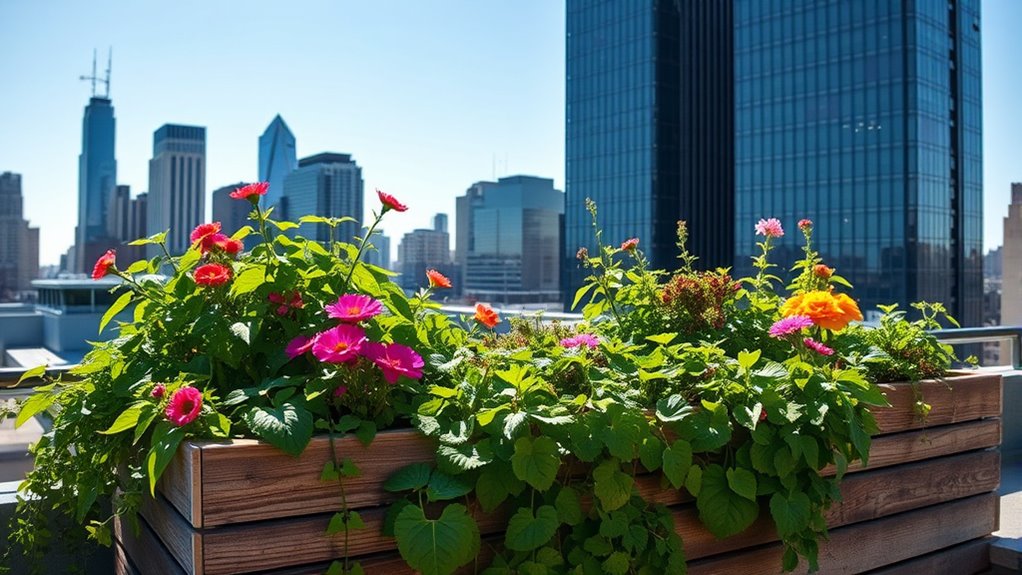

Even without a balcony or yard, you can still create a thriving garden by using rooftops or community gardens. Container gardening, vertical gardens, and raised beds maximize limited space, making it easy to grow vegetables, herbs, and flowers. Rooftop and shared gardens offer fresh produce, a relaxing environment, and community bonding opportunities. Exploring these options can turn empty rooftops into beautiful, productive outdoor spaces—keep going to discover how you can transform your urban environment.
Key Takeaways
- Convert rooftops and communal spaces into gardens using containers, raised beds, or vertical gardening techniques.
- Select easy-to-grow, space-efficient plants like herbs, vegetables, and small fruit trees suited for limited areas.
- Ensure adequate sunlight, quality soil, and regular watering to maximize garden productivity.
- Incorporate comfortable seating and natural elements to create relaxing outdoor retreats.
- Foster community involvement by sharing gardening tips and organizing collective efforts in shared spaces.
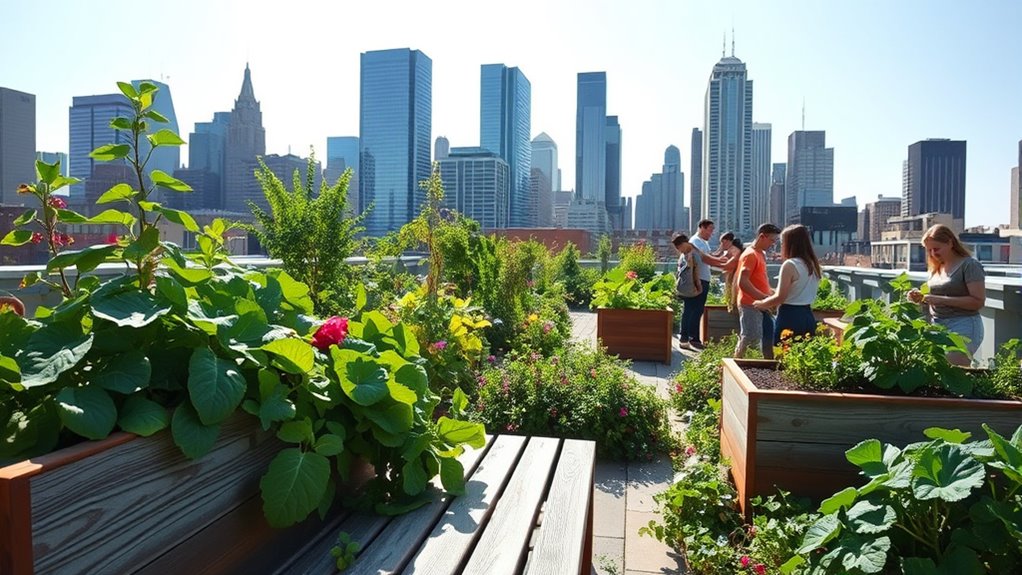
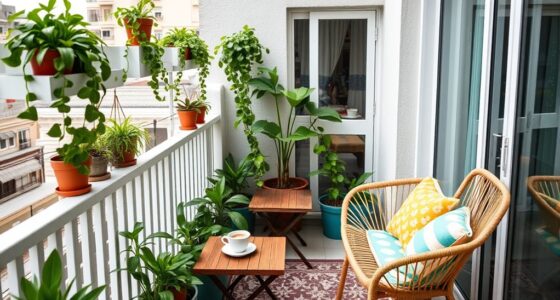
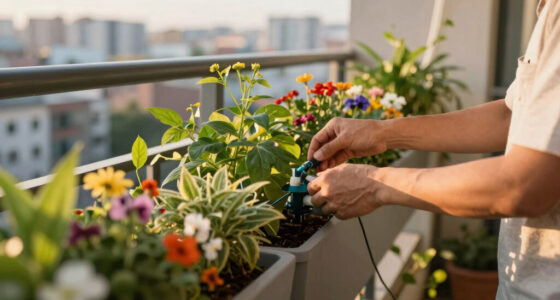
Are you unsure whether to turn your rooftop or community space into a garden? Many people face this dilemma when they lack a yard or balcony but still want to enjoy the benefits of gardening. The good news is that transforming these spaces into a thriving garden is entirely possible and can be incredibly rewarding. Whether you’re interested in urban farming or simply creating a peaceful outdoor retreat, your rooftop or communal area can serve as the perfect canvas for your green ambitions. Urban farming has gained popularity for its ability to bring fresh produce directly to city dwellers. By utilizing a rooftop or community garden, you can grow vegetables, herbs, and even small fruit trees, reducing your reliance on store-bought goods. This approach not only supplies you with healthy, organic food but also helps cut down on your carbon footprint. Setting up containers, raised beds, or vertical gardens is a practical way to maximize limited space and create a productive urban farm that fits your lifestyle. Plus, cultivating your own food can be a deeply satisfying experience, giving you a sense of accomplishment and a closer connection to nature in the midst of city life. Additionally, choosing appropriate plants that thrive in container environments ensures your garden remains lush and productive with minimal effort. Beyond the practical benefits, transforming your rooftop or community space into a garden provides a wonderful environment for outdoor relaxation. Imagine unwinding after a busy day, sitting among lush greenery, listening to the gentle rustling of leaves, and soaking up some sunshine. A garden offers a peaceful escape from the hustle and bustle of urban living, giving you a chance to recharge mentally and physically. With some comfortable seating, potted plants, and perhaps a small water feature, you can craft a cozy nook that invites you to unwind and enjoy the outdoors. Creating this space is also an opportunity to connect with neighbors, share gardening tips, and build a sense of community through shared green projects. Starting your rooftop or community garden doesn’t have to be complicated. Select hardy plants suited for container gardening, invest in quality soil, and make sure your space receives enough sunlight. Regular watering and maintenance will keep your garden thriving and your outdoor relaxation spot inviting. Remember, even small efforts can lead to a vibrant, lively garden that transforms an underused space into a valuable asset. Whether you’re growing food or simply cultivating a tranquil retreat, your rooftop or community garden can become a personal oasis amid the cityscape, enriching your daily life and turning an empty space into something truly special.

Field Guide to Urban Gardening: How to Grow Plants, No Matter Where You Live: Raised Beds • Vertical Gardening • Indoor Edibles • Balconies and Rooftops • Hydroponics
As an affiliate, we earn on qualifying purchases.
As an affiliate, we earn on qualifying purchases.
Frequently Asked Questions
Are There Safety Regulations for Rooftop Gardens?
Yes, there are safety regulations for rooftop gardens. You need to follow roof safety guidelines and building codes to guarantee your garden is safe and compliant. These regulations cover structural integrity, load limits, and proper railings or barriers. Make sure to consult local building codes and work with professionals to avoid hazards. Staying within these rules helps protect everyone and prevents potential accidents on your rooftop garden.
How Do I Start a Community Garden Legally?
You can start a community garden legally by diving into garden planning and securing all necessary legal permits—think of it as building a fortress for your plants! First, check local zoning laws and reach out to city offices for permits. Then, gather neighbors’ support and create a clear plan. With these steps, you’ll turn an empty space into a thriving community oasis, all within the law!
What Plants Thrive in Rooftop Garden Environments?
You can grow drought-tolerant plants like succulents, lavender, and ice plants in your rooftop garden. Container gardening works best, so choose containers with good drainage and plenty of sunlight. These plants thrive in limited soil and dry conditions, making them ideal for rooftop environments. Regular watering isn’t necessary, but guarantee your containers are well-drained to prevent root rot. With the right plants and setup, your rooftop garden will flourish.
Who Funds or Maintains Shared Rooftop or Community Gardens?
You’ll find that funding sources for community gardens often come from local governments, nonprofits, or dedicated residents like you. Maintenance responsibilities usually fall on community members, neighborhood associations, or sometimes property owners. These groups work tirelessly, almost as if they’re tending to a living masterpiece, to keep the garden thriving. Your involvement can make a huge difference—by volunteering or supporting funding efforts, you help turn shared spaces into lush, vibrant oases.
Can Rooftop Gardens Be Used for Commercial Purposes?
Rooftop gardens can be used for commercial purposes, but you’ll need to check local regulations and building codes first. Many urban farming ventures turn rooftops into profitable spaces, creating a rooftop business that sells fresh produce or hosts events. If you plan to do this, make sure you get proper permits and consider the structural capacity of the roof. With the right permissions, you can successfully transform your rooftop into an urban farming enterprise.

Olaiti 5-Tier Vertical Garden Bed Planter Boxes with Drainage System & Storage Space, Freestanding Vertical Garden Planter with 5 S-Hooks for Plants Vegetables Flowers Herbs in Garden Patio Yard
[MINIMAL FOOTPRINT & MAXIMIZED SUNLIGHT] Save your valuable floor area! Designed to occupy very little ground space, this…
As an affiliate, we earn on qualifying purchases.
As an affiliate, we earn on qualifying purchases.
Conclusion
Even without a balcony or yard, you can transform your building’s roof or community garden into a vibrant oasis. Think of it like planting seeds of connection and sustainability—each small effort blooms into a shared sanctuary. When I started tending my community garden, I realized it’s not just about growing vegetables but cultivating a sense of belonging. So, seize the opportunity; your rooftop or shared space can become your personal oasis and a community’s heart.
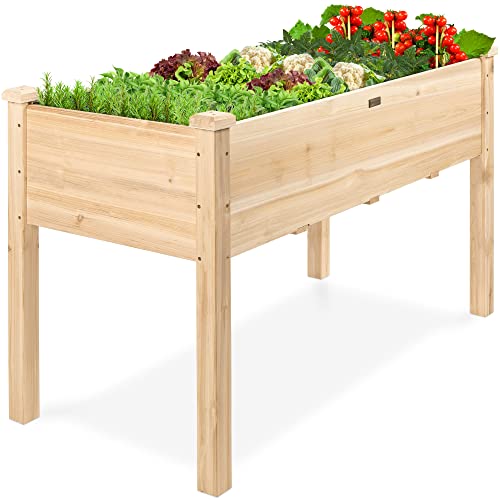
Best Choice Products 48 x 24 x 30 Inches Raised Garden Bed, Elevated Wood Planter Box Stand for Backyard, Patio, Balcony with Bed Liner, 200 Pound Capacity – Natural
LARGE PLANTING SPACE: Designed with a long bed space (5CuFt) deep enough to provide your plants and vegetables…
As an affiliate, we earn on qualifying purchases.
As an affiliate, we earn on qualifying purchases.
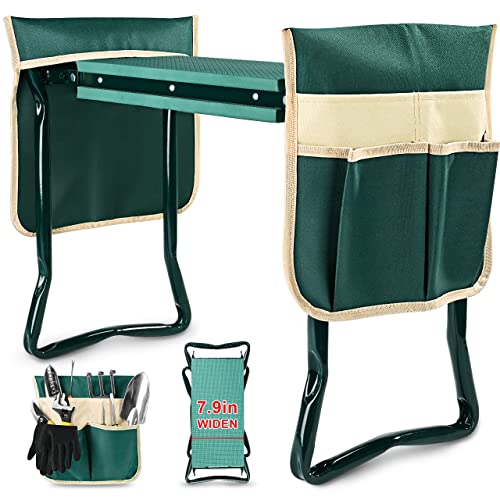
KVR Upgraded Garden Kneeler and Seat with Thicken & Widen Soft Kneeling Pad,Heavy Duty Foldable Gardener Stool with 2 Tool Pouches,Gardening Gifts for Women Mom Men Seniors¡…
【Upgrade Widened】This Garden Kneeler is widened to 7.9 inches to fit more person and make you feel more…
As an affiliate, we earn on qualifying purchases.
As an affiliate, we earn on qualifying purchases.