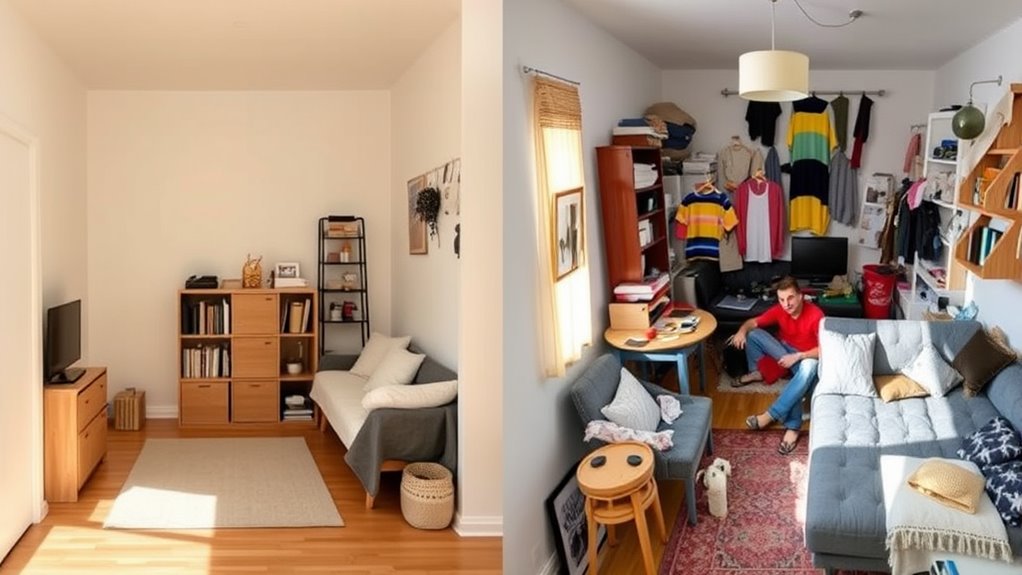

When you live alone in a small space, decluttering is more straightforward because you make decisions quickly and don’t have to contemplate others’ belongings. With others, you need to coordinate, set boundaries, and respect emotional attachments, which can slow the process. Using smart storage solutions and taking small steps helps you manage clutter efficiently. To learn how to tailor your approach for your situation, keep exploring tips that fit your living arrangement.
Key Takeaways
- Living alone allows quicker, autonomous decluttering decisions, while cohabitation requires consensus and compromise.
- Shared spaces demand coordinated storage solutions to prevent clutter buildup among multiple residents.
- Emotional attachments may be stronger when living alone, making decluttering more personal and deliberate.
- In small spaces, maximizing storage with multi-functional furniture benefits both solo and shared living arrangements.
- Regular communication and shared routines help maintain an organized environment when living with others.
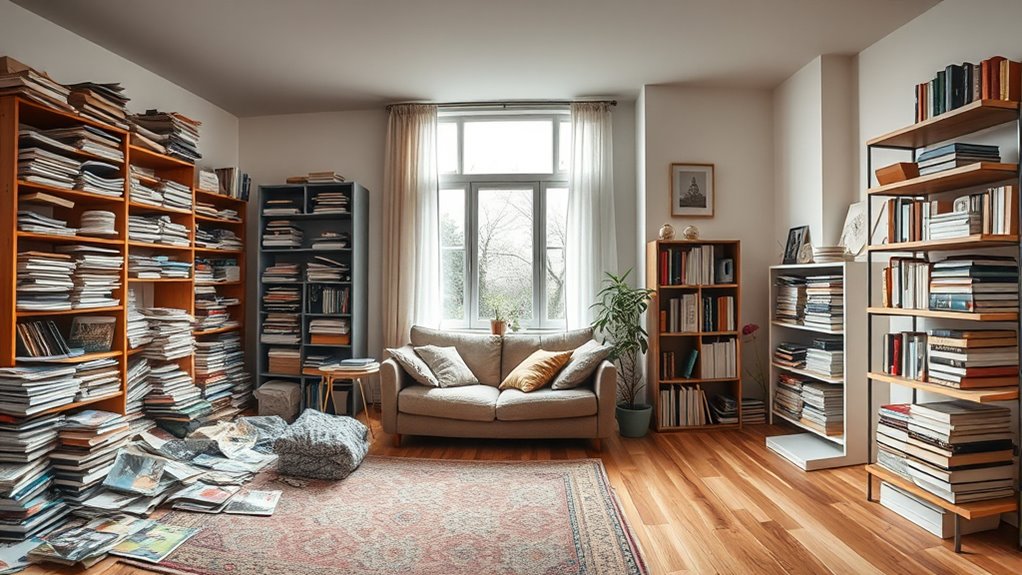
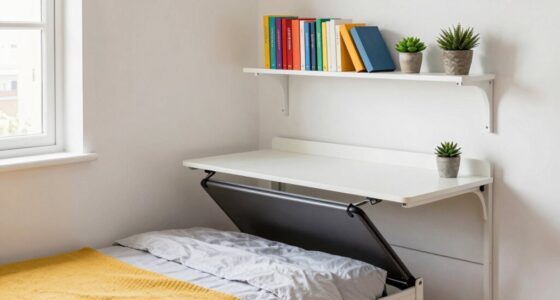
Decluttering can feel like a formidable task, especially when your living situation influences how you approach it. When you live alone, you might think you have more flexibility to keep things because there’s no one else to contemplate. However, even in small spaces, clutter can quickly become overwhelming without proper strategies. To tackle this, focus on effective storage solutions that maximize your space rather than simply piling things up. Use multi-functional furniture like beds with built-in drawers or ottomans with hidden compartments. Wall-mounted shelves can free up floor space and help organize items neatly. Clear storage bins are also great for categorizing belongings, making it easier to find what you need and keep clutter at bay.
But beyond practical solutions, you’ll find that emotional attachments can make decluttering particularly challenging. You might hold onto souvenirs, old clothes, or mementos that evoke strong feelings or memories. It’s normal to hesitate because parting with these items feels like losing a piece of your history. To manage this, ask yourself if you truly need to keep everything or if certain items serve a purpose or bring genuine joy. Sometimes, taking photos of sentimental items before letting them go can help preserve memories without taking up physical space. Remember, decluttering isn’t about erasing history; it’s about creating a space that feels comfortable and manageable.
Living alone gives you the advantage of making decisions quickly and without needing consensus, but it also means you’re solely responsible for maintaining your space. This can be empowering, but it might also make you more emotionally attached to your belongings because they represent your personal history and identity. Be gentle with yourself as you decide what to keep. Set small goals—perhaps start with a single drawer or closet—and gradually work your way through your space. Focus on creating a system that works for you, using customizable storage solutions to suit your specific needs. As you let go of unnecessary items, you’ll notice your living environment becoming more open, peaceful, and easier to maintain. Developing simple organizing routines can help sustain your decluttering efforts over time.
In the end, whether you live alone or with others, effective storage solutions combined with a mindful approach to emotional attachments are key. When you’re the only one responsible, you get to tailor your space precisely to your preferences, but it also requires patience and honesty about what truly matters. With consistent effort, decluttering can transform your small living space into a sanctuary that’s welcoming, functional, and free of unnecessary clutter.
The Tiny Home Storage Solution Book: 101 Space-Saving Ideas, Built-In Storage Designs, and Multifunctional Furniture for Small Houses
As an affiliate, we earn on qualifying purchases.
As an affiliate, we earn on qualifying purchases.
Frequently Asked Questions
How Do I Handle Conflicting Decluttering Preferences With Roommates?
You should start by openly discussing personal boundaries and listening to each roommate’s preferences. Establish decision-making dynamics where everyone feels heard and respected. Compromise is key—perhaps create shared spaces for common decluttering rules and individual zones for personal belongings. Regular check-ins help maintain harmony, ensuring that conflicting decluttering preferences don’t escalate. By fostering respectful communication, you’ll find solutions that work for everyone and keep your shared space organized.
What Are Effective Ways to Involve Others in Decluttering?
Picture a shared room, where personal space meets emotional attachment. To involve others in decluttering, start by respecting their feelings and listening to their concerns. Use gentle conversations to highlight benefits, like more space or a peaceful environment. Encourage collaboration through fun projects, like sorting items together. This way, you foster teamwork, reduce resistance, and create a shared sense of accomplishment, making decluttering a positive experience for everyone involved.
How Can I Maintain Organization After Decluttering With Others?
To maintain organization after decluttering with others, set clear personal boundaries and respect each person’s routines. Communicate openly about shared spaces and storage preferences, ensuring everyone feels involved and responsible. Establish simple, consistent routines for tidying up, and revisit your organizational system regularly. By honoring individual habits and boundaries, you create a balanced environment where cleanliness becomes a shared, sustainable habit.
What Are Some Tips for Decluttering Shared Spaces Efficiently?
Think of shared spaces like a garden—needs regular tending. To declutter efficiently, set clear boundaries for personal space and agree on designated spots for shared items. Use labeled storage and schedule quick weekly clean-ups. Remember, digital clutter adds up, so also organize files and messages. When everyone pitches in, your shared space stays tidy, making daily living smoother and more harmonious.
How Does Living With Family Influence Decluttering Strategies?
Living with family influences your decluttering strategies by emphasizing collective habits and shared responsibility. You’ll need to communicate openly, set mutual goals, and establish routines that everyone follows. Family influence encourages you to weigh others’ needs and preferences, making it easier to maintain a clutter-free space. By working together, you create a harmonious environment where everyone feels involved, and clutter naturally decreases through consistent, shared effort.

Fixwal Small Floating Shelves for Wall (Dark Carbonized, Set of 4, 5Inch)
- Set of 4 Small Floating Shelves: Includes four 5×5 inch shelves
- Versatile Installation Options: Mount upside down or right side up
- Multi-room Use: Suitable for bathroom, kitchen, bedroom
As an affiliate, we earn on qualifying purchases.
As an affiliate, we earn on qualifying purchases.
Conclusion
Whether you live alone or with others, decluttering teaches you that chaos somehow finds a way to thrive, even in the tiniest corners. Ironically, in a small space, the clutter often multiplies like weeds, proving that less really is more—even if you’re sharing it with others. So, embrace the mess, or better yet, tackle it before it takes over entirely. After all, in tight quarters, a cluttered life feels a lot more crowded.

YIHONG 6 Pack Clear Storage Bins, Pantry Organizer Bins with Handle, Large
- Versatile Clear Storage Bins: Fits fridge, pantry, cabinets for organization
- Multi-Purpose Set: Includes 6 bins for food, toys, toiletries
- Ideal for Any Space: Suitable for kitchen, bathroom, garage, and more
As an affiliate, we earn on qualifying purchases.
As an affiliate, we earn on qualifying purchases.

DocSafe Storage Ottoman with Lock,Fireproof Folding Ottoman Foot Rest Stool Storage Chest with Storage Safe for Important Documents,Waterproof 17 Inches Short Ottoman Foot Stool with Handles,Black
- Fireproof and Waterproof Material: Resists up to 2000℉, SGS tested
- Durable and Dust-proof Cover: Waterproof PVC leather, holds 440 lbs
- Multipurpose Design: Stool with secure lock and hidden storage
As an affiliate, we earn on qualifying purchases.
As an affiliate, we earn on qualifying purchases.