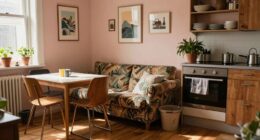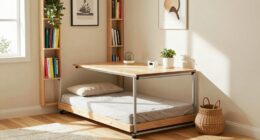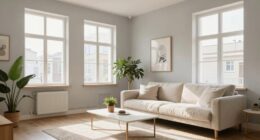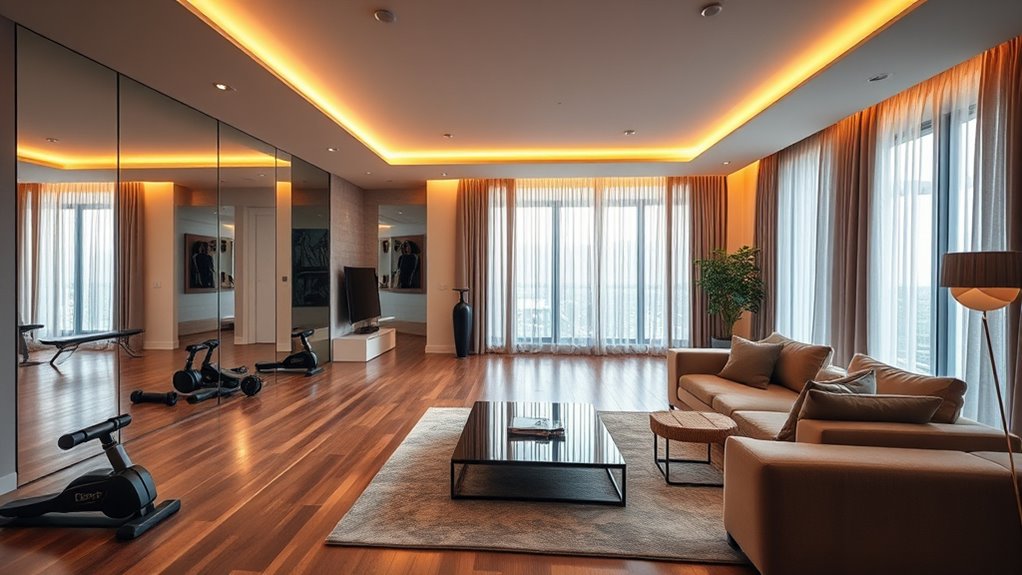
To turn your living room into a gym by morning and a lounge at night, choose multi-functional furniture like fold-away desks or sofa beds that are easy to reconfigure. Arrange furniture to quickly switch zones, using rugs and visual cues for separation. Layer adjustable lighting to set the right mood for each activity, and add visual barriers for added privacy. Keep the space uncluttered and versatile—continue exploring for tips to perfect your setup.
Key Takeaways
- Utilize multi-functional furniture like fold-away desks and sofa beds to easily switch between gym and lounge setups.
- Arrange furniture to create distinct zones with visual cues such as rugs or artwork for clear activity separation.
- Incorporate adjustable lighting with layered options—bright for workouts, warm and dim for relaxation.
- Position movable or foldable exercise equipment in accessible corners for quick transition to workout mode.
- Design a flexible layout that promotes clutter-free, seamless reconfiguration for day-to-night use.

Have you ever wondered how to make your living room more versatile? If so, the key lies in smart furniture arrangement and thoughtful lighting design. When your space needs to serve dual purposes, you want to create zones that can easily transform without clutter or confusion. Start by selecting multi-functional furniture pieces—think fold-away desks, sofa beds, or storage ottomans—that can be tucked away or rearranged as needed. The furniture arrangement should facilitate quick shift; for example, place a sleek foldable treadmill or yoga mat in one corner for morning workouts, and then fold or move it aside to turn the area into a cozy lounge in the evening. Keeping the layout flexible allows you to switch functions seamlessly, without sacrificing style or comfort. Incorporating energy-efficient lighting solutions can further enhance the ambiance while reducing power consumption. Lighting design plays a vital role in defining these different zones. Bright, focused lighting works well during your workout hours, so consider installing adjustable track lighting or incorporating task lamps that can be directed onto your exercise space. As the day winds down, you can switch to softer, warmer lighting—like dimmable lamps, candles, or ambient LED strips—to create a relaxing atmosphere for lounging. This layered lighting approach helps your living room adapt effortlessly from a lively gym to a calming retreat. Also, using lighting that can be dimmed or color-changed adds to the versatility, allowing you to set the mood instantly. To reinforce the dual purpose, consider visual cues that distinguish the zones, such as rugs or different wall art, which also contribute to the lighting effect by absorbing or reflecting light differently. When you position furniture, think about creating a visual barrier between the workout zone and the lounge area, even if it’s just a bookshelf or a change in flooring. This helps your mind associate specific areas with specific activities, making transition smoother and more natural.

Folding Sofa Bed, Convertible Sleeper Chair with Back Support and Pillow
- Multi-Functional Design: Transforms between sofa bed, sofa, and chair
- Space-Saving Solution: Compact foldable design for small spaces
- Comfortable Support: Detachable pillows with ergonomic foam padding
As an affiliate, we earn on qualifying purchases.
As an affiliate, we earn on qualifying purchases.
Frequently Asked Questions
How Can I Soundproof My Living Room Gym Area?
To soundproof your living room gym, start by adding soundproofing materials like acoustic panels or foam tiles to the walls and ceiling. Use heavy rugs or mats on the floor to absorb impact noise. Consider sealing gaps around doors and windows with weatherstripping or draft stoppers for better noise reduction. Using these noise reduction techniques helps keep your workouts quiet and prevents sound from disturbing other areas.
What Are Space-Saving Furniture Options for Small Multi-Use Rooms?
Imagine transforming your small room with convertible furniture, like a fold-out sofa bed, to maximize space. You can also incorporate modular storage solutions, such as stackable cubes or wall-mounted shelves, to keep things organized without clutter. These options allow you to easily switch between functions, making your multi-use room efficient and comfortable. With thoughtful furniture choices, you maintain functionality while saving space effortlessly.
How Do I Maintain Privacy Between Gym and Lounge Zones?
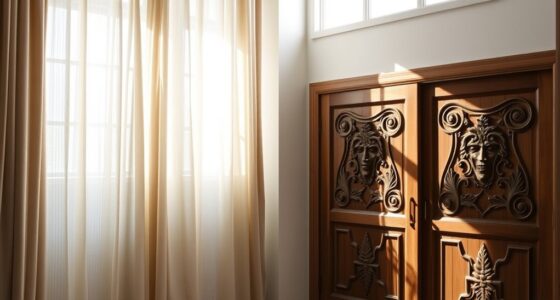
To maintain privacy between your gym and lounge zones, you can use soundproof curtains to block noise and visual separation. Additionally, partition screens are a flexible option; they can be moved or folded away when not in use. Combining these solutions helps create distinct, private spaces within your small room, ensuring that your workout and relaxation areas stay separate and comfortable.
What Lighting Solutions Suit Both Workout and Relaxation?
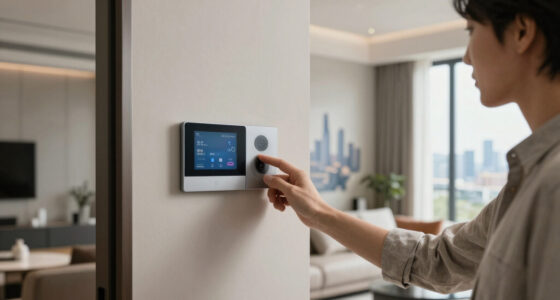
You should opt for smart lighting with adjustable fixtures to suit both workout and relaxation needs. Use dimmable LED lights to energize the space during exercise, and switch to warmer tones for unwinding. Smart lighting systems allow you to quickly change settings via app or voice control, making it easy to create the perfect ambiance for activity or downtime. This flexibility enhances functionality and comfort in your multi-use living room.
How Can I Organize Gym Equipment to Maximize Space?
You can turn your room into a superhero’s lair by masterfully organizing your gym equipment. Use vertical storage solutions like wall-mounted racks and shelves to save precious floor space. Place larger equipment against the walls, leaving the center open for movement. Foldable or multi-functional pieces should be tucked away when not in use. This way, your space feels limitless, and your equipment stays perfectly organized, ready for action whenever you need it.

LUXOAK 3-Piece Modern Coffee Table Set with LED Lights
- Smart LED Lighting: Over 60,000 colors with adjustable brightness, modes, and timer
- High Gloss Finish: Easy to clean, wear-resistant surface
- Ample Storage Space: Open shelf and two drawers for organization
As an affiliate, we earn on qualifying purchases.
As an affiliate, we earn on qualifying purchases.
Conclusion
So, here you are, transforming your living room into a gym by day and a lounge by night—who knew one space could do so much? It’s almost amusing how a few clever tweaks make your home both a sanctuary and a workout haven. Ironically, in trying to maximize every inch, you’ve created a space that’s more versatile than most dedicated gyms or lounges. Sometimes, the best design solves all your problems—without you even realizing it.

PACOVY Floor Lamp, Adjustable Height Floor Lamps for Living Room Bedroom, 120 LED Super Bright Standing Lamp Remote & Touch Control Dimmable Gooseneck Tall Stand Reading Lamp for Office Craft, Black
- High Brightness LED: 120 LEDs, 1800 lumens, energy-efficient
- Adjustable Height & Angle: Extendable pole, 360° rotatable gooseneck
- Easy Assembly: Tool-free setup in 2 minutes
As an affiliate, we earn on qualifying purchases.
As an affiliate, we earn on qualifying purchases.

Walking Pad Treadmill with Handle Bar and Adjustable Incline, Compact Portable Treadmills for Home Office, 2.5HP Quiet Anti-Slip Under Desk Treadmills, 0.6-3.8 MPH Remote Speed Control
- Adjustable Incline and Handles: 4-degree incline with support handles
- LED Display & Speed Feedback: Shows exercise stats and real-time speed
- Compact & Easy to Store: Folds for space-saving storage
As an affiliate, we earn on qualifying purchases.
As an affiliate, we earn on qualifying purchases.