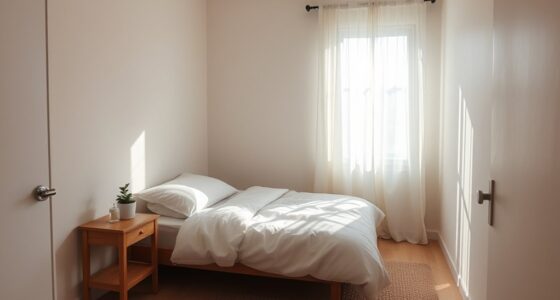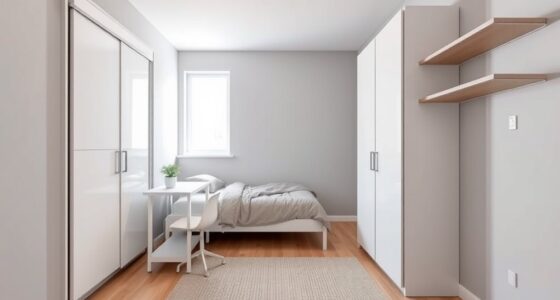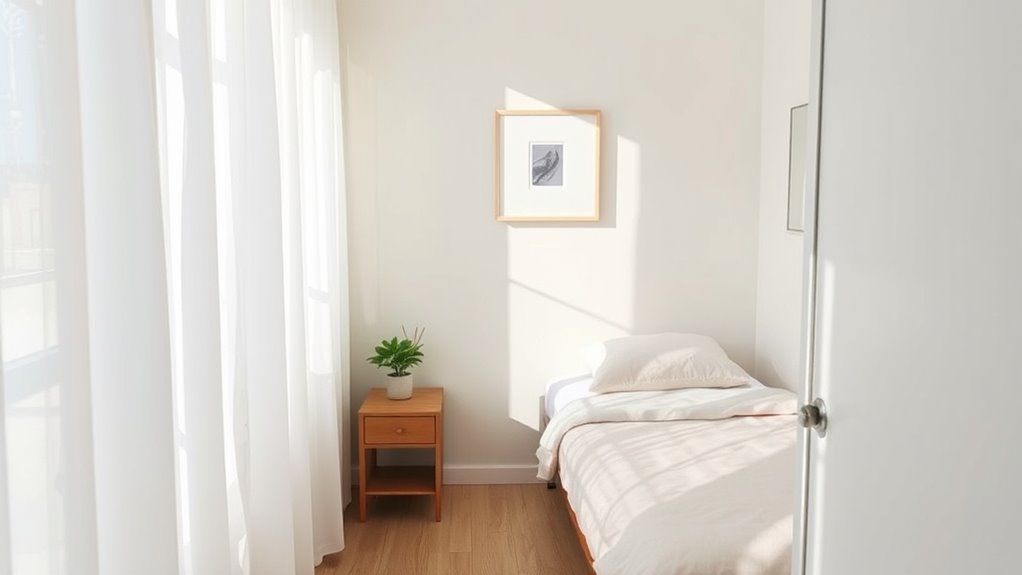

To enhance your small bedroom’s feng shui, position your bed against a solid wall for support and avoid placing it under windows or in line with the door. Use light, neutral colors to expand the space and bring a calming vibe. Keep furniture organized and away from doorways, and incorporate mirrors strategically to reflect light and create a sense of openness. Maintaining clutter-free surroundings further promotes positive energy flow—continue exploring to discover more ways to transform your room beautifully.
Get ready for Prime Big Deal Days — try Prime free
Exclusive member deals on October 6–7, plus fast free delivery. Cancel anytime.
As an affiliate, we earn on qualifying purchases.
Key Takeaways
- Position the bed against a solid wall, away from windows and doors, for stability and security.
- Use light, neutral colors like beige or soft blues to create a sense of openness and tranquility.
- Arrange furniture to maximize energy flow, keeping pathways clear and minimizing clutter.
- Place mirrors strategically to reflect light and visually expand the space without facing the bed directly.
- Keep the room tidy and clutter-free to promote positive energy and a peaceful environment.
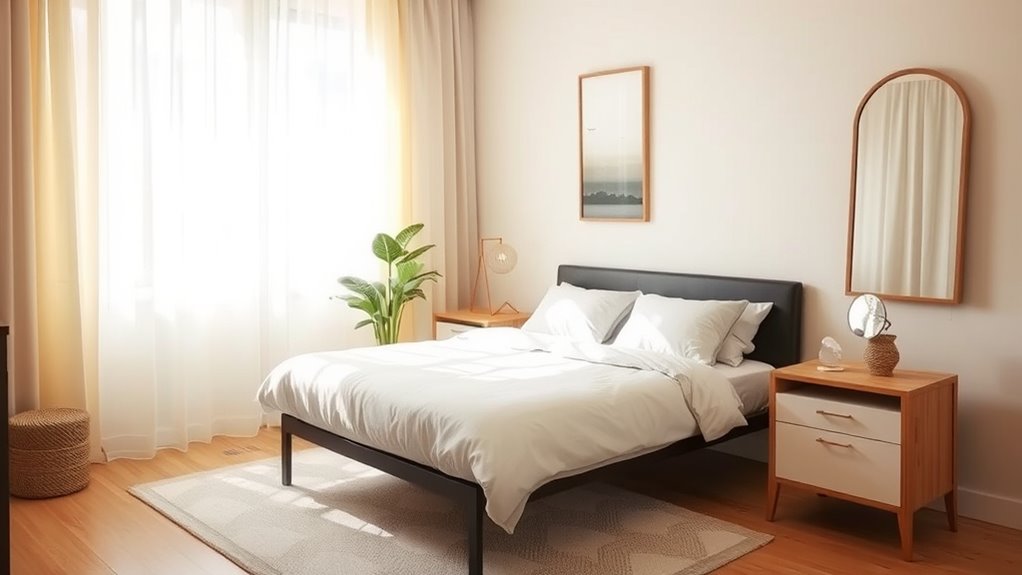
If you have a small bedroom, applying Feng Shui principles can make it feel more spacious, peaceful, and inviting. One of the most effective ways to do this is by paying close attention to bed placement. Ideally, position your bed so that you have a solid wall behind it for support, avoiding placing it directly under a window or in line with the door. This setup creates a sense of stability and security, essential in a small space where every element counts. Keep the path around your bed clear, ensuring easy movement and a clutter-free environment, which promotes positive energy flow. If possible, avoid placing your bed in the center of the room or aligned with the door, as these positions can create a sense of imbalance or vulnerability.
Color schemes also play a vital role in enhancing the Feng Shui of your small bedroom. Light, neutral tones such as soft beige, gentle blues, or pale greens tend to expand the space visually and promote tranquility. These colors reflect natural light, making the room appear larger and more open. If you want a touch of energy, incorporate small accents of warm colors like coral or peach through pillows or artwork, but keep these elements minimal to avoid overwhelming the space. Dark, bold colors can make a small room feel cramped, so use them sparingly, perhaps as an accent on one wall or in accessories, to create contrast without sacrificing a sense of openness.
In addition to bed placement and color schemes, consider how you arrange your furniture. Keep larger pieces away from doorways and windows to maximize the flow of energy. Use multi-functional furniture, like a bed with built-in storage or a sleek nightstand, to reduce clutter. Mirrors can also be a powerful Feng Shui tool; position them thoughtfully to reflect light and open up the room visually, but avoid placing them directly facing the bed, as this can cause restless energy.
small bedroom bed with solid headboard
As an affiliate, we earn on qualifying purchases.
As an affiliate, we earn on qualifying purchases.
Frequently Asked Questions
Can Feng Shui Principles Be Applied to Shared Small Bedrooms?
Yes, you can apply feng shui principles to shared small bedrooms. Focus on creating clear personal energy zones for each person to maintain balance and harmony. Use dividers or strategic furniture placement to define spaces and guarantee both individuals feel comfortable. Keep clutter to a minimum and position beds away from direct door lines. This helps promote positive energy flow, making the shared sleeping arrangement more peaceful and harmonious for everyone involved.
What Colors Are Best for Small Feng Shui Bedrooms?
Soft, calming colors like pale blues, gentle greens, and warm neutrals work best for small feng shui bedrooms. You might notice how these shades promote relaxation and balance, aligning with color psychology principles. When choosing wall decoration, stick to light hues to maximize space and harmony. These colors create a serene atmosphere, making your small bedroom feel more spacious and inviting, helping you rest better every night.
How Should I Position Furniture for Optimal Energy Flow?
Position your furniture to promote smooth energy flow by placing your bed in a commanding position, ideally with a solid wall behind it and a clear view of the door. Keep mirrors thoughtfully placed—avoid reflecting the bed or doorway to prevent energy from escaping. Orient your bed to maximize positive energy, and guarantee pathways are unobstructed for easy circulation. This setup enhances harmony and vitality in your small bedroom.
Are There Feng Shui Tips for Organizing Closet Space?
To optimize your closet space with feng shui, focus on closet organization by keeping it tidy and clutter-free. Use storage solutions like bins, shelves, and hooks to maximize space and maintain balance. Make certain your clothes are neatly folded or hung, and avoid overcrowding, which blocks energy flow. Regularly declutter to release stagnant energy and create a sense of harmony, making your closet a calming, organized zone that promotes positive chi throughout your home.
How Do I Balance Yin and Yang in Small Bedrooms?
Imagine a gentle tide balancing calm and energy in your small bedroom. To achieve this, position your bed so it’s grounded but not blocking windows, promoting harmony. Use soft lighting options like warm lamps to create a soothing yin vibe, while bright task lights add yang energy when needed. Mixing these elements helps you balance yin and yang, fostering a peaceful, energizing space where you rest and recharge effortlessly.
As an affiliate, we earn on qualifying purchases.
Conclusion
By applying these Feng Shui tips, your small bedroom can become a peaceful sanctuary. Think of it like tidying a cluttered drawer—you create space for positive energy to flow effortlessly. I once helped a friend rearrange her tiny space, and she told me it felt like her worries had been squeezed out, replaced with calm. Remember, a well-balanced room isn’t just about size; it’s about making every inch work for your well-being.
mirrored wall decor for small rooms
As an affiliate, we earn on qualifying purchases.
As an affiliate, we earn on qualifying purchases.
As an affiliate, we earn on qualifying purchases.
Fall yard work Picks
leaf blowers
As an affiliate, we earn on qualifying purchases.