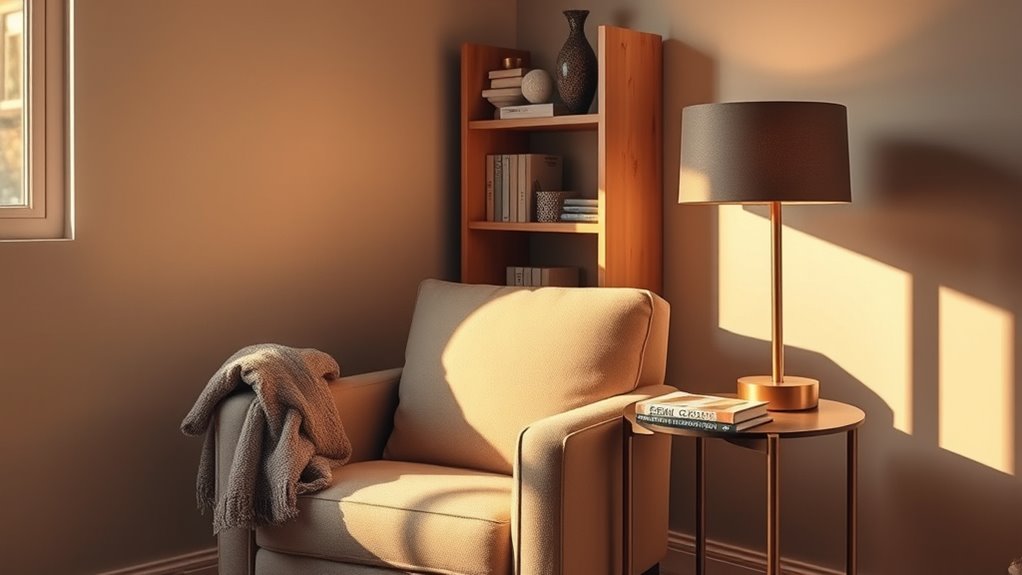

To strike the right balance between cozy and cluttered in a small space, prioritize multi-functional furniture and smart storage solutions to keep things organized. Use warm lighting, layered textures, and inviting colors to create a welcoming atmosphere. Regularly declutter by evaluating what adds value, and incorporate mirrors and strategic decor placements to make the space feel open and comfortable. Keep experimenting with these tips, and you’ll craft a space that’s both cozy and clutter-free.

Get home appliances delivered free with Prime
- Fast, free delivery on millions of items
- Prime Video, Amazon Music and more included
- Member-only deals all year
Key Takeaways
- Use strategic decor placement and focal points to create a cozy atmosphere without overcrowding the space.
- Incorporate multi-functional furniture with hidden storage to reduce clutter while maintaining comfort.
- Layer lighting with warm ambient, task, and accent lights to enhance coziness and highlight key decor features.
- Opt for a warm color palette and textured textiles to evoke warmth while avoiding visual overload.
- Regularly declutter with efficient storage solutions and mindful decoration to sustain a balanced, inviting environment.
As an affiliate, we earn on qualifying purchases.
Prioritize Multi-Functional Furniture
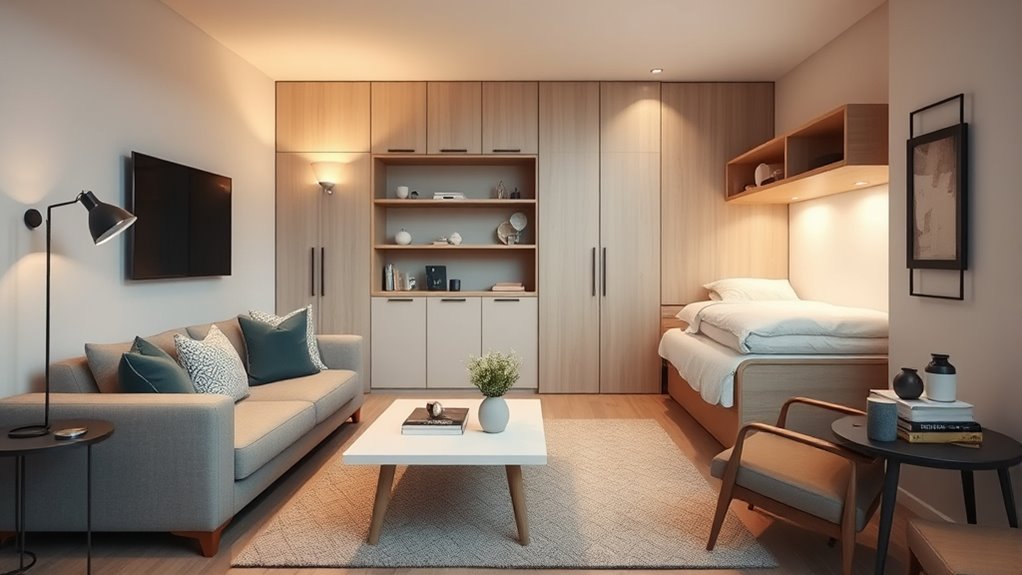
To make the most of limited space, you should prioritize multi-functional furniture that offers multiple uses in one piece. Think of sofas with built-in storage, beds with drawers underneath, or fold-away desks that save space during the day. These pieces help reduce clutter while maintaining a cozy feel. To personalize your space, add decorative accessories like colorful cushions or unique lamps—these details make your environment inviting without crowding it. Keep in mind that multi-functional furniture can serve as a backdrop for your personality, so select items that reflect your style. Incorporating vintage decor can enhance the rustic charm and authenticity of your space. Additionally, choosing vertical storage solutions can maximize your room’s potential and keep belongings organized. By combining practicality with decorative touches, you create a small space that feels both functional and personalized, avoiding the cluttered look while maintaining a warm, inviting atmosphere.
As an affiliate, we earn on qualifying purchases.
Smart Storage Solutions to Maximize Space

When space is limited, smart storage solutions become essential for keeping your small area organized and clutter-free. Consider these options: 1. Install vertical gardening walls to save floor space while adding greenery and decorative accents. 2. Use multifunctional furniture with built-in storage, like ottomans or beds with drawers, to hide essentials out of sight. 3. Incorporate wall-mounted shelves or hooks to keep everyday items accessible without cluttering surfaces. These strategies maximize every inch, turning unused vertical space into functional storage. Vertical gardening not only adds visual interest but also frees up shelf or floor space. Decorative accents, like stylish baskets or wall art, help keep your small space inviting without feeling crowded. The key is balancing practicality with aesthetics to create a cozy, clutter-free environment, and choosing the right storage solutions can make all the difference. Additionally, selecting energy-efficient appliances and proper ventilation can enhance comfort while maintaining efficiency. Incorporating compact appliances designed specifically for small spaces can further optimize your environment and reduce clutter. Effective organization tools, such as modular storage units, can also improve overall space management.
As an affiliate, we earn on qualifying purchases.
Incorporate Textures and Colors for Warmth
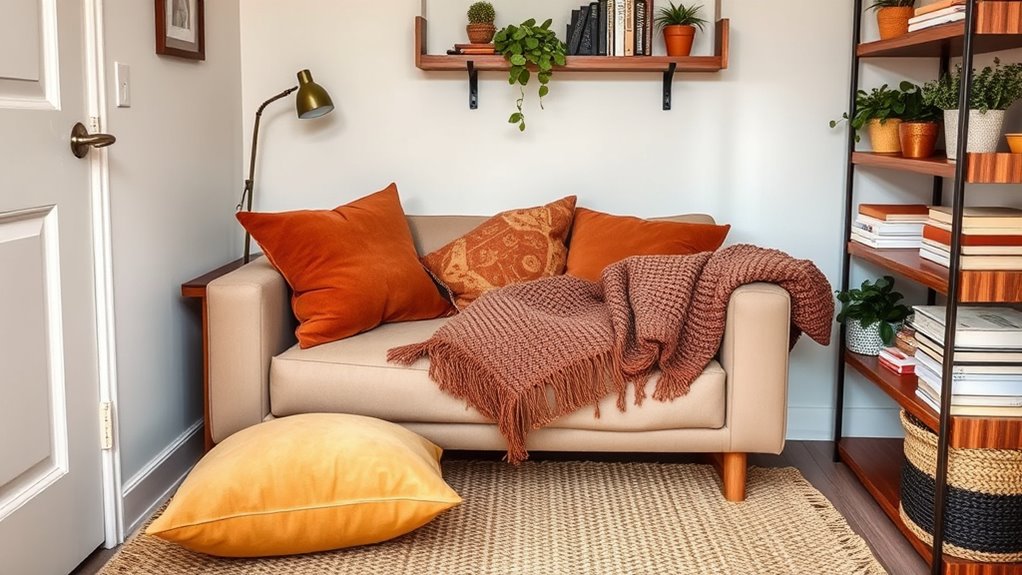
After optimizing your small space with smart storage, it’s time to focus on creating a warm, inviting atmosphere. Incorporate layered textiles like cozy throws, plush rugs, and soft curtains to add texture and depth. Use warm color palettes—think rich reds, earthy browns, and gentle oranges—to evoke comfort and relaxation. Mixing different textures and hues enhances visual interest without cluttering. Incorporating proper storage techniques can help maintain a clean look while allowing you to experiment with various textiles and colors. Additionally, understanding how regional resources can assist in sourcing unique decor items might inspire your decorating choices. Exploring diverse decor options can further elevate your space by blending functionality with aesthetic appeal. Keep in mind that understanding Ethical Hacking principles can also inspire innovative approaches to space organization and security. Incorporating insights from cognitive science can help you design a space that feels both comfortable and stimulating. Below is a simple guide to help you balance textures and colors:
| Texture Type | Color Palette | Example Items |
|---|---|---|
| Soft fabrics | Warm neutrals | Velvet cushions |
| Textured rugs | Earth tones | Wool or jute rugs |
| Knitted throws | Deep reds or oranges | Chunky knit blankets |
| Linen curtains | Muted browns | Light, airy drapes |
| Faux furs | Warm shades | Faux fur pillows |
As an affiliate, we earn on qualifying purchases.
Keep Clutter in Check With Regular Decluttering

Maintaining a clutter-free small space requires consistent effort, as it’s easy for belongings to accumulate quickly. Regular decluttering is essential to stay organized and prevent chaos. To keep clutter in check, develop simple organizational habits like setting aside 10 minutes daily to tidy up. Visualize your space as:
Consistent daily tidying keeps your small space organized and clutter-free.
- A neatly folded pile of clothes on a chair.
- A clear surface free of random papers and gadgets.
- An empty, organized closet shelf ready to store essentials.
Understanding clutter psychology helps you recognize emotional attachments to items that hinder progress. Being aware of modern symbols and signs can help you quickly identify important information and avoid unnecessary clutter caused by misplacement or confusion. Incorporating mindful organization techniques can further enhance your ability to maintain a tidy environment. Regular decluttering isn’t a one-time task; it’s an ongoing process that keeps your small space functional, cozy, and visually appealing. Developing habit formation can make these routines more automatic and sustainable over time. Additionally, practicing visual clutter management can help you prioritize what truly matters and reduce overwhelm.
Use Lighting and Mirrors to Create an Open Feel

Using lighting and mirrors effectively can instantly make a small space feel more open and inviting. Ambient lighting, like soft overhead lights or warm lamps, creates a cozy atmosphere without cluttering the room. Decorative mirrors reflect light, making the space appear larger and more airy. Position mirrors opposite windows to maximize natural light. Combining different lighting sources adds depth and warmth while enhancing the room’s openness. Here’s a quick guide:
| Tip | Effect | Example |
|---|---|---|
| Use ambient lighting | Softens space, reduces shadows | Ceiling-mounted lights |
| Add decorative mirrors | Reflects light, visually enlarges space | Large wall mirror |
| Place mirrors wisely | Enhances natural light, opens up corners | Above a sofa or fireplace |
| Layer lighting | Creates dimension, avoids cluttered look | Floor and table lamps |
| Keep lighting simple | Maintains clean, spacious feel | Minimal fixtures |
Additionally, understanding how attention influences creative practice can help you design an environment that fosters focus and openness. Incorporating lighting techniques can further amplify this effect by emphasizing specific areas and creating a sense of depth within the room. For example, using layered lighting strategically can highlight architectural features and add visual interest, as well as adjusting light color temperature to set the desired mood. Proper placement of decorative elements like plants or artwork can also contribute to a balanced and inviting space.
Frequently Asked Questions
How Can I Choose Furniture That Fits Both Style and Functionality?
To select furniture that fits both style and functionality, start by choosing multi-functional pieces like sofas with built-in storage or fold-out beds. Look for compact storage solutions to maximize space without sacrificing design. Opt for sleek, versatile styles that complement your decor, and prioritize quality to guarantee durability. This way, you create a balanced, stylish, and practical small space that feels cozy yet clutter-free.
What Are the Best Materials for Small-Space Furniture Durability?
You should choose durability-focused materials like industrial metals and sturdy woods for your small-space furniture, as they withstand daily wear. Natural fabrics, such as linen or cotton, are excellent for upholstery because they’re breathable and resilient. Combining industrial materials with natural fabrics adds both strength and a cozy feel, helping your space stay functional and inviting without sacrificing style or longevity.
How Do I Balance Personal Decor With a Clutter-Free Environment?
You can balance personal decor with a clutter-free environment by selecting a few meaningful pieces that express your style and rotating them regularly. Use smart storage solutions to hide everyday items, keeping surfaces clear. Prioritize quality over quantity to avoid overcrowding, and incorporate personal touches like artwork or textiles in moderation. This way, your space remains cozy and reflects your personality without feeling cluttered or overwhelming.
What Are Budget-Friendly Ways to Enhance Space Perception?
Sure, brightening your space doesn’t have to break the bank. Use light color schemes to make rooms feel larger and more open—think whites, pastels, or soft neutrals. Add inexpensive lighting techniques like string lights or LED strips to create depth and warmth. Ironically, a few clever tweaks with affordable paints and lighting can transform your space, making it appear more spacious without spending a fortune.
How Can I Incorporate Eco-Friendly Design in Small Spaces?
You can incorporate eco-friendly design in your small space by choosing sustainable materials like reclaimed wood, bamboo, or recycled metal for furniture and decor. Focus on zero waste tips, such as repurposing items or using multi-functional pieces to reduce clutter. Opt for natural, non-toxic paints and fabrics to promote healthier living. These choices help you create an environmentally conscious, stylish space without sacrificing comfort or functionality.
Conclusion
Finding the right balance between cozy and cluttered in a small space can boost your comfort and efficiency. Did you know that a well-organized room can increase your productivity by up to 20%? By choosing multi-functional furniture, smart storage, and clever lighting, you create an inviting yet functional environment. Keep clutter in check with regular decluttering, and incorporate warm textures and colors. With these tips, you’ll craft a space that feels both spacious and welcoming.
Cold & flu season Picks
humidifiers
As an affiliate, we earn on qualifying purchases.