TL;DR

Get home appliances delivered free with Prime
- Fast, free delivery on millions of items
- Prime Video, Amazon Music and more included
- Member-only deals all year
A Livingetc report featuring lighting designers defines task lighting as focused illumination for a specific activity, such as cooking, reading or working at a desk. The designers say it should respond to people’s routines and complement ambient and accent lighting; the fixture’s style alone does not determine whether it is task lighting.
Lighting designers quoted by Livingetc describe task lighting as focused illumination for a specific activity, such as reading, cooking, working or applying makeup. The report argues that planning light around those activities can make rooms more usable, and that task lighting is defined by what it does—not by a particular fixture style.
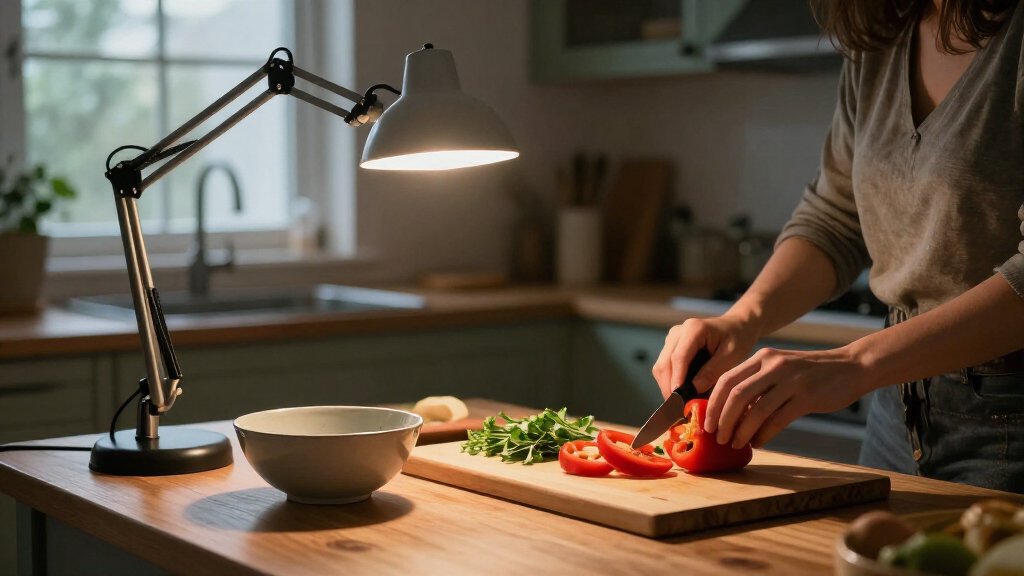
Vanessa Macedo, an associate lighting designer at John Cullen Lighting, says task lighting should direct light to where an activity takes place so the work is comfortable and practical. The aim, she says, is to support the task without causing eye strain. That can mean illuminating a kitchen work surface, a desk, a bedside book or a bathroom vanity.
The report challenges the idea that task lighting has to look like a bright overhead fitting or a strip of LEDs. Kiersten Hoiland, founder of Hoiland Studios, describes it as a functional requirement rather than a style. A pendant can serve the purpose if it puts enough light on the surface below; a more discreet linear fixture can also do so.
Placement depends on how a household uses each room. Hoiland suggests asking whether residents read in bed, work at a dining table or apply makeup at a vanity. Those routines can reveal needs that a floor plan alone may not show. Examples in the report include a reading light by a bed, a fitting above a dining table and a floor lamp beside a living-room armchair.
Lighting That Supports Daily Routines
The practical value of task lighting is that it directs illumination to the place where an activity happens, rather than relying on one general light source for every need. In a kitchen, that means paying attention to work surfaces; in a living room, it might mean lighting a chair used for reading. Matching light to use can make everyday activities easier to carry out.
The designers’ guidance also offers a way to plan a home’s lighting without treating function and appearance as opposites. A fixture can contribute to the room’s design while still providing useful light, provided it delivers illumination where it is needed. The report does not claim that one product or layout will suit every home; its emphasis is on household routines and the specific tasks in each space.
Task lighting is only one part of the overall scheme. Macedo describes ambient lighting as establishing the general mood and accent lighting as adding depth by drawing attention to details such as artwork, architecture or materials. A plan that includes all three layers can serve both practical use and atmosphere.
As an affiliate, we earn on qualifying purchases.
Task Lighting Within a Layered Scheme
The Livingetc report places task lighting alongside two other lighting roles: ambient and accent. It presents them as complementary rather than competing categories. Ambient light provides the room’s overall illumination and mood; accent light highlights selected features; task light supports a particular activity. The distinctions concern purpose, not necessarily the type of fixture.
This is why the same general category of fitting may be used differently from one room to another. A pendant over an island may direct light onto a work area, while a decorative fitting elsewhere may mainly contribute to the room’s appearance. The report’s central point is to consider the light’s effect on the surface or activity beneath it, not to assume that a product label or look settles its role.
The source is a design-advice article, not a technical lighting standard or a product test. It offers designer perspectives and household examples, but does not provide measured brightness levels, a universal spacing formula or product-by-product performance comparisons.
“Task lighting is lighting designed to support a specific activity, providing focused illumination exactly where it is needed.”
— Vanessa Macedo, associate lighting designer at John Cullen Lighting, as quoted by Livingetc
under cabinet LED kitchen task lighting
As an affiliate, we earn on qualifying purchases.
As an affiliate, we earn on qualifying purchases.
No Universal Fixture or Brightness
The report does not set out a single technical specification for task lighting. It gives no recommended brightness, color temperature, beam angle, fixture height or spacing, so readers should not treat its examples as a substitute for project-specific advice. The right setup will depend on the activity, the room and the light reaching the relevant surface.
It is also not clear from the source how particular fixtures perform under different conditions or how much light is appropriate for people with differing vision needs. The article supplies designers’ guidance rather than independent testing or evidence that a particular arrangement produces a specific health or energy outcome.
adjustable desk task lamp with dimmer
As an affiliate, we earn on qualifying purchases.
As an affiliate, we earn on qualifying purchases.
Start With How Each Room Is Used
The practical next step described in the report is to identify the tasks people regularly do in each room, then plan focused light around those locations. A household might note where someone reads, prepares food, works or gets ready, and consider whether the existing light reaches those surfaces comfortably. The approach is room-specific rather than based on a one-size-fits-all fixture list.
Any final design should also account for ambient and accent lighting, so task fixtures serve their practical role without being asked to do every job. The source gives no announced follow-up study or formal standard; its guidance remains a set of design principles and examples from the quoted lighting professionals.
floor lamp for reading beside armchair
As an affiliate, we earn on qualifying purchases.
As an affiliate, we earn on qualifying purchases.
Key Questions
What does task lighting mean?
Task lighting is focused illumination intended to support a particular activity, such as reading, cooking, working at a desk or applying makeup, according to designers quoted by Livingetc.
Does task lighting have to be an LED strip or a bright overhead light?
No. The report says a fixture’s function matters more than its style. A pendant, floor lamp or linear LED fitting can provide task lighting if it directs useful light to the activity or surface.
Where should task lighting go at home?
Place it where focused illumination is needed: for example, near a reading chair or bedside, over a dining or kitchen work surface, or at a bathroom vanity. The designers recommend basing decisions on household routines.
How does task lighting differ from ambient and accent lighting?
Task lighting supports an activity, ambient lighting provides general illumination and mood, and accent lighting highlights details such as artwork or architectural features. The report describes them as complementary layers.
Does the report give exact brightness or placement rules?
No. The source offers general design advice and examples, but does not specify brightness levels, fixture heights or spacing. Those details depend on the room, task and chosen equipment.
Source: rss
Cold & flu season Picks
humidifiers
As an affiliate, we earn on qualifying purchases.