
TL;DR

Get home appliances delivered free with Prime
- Fast, free delivery on millions of items
- Prime Video, Amazon Music and more included
- Member-only deals all year
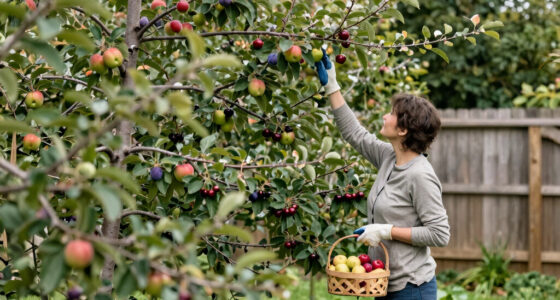
A Hunker report presents Smokehouse apple trees as a natural alternative to backyard fences and screens. The trees typically grow 10 to 15 feet tall, but privacy coverage takes time and requires suitable sun, spacing and a second apple variety for pollination.
A Hunker gardening report recommends Smokehouse apple trees as a natural alternative to backyard fences and screens, offering homeowners a way to create living privacy cover while growing fruit. The trees average 10 to 15 feet tall, but they need full sun and a compatible apple variety nearby to bear fruit.
Smokehouse is a heritage apple variety dating to the early 1800s, according to Hunker. Its dense branches can help screen a yard without the hard boundary of a fence or manufactured screen. The report says the trees may suit homeowners who prefer a garden-like appearance, though the privacy they provide depends on growth and placement.
The article estimates that one tree costs $25 to $60 and can cover a gap of about 10 to 15 feet. It recommends spacing trees roughly 15 to 20 feet apart to limit branch tangling. At that spacing, a new planting may leave openings until the trees grow; the report says Smokehouse apples tend to grow quickly but does not give a specific time for a hedge to become an effective screen.
For healthy growth, Smokehouse apples need full sun and rich, well-draining soil. The report lists the variety as hardy in USDA zones 3 through 9. It says trees in shade may grow weaker and develop less dense branches, reducing their usefulness for privacy. Fruit typically appears in three to five years, and a second apple variety that blooms at about the same time is needed for pollination.
Privacy That Also Produces Fruit
A living hedge can serve two purposes: it can soften sightlines into a yard and, once mature and pollinated, provide apples. That may appeal to homeowners who want privacy without installing a solid barrier, particularly where a natural garden look matters. The trade-off is that trees are not an immediate substitute for a fence: their coverage develops over time and varies with growing conditions.
The report compares tree costs with fence pricing, putting Smokehouse trees at $25 to $60 each and citing privacy fencing at $25 per foot at the low end. Those figures are not a full project-cost comparison. They do not account for the number of trees needed, planting, ongoing care, fence materials or local labor rates, so homeowners should treat them as rough reference points rather than a direct estimate.
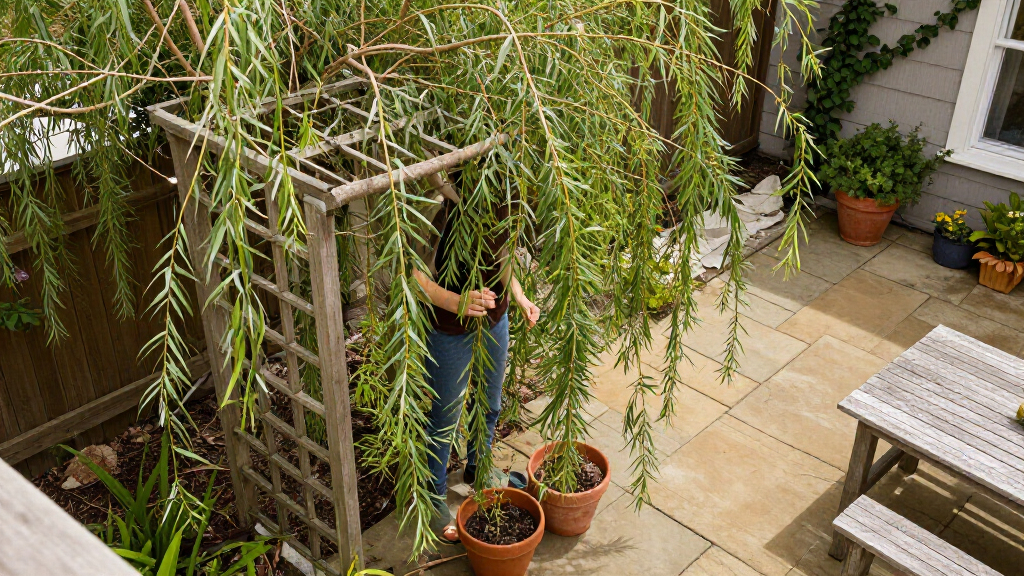
Smokehouse apple trees for privacy
As an affiliate, we earn on qualifying purchases.
As an affiliate, we earn on qualifying purchases.
A Heritage Variety as a Hedge
The source frames Smokehouse apples as one option for people who find fences expensive, difficult to install or maintain, or too artificial for their yards. The variety’s age and fruit production distinguish it from purely ornamental screening plants, but the report does not present a field trial or comparative study of privacy performance.
Its recommended spacing helps explain an important limitation: branches may eventually screen a stretch of yard, but planting trees 15 to 20 feet apart can leave gaps at first. The article says the apples generally fruit within three to five years; that is a fruiting estimate, not a stated timeline for complete privacy coverage.
“Smokehouse apples are a beautiful alternative to fences and screens.”
— Hunker report
As an affiliate, we earn on qualifying purchases.
Coverage Depends on Growing Conditions
The report does not specify how many years Smokehouse trees need to form a continuous screen, how much privacy they provide in different seasons, or how performance varies by cultivar and local conditions. Its coverage and cost estimates are broad figures, not guarantees for a particular property.
Homeowners should also check whether a suitable pollinating apple variety is already nearby or needs to be planted. The source says it must bloom around the same time but does not identify specific compatible cultivars. Local climate, shade, soil and available space will affect whether the trees are a practical fit.
As an affiliate, we earn on qualifying purchases.
Check the Site Before Planting
Anyone considering a Smokehouse hedge should first measure the area to screen, assess sun exposure and soil drainage, and confirm the local hardiness zone. They should plan for the recommended spacing and decide whether to plant a compatible pollinator. Because privacy develops as the trees grow, households needing immediate screening may need another short-term option while the planting matures.
The source provides general gardening guidance, not a site-specific planting plan. The eventual coverage, harvest and upkeep for an individual yard remain dependent on local conditions and care.
As an affiliate, we earn on qualifying purchases.
Key Questions
How tall do Smokehouse apple trees grow?
The Hunker report says they typically reach 10 to 15 feet.
How far apart should the trees be planted?
The report recommends spacing them about 15 to 20 feet apart to limit tangled branches. That spacing may leave gaps while the trees establish.
Do Smokehouse apple trees need another tree to produce fruit?
Yes. According to the report, they need at least one other apple variety that blooms at about the same time for pollination.
How long before the trees produce apples?
The report says Smokehouse trees typically bear fruit in three to five years. It does not give a specific timeline for forming a continuous privacy screen.
Can Smokehouse apples grow in a shaded backyard?
The report says apple trees do best in full sun. Smokehouse apples may grow in shade, but weaker growth and less dense branches could make them less effective for privacy.
Source: rss
NFL season / tailgating Picks
team gear
As an affiliate, we earn on qualifying purchases.