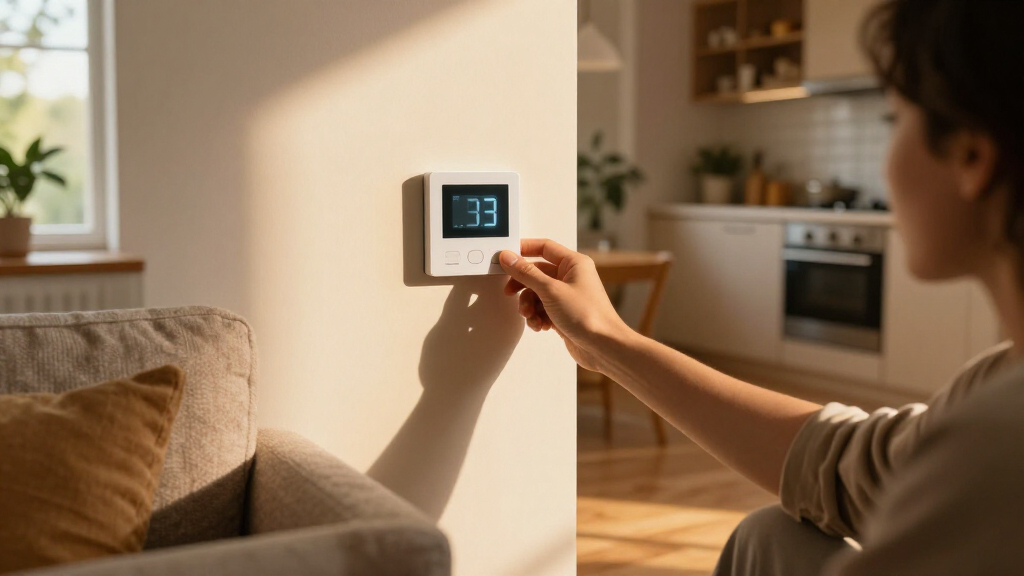
Smart thermostats have moved well beyond simple app control — the best models now cut heating and cooling costs automatically, sense which rooms you actually occupy, and blend into your home’s ecosystem of voice assistants and sensors. The ecobee Smart Thermostat Premium earns my top spot thanks to its included SmartSensor, built-in air quality monitoring, and the most flexible room-by-room comfort logic in this lineup. The Google Nest Learning Thermostat (4th Gen) is the strongest alternative if you want a thermostat that programs itself with almost zero setup effort, while the Amazon Smart Thermostat remains the value benchmark for Alexa households on a budget. The main tradeoff you’ll face: premium learning models with remote sensors cost more up front, while cheaper Wi-Fi models require manual scheduling and often need a C-wire to run reliably. Keep reading for the full breakdown of all 15 models.

Get home appliances delivered free — and shop member deals
- Fast, free delivery on millions of items
- Access to Prime Big Deal Days deals on October 6–7
- Prime Video, Amazon Music and more included
Complete the kit
![[Genuine] Waterdrop PF-01A Water Filter Replacement for W...](https://m.media-amazon.com/images/I/41+5tl9EiKL._SX342_SY445_QL70_FMwebp_.jpg)


Key Takeaways
- Remote room sensors were the biggest differentiator in this comparison — the amazon.com/dp/B0GKGW4N9N?tag=flatmad-20&ascsubtag=dc-1120647″ target=”_blank” rel=”nofollow sponsored noopener”>amazon.com/dp/B09XXS48P8?tag=flatmad-20&ascsubtag=dc-1120647″ target=”_blank” rel=”nofollow sponsored noopener”>ecobee Premium and Nest Learning Thermostat (4th Gen) were the only picks that can heat or cool based on a distant room’s temperature instead of the hallway where they’re mounted.
- C-wire requirements split the lineup nearly in half: budget models like the Amazon Smart Thermostat and Sensi ST55 demand one, while ecobee models include a power-extender kit that works with most systems lacking a C-wire.
- Self-programming is still rare — only the Nest Learning Thermostat truly builds its own schedule; every other model here relies on you setting programs or using geofencing, which matters if you don’t want to manage schedules manually.
- The Honeywell RTH9600WF and RTH9585WF color displays offer strong customization for the price, but their apps and automation support lag behind ecobee and Nest, making them better for tinkerers than for hands-off users.
- Matter support (found on the Meross and ecobee models) is the forward-looking pick for multi-assistant homes, since it keeps the thermostat working even if you switch between Alexa, Google, and Apple Home down the road.
| WiFi Smart Thermostat for Single-Stage Heating and Cooling |  | Best Budget Pick | System compatibility: Conventional single-stage 1 heat/1 cool | Wiring terminals: RH, RC, W, Y, G, C | Power: 24V AC, C-wire required | VIEW LATEST PRICE | See Our Full Breakdown |
| ecobee Smart Thermostat Premium with Wi-Fi, Siri and Alexa, and SmartSensor |  | Best Overall | HVAC compatibility: Compatible with 95% of HVAC systems | Connectivity: Wi-Fi | Voice assistants: Siri and Alexa | VIEW LATEST PRICE | See Our Full Breakdown |
| Meross Matter Smart Wi-Fi Thermostat for 24V HVAC Systems |  | Best for Multi-Platform Smart Homes | HVAC compatibility: 95% of 24V systems | Supported systems: AC, boiler, furnace, heat pump, humidifier, dehumidifier | Connectivity: Wi-Fi, Matter | VIEW LATEST PRICE | See Our Full Breakdown |
| Sensi ST55 Wi-Fi Smart Thermostat |  | Best for Easy DIY Installation | Model: ST55 | Connectivity: Wi-Fi | Smart assistant compatibility: Alexa | VIEW LATEST PRICE | See Our Full Breakdown |
| Amazon Smart Thermostat with Alexa and Ring Compatibility, C-Wire Required, 2-Pack |  | Best for Alexa Households with Multiple Zones | Pack size: 2 thermostats | Power requirement: C-wire required | Compatibility: Alexa and Ring | VIEW LATEST PRICE | See Our Full Breakdown |
| Sensi Lite Smart Wi-Fi Thermostat (ST25) | 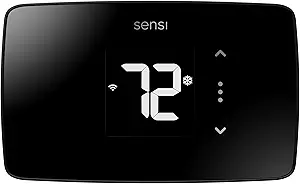 | Best Budget Pick | Model: ST25 | Connectivity: 2.4 GHz Wi-Fi | Voice assistants: Amazon Alexa, Google Assistant | VIEW LATEST PRICE | See Our Full Breakdown |
| ecobee Smart Thermostat Enhanced |  | Best for Automation | HVAC compatibility: Compatible with 90% of HVAC systems | Connectivity: Wi-Fi | Smart home compatibility: Alexa, Google Assistant, Apple HomeKit, SmartThings | VIEW LATEST PRICE | See Our Full Breakdown |
| Google Nest Smart Thermostat (Snow) |  | Best for Google Homes | Connectivity: Wi-Fi | Color: Snow | Energy certification: ENERGY STAR | VIEW LATEST PRICE | See Our Full Breakdown |
| Honeywell Home RTH9600WF Smart Color Wi-Fi Programmable Thermostat |  | Best Display | Model: RTH9600WF | Connectivity: Wi-Fi | Display: Customizable color touchscreen | VIEW LATEST PRICE | See Our Full Breakdown |
| Honeywell Home T5 Smart Wi-Fi Thermostat |  | Best for Geofencing | Connectivity: Wi-Fi | Scheduling: 7-day flexible scheduling | Temperature control: Geofencing with automatic Home/Away mode | VIEW LATEST PRICE | See Our Full Breakdown |
| Honeywell Home RTH9585WF Wi-Fi Smart Color Thermostat |  | Best for Whole-Home System Flexibility | Model: RTH9585WF | Connectivity: Wi-Fi | Programming: 7-day programmable | VIEW LATEST PRICE | See Our Full Breakdown |
| Amazon Smart Thermostat with Alexa and Ring Compatibility |  | Best Budget-Friendly Alexa Pick | Compatibility: Alexa and Ring | Wiring requirement: C-wire required | Controls: Alexa app, schedules, and compatible Alexa devices | VIEW LATEST PRICE | See Our Full Breakdown |
| Google Nest Learning Thermostat (4th Gen) with Nest Temperature Sensor (2nd Gen), Obsidian |  | Best Premium Pick | Thermostat generation: 4th gen | Included sensor: Nest Temperature Sensor (2nd gen) | Color: Obsidian | VIEW LATEST PRICE | See Our Full Breakdown |
| Google Nest Thermostat, Smart Wi-Fi Thermostat, Charcoal |  | Best Value Smart Upgrade | Color: Charcoal | Connectivity: Wi-Fi (2.4 GHz and 5 GHz), Bluetooth Low Energy | App control: Google Home app for Android and iPhone | VIEW LATEST PRICE | See Our Full Breakdown |
| ecobee Smart Thermostat Essential Wi-Fi Thermostat |  | Best for Multi-Ecosystem Homes | Connectivity: Wi-Fi | Certification: Energy Star | System compatibility: Most 24 VAC HVAC systems; compatible with 85% of systems | VIEW LATEST PRICE | See Our Full Breakdown |
| smart thermostat | Connectivity |
|---|---|
| WiFi Smart Thermostat for Sing | — |
| ecobee Smart Thermostat Premiu | Wi-Fi |
| Meross Matter Smart Wi-Fi Ther | Wi-Fi, Matter |
| Sensi ST55 Wi-Fi Smart Thermos | Wi-Fi |
| Amazon Smart Thermostat with A | — |
| Sensi Lite Smart Wi-Fi Thermos | 2.4 GHz Wi-Fi |
| ecobee Smart Thermostat Enhanc | Wi-Fi |
| Google Nest Smart Thermostat | Wi-Fi |
| Honeywell Home RTH9600WF Smart | Wi-Fi |
| Honeywell Home T5 Smart Wi-Fi | Wi-Fi |
| Honeywell Home RTH9585WF Wi-Fi | Wi-Fi |
| Amazon Smart Thermostat with A | — |
| Google Nest Learning Thermosta | — |
| Google Nest Thermostat | Wi-Fi (2.4 GHz and 5 GHz), Bluetooth Low Energy |
| ecobee Smart Thermostat Essent | Wi-Fi |
More Details on Our Top Picks
WiFi Smart Thermostat for Single-Stage Heating and Cooling
This no-frills option covers the basics that matter most: remote app control, 7-day scheduling, and a backlit display that stays readable at night. Where the ecobee Smart Thermostat Premium adds air quality monitoring and voice assistants, this model strips everything down to temperature management, which is exactly why it costs so little. The tradeoff is narrow compatibility — it handles conventional single-stage gas, oil, or electric systems with AC, but heat pump owners and anyone with multi-stage equipment are out of luck. The C-wire requirement is non-negotiable here, unlike the Sensi ST55, which often works without one. Compared with the Amazon Smart Thermostat, you lose Alexa integration but gain standalone flexibility if your home isn’t built around a single ecosystem.
Pros:- Remote temperature control through a phone app
- Customizable 7-day schedules for weekday and weekend routines
- Backlit LCD stays readable in dark hallways
- Covers the most common conventional HVAC setups
Cons:- Requires a 24V C-wire with no battery backup option
- No heat pump or multi-stage system support
- Limited to 2.4 GHz Wi-Fi networks
Best for: Budget-conscious owners of basic single-stage furnaces and AC units who want app control without paying for smart home extras
Not ideal for: Heat pump or multi-stage system owners, and households without an existing C-wire
- System compatibility:Conventional single-stage 1 heat/1 cool
- Wiring terminals:RH, RC, W, Y, G, C
- Power:24V AC, C-wire required
- Wi-Fi:2.4 GHz only
- Scheduling:7-day programmable
- Temperature accuracy:Within 2°F
- Display:Backlit LCD
- Dimensions:0.98 in D × 4.72 in W × 3.86 in H
Our verdict“A sensible low-cost choice for straightforward single-stage systems, as long as a C-wire is already in place.”
ecobee Smart Thermostat Premium with Wi-Fi, Siri and Alexa, and SmartSensor
This is the most complete package in the lineup. The included SmartSensor reads temperature and occupancy in the rooms you actually use, so the ecobee heats the living room at 6 p.m. instead of an empty hallway — something the Sensi ST55 and Meross Matter can’t do without add-ons. Add a built-in air quality monitor, a smart speaker with Siri or Alexa, and a Power Extender Kit for homes without a C-wire, and it out-features nearly everything else here. The catches are real, though: Siri needs a separate Apple home hub, some security features sit behind a subscription, and doorbell integrations require ecobee’s own camera. Compared with the Nest Learning Thermostat, ecobee leans on sensors rather than pure algorithmic learning, which tends to feel more predictable week to week.
Pros:- Included SmartSensor adjusts comfort room by room based on occupancy
- Built-in air quality monitoring with filter reminders
- Works with Siri, Alexa, and full app control
- Power Extender Kit covers homes without a C-wire, plus a 3-year warranty
Cons:- Siri requires a separate Apple home hub
- Some security features need an ecobee Smart Security subscription
- Doorbell features only work with ecobee’s compatible camera hardware
Best for: Homeowners who want whole-home comfort intelligence, air quality insight, and voice control in a single device
Not ideal for: Buyers on a strict budget or those unwilling to buy an Apple home hub for Siri and a subscription for advanced security features
- HVAC compatibility:Compatible with 95% of HVAC systems
- Connectivity:Wi-Fi
- Voice assistants:Siri and Alexa
- Included sensor:SmartSensor
- Air quality monitor:Built in
- C-wire alternative:Power Extender Kit included
- Certification:ENERGY STAR
- Warranty:3 years
Our verdict“The best-equipped smart thermostat for most homes, provided you’re comfortable with its Apple hub and subscription dependencies.”
Meross Matter Smart Wi-Fi Thermostat for 24V HVAC Systems
The standout feature here is Matter support, which lets this thermostat live happily inside Apple Home, Alexa, Google Home, SmartThings, or Home Assistant — a flexibility no other product in this roundup matches. Where the budget WiFi Smart Thermostat only handles single-stage systems, the Meross covers heat pumps, boilers, furnaces, and humidifiers, making it far more versatile for mixed HVAC setups. It also sends filter-life and system alerts, which the basic models skip entirely. The wiring situation is the main friction point: some configurations need a C-wire that isn’t included, and high-voltage baseboard, millivolt, and two-wire systems are simply incompatible. If your priority is ecosystem neutrality over polish, this beats the Amazon Smart Thermostat, which locks you into the Alexa world.
Pros:- Matter integration across Apple Home, Alexa, Google Home, SmartThings, and Home Assistant
- Broad 24V system support including heat pumps and boilers
- Filter-life and system issue alerts
- Flexible programmable schedules with a lockable display
Cons:- C-wire may be required and is not included
- No support for electric baseboard, millivolt, or two-wire systems
- LED display is more utilitarian than premium rivals like the ecobee
Best for: Smart home enthusiasts who run mixed platforms or Home Assistant and need heat pump or boiler support
Not ideal for: Owners of electric baseboard heaters, millivolt systems, or two-wire setups without a C-wire
- HVAC compatibility:95% of 24V systems
- Supported systems:AC, boiler, furnace, heat pump, humidifier, dehumidifier
- Connectivity:Wi-Fi, Matter
- Compatible platforms:Apple Home, Alexa, Google Home, Home Assistant, SmartThings
- Voltage:24 volts
- Control:App and voice control
- Display:LED
- Incompatible systems:110V/120V/240V baseboard, millivolt, two-wire
Our verdict“The smart pick for multi-platform households with complex 24V HVAC systems, provided your wiring cooperates.”
Sensi ST55 Wi-Fi Smart Thermostat
Installation anxiety kills more thermostat upgrades than price does, and the Sensi ST55 attacks that problem directly with app-guided steps and a built-in level so the unit sits straight on the wall. Its biggest practical advantage is that a common wire isn’t required in most applications — a genuine rarity here, since the Amazon Smart Thermostat and the budget WiFi model both mandate a C-wire. Once mounted, you get flexible scheduling, usage reports, and maintenance reminders, roughly matching the Meross on everyday features. What you don’t get is anything beyond that: no room sensors like the ecobee Smart Thermostat Premium, no Matter support, and Alexa is the only voice assistant on board. For most single-homeowners, though, that simplicity is the point.
Pros:- DIY installation guided by the app with a built-in level
- Common wire not required in most installations
- Usage reports, equipment alerts, and maintenance reminders
- Company states it does not sell personal information to third parties
Cons:- C-wire may still be needed in some wiring configurations
- Voice control limited to Alexa only
- No room sensing or air quality features compared with premium rivals
Best for: First-time installers and renters or homeowners without a C-wire who want a low-hassle upgrade
Not ideal for: Smart home power users who want room sensors, Matter, or multi-assistant voice control
- Model:ST55
- Connectivity:Wi-Fi
- Smart assistant compatibility:Alexa
- Certification:ENERGY STAR
- Installation:DIY with built-in level and app instructions
- Common wire:Not required in most applications
- Energy savings:About 23% on HVAC energy per product description
Our verdict“The least intimidating way to add Wi-Fi thermostat control to an older home, ideal if wiring is a question mark.”
Amazon Smart Thermostat with Alexa and Ring Compatibility, C-Wire Required, 2-Pack
Sold as a two-pack, this is the rare smart thermostat deal that actually addresses multi-zone homes — two units mean independent control upstairs and downstairs without buying twice. Built on Honeywell Home technology and guided by DIY instructions in the Alexa app, it slots seamlessly into an Alexa or Ring setup, with compatible Echo devices able to adjust temperature based on presence. Compared with the single-unit Sensi ST55, you trade the flexible no-C-wire installation and usage reports for deeper ecosystem integration; compared with the Meross, you lose Matter’s platform freedom entirely. The C-wire requirement applies to both units, so older homes may need wiring work before either goes up. Automatic routines also hinge on owning compatible Alexa hardware, which quietly raises the true cost.
Pros:- Two thermostats for independent multi-zone control
- Deep Alexa and Ring integration with presence-based automation
- DIY installation guided through the Alexa app
- Built on proven Honeywell Home technology
Cons:- C-wire required for both units
- Some automatic controls depend on owning compatible Alexa devices
- Locked to the Alexa ecosystem with no Matter support
Best for: Alexa-centric households with two-zone HVAC systems who want coordinated control from one app
Not ideal for: Google or Apple Home users, and homes without C-wires in both installation locations
- Pack size:2 thermostats
- Power requirement:C-wire required
- Compatibility:Alexa and Ring
- Control options:Alexa app, schedules, compatible Alexa devices
- Installation:DIY guided through the Alexa app
- Underlying technology:Honeywell Home
- Estimated savings:About $50 per year per ENERGY STAR certified thermostat
Our verdict“The most cost-effective path to two-zone smart climate control if your home already runs on Alexa.”
Sensi Lite Smart Wi-Fi Thermostat (ST25)
The Sensi Lite makes the list because it delivers the core smart thermostat experience — app control, scheduling, geofencing, and usage reports — at the lowest barrier to entry in this lineup. Compared with the Honeywell Home T5, it offers nearly the same feature set but with a friendlier DIY installation: a built-in level and genuinely step-by-step instructions mean most homeowners can finish the swap in under an hour. The privacy angle is a real differentiator too, since Sensi states it does not sell thermostat activity data for targeted ads. The tradeoff is polish — the LCD display is basic next to the Honeywell RTH9600WF’s color touchscreen, and there are no smart sensors or occupancy learning like the ecobee Enhanced offers.
Pros:- Genuinely simple DIY install with built-in level and clear instructions
- Full feature set including scheduling, geofencing, and energy usage reports
- Works without a C-wire on most systems
- Manufacturer does not sell personal data or use activity for targeted ads
Cons:- C-wire required for heat pump and heat/cool-only setups
- Plain LCD display feels dated compared to color touchscreen rivals
- Only connects to 2.4 GHz Wi-Fi networks
Best for: First-time smart thermostat buyers on a budget who want app and voice control without paying for premium hardware
Not ideal for: Heat pump owners — this model needs a C-wire for heat pump and heat/cool-only systems, which undercuts its easy-install appeal
- Model:ST25
- Connectivity:2.4 GHz Wi-Fi
- Voice assistants:Amazon Alexa, Google Assistant
- Smart home compatibility:SmartThings
- Display:LCD
- Power source:Battery (2 AAA) or C-wire, 24 volts
- HVAC compatibility:AC, boiler, furnace, heat pump (C-wire required for heat pumps)
- Certification:ENERGY STAR
Our verdict“A smart choice for straightforward furnace or AC systems where price and easy installation matter more than display quality or advanced sensing.”
ecobee Smart Thermostat Enhanced
This model stands out for occupancy-based automation: instead of following a fixed schedule, it learns routines and adjusts heating and cooling around whether anyone is actually home, factoring in humidity and weather. Compared with the Google Nest Thermostat, which relies more on app-based scheduling you set yourself, the ecobee Enhanced does more of the thinking for you. The bundled Power Extender Kit matches the C-wire flexibility of the Sensi Lite while supporting a claimed 90% of HVAC systems. The meaningful tradeoff is that SmartSensors are sold separately — room-by-room temperature averaging, one of ecobee’s biggest advantages, costs extra. Buyers with complex or zoned systems should verify compatibility before committing.
Pros:- Occupancy and routine learning automates savings without manual programming
- Power Extender Kit included for homes without a C-wire
- Broad platform support including Apple HomeKit, Alexa, Google Assistant, and SmartThings
- Accounts for humidity and weather when adjusting temperature
Cons:- SmartSensors for multi-room sensing are sold separately
- HVAC compatibility should be verified for some systems
- Lacks the built-in voice assistant and air quality features of the ecobee Premium
Best for: Homeowners with irregular schedules who want a thermostat that adapts automatically instead of being programmed manually
Not ideal for: Buyers expecting whole-home room sensing out of the box — the SmartSensors that enable it are an additional purchase
- HVAC compatibility:Compatible with 90% of HVAC systems
- Connectivity:Wi-Fi
- Smart home compatibility:Alexa, Google Assistant, Apple HomeKit, SmartThings
- Included accessories:Power Extender Kit, trim kit
- Remote control:ecobee app for smartphone, tablet, Apple Watch
- Additional sensors:Compatible with ecobee SmartSensors (sold separately)
- Warranty:3 years
Our verdict“The strongest pick here for hands-off energy savings, provided you either skip room sensors or budget for them separately.”
Google Nest Smart Thermostat (Snow)
The Nest Thermostat earns its spot as the natural fit for anyone already living in the Google ecosystem. Scheduling, remote control, and HVAC alerts all run through the Google Home app, and Matter support means it plays nicely with a wider range of voice assistants than older rivals. Where the ecobee Enhanced leans on occupancy learning, Nest takes a simpler approach — you set the schedule, and it nudges you toward savings — which some buyers will prefer and others will find limiting. Installation is forgiving, with no C-wire needed in most homes, though heat pump and zone-controlled systems may still need one or a power accessory. Its Snow finish also gives it a cleaner wall presence than the black Sensi Lite.
Pros:- Deep Google Home and Google Assistant integration with Matter support
- HVAC alerts and maintenance reminders catch problems early
- Works without a C-wire in most homes
- ENERGY STAR certified with energy-saving guidance in the app
Cons:- Some heating, cooling, and heat pump systems need a C-wire or accessory
- Voice control requires a separate compatible smart speaker or display
- Scheduling is more manual than ecobee’s occupancy-based automation
Best for: Google Home households that want tight ecosystem integration plus proactive maintenance alerts
Not ideal for: Heat pump and zone-controlled system owners who may need a C-wire or power accessory, adding cost and complexity
- Connectivity:Wi-Fi
- Color:Snow
- Energy certification:ENERGY STAR
- C-wire:Not required in most homes; required or accessory needed for some systems
- Smart home compatibility:Google Home, Google Assistant, Alexa, Matter-certified voice assistants
Our verdict“The easiest yes for Google-centric homes that want alerts and remote control without a steep learning curve.”
Honeywell Home RTH9600WF Smart Color Wi-Fi Programmable Thermostat
If the thermostat lives somewhere visible, the RTH9600WF is the pick that treats the wall as part of the decor. Its customizable color touchscreen can be matched to your paint or mood — something no other model in this batch offers, including the plainer Nest Thermostat and the LCD-only Sensi Lite. Programmatically it’s flexible too, with multi-system support spanning forced-air, hot water, steam, and heat pumps with electric backup, a wider net than the T5 catches. The catch is power: a C-wire is required, full stop, with no battery fallback like the Sensi Lite provides, and it outright excludes 120–240V electric baseboard heating. Cortana support on the spec sheet is also more legacy footnote than living feature.
Pros:- Customizable color touchscreen that matches any room’s decor
- Broad compatibility across forced-air, hot water, steam, and heat pump systems
- Flexible programming with remote app control
- Works with Alexa, Google Assistant, and other voice assistants
Cons:- C-wire or power adapter required — no battery option
- Not compatible with 120–240V electric baseboard heat
- Cortana compatibility is effectively obsolete
Best for: Homeowners who want a thermostat that looks intentional on the wall and already have a C-wire in place
Not ideal for: Electric baseboard heating users and homes without a C-wire or willingness to add a power adapter
- Model:RTH9600WF
- Connectivity:Wi-Fi
- Display:Customizable color touchscreen
- Voice assistants:Amazon Alexa, Google Assistant, Microsoft Cortana
- System compatibility:Forced-air gas/oil/electric, hot water, steam, heat pumps with electric backup
- Power requirement:C-wire required
- Certification:ENERGY STAR
Our verdict“The best-looking and most flexible programmer in this group, as long as your wiring cooperates.”
Honeywell Home T5 Smart Wi-Fi Thermostat
The T5 is built around one idea done well: location-based temperature control. Its geofencing and automatic Home/Away mode let the house heat or cool itself based on whether your phone is actually there — a genuine comfort-and-savings win for people with unpredictable comings and goings. In that respect it undercuts the Nest Thermostat, which leans on manual scheduling, while remaining simpler and cheaper-feeling than the ecobee Enhanced’s full occupancy learning. The 7-day flexible scheduling and monthly energy reports round out a solid feature package. Be realistic about wiring, though: depending on your setup you may need a C-wire power adapter, and heating-only oil furnace systems won’t work at all without one.
Pros:- Reliable geofencing with automatic Home/Away adjustments
- 7-day flexible scheduling fits varied weekly routines
- Monthly energy reports make usage patterns visible
- Remote control from smartphone or tablet
Cons:- C-wire power adapter may be required depending on wiring
- Heating-only oil furnace systems require a C-wire
- No smart sensor ecosystem like ecobee’s for room-level comfort
Best for: Commuters and households with variable schedules who want the house to respond to their location automatically
Not ideal for: Heating-only oil furnace owners without a C-wire, and anyone unwilling to potentially buy a power adapter
- Connectivity:Wi-Fi
- Scheduling:7-day flexible scheduling
- Temperature control:Geofencing with automatic Home/Away mode
- Energy certification:ENERGY STAR
- Power requirement:C-wire power adapter may be required
- Compatibility:Most heat/cool oil furnace systems; heating-only oil furnaces require a C-wire
Our verdict“A dependable middle-ground pick whose location awareness earns its keep for anyone tired of heating an empty house.”
Honeywell Home RTH9585WF Wi-Fi Smart Color Thermostat
This option stands out for covering heating types most rivals ignore. Where the Google Nest Thermostat leans toward conventional forced-air setups, the RTH9585WF handles forced air, hot water, steam, and heat pumps with electric backup, which matters if your home runs an older boiler or radiators. The customizable color touchscreen is genuinely useful rather than decorative — homeowners can match wall decor or boost contrast for readability from across the room. Compared with the Amazon Smart Thermostat, this model trades voice-ecosystem depth for flexible 7-day scheduling, energy reports, and maintenance alerts, giving hands-on users more to work with in the app. The tradeoff is the wiring: a C-wire is required, full stop, with no power-extender workaround, and electric baseboard homes are out of luck entirely.
Pros:- Works with forced air, hot water, steam, and heat pump systems — unusually broad coverage
- Customizable color touchscreen that’s easy to read from a distance
- 7-day programming with energy reports and maintenance alerts
- Works with both Alexa and Google Home
Cons:- C-wire is mandatory with no included workaround
- Incompatible with 120–240 V electric baseboard heat
Best for: Owners of steam, hot water, or heat pump systems who want a readable color touchscreen and detailed scheduling control
Not ideal for: Electric baseboard heating homes, and anyone without a C-wire who doesn’t want to run new wiring
- Model:RTH9585WF
- Connectivity:Wi-Fi
- Programming:7-day programmable
- Display:Customizable color touchscreen
- Smart home compatibility:Amazon Alexa and Google Home
- Power requirement:C-wire required
- Compatible systems:Forced air (gas, oil, electric), hot water, steam, and heat pumps with electric backup
- Not compatible with:Electric baseboard heat (120–240 V)
Our verdict“This pick makes the most sense for homes with unconventional heating systems that most smart thermostats can’t touch, provided a C-wire is already in place.”
Amazon Smart Thermostat with Alexa and Ring Compatibility
For households already living inside the Alexa ecosystem, this is the easiest entry point in the lineup. It undercuts feature-rich rivals like the Nest Learning Thermostat (4th Gen) by skipping learning algorithms and bundled sensors, but the core experience — scheduling, remote app control, and DIY installation guided step-by-step in the Alexa app — covers what most buyers actually use day to day. The unique angle is Ring compatibility: paired Alexa devices can adjust temperature based on presence or temperature readings, something the ecobee Smart Thermostat Essential achieves only through its own separate sensors. Those automatic adjustments do hinge on owning compatible Alexa hardware, which is the hidden cost here. Like the Honeywell RTH9585WF, it demands a C-wire, so older homes without one should budget for an electrician or look at the Nest options instead.
Pros:- Step-by-step DIY installation guidance through the Alexa app
- Remote control and custom scheduling from anywhere
- Presence- and temperature-based automation with compatible Alexa and Ring devices
- Built on proven Honeywell Home thermostat technology
Cons:- C-wire required with no adapter included
- Automatic adjustments only work with compatible Alexa devices in the home
Best for: Alexa-and-Ring households that want dependable app scheduling and remote control without paying for features they won’t use
Not ideal for: Homes without a C-wire, and buyers without Echo or Ring devices who’d lose the automatic temperature adjustments
- Compatibility:Alexa and Ring
- Wiring requirement:C-wire required
- Controls:Alexa app, schedules, and compatible Alexa devices
- Installation:DIY with Alexa app guidance
- Technology:Honeywell Home Thermostat Technology
- Energy certification:ENERGY STAR
Our verdict“The right choice for Alexa-centric households that want solid smart control at a low entry cost, as long as a C-wire is present.”
Google Nest Learning Thermostat (4th Gen) with Nest Temperature Sensor (2nd Gen), Obsidian
This is the most capable option in the roundup, and it earns that position through automation rather than buttons. The learning capability means it builds a schedule from your habits instead of asking you to program one — a real advantage over the Honeywell RTH9585WF, where 7-day scheduling is entirely manual. The bundled Nest Temperature Sensor (2nd gen) addresses a problem most thermostats ignore: room-to-room hot and cold spots, letting the system prioritize the nursery or bedroom instead of the hallway where the thermostat hangs. Its 60% larger display with Dynamic Farsight shows useful info at a glance, and Matter support keeps it future-proof across Google, Alexa, and Siri. Compared with the standard Google Nest Thermostat, you’re paying a premium for learning, the sensor, and the bigger screen. Wiring is the main question mark — most homes skip the C-wire, but some systems still need one.
Pros:- Learns your preferences and routines, eliminating manual scheduling
- Included remote sensor manages hot and cold spots in specific rooms
- Matter support plus Google Assistant, Alexa, and Siri compatibility
- C-wire not required in most homes
Cons:- Premium price point for features not everyone will use
- A C wire may still be needed depending on the HVAC system
Best for: Buyers who want a thermostat that programs itself, evens out uneven room temperatures, and works with every major voice assistant
Not ideal for: Budget-focused shoppers, and those with unusual HVAC setups who should verify compatibility before committing
- Thermostat generation:4th gen
- Included sensor:Nest Temperature Sensor (2nd gen)
- Color:Obsidian
- System compatibility:Most 24V heating and cooling systems, including gas, electric, oil, forced air, heat pump, and radiant
- C wire:Not required for installation in most homes
- Smart home compatibility:Matter, Google Assistant, Alexa, and Siri
- Display:60% larger display with Dynamic Farsight
Our verdict“The strongest overall choice for buyers who want set-and-forget intelligence and whole-home comfort, if the higher cost fits the budget.”
Google Nest Thermostat, Smart Wi-Fi Thermostat, Charcoal
This model is better suited to buyers who want the Nest experience without the Learning edition’s price. You give up the self-programming schedule and the bundled room sensor that come with the Nest Learning Thermostat (4th Gen), but the essentials are strong: automatic adjustment when you leave, app scheduling, HVAC monitoring with maintenance alerts, and dual-band Wi-Fi that connects more reliably than the 2.4 GHz-only options common at this price. Its ENERGY STAR certification reflects the eco-focused software rather than hardware muscle. Compared with the Amazon Smart Thermostat, it suits mixed smart homes better thanks to Matter support and freedom from a single ecosystem, and most homes won’t need a C-wire — though some systems do, so the compatibility checker is worth a minute before ordering. Voice control assumes you already own a compatible speaker or display.
Pros:- Home/Away assist adjusts temperature automatically when you leave
- HVAC monitoring sends alerts and maintenance reminders
- Supports both 2.4 GHz and 5 GHz Wi-Fi plus Bluetooth Low Energy
- Works with Google Assistant and Matter-certified platforms
Cons:- Some HVAC systems still require a C wire or power accessory
- No learning capability or included remote sensor like the pricier Nest
Best for: First-time smart thermostat buyers who want remote control, energy-saving automation, and Matter support at a moderate price
Not ideal for: Buyers who want room-by-room temperature sensing or automatic schedule learning — the 4th Gen model covers both
- Color:Charcoal
- Connectivity:Wi-Fi (2.4 GHz and 5 GHz), Bluetooth Low Energy
- App control:Google Home app for Android and iPhone
- Energy certification:ENERGY STAR
- Voice assistant compatibility:Google Assistant and Matter-certified voice assistants
- C wire requirement:Not required in most homes; required for some systems
Our verdict“A smart middle path for anyone who wants dependable Nest software and ecosystem flexibility without paying the premium for learning features.”
ecobee Smart Thermostat Essential Wi-Fi Thermostat
This pick makes the most sense for households that refuse to marry a single ecosystem. Native support for Apple HomeKit, Google Assistant, and Alexa out of the box gives it broader reach than the Amazon Smart Thermostat (Alexa-only) or the standard Google Nest Thermostat, which handles Siri only indirectly. The eco+ feature set is the differentiator on the software side: schedule assistance and time-of-use optimization can shift energy consumption toward cheaper hours — a genuinely practical perk for homes on variable-rate plans that neither Honeywell nor the base Nest matches. Its 85% HVAC compatibility covers gas, oil, dual fuel, heat pumps, and boilers. The catch is à la carte pricing: the Power Extender Kit and SmartSensors are sold separately, so homes without a C-wire or with uneven rooms will pay extra to match what the Nest Learning Thermostat includes out of the box.
Pros:- Native support for Apple HomeKit, Google Assistant, and Alexa
- eco+ time-of-use optimization helps cut costs on variable-rate plans
- Compatible with roughly 85% of HVAC systems including boilers and dual fuel
- Indoor humidity detection and schedule assistant built in
Cons:- Power Extender Kit for C-wire-less homes is sold separately
- SmartSensors for multi-room comfort are an added purchase
Best for: Smart homes that mix Apple, Google, and Alexa devices, especially those on time-of-use electricity pricing
Not ideal for: Buyers wanting everything in one box — sensor support and C-wire solutions cost extra
- Connectivity:Wi-Fi
- Certification:Energy Star
- System compatibility:Most 24 VAC HVAC systems; compatible with 85% of systems
- Supported equipment:Gas, oil, electric, dual fuel, forced air, heat pumps, and boilers
- Smart home compatibility:Apple HomeKit, Google Assistant, and Alexa
- Controls:Color touchscreen and ecobee app
- C-wire:Power Extender Kit sold separately for homes without a C-wire
- Additional features:Indoor humidity detection, schedule assistant, and time-of-use optimization
Our verdict“The most ecosystem-agnostic choice in the lineup, ideal for mixed-platform homes that value energy intelligence over included accessories.”

How We Picked
I evaluated these 15 thermostats on five factors that actually determine satisfaction: HVAC compatibility (single-stage vs. multi-stage, heat pump support, C-wire requirements and workarounds), smart features (geofencing, learning, remote sensors, occupancy detection), ecosystem fit (Alexa, Google Home, Siri, and Matter support), installation difficulty for DIY buyers, and energy-saving potential backed by ENERGY STAR certification where applicable. A thermostat with brilliant software that won’t power your system correctly is useless, so compatibility carried the most weight in the ranking.
From there, I ordered the lineup by how well each model serves a distinct buyer: full-featured picks with sensors and learning rose to the top, versatile mid-range models filled the middle, and reliable budget options anchored the bottom of the list without being dismissed — they simply trade automation and sensor support for affordability. Where two products overlap heavily, like the two Honeywell color models or the single and two-pack Amazon thermostats, I flagged which buyer each version suits best.
Factors to Consider When Choosing Smart Thermostats
Before settling on a specific model, it helps to understand the decisions that shape every smart thermostat purchase. These are the factors that most often make or break the experience — and the mistakes buyers regret most.Know Your HVAC System Before Anything Else
The single most common mistake is buying a thermostat that can’t control your equipment. Most budget models — like the Sensi ST55 or Amazon Smart Thermostat — handle only single-stage heating and cooling, which covers conventional furnaces and AC units but not multi-stage systems, heat pumps with auxiliary heat, or zoned setups. If you have a heat pump, check for dedicated heat pump support and whether the model properly manages auxiliary heat, because mishandled aux heat can erase your energy savings entirely. Before ordering, pull your old thermostat off the wall and photograph the wiring; the number and labels of those wires tell you more than any product page. Models with broader stage support, like the ecobee lineup and Honeywell color thermostats, are safer bets for complex systems.
The C-Wire Question Can Sink an Easy Install
Many homes built before smart thermostats existed lack a C-wire (common wire), which provides continuous power to the thermostat’s Wi-Fi radio. Without one, some models simply won’t boot, while others drain batteries or suffer intermittent Wi-Fi dropouts that break automations. The Amazon Smart Thermostat and most Sensi models require a C-wire with no exceptions, which is why the 2-pack makes sense mainly for homes already wired for it. ecobee sidesteps the problem by including a power-extender kit in the box, and some Honeywell models offer similar solutions. If your wiring is uncertain, favor a brand that ships a power adapter rather than gambling on compatibility.
Learning vs. Manual Scheduling: How Lazy Do You Want to Be?
There’s a real divide between thermostats that program themselves and those that wait for instructions. The Nest Learning Thermostat observes your comings and goings for a week and builds a schedule without any input, which is genuinely valuable for people who would never sit down and program setpoints. Everything else in this category relies on manual schedules, app-based geofencing, or occupancy sensors to save energy. If you’re disciplined about setting schedules, a cheaper manual model like the Sensi Lite captures most of the same savings for less money. But if you know you’ll never touch the app after install day, paying more for learning or strong geofencing pays for itself through avoided waste.
Remote Sensors Change Where Comfort Actually Happens
A thermostat only knows the temperature of the hallway it’s mounted in — which is often the least-lived-in spot in the house. Remote sensors let the system average readings from bedrooms, nurseries, or home offices, or prioritize the room you’re occupying. Only the ecobee Premium (SmartSensor included) and the Nest Learning Thermostat 4th Gen (Temperature Sensor included) support this out of the box, and it’s the feature owners of other brands most often wish they had. If you have a nursery, a drafty bedroom, or a multi-story home with uneven temperatures, sensor support should rank above almost any other feature. Buyers in small apartments with even heating can safely skip it and save.
Ecosystem Lock-In and Matter Support
Every thermostat here works with at least one voice assistant, but how deeply it integrates varies widely. Amazon’s thermostat ties naturally into Alexa and Ring routines; Nest models pair tightly with Google Home and can struggle or lose features outside it; ecobee plays well across Alexa, Google, Siri, and Apple Home. If your household mixes assistants or you expect to change ecosystems in the next few years, Matter-certified options like the Meross or recent ecobee models protect your investment. Also check whether the thermostat works with utility rebate programs in your area — many power companies offer bill credits for ENERGY STAR models that participate in demand response, which can offset a meaningful chunk of the purchase price.
When to Pay More — and When Not To
Premium pricing buys three things: remote sensors, air quality or occupancy intelligence, and nicer hardware like metal rings and speakers. If none of those map to your situation — say, you rent a small apartment with a simple furnace and already have a C-wire — a budget model does 90% of the job, and spending more mostly buys aesthetics. Pay up when you have uneven room temperatures, a heat pump that benefits from smarter staging, or a household with unpredictable schedules where automation does the work you won’t. Also resist overspending on the 2-pack Amazon option unless you genuinely have two zones to control; a single unit plus careful scheduling usually beats duplicate hardware for savings.
Frequently Asked Questions
Do I really need a C-wire, or can I skip it?
For models like the Amazon Smart Thermostat and Sensi ST55, a C-wire is mandatory — without one they won’t power on reliably, and short-term workarounds tend to cause Wi-Fi dropouts that break schedules and automations. If your home lacks a C-wire, your cleanest options are the ecobee models, which include a power-extender kit that taps existing wires for continuous power in most systems. Alternatively, an electrician can run a C-wire, but that added cost can rival the price difference of just buying a thermostat that doesn’t need one. Check your current thermostat’s wiring before ordering anything: if you see a wire on the C terminal, you’re set for any model here.
Is the Nest Learning Thermostat worth the extra cost over the regular Nest Thermostat?
It depends almost entirely on whether you’ll program a schedule yourself. The standard Google Nest Thermostat is a solid smart model, but it uses basic geofencing and manual scheduling — if you set it up thoughtfully, its savings approach the Learning model’s. The Learning Thermostat (4th Gen) earns its premium by building its own schedule from your habits, adding the remote Temperature Sensor for room-specific comfort, and including finer heat pump control that squeezes out extra efficiency. Households with irregular routines benefit most, since the learning engine adapts where manual schedules fail. If your schedule is identical every weekday, the cheaper Nest captures most of the value.
Which of these thermostats work best with Apple Home and Siri?
ecobee is the strongest choice for Apple households — the ecobee Smart Thermostat Premium has Siri built directly into the thermostat itself, plus native Apple Home integration with remote sensor support exposed to HomeKit. The Meross Matter thermostat is the budget-friendly Apple option, since Matter connectivity works natively with Apple Home without a bridge. Nest models are the weakest fit here, as Google’s ecosystem integration is prioritized and Apple Home support is limited or absent. If you rely on HomeKit automations, scenes, or HomePod voice control, verify Matter or explicit HomeKit certification before buying anything else in this lineup.
Can a smart thermostat actually lower my energy bill, and by how much?
Yes, but the savings come from behavior change, not magic. Independent estimates and ENERGY STAR data suggest properly used smart thermostats can trim roughly 8% off heating and cooling costs, with the biggest gains in homes that previously ran one constant temperature or forgot to adjust when away. The features that drive savings are geofencing or occupancy detection that cuts runtime when nobody’s home, and sensor-based averaging that avoids over-heating or over-cooling unoccupied zones. A cheap thermostat with a disciplined schedule beats an expensive learning model you never configure. Also check your utility for rebate programs — many offer credits just for enrolling an ENERGY STAR certified model like the Sensi Lite or ecobee Enhanced.
What’s the difference between the two Honeywell color thermostats here?
The RTH9600WF and RTH9585WF look similar but differ in system support and display. The RTH9585WF is the more capable of the two, with a larger customizable color touchscreen and broader compatibility that makes it the safer pick for multi-stage systems. The RTH9600WF targets more conventional single-stage setups and offers strong programmability at a lower tier, making it a reasonable mid-range choice if you like the color display but don’t need the extra staging. Both use the reliable Honeywell Home app and support geofencing, but neither offers remote room sensors — so if temperature averaging matters to you, jump to ecobee or the Nest Learning model instead. Choose the RTH9585WF if your wiring diagram looks complicated; choose the RTH9600WF for a straightforward furnace-and-AC home.
Conclusion
For most buyers, the ecobee Smart Thermostat Premium is the best overall choice — its included SmartSensor, air quality monitoring, and cross-platform support solve the problems cheaper thermostats ignore. If value is the priority, the Amazon Smart Thermostat delivers dependable app control and Alexa integration at the lowest entry point, provided your home has a C-wire. The Nest Learning Thermostat (4th Gen) is the premium pick for people who want zero-touch automation and the best-looking hardware on the wall. Beginners and DIY installers should start with the Sensi Lite, which pairs genuinely simple setup with ENERGY STAR savings and forgiving wiring requirements. For specific needs: heat-pump owners and multi-stage systems are best served by the ecobee Enhanced or Honeywell RTH9585WF, Matter-first smart homes should grab the Meross Matter thermostat, and Alexa-and-Ring households wanting display flair will be happy with the Honeywell T5. Match the pick to your wiring and habits, not the price tag, and the savings will follow.
NFL season / tailgating Picks
team gear
As an affiliate, we earn on qualifying purchases.