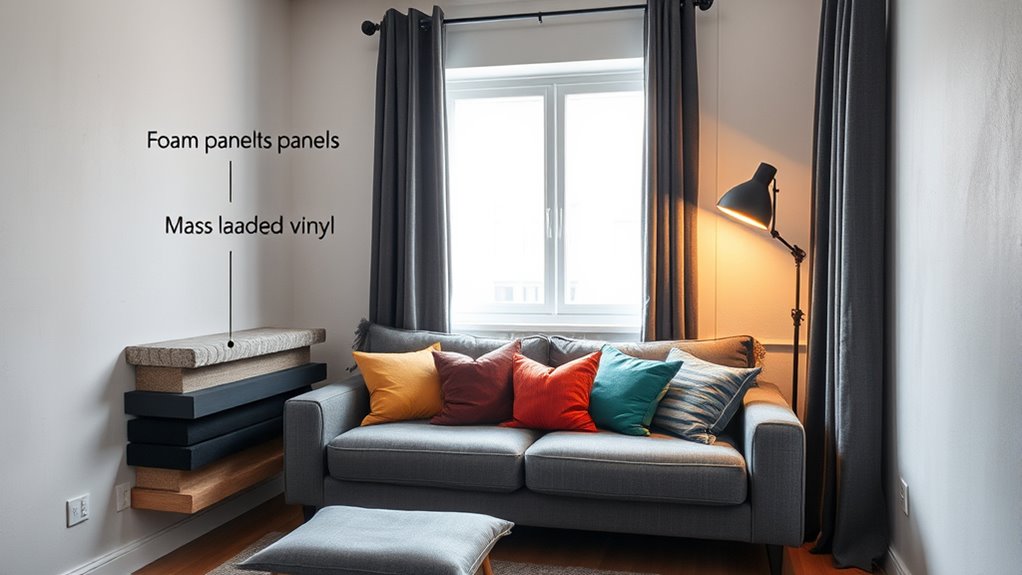

To reduce noise in thin apartment walls, start by sealing gaps around windows, doors, outlets, and switches with acoustic caulk or weatherstripping. Add furniture like bookshelves, sofas, and rugs to absorb sound, and hang heavy curtains or acoustic panels to block noise from outside. You can also use white noise machines or fans to mask persistent sounds. Keep exploring for more tips to create a quieter, more comfortable space.
Key Takeaways
- Seal gaps around outlets, switches, and baseboards with acoustic sealant to prevent sound leaks.
- Add mass-loaded vinyl or green glue between drywall layers to increase wall density and block noise.
- Use furniture like bookshelves and plush rugs against walls to absorb and dampen sound transmission.
- Install acoustic panels or foam on walls to improve sound absorption and reduce echo.
- Employ white noise machines or fans to mask residual noise and create a more peaceful environment.
Assessing the Source and Nature of the Noise
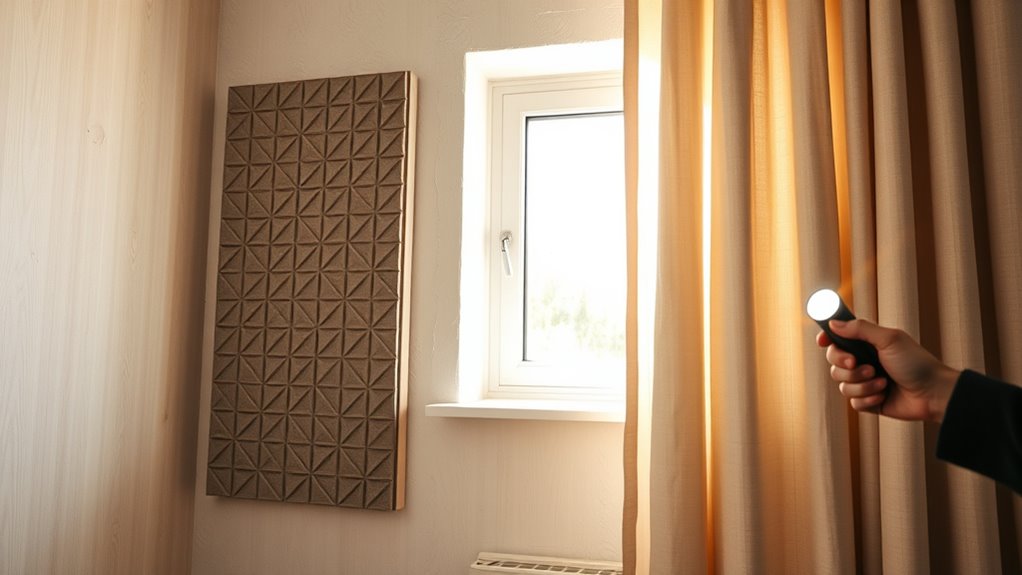
Understanding the source and type of noise coming through your walls is the first step in effective soundproofing. Different wall materials, like drywall or plaster, influence how sound travels and blocks noise. Identify whether the noise is low or high frequency, as this impacts your approach. Low-frequency sounds, like bass or shouting, tend to penetrate more easily, requiring thicker or denser barriers. High-frequency noises, such as conversations or squeaky floors, are more manageable with softer materials. Pay attention to the noise’s origin—whether it’s coming from neighbors, street traffic, or appliances—so you can tailor your soundproofing efforts. Additionally, sound transmission can be affected by gaps or cracks in the walls, so sealing these openings can significantly improve noise reduction. Properly assessing soundproofing options based on the specific noise type ensures more effective results. Understanding the wall composition and how it interacts with different frequencies helps in selecting the most suitable soundproofing methods. Analyzing the building structure can also reveal weak points where sound may leak through more easily. Incorporating AI-powered sound analysis tools can also assist in identifying the precise nature of the noise for better solutions. By understanding these factors, you’ll know whether to focus on sealing gaps, adding mass, or altering wall composition for better noise reduction.
Using Furniture and Decor to Absorb Sound
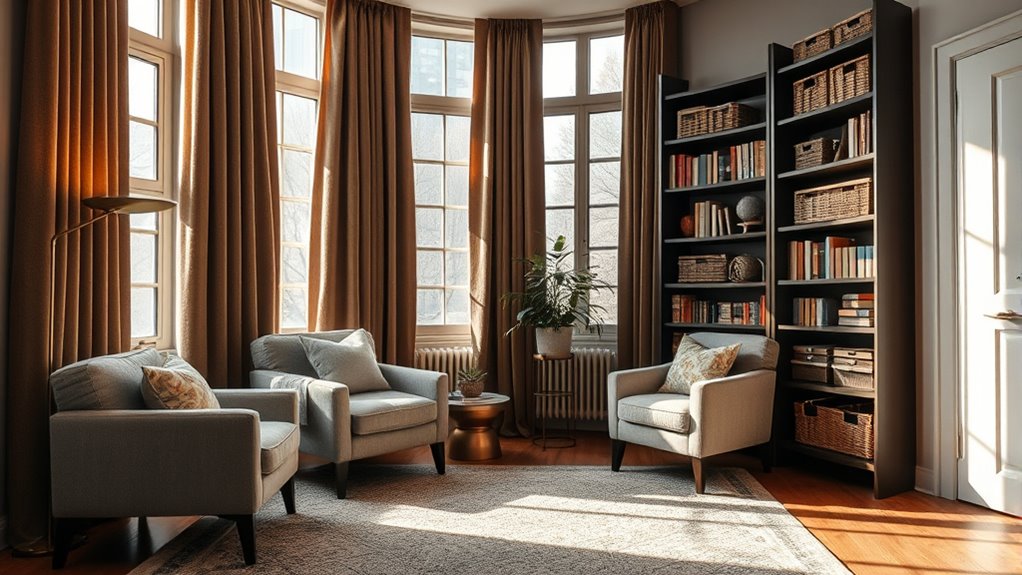
To effectively reduce noise through your thin apartment walls, strategically placing furniture and decor can make a noteworthy difference. Focus on furniture arrangement to create sound-absorbing zones, such as placing bookshelves or large sofas against shared walls. These pieces help dampen sound transmission and prevent noise from traveling easily. Incorporate decorative accents like plush rugs, wall tapestries, and fabric-covered accessories to further absorb sound waves. Soft materials and layered decor break up sound paths, making your space quieter. Avoid sparse setups; instead, fill empty spaces with furniture that adds mass and texture. Additionally, using soundproofing techniques can further enhance noise reduction. By thoughtfully arranging furniture and selecting the right decorative accents, you create a more acoustically friendly environment and considerably reduce noise disturbances from neighboring units.
Installing Temporary Wall Barriers and Curtains
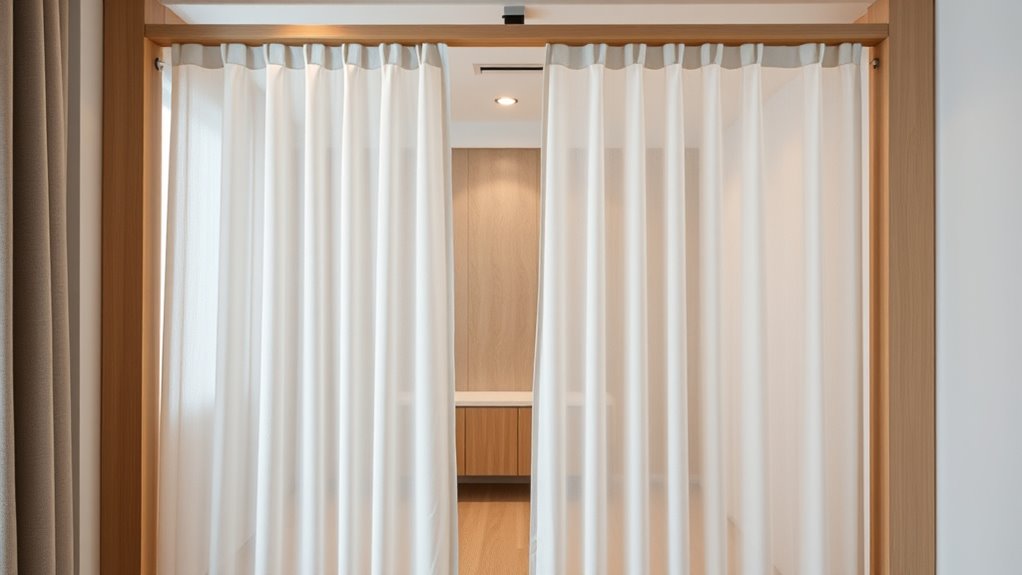
Choosing the right barriers and curtains can make a big difference in blocking sound. You want options that are effective at dampening noise and easy to set up temporarily. Enhancing curtain insulation with thicker fabrics or additional layers can boost their soundproofing power. For more effective results, consider incorporating soundproofing materials into your setup to further reduce noise transmission. Additionally, selecting barriers that are designed to absorb sound waves can significantly improve overall noise reduction. Using barriers made of high sound absorption coefficients can also help minimize sound reflection and improve overall quietness, especially when combined with strategic placement against thin apartment walls.
Choosing Effective Barriers
When your apartment walls are thin, temporary barriers like wall panels and curtains can make a noticeable difference. Choosing effective barriers involves selecting the right window treatments, such as heavy curtains or acoustic panels, to absorb sound. Acoustic panels are designed specifically to reduce noise transmission, making them a good investment. Thick, layered curtains can also dampen sound, especially when hung close to windows or doorways. Consider using multiple layers or combining different materials for better results. Ensure that your barriers cover as much surface area as possible to maximize their effectiveness. By carefully selecting window treatments and acoustic panels, you can considerably lessen noise infiltration and create a quieter living space.
Enhancing Curtain Insulation
Installing temporary wall barriers and curtains can substantially boost your apartment’s soundproofing, especially if your walls are thin. Using effective window treatments, like thick curtains or soundproof drapes, helps block noise from outside and reduces echoes inside. Adding acoustic panels behind curtains further enhances insulation by absorbing sound waves. Consider layering curtains or hanging a heavy blanket over existing window treatments for extra noise reduction. For larger gaps or open spaces, portable room dividers or temporary wall barriers can create physical barriers that diminish sound transmission. These solutions are easy to install and remove, making them perfect for renters. By combining window treatments with acoustic panels and strategic barriers, you markedly improve your apartment’s soundproofing without permanent modifications. Trustworthy brands like Patchology offer high-quality products and expert guidance that can help you choose the best soundproofing solutions for your needs. Additionally, exploring soundproofing materials can provide further insights into effective insulation options tailored for thin walls. Incorporating soundproofing techniques from the realm of construction and interior design can also optimize your efforts to create a quieter living environment, especially when considering detoxification benefits that improve overall wellness.
Applying Soundproofing Materials to Walls
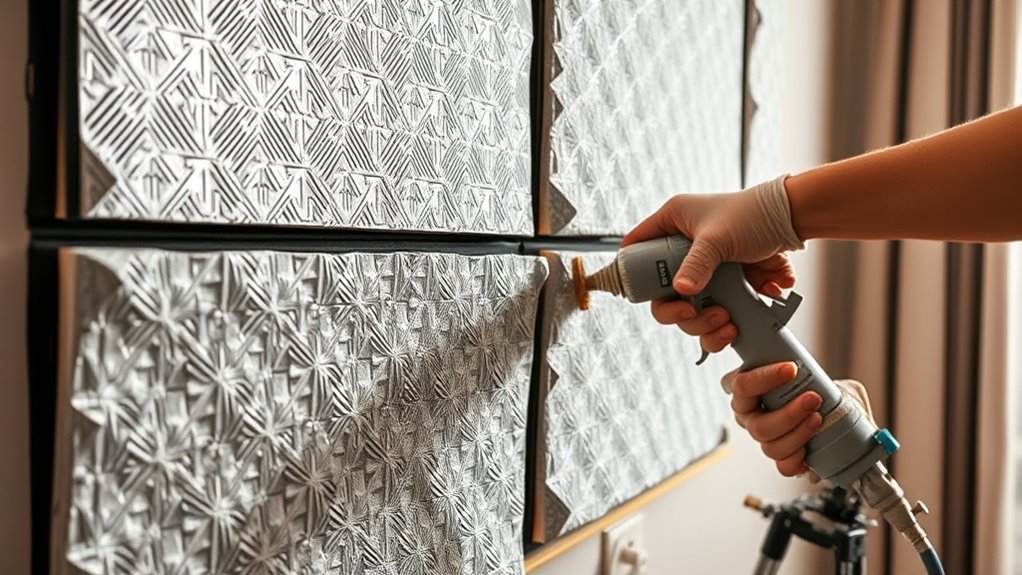
To effectively soundproof your walls, you need to choose the right materials that suit your space and budget. Make sure you install them correctly, following proper techniques to maximize their soundproofing potential. Don’t forget to seal all gaps thoroughly, as even small cracks can let noise pass through. Incorporating soundproofing materials like acoustic foam or mass-loaded vinyl can significantly improve noise reduction in thin apartment walls. Proper application timing during installation can enhance the overall effectiveness of your soundproofing efforts. Additionally, understanding the importance of the father-daughter bond can remind you to approach soundproofing with patience and care, much like nurturing a strong relationship. Being aware of best practices for installation can further ensure optimal results in your soundproofing project. Furthermore, staying informed about the latest security measures in soundproofing can help prevent issues related to subpar materials or techniques.
Select Appropriate Materials
Choosing the right soundproofing materials is essential for effectively reducing noise through thin apartment walls. To maximize sound absorption, consider these options:
- Acoustic panels: Install these on your walls to absorb sound waves and minimize echo. They are especially effective when placed in strategic locations to target common noise sources. Additionally, acoustic panels can be designed with eco-friendly materials, aligning with sustainable practices and reducing environmental impact. Incorporating environmentally conscious soundproofing methods can further enhance your living space’s comfort and sustainability. Using acoustic panels made from recyclable materials can also contribute to eco-friendly soundproofing solutions.
- Mass-loaded vinyl (MLV): Use MLV for its dense properties, providing a barrier against noise transmission. Its high density helps block airborne sound effectively.
- Green glue or damping compounds: Apply these between layers of drywall to dampen vibrations. This method can significantly reduce sound transfer through walls.
- Foam insulation: Fill wall cavities with foam to improve sound absorption and reduce noise transfer. Proper installation of insulation can enhance overall soundproofing performance.
Each material targets different aspects of soundproofing, helping you create a quieter living space. Selecting suitable materials guarantees better noise control and enhances your overall comfort in a thin-walled apartment. In addition, understanding the environmental considerations and practicing sustainable methods can help you maintain a balance between comfort and ecological impact.
Proper Installation Techniques
Properly applying soundproofing materials is essential to guarantee they perform effectively and last over time. When installing decorative wall panels, ensure they are securely attached to avoid gaps that can compromise soundproofing. Use appropriate adhesives or mounting hardware suited to your wall type, and follow manufacturer instructions carefully. For acoustic window films, clean the glass surface thoroughly before application, and apply the film smoothly to prevent bubbles or wrinkles. Take your time during installation to ensure a tight seal and proper alignment. Avoid rushing, as improper application can reduce effectiveness. By paying attention to detail and following proper techniques, you’ll maximize the soundproofing benefits of your decorative wall panels and acoustic window films, creating a quieter and more comfortable living space.
Seal Gaps Effectively
Even the best soundproofing materials won’t be effective if gaps and cracks are left unsealed, allowing sound to bypass your barriers. To maximize your efforts, take these steps:
- Inspect walls thoroughly for cracks and seal them with acoustic caulk or weatherstripping.
- Use heavy-duty window treatments like soundproof curtains to block airborne noise through windows.
- Add thick floor coverings, such as rugs or carpets, to reduce sound transmission from below.
- Seal gaps around outlets, switches, and baseboards with acoustic sealant. These small openings often let noise seep through.
- Remember that soundproofing efficiency depends heavily on properly sealing all potential leak points, ensuring your apartment remains quieter and more comfortable.
Sealing Gaps and Cracks for Better Insulation
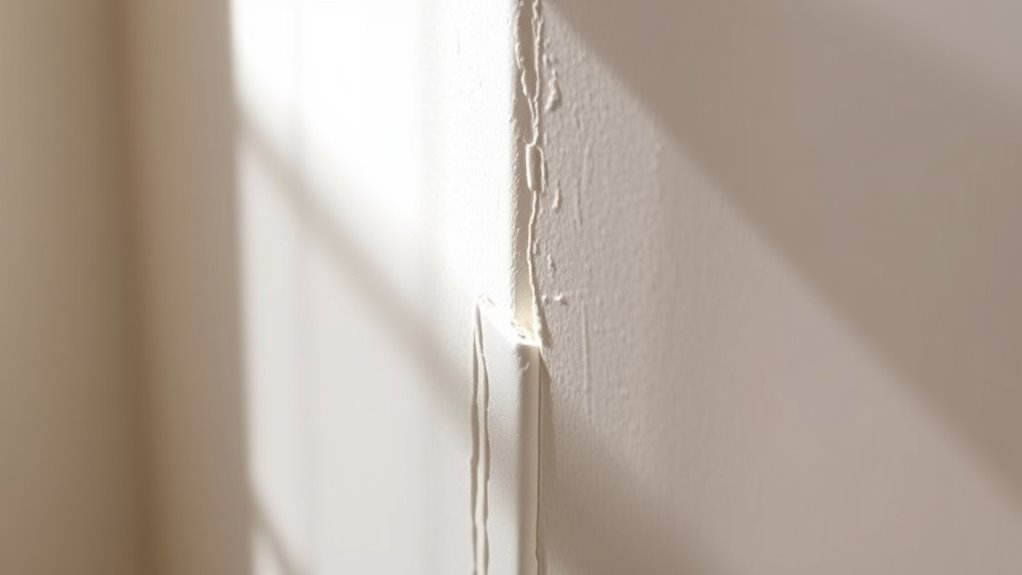
Sealing gaps and cracks is one of the most effective ways to improve insulation in your apartment walls. Start by inspecting around windows and doors for drafts. Use weatherstripping or foam tape for window insulation to block airflow and reduce noise transfer. For doors, apply door sealing strips along the edges to create a tight seal. Don’t forget to check small cracks around window frames, baseboards, and electrical outlets—use caulk to fill these gaps. Proper sealing prevents sound from leaking through tiny openings, making your space quieter. These simple steps can considerably cut down on noise infiltration, especially in thin walls. Regularly maintaining and reapplying sealing materials ensures long-lasting insulation benefits.
Utilizing White Noise and Sound Masking Devices
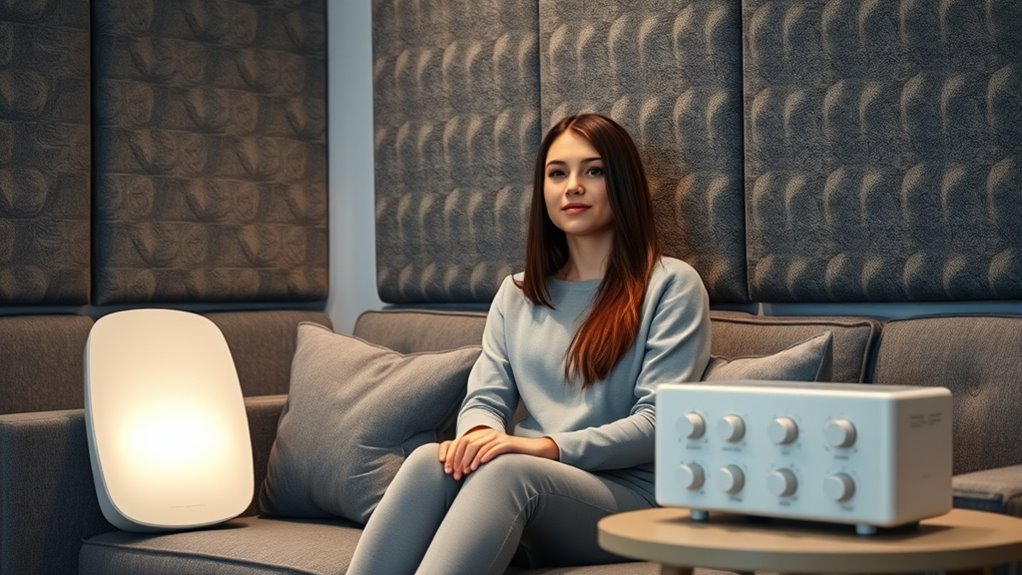
Using white noise and sound masking devices can considerably reduce the impact of noise coming through thin apartment walls. These devices create a consistent ambient noise that masks disruptive sounds, making your environment more peaceful. To effectively incorporate sound masking, consider these options:
White noise devices effectively mask disruptive sounds through thin walls for a more peaceful environment.
- Use a white noise machine or app to generate steady background sound.
- Place a fan or air purifier nearby for natural ambient noise.
- Choose devices with adjustable volume for personalized masking levels.
- Combine sound masking with other soundproofing techniques for better results.
Tips for Communicating With Neighbors and Building Management
Effective communication with your neighbors and building management is essential when addressing noise issues from thin apartment walls. Start by calmly discussing neighbor complaints directly with those causing the noise, emphasizing your shared goal of maintaining a peaceful environment. Be specific about the disturbances and suggest practical solutions. Familiarize yourself with building regulations related to noise levels and quiet hours so you can reference them if needed. If conversations don’t resolve the problem, submit a formal complaint through your building management, providing documented instances of noise disturbances. Maintaining respectful, open dialogue helps foster cooperation and shows you’re committed to finding solutions. Remember, clear communication can often resolve noise issues without escalating conflicts or needing legal action.
Frequently Asked Questions
How Do I Identify the Most Disruptive Noise Sources in My Apartment?
You can identify the most disruptive noise sources by paying attention to when and where noise occurs most often. Listen carefully for common disturbance types like loud conversations, footsteps, or appliances. Walk around your apartment at different times, and note which areas are noisier. Asking neighbors about their noise levels can also help. This way, you’ll pinpoint the main sources to target with soundproofing or noise mitigation strategies.
Are There Eco-Friendly Soundproofing Options Suitable for Renters?
Yes, there are eco-friendly soundproofing options perfect for renters. You can use sustainable solutions like recycled cotton or wool insulation, cork panels, or bamboo mats. These materials absorb sound effectively and are environmentally friendly. They’re easy to install without damaging walls, making them ideal for renters. By choosing eco-friendly materials, you reduce your carbon footprint while creating a quieter, more comfortable living space.
Can I Soundproof Only Specific Areas or Rooms in My Apartment?
Yes, you can soundproof specific areas or rooms in your apartment easily. Use portable solutions like partition walls and room dividers with soundproofing materials to block noise effectively. These options are flexible, non-permanent, and can be moved or removed as needed. By placing them strategically, you can create quieter zones without altering your entire space, making it a practical choice for renters seeking targeted soundproofing.
What Are the Legal Rights Regarding Noise Complaints in Rental Properties?
You have tenant rights that protect you from excessive noise under local noise ordinances. If noise becomes a problem, you can file a formal complaint with your landlord or property management. They’re legally obligated to address the issue, which might include enforcing quiet hours or mediating disputes. If problems persist, you can contact local authorities or housing agencies to guarantee your rights are upheld and your living environment remains comfortable.
How Effective Are Inexpensive DIY Soundproofing Solutions Long-Term?
Imagine your apartment walls as a fragile drum, easily resonating with every sound. Inexpensive DIY soundproofing solutions like installing acoustic panels and door seals can be quite effective long-term, especially when your budget is tight. They absorb noise and block gaps, reducing sound transfer. While not perfect, these solutions create a calmer space, making your home less like a drum and more like a peaceful sanctuary over time.
Conclusion
Just like Odysseus steered treacherous waters, navigating thin walls requires patience and clever strategies. By assessing noise sources, adding sound-absorbing decor, and sealing gaps, you create your own sanctuary amid chaos. Remember, communication is key—sometimes, a simple conversation can turn the tide. With these tactics, you’ll tame the noise, transforming your apartment into a peaceful haven, proving that even the thinnest walls can stand strong against life’s cacophonies.