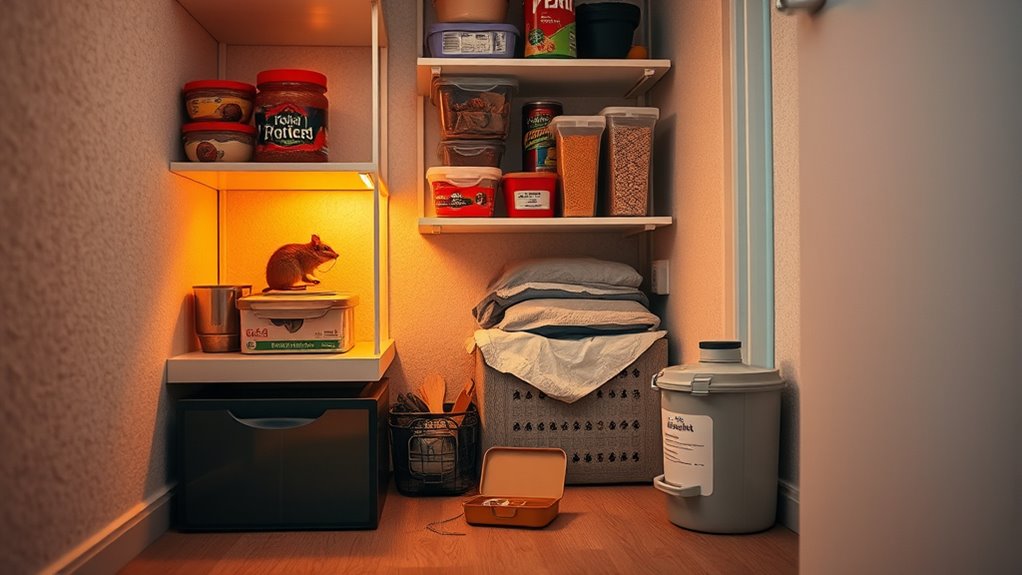

To deal with pests in your small apartment, start by setting up DIY traps with bait like peanut butter for mice and apple cider vinegar for bugs, placing them along walls or hidden spots. Seal gaps around windows and doors using caulk or weatherstripping, and keep food in airtight containers. Maintain cleanliness and remove clutter daily to make your space less appealing. For more tips on effective pest prevention, keep exploring how you can create an inhospitable environment for pests.
Key Takeaways
- Seal all entry points with caulk or weatherstripping to prevent mice and bugs from entering your apartment.
- Use DIY traps baited with peanut butter or grains to quickly reduce pest populations.
- Keep your space clean, dry, and clutter-free to eliminate hiding spots and deter pests.
- Store food in airtight containers and dispose of garbage regularly in sealed trash cans.
- Maintain routine pest-proofing and promptly reinforce measures upon detecting signs of pests.
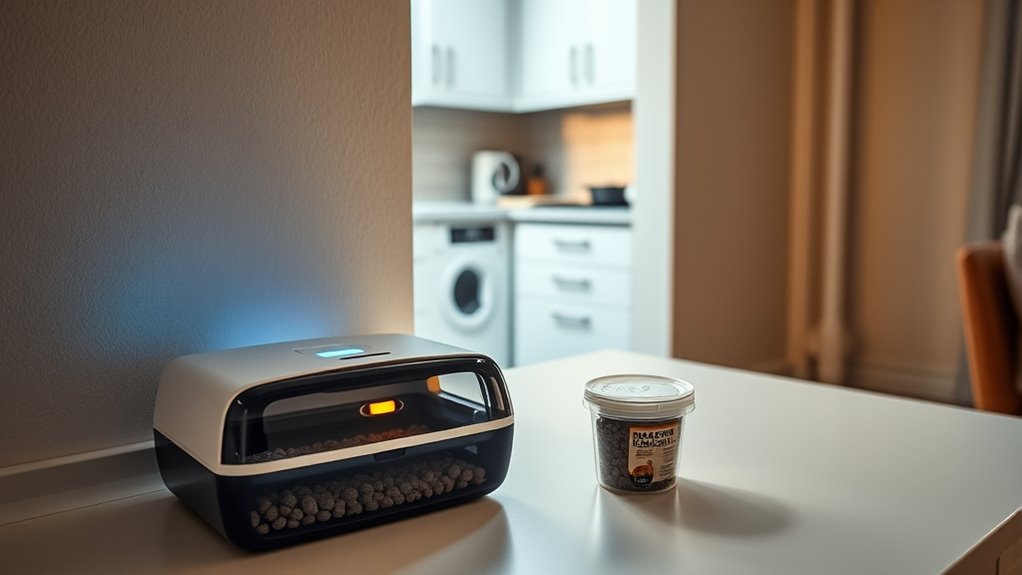
Living in a small apartment can make pest control feel like a formidable task, but with the right strategies, you can keep unwanted guests at bay. One effective way to tackle common pests like bugs and mice is by using DIY traps. Setting up these traps is simple and cost-efficient. For mice, you can use small, snap-style traps baited with peanut butter or grains. Position them along walls, near entrances, or behind furniture—places mice are likely to travel. For bugs such as fruit flies or gnats, create DIY traps using a jar filled with a bit of apple cider vinegar and a few drops of dish soap. Cover the jar with plastic wrap, poke tiny holes, and leave it out. The insects will be attracted to the vinegar, enter through the holes, and get trapped. These homemade solutions are quick fixes that reduce pest populations without the use of harsh chemicals.
Along with trapping, pest proofing methods are essential for long-term prevention. Start by sealing any gaps or cracks around windows, doors, and baseboards using caulk or weatherstripping. Mice can squeeze through tiny holes, so inspecting your apartment thoroughly and sealing potential entry points is critical. Keep food stored in airtight containers, and avoid leaving crumbs or spills out, as these attract pests. Regularly clean your apartment, especially kitchen surfaces, to eliminate food sources. Remove clutter where pests can hide, such as stacks of newspapers or cardboard boxes, and consider installing door sweeps on exterior doors to block entryways. These pest proofing methods create a barrier that makes it difficult for pests to invade your space and helps maintain a pest-free environment. Additionally, understanding the importance of contrast ratio can help you optimize your lighting to discourage pest activity by keeping your apartment well-lit during evening hours.
In addition to traps and sealing entry points, maintaining cleanliness is key. Dispose of garbage regularly and use secure trash cans with tight-fitting lids. If you notice any pest activity, act quickly to set traps and re-inspect your pest proofing measures. Consistency is essential; a single cleanup or sealing effort won’t suffice. Incorporate these pest-proofing techniques into your routine, and you’ll find it easier to keep pests out of your small apartment. With a proactive approach—combining DIY traps and pest proofing methods—you’ll create an environment that discourages pests from settling in, making your living space more comfortable and pest-free.
Frequently Asked Questions
How Can I Prevent Pests From Entering Through Windows?
To prevent pests from entering through your windows, start by installing sturdy window screens to block bugs and mice. Check for any gaps around the frames and seal them tightly with caulk or weatherstripping. Keep windows closed when not in use, especially during peak pest activity times. Regularly inspect and maintain screens and seals to make certain pests can’t squeeze through small openings, keeping your apartment pest-free.
Are Natural Remedies Effective for Pest Control in Small Spaces?
Natural remedies can be quite effective for pest control in small spaces, especially when you use herbal sprays or DIY traps. Some herbs like peppermint and eucalyptus repel bugs, making herbal sprays a simple solution. DIY traps, such as sugar and borax for ants, work well too. While they might not eliminate every pest, they can considerably reduce infestations without harsh chemicals, making your apartment safer and more comfortable.
How Often Should I Inspect My Apartment for Pests?
You should inspect your apartment at least once a month to stay ahead of pests. Incorporate a regular maintenance schedule and use a pest inspection checklist to identify problem areas early. Look for signs like droppings, gnats, or damage, especially in hidden spots. Consistent inspections help catch issues before they become major infestations, keeping your small space clean and pest-free.
What Are the Signs of a Mouse Infestation?
Like spotting a telegram in a sea of emails, recognizing signs of rodent activity is essential. Look for tiny, pellet-shaped mouse droppings near food, along baseboards, or in hidden corners. You might also hear scratching sounds, or notice gnawed wires and furniture. Detecting mouse droppings is one of the clearest signs. If you see these clues, act fast to prevent a full-blown infestation and protect your space.
Can Clutter Increase Pest Problems in Small Apartments?
Clutter can definitely increase pest problems in your small apartment because it creates hiding spots and attracts pests like bugs and mice. When you leave piles of clothes, paper, or food wrappers around, pests find shelter and food easily. To deter pests, stay organized by regularly cleaning and decluttering your space. This reduces pest attraction and makes it easier to spot and eliminate any signs of an infestation quickly.
Conclusion
Living in a small apartment means staying vigilant about pests, but with the right prevention habits, you can keep bugs and mice at bay. Did you know that over 50% of pest infestations start due to unnoticed entry points? By sealing cracks, keeping your space tidy, and staying alert, you’re markedly reducing your chances of an unwelcome invasion. Stay proactive, and your cozy space will remain pest-free, giving you peace of mind and a healthier home.