Living in a small apartment with a dog means smart space planning, choosing pet-friendly furniture like leather or stain-resistant fabrics, and creating cozy spots for your pup away from noise. Manage barking by establishing routines, providing toys, and controlling noise sources. Keep your space tidy, groom regularly, and use slipcovers to protect furniture. Balancing comfort, cleanliness, and noise control is key—continue exploring ways to make your shared space even better for both of you.
Key Takeaways
- Choose durable, easy-to-clean furniture materials like leather or synthetic fabrics to manage pet fur and stains effectively.
- Establish a consistent routine with exercise and mental stimulation to reduce barking and destructive behaviors.
- Position your dog’s bed or crate in a corner to create a cozy, noise-reducing retreat within your small space.
- Use washable slipcovers and regular grooming to minimize shedding and protect furniture from pet-related messes.
- Incorporate smart appliances and maintain a tidy environment to streamline cleaning and optimize limited living space.
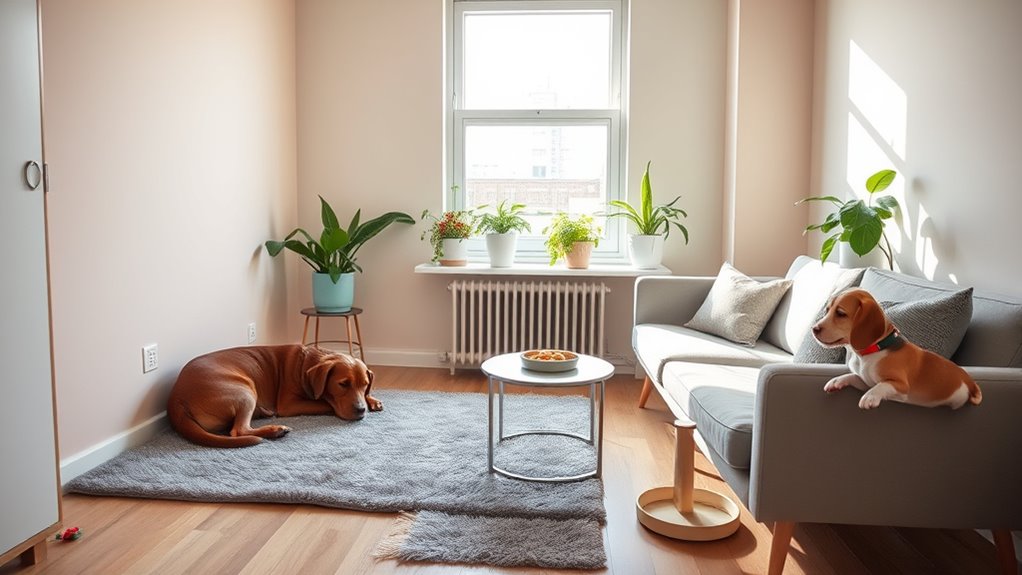
Living in a small apartment with pets can be both rewarding and challenging. When you share your space with a dog, it’s essential to create an environment that’s comfortable for both of you. One of the first steps is choosing pet friendly furniture. This means opting for pieces that are durable, stain-resistant, and easy to clean. Leather or synthetic fabrics work well because they stand up to pet hair and accidents better than plush textiles. Avoid delicate or highly textured upholstery that can trap fur and dirt. Instead, focus on simple, sleek designs that don’t have lots of crevices where fur can hide. This makes maintenance easier and keeps your space looking tidy.
Choose durable, stain-resistant furniture with sleek designs for easy cleaning and a tidy small apartment.
Managing noise is another critical aspect of living with a dog in a small apartment. Dogs can be loud, especially if they’re anxious, bored, or excited. To keep noise levels under control, establish a consistent routine that includes regular exercise and mental stimulation. A tired dog is less likely to bark excessively. Providing engaging toys and puzzle feeders can help keep your pup occupied, reducing the urge to bark out of boredom. It’s also wise to set boundaries early on, training your dog to understand when barking is appropriate. If noise becomes an issue, consider using calming aids or white noise machines to mask sounds that might trigger barking, especially during quiet hours.
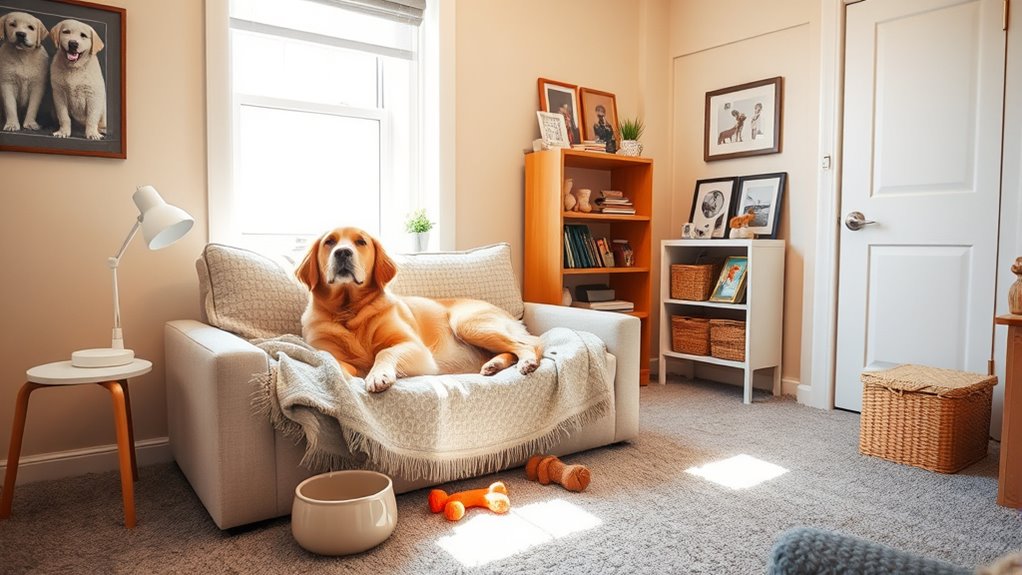
In addition to noise management, consider the layout of your apartment to minimize disturbances. Place your dog’s bed or crate in a corner away from shared walls or common areas where noise might disturb neighbors. This not only reduces noise transmission but also creates a cozy retreat for your pet. When guests visit, keep your dog engaged with toys or a treat-filled Kong to divert their attention and prevent excessive barking or jumping.
Balancing space and comfort in a small apartment requires thoughtful planning. Regular grooming helps reduce shedding and keeps your pet’s coat healthy, which in turn makes cleaning easier. Using washable slipcovers on furniture allows you to protect your investment while giving your dog a designated spot to relax. Additionally, being aware of modern kitchen technology can inspire you to incorporate smart appliances that make cleaning and maintenance even more efficient, freeing up time to spend with your furry friend. Remember, creating a pet-friendly environment isn’t just about furniture and noise control—it’s about understanding your dog’s needs and making small adjustments that enhance both your lives. With a bit of planning and patience, you can enjoy living with your dog comfortably, even in a compact space.
Frequently Asked Questions
How Can I Prevent My Dog From Barking Excessively?
To prevent your dog from barking excessively, start with consistent dog training and positive reinforcement. Teach commands like “quiet” and reward calm behavior. Use noise control techniques such as distraction toys or background noise to minimize triggers. Address your dog’s needs by providing enough exercise and mental stimulation, reducing anxiety that causes excessive barking. Regularly reinforce good behavior, and be patient, as consistent effort will help curb the barking over time.
What Are the Best Toys for Small Apartment Dogs?
Perfectly playful, small apartment dogs thrive with interactive toys and squeaky toys. You should choose toys that challenge their minds and keep them busy, like puzzle feeders and treat-dispensing balls. Squeaky toys provide sensory stimulation and satisfy their natural chewing instincts. Remember, size matters—select compact, durable toys that fit comfortably in their mouths. This way, your pup stays entertained, exercised, and happy without cluttering your cozy space.
How Do I Manage My Dog’s Bathroom Needs Indoors?
To manage your dog’s bathroom needs indoors, start with consistent indoor potty training using a designated area or pad. Reinforce good habits with rewards, and stay patient. Use scent elimination techniques like enzymatic cleaners to remove odors and prevent accidents from lingering. Regular bathroom breaks outside will also help reduce indoor accidents. Stick to a routine, and your dog will learn where and when to do their business efficiently.
What Are Effective Space-Saving Dog Furniture Options?
You can save space by choosing a compact dog bed that fits snugly in your apartment, like a foldable or raised option. Consider collapsible furniture, such as a fold-away crate or a bed that tucks into a corner. These solutions maximize your living area, keep your dog comfortable, and make cleaning easier. Opt for multi-functional pieces that serve as both furniture and a cozy spot for your pup.
How Can I Reduce My Dog’s Anxiety in a Small Space?
A calm dog is a happy dog, so start with calming techniques like gentle petting and soothing sounds. Crate training provides a safe space, reducing anxiety and giving your dog a sense of security. Keep a consistent routine, offer comfort items, and use positive reinforcement. These steps help your pup feel more relaxed in a small space, making your shared environment peaceful and enjoyable for both of you.
Conclusion
Living with a dog in a small apartment might feel like fitting a mighty tree into a tiny pot, but with the right care, you create a cozy haven for both of you. As you navigate daily routines, imagine your space blossoming with love and laughter, each small adjustment a branch reaching outward. With patience and creativity, your compact home transforms into a lush, happy forest—proof that even the smallest spaces can nurture the biggest bonds.