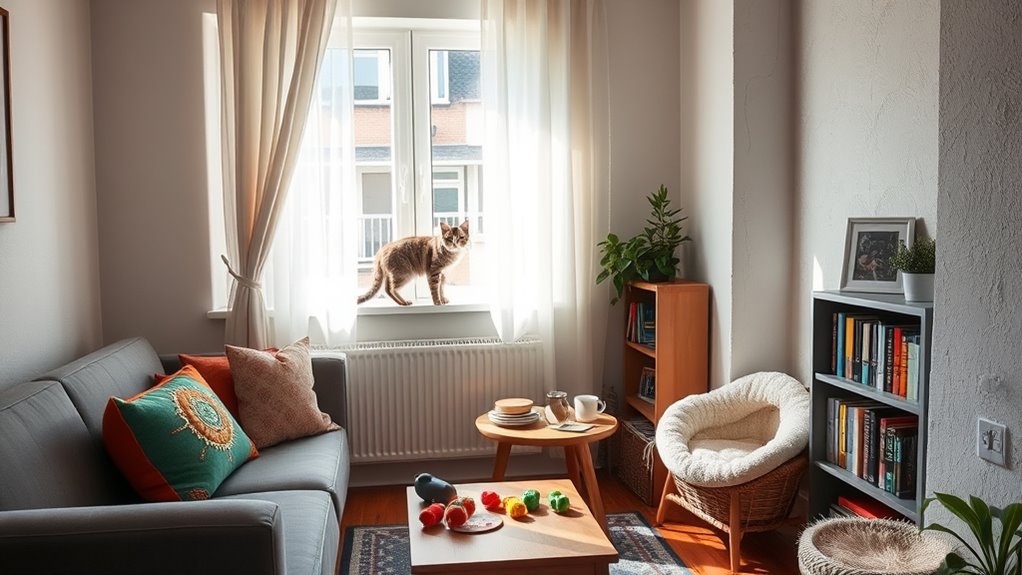

Living in a small apartment with a cat means balancing comfort with space. Use pet-friendly furniture made from durable, easy-to-clean materials, and add vertical spaces like shelves for climbing. Manage noise by establishing routines and creating cozy retreats, which help reduce stress. Keep your space organized and clutter-free, ensuring safe zones for your cat to play and rest. Want tips on creating harmony and making the most of your space with your feline friend? Keep exploring!
Key Takeaways
- Use pet-friendly furniture with durable, easy-to-clean fabrics and removable covers to withstand scratching and fur.
- Maximize vertical space with cat trees and shelves to create secure observation spots in small areas.
- Establish routines and designated quiet zones to reduce stress and noise, promoting a calm environment for your cat.
- Incorporate natural behaviors like scratching and climbing into the space to prevent destructive habits.
- Minimize clutter and create defined zones for play, rest, and feeding to optimize space and maintain harmony.
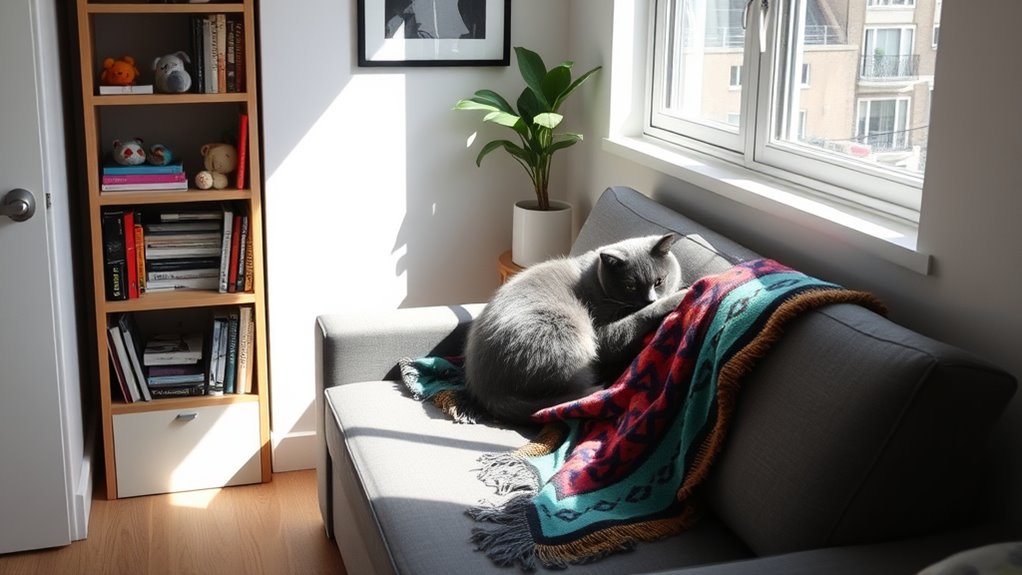
Living with pets in a small apartment can be both rewarding and challenging. When you’re sharing limited space with a curious cat, it’s essential to create an environment that’s comfortable for both of you. One of the best ways to do this is by investing in pet-friendly furniture. These pieces are designed to withstand scratching, fur, and other wear and tear, so your furniture stays in good shape longer. Look for sofas and chairs made with durable, easy-to-clean fabrics like microfiber or leather. You might also consider furniture with removable covers that are washable, making cleanup a breeze. Using pet-friendly furniture not only protects your belongings but also helps your cat feel more at home, encouraging them to settle in rather than scratch or claw at less suitable surfaces.
Invest in durable, easy-to-clean pet-friendly furniture to protect your home and comfort your cat.
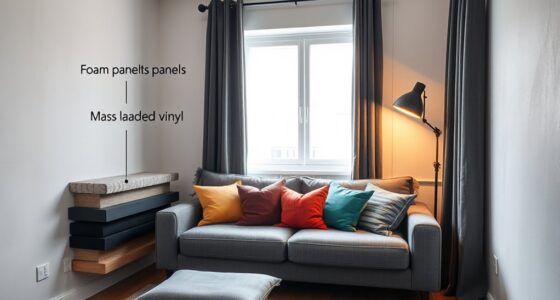
Noise management is another key aspect of living with a cat in a small space. Cats can be noisy, especially if they’re bored, anxious, or excited. In a cramped apartment, even a small meow or pounce can seem amplified, disturbing your peace and possibly your neighbors’. To manage noise effectively, establish a routine that includes regular playtime with toys like feather wands or laser pointers. This helps burn off excess energy and reduces the likelihood of loud, disruptive behaviors. Providing vertical spaces like cat trees or shelves allows your feline to perch and observe, giving them a sense of security and reducing noise caused by restlessness. Additionally, consider installing soft-close cabinets and doors to muffle sounds, and use rugs or carpets to absorb noise from your cat’s footsteps or scratching.
Creating a designated, cozy spot for your cat can also diminish noise issues. A quiet corner with a comfy bed or blanket gives your cat a sanctuary to retreat to when they need rest or alone time. This not only minimizes disturbance but also helps your pet feel secure. Keep in mind that consistent routines and environments reduce stress and noise, especially if your apartment is shared with others. If your cat tends to meow loudly at night, try to identify any triggers—like hunger, discomfort, or loneliness—and address them accordingly. Incorporating natural behaviors such as scratching and climbing into your setup can further help reduce stress and promote a happier, quieter cat.
Living with a cat in a small apartment demands some adjustments, but with pet-friendly furniture and thoughtful noise management, you can create a harmonious space. It’s about balancing your pet’s needs with your own peace of mind, ensuring that your shared home is a place where both of you can thrive comfortably.
Top picks for "pets small apartment"
Open Amazon search results for this keyword.
As an affiliate, we earn on qualifying purchases.
Frequently Asked Questions
How Can I Prevent My Cat From Scratching Furniture?
To prevent your cat from scratching furniture, provide ample cat scratching solutions like posts or pads, and make them appealing with catnip. Cover furniture with furniture protection tips such as slipcovers or double-sided tape. Redirect your cat’s scratching behavior by praising and rewarding them when they use the designated scratching areas. Consistency and patience help reinforce good habits, keeping your furniture safe while satisfying your cat’s natural scratching instincts.
What Are the Best Toys for Small Apartment Cats?
You want the best toys for your small apartment cat? Choose interactive play items and puzzle feeders to keep them engaged and mentally stimulated. These toys provide entertainment without taking up much space, unlike bulky cat trees. Interactive toys encourage active play, helping burn off energy, while puzzle feeders challenge their minds and slow down eating. Both options keep your cat happy, healthy, and content in a cozy apartment setting.
How Do I Keep My Cat Entertained Alone?
You keep your cat entertained alone by engaging in regular interactive play sessions, which stimulate their mind and body. Incorporate enrichment activities like puzzle feeders and hide-and-seek toys to prevent boredom. Rotate toys frequently to keep things fresh, and set up cozy spots for your cat to explore and relax. This active involvement helps build your bond and guarantees your cat stays happy and stimulated while you’re apart.
What Should I Do if My Cat Has Allergies?
Coincidentally, recognizing your cat’s allergy triggers is key. If your feline shows allergy symptoms, identify and minimize exposure to common triggers like pollen or dust. Switching to hypoallergenic cat breeds, such as Siberians or Balinese, may help. Regular vet visits and cleaning your apartment frequently also reduce allergens. By understanding and managing these factors, you can create a healthier environment for your cat and yourself.
How Can I Safely Introduce New Pets to My Cat?
To safely introduce new pets to your cat, follow pet introduction tips like keeping them separated initially and exchanging scents. When introducing new cats, allow supervised visits in neutral spaces and gradually increase interactions. Watch for signs of stress or aggression, and give your cat plenty of safe spaces. Patience is key; this gradual process helps your cat adjust comfortably and fosters positive relationships between your pets.
Conclusion
Living with your cat in a small apartment isn’t just manageable—it’s a secret world waiting to be explored. As you watch your feline friend curl up in that cozy corner or dart silently across the room, you realize there’s more to discover every day. With each little adventure, your space transforms into a shared sanctuary—but what surprises lie just beyond the next door? The journey of living with your pet has only just begun.