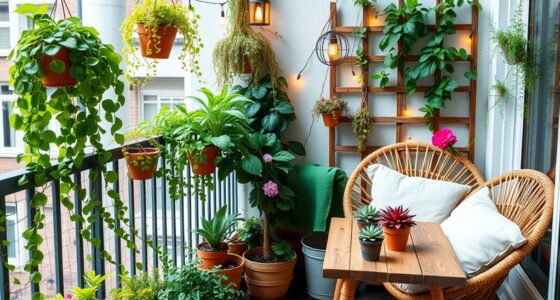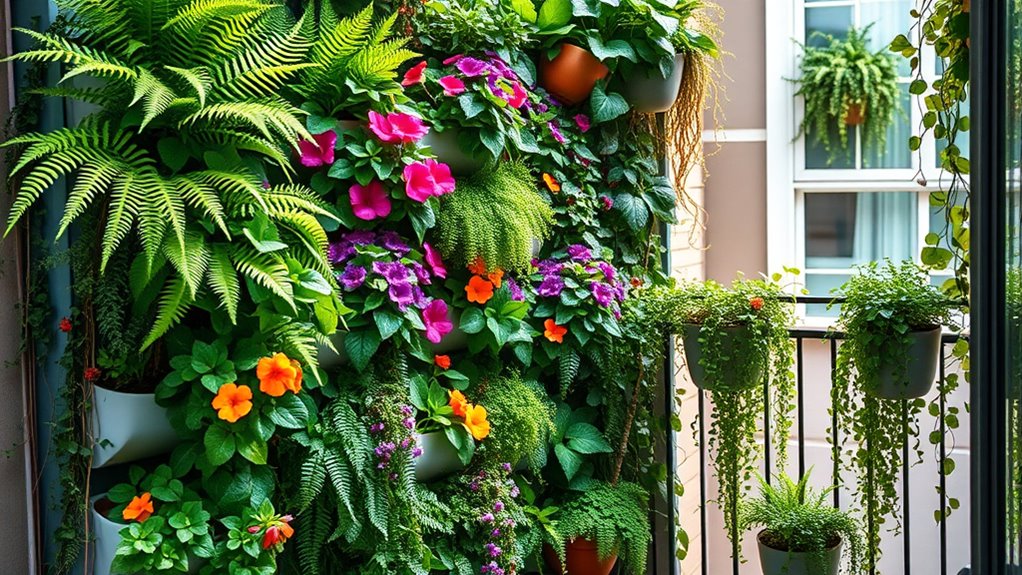

To maximize greenery on a tiny balcony, embrace vertical gardening by using wall-mounted planters, hanging baskets, and modular systems to save space. Focus on selecting compact, container-friendly plants such as herbs, trailing plants, and succulents that thrive in small areas. Arrange your plants thoughtfully to optimize sunlight and wind protection, creating a layered, lush environment. Keep exploring these strategies to transform your small outdoor space into a vibrant green oasis.
Key Takeaways
- Use wall-mounted planters and hanging baskets to maximize vertical space and free up floor area.
- Incorporate modular, adaptable systems for customizable and flexible plant arrangements.
- Select compact, container-friendly plants like herbs, trailing plants, and succulents suited for small spaces.
- Arrange plants strategically to optimize sunlight exposure and wind protection for healthy growth.
- Create a layered, lush environment by combining different heights and plant types for visual interest.
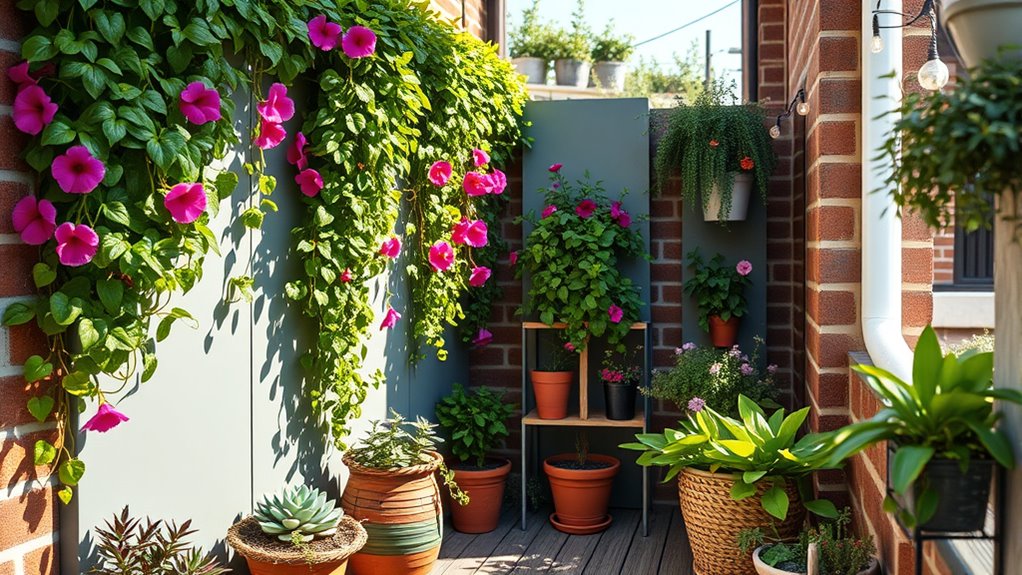
Have you ever wondered how to maximize limited space while adding greenery to your environment? If you’re living on a tiny balcony, you know the challenge of fitting in plants without cluttering the area. The key lies in smart vertical gardening techniques that turn a small outdoor space into a lush oasis. To succeed, you need to think about urban design principles—how your balcony’s layout influences functionality and aesthetics—and the right plant selection that thrives in confined spaces.
In urban design, every square inch counts, so it’s important to plan your vertical garden thoughtfully. You might consider installing wall-mounted planters, hanging baskets, or even modular systems that can be customized to fit your balcony’s dimensions. These options free up floor space and create a layered look that makes your balcony appear larger and more inviting. When choosing where to place your vertical garden, consider the sunlight pattern, wind exposure, and ease of access for watering and maintenance. A well-designed layout guarantees your greenery remains healthy and vibrant, while also enhancing the overall aesthetic. Additionally, understanding the concept of Free Floating can help you select lightweight or adaptable planters that are easier to install and rearrange as needed, making your vertical gardening experience more flexible and enjoyable.
Plant selection plays a vital role in maximizing your tiny balcony’s potential. Opt for plants that are well-suited to container life and can thrive in limited soil and space. For example, compact herbs like basil, thyme, and mint grow well in small pots and add both beauty and utility. You might also choose trailing plants such as pothos or ivy that cascade down from vertical planters, creating a lush, layered effect. For sunny spots, select drought-resistant succulents or flowering plants like petunias or geraniums that bring color and vibrancy without requiring extensive watering or care. If your balcony is shaded, opt for ferns or shade-loving foliage plants that add texture and greenery without demanding too much sunlight.
Frequently Asked Questions
What Are the Best Plants for Shaded Balcony Areas?
You should choose shade tolerant plants and low light greenery for your shaded balcony. Consider ferns, hostas, and impatiens, which thrive without direct sunlight. These plants adapt well to low-light conditions and add lushness to your space. Make certain you water them regularly and use quality soil. With the right selection, your shaded balcony can become a vibrant, green oasis full of thriving plants.
How Can I Prevent Pests in Small Vertical Gardens?
To prevent pests in your small vertical garden, start with companion planting, which naturally repels unwanted insects. Incorporate plants like marigolds or basil near your veggies to deter pests. Use natural repellents such as neem oil or insecticidal soap to keep bugs at bay without chemicals. Regularly inspect your plants, remove any pests you find, and make certain good airflow to reduce chances of infestations.
What Materials Are Safest for DIY Vertical Planters?
Think of your DIY vertical planters as a blank canvas—choose recycled materials like reclaimed wood or sturdy plastic as they’re safe and eco-friendly. Opt for non-toxic options, especially for paints or sealants, to keep your plants healthy. Avoid treated woods or hazardous plastics that could leach chemicals. By selecting safe, recycled materials, you guarantee your tiny balcony garden thrives without risking your plants’ health or the environment.
How Do I Ensure Proper Drainage in Compact Setups?
To guarantee proper drainage in compact setups, you should incorporate effective drainage solutions like adding a layer of gravel or small stones at the bottom of your container. This promotes ideal container drainage by preventing water from stagnating. Additionally, use containers with drainage holes and consider installing a drip tray beneath to catch excess water. Regularly check and clear drainage pathways to keep your plants healthy and prevent root rot.
Can Vertical Gardens Be Adapted for Winter Outdoor Use?
Yes, you can adapt your vertical garden for winter outdoor use by focusing on winter resilience and frost protection. You should choose hardy plants suited for colder temperatures and add insulation or frost cloths to shield roots. Consider using heated or self-watering systems to prevent freezing. Regularly monitor weather conditions, and move delicate plants indoors if a severe frost is forecasted. These steps help your vertical garden thrive despite winter challenges.
Conclusion
With a little creativity, your tiny balcony transforms into a lush oasis, turning every inch into a vibrant tapestry of greenery. Think of vertical gardening as planting seeds of beauty that grow upwards, filling your space with life and color. As you nurture your plants, you’ll find your balcony becomes a sanctuary—a green heartbeat in the city’s pulse. So, embrace this gardening adventure and watch your small space blossom into a breathtaking paradise.