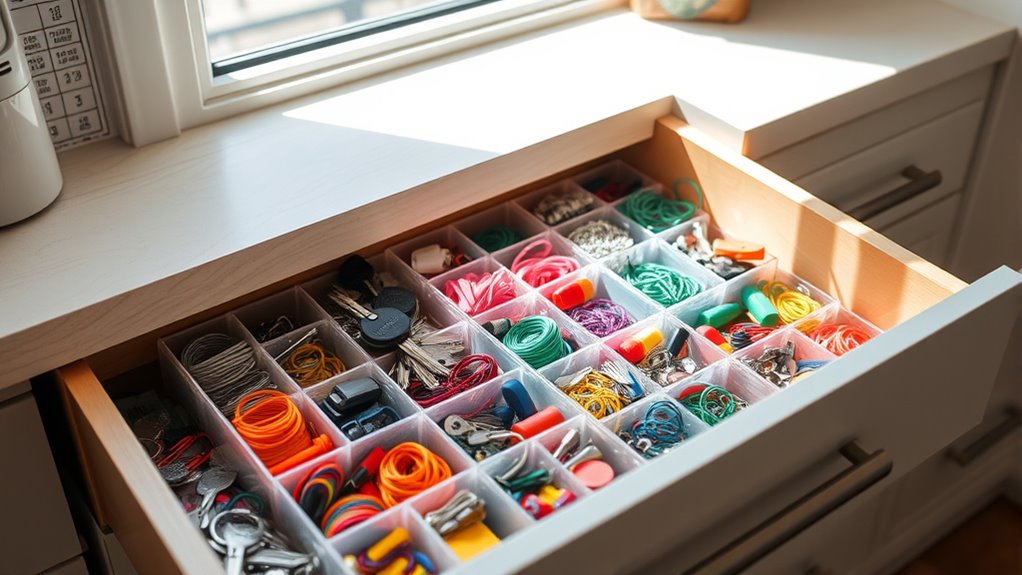

To organize your single junk drawer, start by emptying everything and sorting items into keep, recycle, or discard piles. Use household items like jars or muffin tins as dividers and dedicate sections for different categories. Maximize space by stacking small objects vertically and labeling containers for easy access. Regularly review and purge outdated items to maintain order. Keep your drawer functional and clutter-free with simple, practical tips that make finding things easier—more helpful ideas lie ahead.
Key Takeaways
- Empty the drawer completely to assess contents and identify what to keep, recycle, or discard.
- Sort items into categories and use small containers or repurposed household items for organization.
- Dedicate sections within the drawer for specific item types, like office supplies or batteries.
- Label containers and utilize vertical stacking to maximize space and accessibility.
- Regularly review and purge outdated or unused items to maintain an organized and functional drawer.
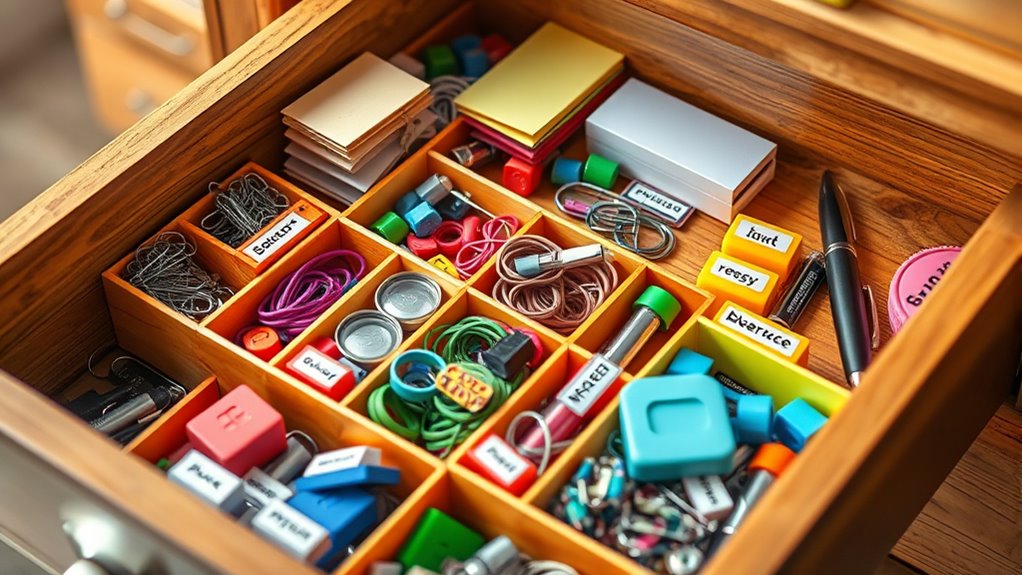
Have you ever opened your junk drawer and felt overwhelmed by the clutter? It’s a common experience, and the good news is, you can tackle it with some simple strategies. Start by emptying the entire drawer so you can see exactly what you’re dealing with. As you sort through the items, consider recycling tips for anything that no longer serves a purpose. Old receipts, broken pens, expired coupons—these are prime candidates for recycling or discarding. Clearing out the unnecessary clutter creates more space and makes it easier to organize what remains.
Once you’ve emptied the drawer and sorted through the contents, it’s time to think about storage solutions. Use small containers, dividers, or even repurposed items like empty egg cartons or jewelry boxes to keep similar items together. For example, dedicate one section for office supplies like pens and paper clips, another for batteries and small tools, and a separate spot for miscellaneous items like rubber bands or chargers. Incorporating these storage solutions prevents items from sprawling across the drawer and makes it easier to find what you need quickly.
To maximize space, consider stacking smaller items vertically, like storing a collection of USB drives or small batteries in a small container. Labeling these containers can save you time later, especially if your drawer tends to be a catch-all for various odds and ends. When it comes to recycling tips, don’t forget to regularly review the contents. Set a schedule—perhaps every few months—to purge items that are no longer useful or functional. This habit keeps your junk drawer from becoming a dumping ground again.
Additionally, understanding the importance of contrast ratio in projectors can help you appreciate the significance of clear, detailed images, which is especially useful if you decide to set up a home cinema space in your home. If you’re struggling with the idea of finding storage solutions, look around your home for items you can repurpose. Small jars, empty boxes, or even a muffin tin can serve as compartments within your drawer. These simple tricks transform chaos into order without needing to buy expensive organizers. Remember, the goal isn’t perfection but functionality. A well-organized junk drawer makes your life easier, reducing stress and saving time when you’re searching for that elusive screwdriver or a specific cable.
Frequently Asked Questions
How Often Should I Reorganize My Junk Drawer?
You should reorganize your junk drawer every few months to maintain order. Regularly applying storage solutions and decluttering tips helps prevent clutter from piling up. When you notice items becoming disorganized or unused, it’s time to tidy up. Doing this frequently keeps your drawer functional and clutter-free, making it easier to find what you need quickly. Consistent maintenance guarantees your storage solutions stay effective and your space remains tidy.
What Are the Best Containers for Small Items?
You should use drawer dividers to organize small items effectively. Look for small container options like stackable bins, clear plastic organizers, or divided trays. These help keep everything visible and accessible, preventing clutter. Choose containers that fit your drawer size and suit your items, like tiny compartments for screws or batteries. With the right small container options, you’ll quickly find what you need and keep your junk drawer tidy.
How Do I Deal With Sentimental Clutter?
You might think sentimental clutter is untouchable, but it’s manageable. Start by setting aside a dedicated space for sentimental storage, like a small box or drawer. Keep only the most meaningful keepsakes, and consider taking photos of items you can’t part with. Regularly review your keepsake organization, and resist the urge to hold onto everything. This approach helps preserve your memories without overwhelming your space.
Can I Incorporate a Labeling System?
Yes, you can definitely incorporate a labeling system into your junk drawer organization. Using labels on containers or sections helps you quickly identify items and maintain order. Combine this with simple organization methods like small bins or dividers to categorize your stuff. Regularly update your labels to reflect any changes, making it easier to find things and keep your single drawer tidy and functional.
What Should I Do With Items I Rarely Use?
Imagine finding a set of old batteries buried deep in your junk drawer. For rarely used items like these, use dedicated storage solutions such as a small labeled container or a separate box. Apply decluttering tips by periodically reviewing and removing items you no longer need. This keeps your junk drawer organized, prevents clutter buildup, and makes it easier to find what you actually use.
Conclusion
By banishing clutter and boldly balancing belongings, your single drawer becomes a streamlined sanctuary. With a little bit of patience and a touch of persistence, you’ll transform chaos into clarity, creating a space that’s simple, serene, and satisfying. Remember, consistency is key—keep curating, categorizing, and cleaning to maintain your masterpiece of minimal mess. Soon, your once-jumbled junk drawer will stand as a shining symbol of smart, sustainable storage, showcasing your skillful, savvy organization.