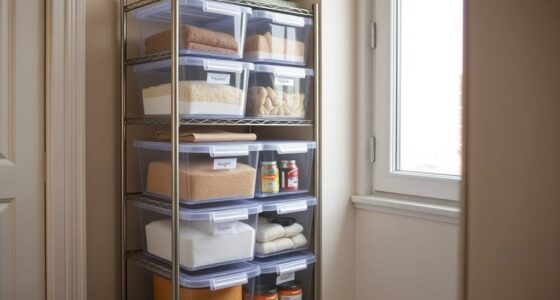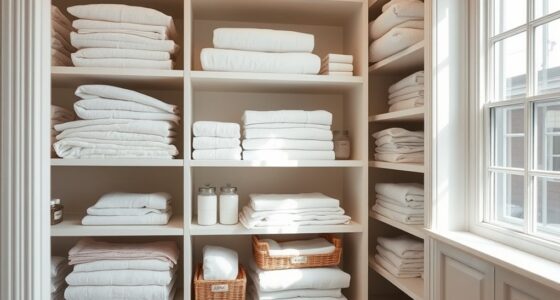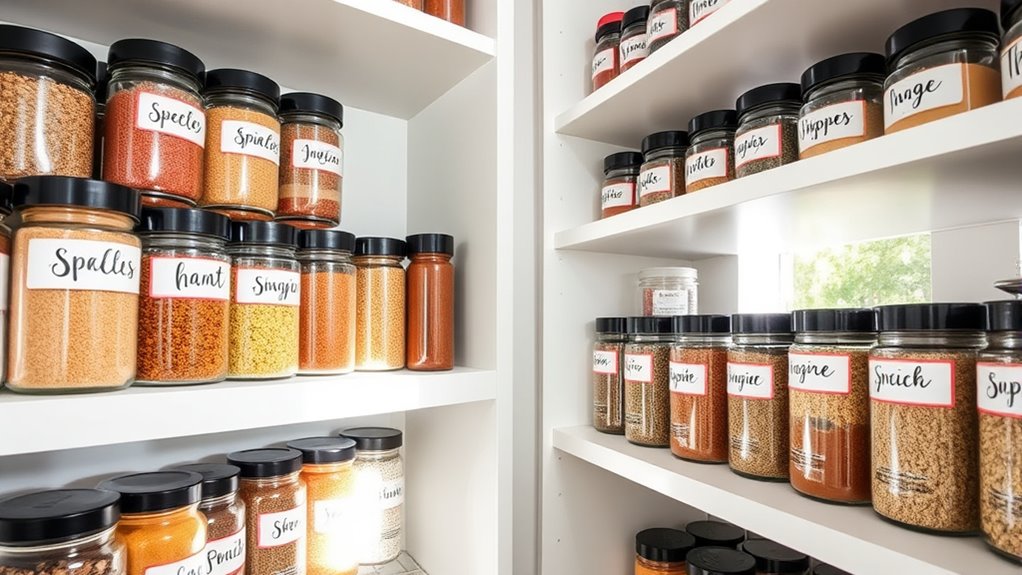

Labels work like magic in small spaces, helping you organize efficiently and keep clutter at bay. They make it easy to identify items quickly, saving you time and effort. Using color-coded labels adds extra clarity, letting you spot categories instantly. Durable labels withstand daily wear, ensuring your system stays neat over time. This simple step transforms chaos into order. Want to discover how to craft the perfect labeling system? Keep exploring!
Key Takeaways
- Labels provide quick visual categorization, maximizing limited space efficiency.
- Color-coded labels enable instant identification, reducing search time in small areas.
- Durable label materials ensure long-lasting organization despite handling and cleaning.
- Well-sealed labels maintain a neat appearance, encouraging consistent use and reducing clutter.
- An effective labeling system creates clear designated spots, transforming chaos into functional order.
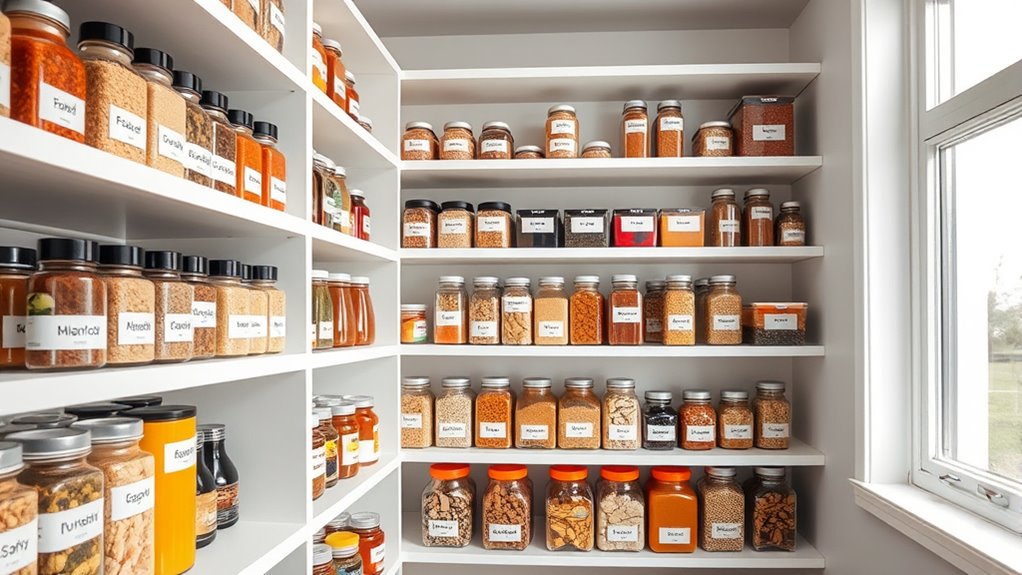
Organizing a small space can feel overwhelming, but using labels makes the process much easier. When your environment is limited in size, every inch counts, and clutter can quickly take over if you’re not careful. That’s where labels come in—simple tools that bring clarity and efficiency to your organization system. One of the most effective strategies is to use color coded labels. These labels allow you to categorize items at a glance, making it effortless to locate what you need without rummaging through boxes or shelves. For example, assign blue labels for kitchen supplies, red for cleaning products, and green for office materials. This visual cue saves time and reduces frustration, especially when multiple people share the space.
Using color coded labels simplifies small space organization and helps you find items quickly and easily.
However, just choosing colorful labels isn’t enough; you also need to think about label durability. Since small spaces often involve frequent handling or exposure to moisture, labels must withstand daily wear and tear. Look for options made from durable materials like laminated paper, vinyl, or plastic. These materials resist smudging, tearing, and fading, ensuring your labels stay intact over time. Durable labels keep your organizational system consistent and professional-looking, even after months of use. Properly sealed labels also prevent peeling or smudging when wiped clean, which is vital in busy areas like kitchens or workshops. Investing in high-quality, label durability ensures your system remains functional and visually appealing long-term, reducing the need for frequent relabeling.
In addition to their visual appeal, durable labels contribute to maintaining order. When labels hold up against daily use, you’re more likely to stick with your organization plan. This consistency makes it easier to maintain a clutter-free environment and prevents chaos from creeping back in. Furthermore, color coded labels combined with durable materials give you a reliable system that’s easy to update as your needs change. You can switch out labels or add new categories without worrying about damage or smudging. This flexibility is especially important in small spaces where adaptability is key to maximizing your limited square footage. Plus, understanding the benefits of visual cues can help you design a more effective labeling system that supports your organization goals.
Ultimately, the right combination of color coded labels and label durability transforms your small space from cluttered chaos into a streamlined, efficient environment. You’ll find that everything has a designated place, and locating items becomes quicker and less stressful. With a bit of planning and the right materials, your small space can become a well-organized haven that feels spacious, functional, and inviting. Labels aren’t just about organization—they’re about creating a system that works for you, one that’s visually clear and built to last.
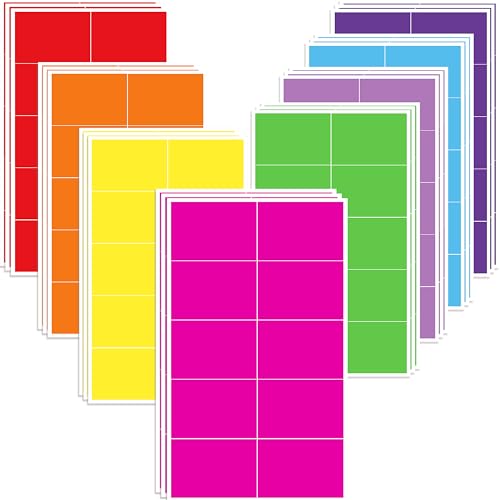
240 Pack Colored Labels Stickers,3 x 2 Inch Tear Resistant No Residue Moving Labels,8 Color Removable Waterproof Vinyl Label Stickers
[Residue-Free, Upgraded Vinyl Tear-Off Labels] Say goodbye to the hassle of sticky residue with these moving labels! Made…
As an affiliate, we earn on qualifying purchases.
As an affiliate, we earn on qualifying purchases.
Frequently Asked Questions
What Are the Best Label Types for Waterproof Storage?
For waterproof storage, you should choose durable, weatherproof labels like vinyl or laminated paper labels. These options offer excellent label durability and resist water, humidity, and moisture. Make sure the labels have strong adhesive strength to stay secure on wet or slippery surfaces. Vinyl labels with a waterproof coating and industrial-strength adhesive are your best bet, ensuring your labels stay put and remain legible in challenging storage conditions.
How Do Labels Affect the Longevity of Storage Containers?
Coincidentally, your choice of labels directly impacts the longevity of your storage containers. When you prioritize label durability, it helps prevent peeling or fading over time, keeping your containers looking clear and organized. Clear labels also make it easier to identify contents quickly, reducing unnecessary handling that could wear down the label. Ultimately, durable, well-adhered labels protect both the container’s clarity and its contents, extending its lifespan.
Can Labeling Improve Organization for Children’s Play Areas?
Yes, labeling can substantially improve organization in children’s play areas by reducing play area clutter. Use clear, colorful labels placed at eye level or on container fronts to make it easy for kids to find and put things away. Implement label placement strategies that involve pictures or words, helping children learn where items belong and encouraging independence, making cleanup quicker and more efficient.
What Are Eco-Friendly Labeling Options for Small Spaces?
You’ll be glad to know that eco-friendly labeling options like those made from recyclable materials and biodegradable adhesives are gaining popularity. Studies show that 75% of consumers prefer sustainable products, so choosing these labels helps reduce waste and environmental impact. By using recyclable materials and biodegradable adhesives, you create labels that are safe, sustainable, and effective, making your small space organized while also supporting eco-conscious choices.
How Often Should Labels Be Updated or Replaced?
You should update or replace labels whenever they start to peel, fade, or become unreadable, ensuring ideal label durability. Regular label maintenance keeps your organization system effective and prevents confusion. Check labels monthly, especially in high-traffic or humid areas, and replace them as needed. This proactive approach maintains clarity and keeps your small space organized, making it easier to find and store items efficiently over time.

VolenGo Label Maker Machine with 4 Tapes, Wire Label Maker Waterproof-Labels, Laminated Handheld Label Printer, Backlit & Portable & 3 Cable Modes, H1100 Labeler for Industrial Office Organization
𝗕𝗮𝗰𝗸𝗹𝗶𝗴𝗵𝘁 𝗦𝗰𝗿𝗲𝗲𝗻: VolenGo H1100 label maker has a Backlit-LCD, even in low-light situations; No more struggling to see…
As an affiliate, we earn on qualifying purchases.
As an affiliate, we earn on qualifying purchases.
Conclusion
Labels are like guiding stars, turning chaos into clarity in your small space. They help you find what you need in an instant and keep everything tidy without the clutter. With just a simple label, you transform your environment into a well-organized haven, making daily routines smoother and less stressful. Embrace labels, and watch your small space blossom into a beautifully coordinated symphony where everything has its place, waiting to be discovered with a quick glance.

Talented Kitchen Clear Vinyl Pantry Labels for Food Containers – Waterproof & Repositionable for Kitchen Jars – Farmhouse Pantry Organization – Preprinted Baking Labels – Pack of 154, Assorted Sizes
Sleek Kitchen Organization: Elevate your kitchen storage with Talented Kitchen's expertly designed 154 pantry labels for containers. These…
As an affiliate, we earn on qualifying purchases.
As an affiliate, we earn on qualifying purchases.

Smart Labels QR Code Stickers Pack of 48 (Original) Made in USA – QR Code Labels for Storage & Inventory Tracking, Storage Unit Organization, App Stickers for Inventory Organization & Moving Supplies
SMART ORGANIZATION WITH COLOR-CODED QR CODES: Say goodbye to clutter! Our qr code storage system, including a qr…
As an affiliate, we earn on qualifying purchases.
As an affiliate, we earn on qualifying purchases.