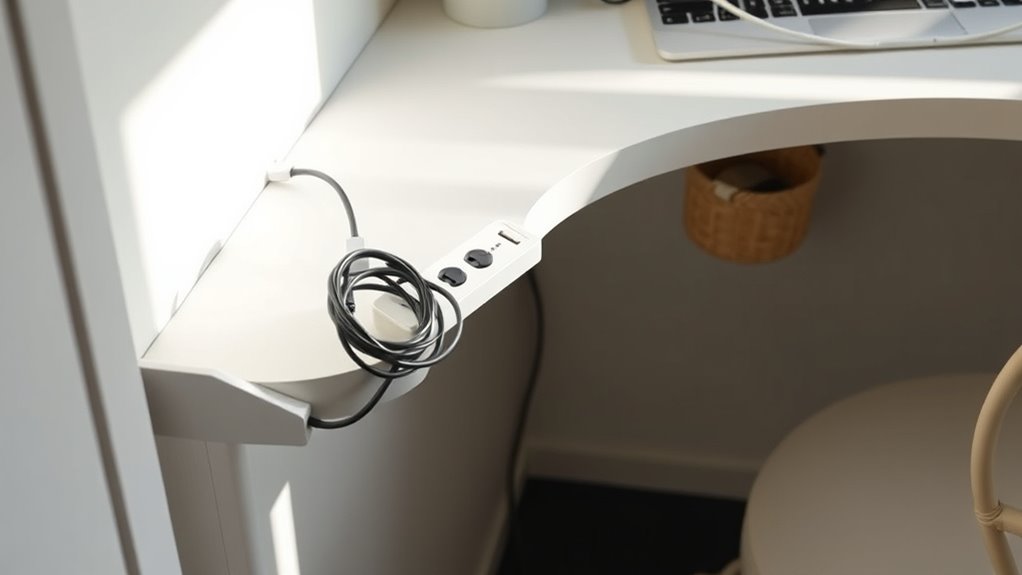

To keep cables and wires tidy in a small space, start by evaluating which cords are necessary and remove or replace any unused ones. Bundle cables with Velcro straps or cable ties, then route them along walls or furniture using clips or channels. Label cords for easy identification and hide them behind furniture or along edges for a cleaner look. Regularly review and re-organize your setup, and if you continue, you’ll discover more tips for effective cable management.
Key Takeaways
- Identify essential cables, eliminate unnecessary ones, and consider wireless options to reduce clutter.
- Bundle cables with ties or straps, leaving slack to prevent strain and damage.
- Use cable channels, clips, or sleeves to route cords along walls and floors neatly.
- Label cables for easy identification and quick access.
- Regularly inspect, re-route, and remove unused cables to maintain organization.
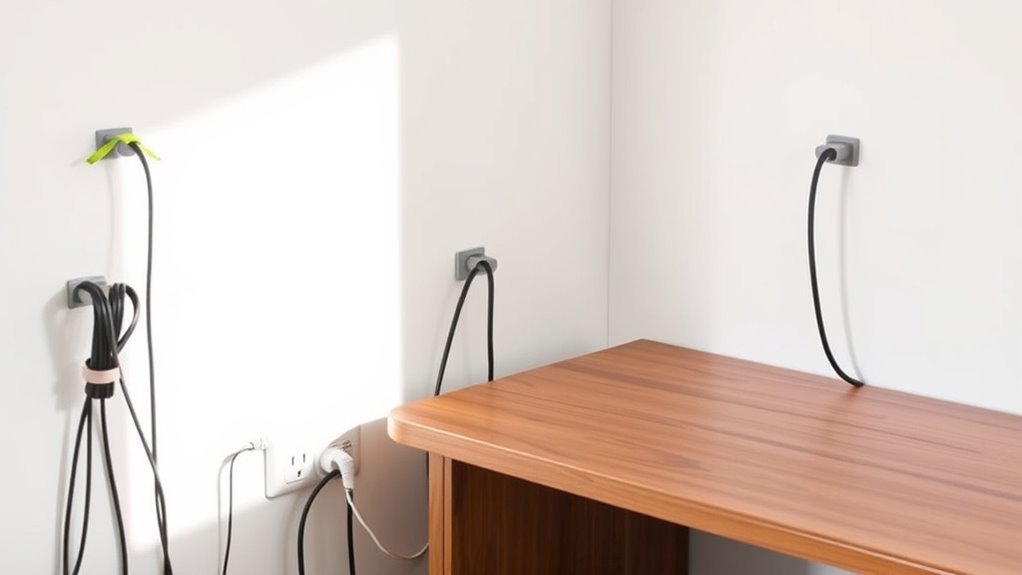
In a small space, cluttered cables and wires can quickly become overwhelming and make your area feel even more cramped. To keep your environment organized and functional, mastering wire management is essential. Good cable organization not only improves the look of your space but also makes it safer and easier to access what you need. The key is to develop a system that minimizes tangles and keeps cords neatly out of the way, so you’re not constantly wrestling with a spaghetti of wires.
In small spaces, organized cables improve safety, accessibility, and overall tidiness.
Start by evaluating all your cables. Identify which ones are essential and which can be eliminated or replaced with wireless alternatives. Once you know what you need, gather supplies like cable ties, clips, sleeves, or channels. These tools help you bundle cords together, preventing them from sprawling across your desk or floor. When you bundle cables, make sure to leave some slack to avoid straining connectors or causing damage. Using Velcro straps instead of plastic ties can make future adjustments easier and prevent damage.
Next, create designated zones for your cables. For example, position your power strip in a central spot, and route all cords toward it. Use adhesive cable clips or mounts to secure cables along walls or behind furniture, keeping them flat and out of sight. This prevents cords from hanging loosely and reduces the risk of tripping or accidental unplugging. When possible, run cables behind furniture or along edges to hide them from view, giving your space a cleaner look.
Invest in cable sleeves or braided wraps for longer cords that need to reach across your small space. These sleeves not only tidy up multiple cords but also protect them from wear and tear. For devices that are used frequently, consider using labeled cable tags so you can quickly identify which cord belongs to which device. This saves time and avoids the frustration of unplugging the wrong device.
Finally, routinely inspect and maintain your cable organization. Over time, cables can shift or become tangled again. Regularly check your wire management setup, re-tie or re-route cords as needed, and remove any unnecessary cables. Keeping your cables organized is an ongoing process, but investing a little effort now makes your small space much more manageable. Additionally, understanding your home theatre projectors and their setup can help you plan cable routes more effectively, ensuring a clean and efficient space. With a few simple steps, you’ll transform a jumble of wires into a sleek, efficient system that maximizes your limited space without sacrificing accessibility or safety.
Frequently Asked Questions
What Are the Best Cable Management Tools for Small Spaces?
The best cable management tools for small spaces include cable labels and cord clips. Use cable labels to identify each wire easily, preventing confusion. Cord clips help secure cables along walls or furniture, keeping them organized and out of the way. Combining these tools makes your space look tidy and prevents tangling. You’ll find that simple solutions like labels and clips make a big difference in maintaining an organized, clutter-free environment.
How Can I Hide Cables Without Damaging Walls?
Hiding cables without damaging walls is like weaving a gentle dance around your space. You can use cord concealment options like adhesive cable clips, fabric sleeves, or cable raceways that stick securely without nails or drilling. For cable routing, run wires along baseboards or behind furniture, securing them with removable clips. These methods keep your space tidy and damage-free, making your setup look clean and organized effortlessly.
Are Wireless Devices a Good Solution for Clutter?
Wireless devices are a great solution for clutter because they offer wireless convenience and help you achieve cable-free living. By reducing the number of cords, you create a cleaner, more organized space. Plus, wireless gadgets often look sleeker and are easier to move around. If you want to minimize visual clutter and enjoy a tidier small space, switching to wireless devices definitely makes sense.
How Often Should I Check and Reorganize Cables?
You should check and reorganize your cables every few months to prevent clutter from building up. While it might seem frequent, routine inspections help catch loose or damaged wires early. Use cable labeling to identify connections quickly and keep things tidy. This balance guarantees your setup stays organized without unnecessary hassle, making maintenance manageable and your space more efficient. Regular checks keep your cables in top shape and your workspace clutter-free.
What Safety Tips Should I Follow When Managing Wires?
When managing wires, prioritize electrical safety by unplugging devices before handling cables. Avoid overloading outlets to reduce fire hazards, and keep cords away from water or heat sources. Use cable organizers to prevent tripping and damage. Regularly inspect cords for frays or damage, replacing any compromised wires immediately. Properly secured and maintained cables help prevent electrical accidents and minimize fire risks in your small space.
Conclusion
By organizing your cables and wires, you’re reclaiming your space and peace of mind, much like Houdini’s mastery over chaos. Remember, a tidy space isn’t just about neatness — it’s about creating room for creativity and calm to flourish. When you keep your cables in check, you’re also taking control of your environment, proving that even small changes can *release* big potential. So stay disciplined, and let your organized space be a reflection of your clear, focused mind.