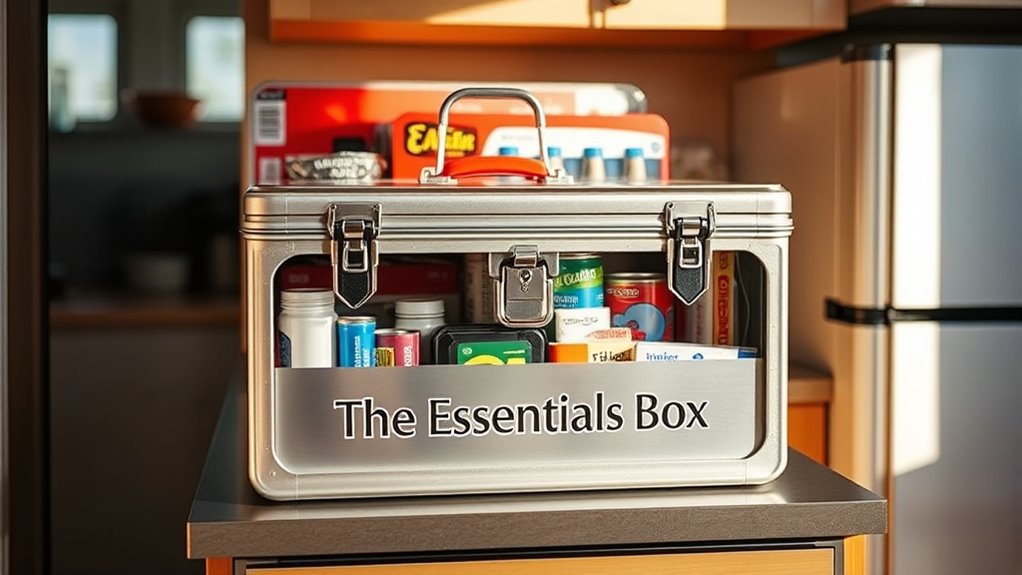

To create an essentials box for your tiny apartment, focus on organization and quick accessibility. Use labeled, stackable containers or transparent bins to store first aid supplies, flashlights, batteries, and multi-tools in a dedicated, easily reachable spot. Keep an emergency bag nearby for quick evacuation. Regularly review and update your supplies to guarantee everything is current and ready. If you stay tuned, you’ll discover more tips to keep your kit effective and space-efficient.
Key Takeaways
- Use labeled, stackable, and transparent containers to organize emergency supplies for quick identification.
- Prioritize compact, multi-purpose tools and essentials like first aid, flashlights, batteries, and snacks.
- Store supplies in a dedicated, easily accessible spot clearly marked for rapid retrieval during emergencies.
- Regularly review and update your kit, replacing expired items and adding new essentials as needed.
- Optimize small space with vertical storage, decluttering, and portable emergency bags for efficient organization.
Have you ever considered how prepared you are for an unexpected emergency? In a tiny apartment, space is limited, but that doesn’t mean you can’t set up a reliable emergency storage kit. The key is understanding the importance of safety protocols and storage organization. When emergencies strike—whether it’s a fire, power outage, or medical issue—you want to be ready to act quickly and efficiently. That’s why your kit needs to be well-designed, accessible, and organized.
First, safety protocols matter because they guide what you include and how you store it. You want to ensure your emergency kit is easy to find and use under stress. Keep it in a dedicated, clearly marked spot—perhaps a labeled container or a specific cabinet—so you don’t waste precious seconds searching. Load it with essentials like first aid supplies, flashlights, batteries, and a multi-tool. Remember, safety protocols also mean knowing how to use everything in your kit properly. Practice opening the kit, replacing expired items, and understanding how your tools work. This prep minimizes panic during an actual emergency.
Store your emergency kit in a labeled, accessible spot and practice using all supplies regularly for quick response.
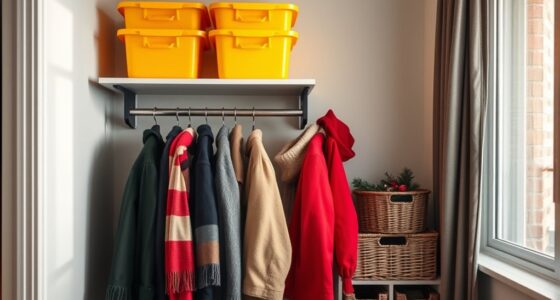
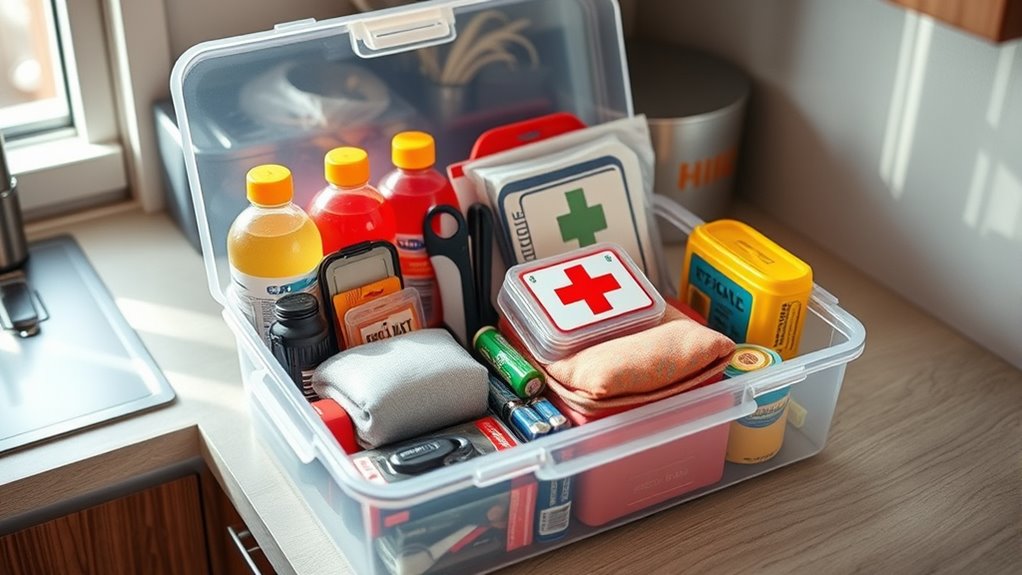
Storage organization plays a pivotal role in making your kit effective. In a tiny apartment, clutter can be a challenge, so choose smart storage solutions. Use stackable containers or labeled bins to separate different items—medical supplies, snacks, hygiene products, and documents. Compact, transparent boxes allow you to see everything at a glance, saving time when seconds matter most. Consider investing in a portable emergency bag that you can grab quickly if you need to evacuate. The idea isn’t just to cram in supplies but to arrange them logically, so you can find what you need without rummaging through a jumble of items.
It’s also important to regularly review and update your storage organization. Expired medications or outdated supplies should be replaced, and new essentials added as needed. This ongoing process ensures your kit remains functional and reliable. In tiny apartments, decluttering your storage space can maximize efficiency—removing unnecessary items frees up room and reduces chaos. Use vertical space with wall-mounted shelves or hooks for flashlights and emergency tools, making everything easily accessible.
Additionally, understanding the concept of natural pools can inspire you to incorporate sustainable and eco-friendly elements into your emergency preparedness—like using natural filtration methods or native plants in your storage setup to promote biodiversity and reduce chemical use. Ultimately, a well-thought-out emergency storage kit isn’t just about having supplies; it’s about creating a system that aligns with safety protocols and intelligent storage organization. By doing so, you’ll feel more confident and prepared, knowing that in a crisis, you can respond swiftly and calmly. It’s a small investment of time and effort that pays off when it truly counts—keeping you safe and secure in your cozy apartment.
Frequently Asked Questions
How Often Should I Update My Emergency Supplies?
You should update your emergency supplies every six months to guarantee food safety and water filtration effectiveness. Check expiration dates on food and replace items as needed. Inspect water filters and replace them if they show signs of wear or after use. Regularly reviewing your kit helps you stay prepared, ensuring your supplies remain safe and functional during emergencies. Mark your calendar to remind yourself to perform these updates.
Can I Customize the Essentials Box for Specific Needs?
Coincidentally, customizing your essentials box is straightforward and highly beneficial. You can easily explore personalization options to adapt the kit to your specific needs. Whether you require additional first aid supplies, specialty tools, or dietary considerations, tailoring the contents guarantees you’re prepared for your unique circumstances. By adjusting your emergency storage, you enhance safety and peace of mind, making sure you’re always ready for unexpected situations.
Is the Kit Suitable for All Climates?
Yes, the kit is designed with climate adaptability in mind, making it suitable for various environments. You can make seasonal adjustments by adding items like extra blankets for winter or hydration supplies for hot weather. While the core essentials are versatile, it’s wise to customize the kit based on your local climate, ensuring you’re prepared for any emergency regardless of seasonal changes.
What Is the Recommended Storage Location in a Tiny Apartment?
You should store the kit in a dedicated storage closet or under your bed to maximize space. Both options keep your emergency supplies accessible yet out of the way. A storage closet offers a secure, organized area, while under-bed storage provides a discreet, flat space. Choose the location that fits your layout best, ensuring quick access and maintaining your apartment’s tidiness during emergencies.
How Discreet Is the Storage Solution for Shared Living Spaces?
Your discreet container blends seamlessly into shared space concealment, making it hard for others to notice. It’s designed to look like a regular storage box or furniture piece, so it doesn’t draw attention. You can tuck it behind a door, under a bed, or inside a closet, ensuring your emergency supplies stay private and secure without disrupting the shared living environment. This way, you maintain privacy and peace of mind.
Conclusion
Having your emergency storage kit ready is like planting a sturdy tree—you hope you’ll never need it, but when the storm hits, it’s your shelter. In tiny apartments, space is precious, but preparedness is priceless. Keep your kit accessible and organized, so you’re always ready to weather any surprise. Remember, a well-prepared emergency kit isn’t just a collection of supplies; it’s your safety net, turning chaos into calm when it matters most.