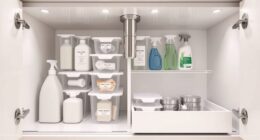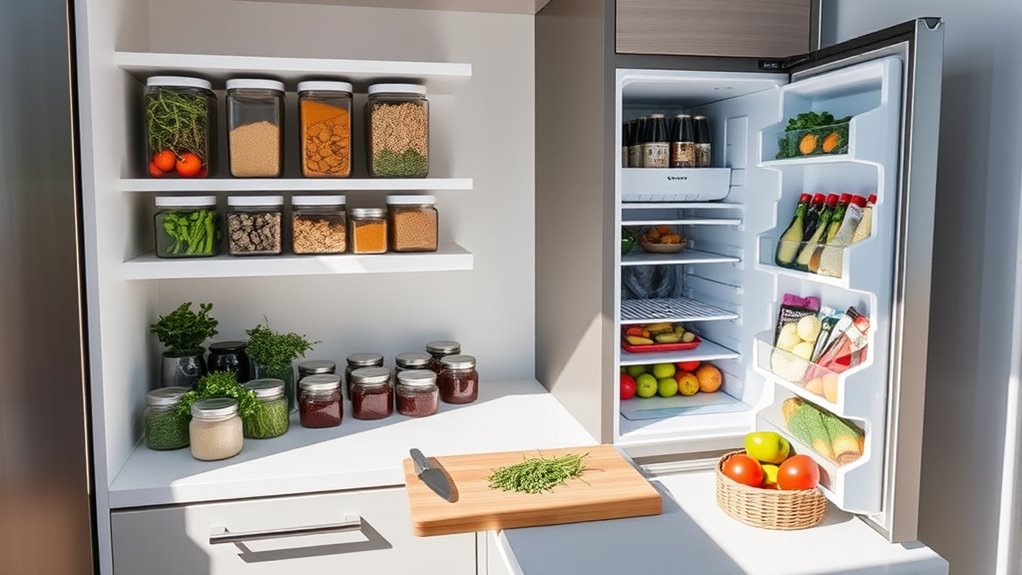

To maximize your small kitchen, plan meals weekly to save time and reduce waste, using versatile ingredients and prepared dishes. Use clear, stackable containers for grocery storage, label items with dates, and organize essentials at eye level for easy access. Freeze leftovers and excess ingredients in small portions to extend freshness. Stick to shopping lists to avoid clutter and overstocking. Keep your space efficient and tidy—more tips to help you master your kitchen await you.
Key Takeaways
- Plan weekly meals to streamline shopping, reduce food waste, and ensure ingredients are used efficiently.
- Use airtight, stackable containers and label items to maximize small storage spaces.
- Dedicate specific prep times for chopping, cooking, and portioning to save time during busy days.
- Freeze leftovers, herbs, and pre-portioned meals to extend freshness and optimize freezer space.
- Maintain proper ventilation to keep the kitchen odor-free and enhance overall comfort during meal prep.
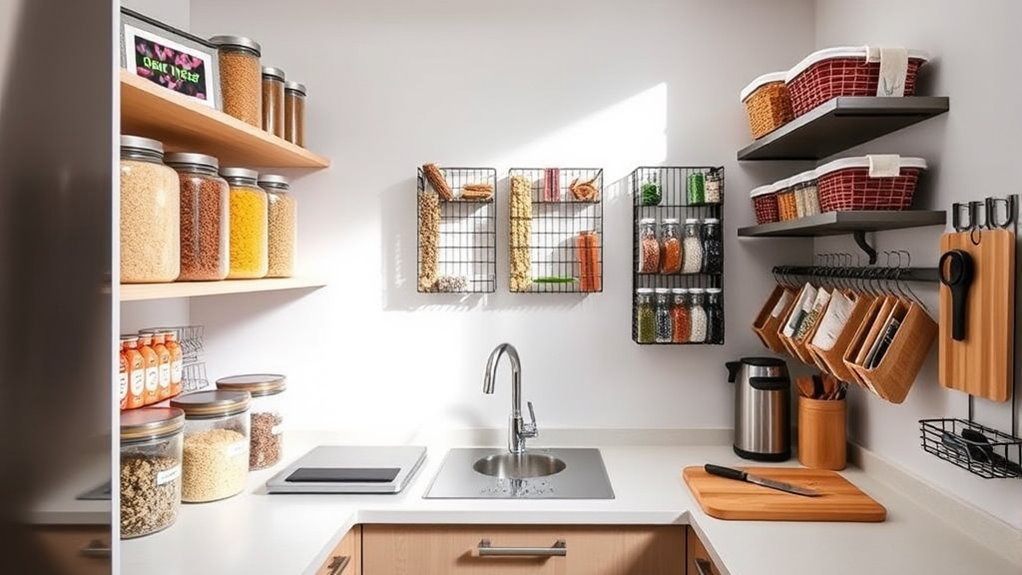
Effective meal planning and proper grocery storage can save you time, money, and reduce food waste. When you plan your meals carefully, you can streamline your shopping list, avoid impulse buys, and ensure you use ingredients before they spoil. Incorporating portion control into your routine is key to managing your food and preventing leftovers from going to waste. By pre-portioning meals and snacks, you not only control serving sizes but also make it easier to grab meals on the go or reheat quickly. This practice helps you stay within your budget and maintain healthier eating habits, especially in a small kitchen where space is limited.
Developing effective meal prep routines is essential for small kitchens because it maximizes your storage and minimizes clutter. Dedicate a specific day or time each week to prepare ingredients or entire meals in advance. Chop vegetables, cook grains, or even prepare whole dishes that can be stored in airtight containers. When you do this, you’ll find it easier to assemble meals during busy weekdays, saving you time and reducing the temptation to order takeout. Meal prepping also allows you to portion out individual servings, making it simple to grab a balanced meal without measuring or cooking from scratch each time. Additionally, understanding ventilation considerations can help keep your small kitchen comfortable and odor-free while cooking.
Meal prepping weekly saves time, reduces clutter, and makes healthy eating easier in small kitchens.
To optimize your grocery storage, invest in clear, stackable containers that fit neatly into your fridge or pantry. This makes it easier to see what you have at a glance, preventing duplicates and reducing the risk of forgotten items going bad. Label everything with dates so you can prioritize older ingredients first, ensuring nothing expires before you use it. Proper storage not only prolongs the freshness of your food but also helps you organize your small space efficiently. Keep frequently used items at eye level for quick access, and store less-used ingredients in less accessible spots.
In addition, consider using your freezer creatively. Freeze leftovers, pre-portioned meals, or ingredients like herbs and bread to extend their lifespan. This is especially helpful in small kitchens where space for storing bulky items is limited. When planning your grocery trips, stick to your shopping list and buy only what you need for the week. This minimizes overstocking, which can clutter your small kitchen and lead to waste.
Frequently Asked Questions
How Can I Maximize Storage in a Tiny Pantry?
To maximize storage in your tiny pantry, use vertical storage solutions like stacking shelves or racks to utilize every inch of height. Invest in multipurpose containers that can store a variety of dry goods, reducing clutter and saving space. Organize items by size and frequency of use, keeping essentials at eye level. Regularly declutter and rotate stock to maintain an efficient, accessible pantry that fits your small space perfectly.
What Are the Best Space-Saving Kitchen Tools?
Like a trusty Swiss Army knife, your best space-saving kitchen tools include collapsible containers that fold flat when not in use and magnetic spice racks that attach to your fridge or wall. These tools maximize limited space and keep your counters clutter-free. You’ll love how versatile and efficient they are, making meal prep and storage a breeze in your small kitchen. Plus, they add a modern touch to your space!
How Do I Organize Perishables Efficiently?
To organize perishables efficiently, use proper refrigeration techniques like adjusting shelves for different items and keeping the coldest zone at the back. Rotate perishables regularly, placing newer items behind older ones to prevent spoilage. Store fruits and vegetables separately, and use clear bins to see contents easily. Keep dairy and meats on the bottom shelf for safety. Consistently applying these methods helps reduce waste and keeps your small kitchen tidy.
What Are Quick Meal Prep Tips for Busy Days?
When busy days hit, you’ll love quick meal prep tips that save time and sanity. Embrace batch cooking, so you cook once and eat thrice—no magic required. Use meal prep containers to organize leftovers, turning chaos into order. Whip up simple, nutritious recipes in advance, and you’re set. Skip the fuss, and let your fridge be your friend—fast, efficient meals, no stress, just delicious convenience.
How Can I Reduce Food Waste in Small Kitchens?
To reduce food waste in your small kitchen, focus on food preservation techniques like airtight containers and proper refrigeration. Practice meal portioning by dividing leftovers into manageable servings, preventing spoilage and encouraging reuse. Keep an organized fridge to monitor expiry dates easily. By doing so, you minimize waste, save money, and make the most out of your limited space, ensuring fresh ingredients last longer and your kitchen stays clutter-free.
Conclusion
With smart planning and clever storage, your small kitchen becomes a well-orchestrated symphony of flavors. Think of your space as a tiny garden—each carefully chosen ingredient is a seed that, with a little care, blossoms into delicious meals. When you master the art of efficient meal prep and storage, your culinary landscape transforms from cluttered chaos into a harmonious haven. Soon, you’ll be creating magic in your cozy kitchen, turning every meal into a masterpiece.