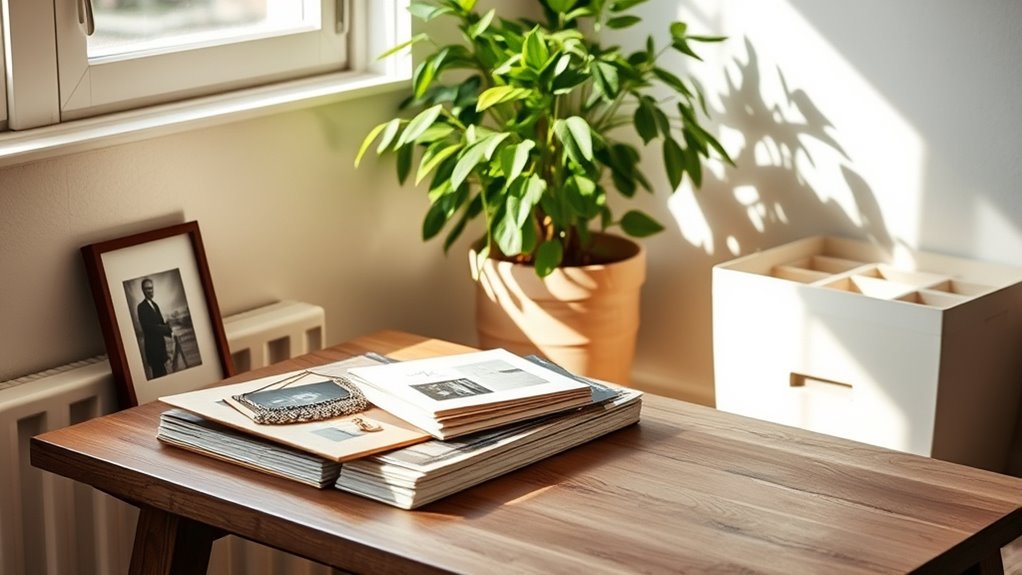

When space is tight, focus on selecting sentimental items that truly matter. Keep only those that evoke strong memories or represent important moments. Consider digitizing photos to save space and displaying a few meaningful objects thoughtfully. Create designated areas like memory boxes or shelves for treasured keepsakes. Be honest about what no longer resonates and donate or recycle those items. Managing sentimental clutter this way allows you to honor your memories while making room—more helpful tips follow.
Key Takeaways
- Prioritize keeping items that evoke strong, meaningful memories and consider donating or recycling others to reduce clutter.
- Create designated spaces like memory boxes or display shelves to organize sentimental items thoughtfully.
- Digitize photographs and scan keepsakes to preserve memories while saving physical space.
- Be selective; ask whether each item truly resonates or if it’s just taking up space without emotional significance.
- Focus on quality over quantity, maintaining a manageable collection that honors your emotional bonds without overwhelming your space.
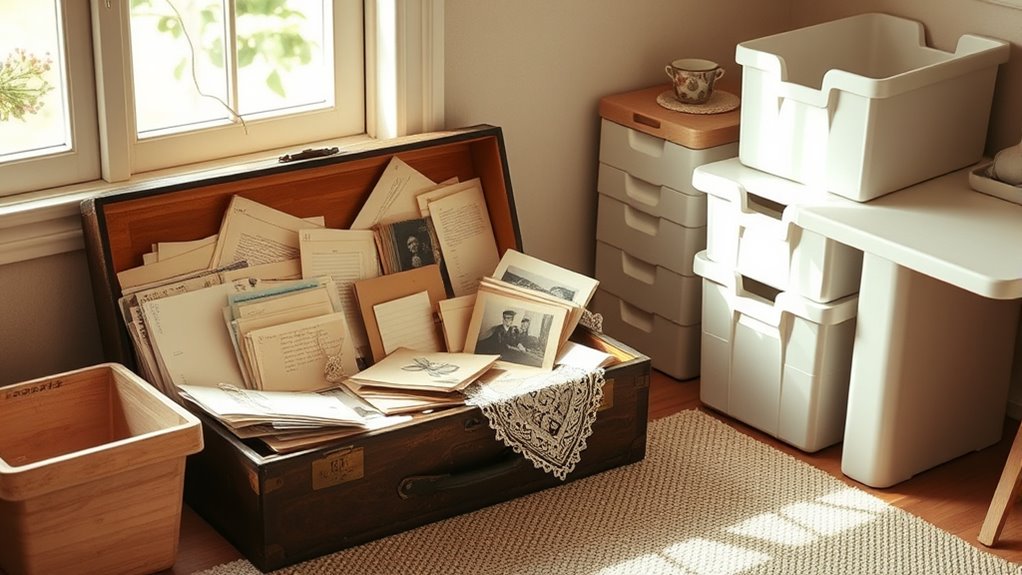
Decluttering sentimental items can feel overwhelming because these possessions often carry deep emotional meaning. You might hesitate to let go, worried about losing precious memories or damaging your emotional attachment to certain objects. It’s natural to feel this way, but understanding how to approach this process can help you free up space without sacrificing the memories you cherish. The key is to focus on memory preservation while managing your emotional attachments thoughtfully.
Start by acknowledging that not every item needs to be kept forever. Instead, decide which pieces truly hold significance and which are more clutter than meaningful keepsake. For example, a box of old greeting cards might be sentimental, but if only a few cards truly evoke strong memories, consider keeping those and recycling or donating the rest. This way, you preserve the essence of the memories without being overwhelmed by the sheer volume of possessions. Remember, it’s about quality over quantity—select the items that genuinely represent important moments or relationships in your life.
To manage emotional attachment, you can create a designated space for your most treasured items. This might be a memory box, a photo album, or a display shelf. Limiting yourself to a specific area helps you curate your collection intentionally, making the process more manageable. When deciding what to keep, ask yourself, “Does this object evoke a strong, clear memory or emotion?” If yes, it deserves a place in your curated collection. If it feels more like a placeholder or a reminder of a past that no longer resonates deeply, consider letting it go. This approach helps you stay connected to your memories while preventing clutter from taking over.
Photographs are a prime example of sentimental items that benefit from thoughtful curation. Instead of holding onto every photo, select the ones that truly capture meaningful moments or people. Digitize these images to save space, allowing you to keep the memories alive without physical clutter. For physical items like heirlooms or souvenirs, ask whether they serve a purpose beyond their sentimental value—could they be repurposed or displayed in a way that honors their significance? Additionally, understanding that home theatre projectors and other technological items require space and proper organization can help you prioritize what to store or display to keep your environment streamlined.
In the end, decluttering sentimental items isn’t about erasing your past but about creating a space that respects your emotional attachment while making room for your present. By being selective, organizing thoughtfully, and focusing on memory preservation, you can reduce clutter without sacrificing the meaningful connections that these possessions represent. Remember, it’s your memories that matter most, and you have the power to keep them alive in a way that’s manageable and fulfilling.
Frequently Asked Questions
How Do I Handle Sentimental Items With No Clear Emotional Value?
When handling sentimental items with no clear emotional value, try emotional detachment to make decisions easier. Ask yourself if keeping the item truly helps with memory preservation or if it’s just clutter. If it doesn’t evoke strong feelings or serve a meaningful purpose, consider donating or recycling it. This helps you clear space while maintaining a sense of respect for your past experiences without unnecessary emotional attachment.
What Are Creative Ways to Display Sentimental Belongings?
You can create artistic arrangements with your sentimental belongings by using shadow boxes, which beautifully showcase items like photos or keepsakes. Consider grouping related items for a cohesive display or layering smaller objects for visual interest. You might also hang a series of shadow boxes on a wall to tell a story or add a personal touch to your space. These creative displays help preserve memories while keeping your space organized.
How Can I Involve Family Members in Sentimental Decluttering?
You can involve family members in sentimental decluttering by encouraging family collaboration and fostering shared decision making. Invite everyone to discuss what items hold the most meaning, and listen to each person’s opinions. Set up a relaxed, respectful environment where everyone feels comfortable sharing their feelings. By doing this, you make decluttering a team effort, helping preserve memories while creating space, and ensuring everyone’s voice is heard and valued.
Are Digital Memories a Good Substitute for Physical Keepsakes?
A picture is worth a thousand words, and digital memories can be a great substitute for physical keepsakes. You can create digital backups and organize photos easily, saving space while preserving important moments. While physical items have sentimental value, digital collections allow quick access and sharing without clutter. Just make certain you regularly back up and categorize your digital memories for easy retrieval and peace of mind.
What Should I Do With Sentimental Items That Are Damaged or Fragile?
When dealing with damaged or fragile sentimental items, you should prioritize preservation techniques like careful cleaning and mending to prevent further deterioration. Use suitable storage solutions, such as acid-free boxes or protective sleeves, to safeguard these items. Handle them gently and store them in a stable environment. If the damage is severe, consider digitizing photos or creating replicas, so you preserve the memory without risking the original’s condition.
Conclusion
When space is tight, decluttering sentimental items might feel like trying to fit a mountain into a teacup. But remember, you hold the power to transform chaos into clarity. Let go of what no longer serves your heart’s story, and cherish the irreplaceable memories that truly matter. With a little effort, you’ll reclaim your space and peace, proving that even the most overwhelming clutter can be tamed into a sanctuary of meaningful simplicity.