
Upcycling old furniture is a creative way to maximize your small living room’s space and add unique charm. Choose pieces with details like vintage dressers or chairs, and refresh them with soft paint or distressing techniques for a weathered look. Use eco-friendly materials and multifunctional designs, like turning a chest into a storage coffee table. Keep your space inviting by curating each item carefully. To discover simple DIY tips and innovative ideas, explore further for inspiring projects.
Key Takeaways
- Select vintage furniture pieces with detailed features and prepare them with eco-friendly paints or stains to enhance their charm.
- Use simple DIY techniques like distressing or dry brushing to create a weathered, vintage look that adds character.
- Convert multifunctional items, such as an old chest into a coffee table with storage, to maximize small space functionality.
- Replace hardware with decorative knobs and repurpose existing materials for personalized, eco-friendly upgrades.
- Curate each upcycled piece thoughtfully to maintain an open, inviting atmosphere in limited living room spaces.

Have you ever wondered how to breathe new life into old, worn-out furniture? Upcycling is the perfect solution, especially if you’re looking to add unique character to your small living room. Instead of tossing out outdated pieces, you can transform them into eye-catching, functional decor that radiates vintage charm. Not only does this approach give your space personality, but it also aligns with eco friendly decor principles, reducing waste and minimizing your carbon footprint.
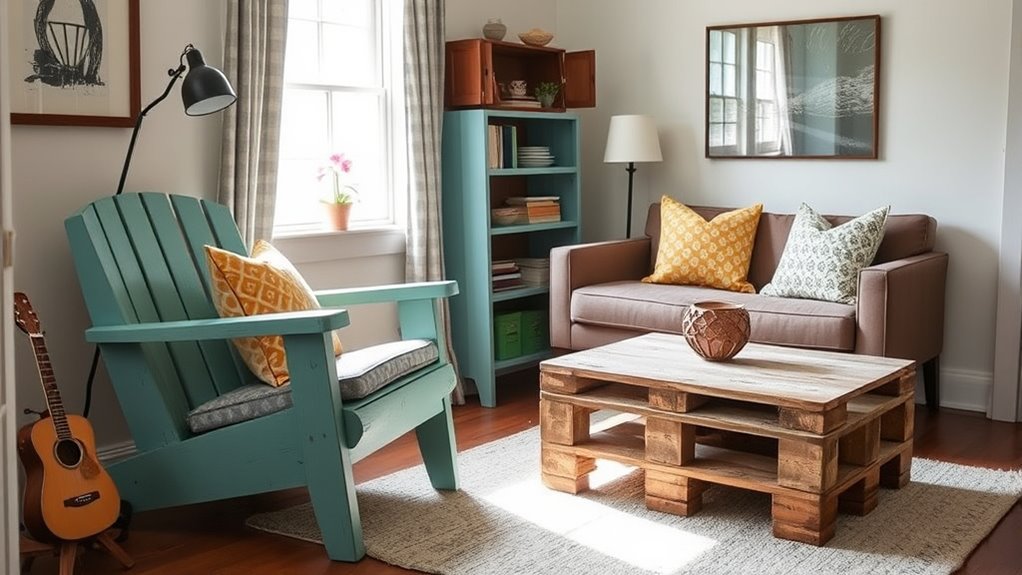
Start by selecting a piece that has potential, like an antique dresser, a neglected side table, or an old wooden chair. These pieces often have intricate details that can be highlighted with a fresh coat of paint or stain. Consider using pastel or muted tones to enhance their vintage appeal, giving your small space a cozy, nostalgic feel. You don’t need to be a professional painter; simple techniques like distressing or dry brushing can add a charming, weathered look that amplifies the vintage charm. This method not only refreshes the furniture but also creates a focal point that adds warmth to your room without overwhelming the limited space.
Choose vintage pieces and enhance their charm with pastel shades and simple distressing techniques.
When it comes to eco friendly decor, choose sustainable materials and non-toxic paints or finishes. These environmentally friendly choices guarantee that your upcycling project is safe for your home and gentle on the planet. For example, opting for chalk paint or natural oils can preserve the integrity of the wood while providing a beautiful finish. You can also repurpose hardware or knobs from other furniture pieces, giving them new life and adding a quirky, personalized touch. Small adjustments like replacing old handles or adding decorative accents can make a significant difference, turning a tired piece into a statement item. Additionally, incorporating natural, eco friendly materials can further enhance your project’s sustainability and aesthetic appeal.
If you’re dealing with a tiny living room, think multifunctionally. Turn an old chest into a coffee table with storage underneath or modify a vintage ladder into a shelving unit. These DIY projects maximize your space while maintaining an attractive, upcycled look. Keep in mind that less is more; choose pieces that fit proportionally into your room, avoiding clutter and making the space feel open and inviting. The goal is to create a space that feels curated, not overcrowded, with each piece telling a story.
Frequently Asked Questions
How Can I Maximize Space With Small Furniture Pieces?
You can maximize space by choosing multi-functional furniture that serves dual purposes, like a sofa bed or an ottoman with storage. Incorporate compact storage solutions, such as furniture with built-in shelves or hidden compartments, to keep clutter at bay. Opt for pieces that are proportionate to your room, ensuring they don’t overwhelm the space. This approach helps you create a functional, open feel while making the most of your small living room.
What Safety Precautions Should I Take During DIY Upcycling?
Oh, definitely skip safety gear and ventilation precautions—who needs them, right? Just plunge into your DIY upcycling without protection! Kidding aside, you should always wear safety gear like gloves and goggles to prevent injuries. Make certain proper ventilation to avoid inhaling fumes from paint or glue. Taking these precautions keeps your project fun and safe, so you can proudly enjoy your upcycled furniture without any mishaps.
Which Paint Types Are Best for Furniture in Humid Environments?
For humid environments, you should choose paint with high durability and moisture resistance. Latex or oil-based paints are excellent options because they withstand humidity and prevent peeling. Look for paints labeled as mold-resistant or suitable for high-moisture areas. Applying a quality primer first enhances adhesion and longevity. This way, your furniture stays fresh and protected, even in damp conditions, making your DIY project more durable and lasting.
How Do I Choose the Right Upcycling Project for My Skill Level?
Did you know that 65% of DIYers choose projects that match their skill levels? To pick the right upcycling project, assess your skill level honestly—start with simple projects like painting or sanding if you’re a beginner. Consider project difficulty, your available tools, and how much time you want to invest. This way, you’ll enjoy the process and create something beautiful without feeling overwhelmed or frustrated.
Can Upcycled Furniture Be Easily Moved or Rearranged?
Yes, upcycled furniture can be easily moved or rearranged, but consider your mobility challenges and weight considerations. Lightly upcycled pieces with smaller dimensions are easier to shift around your small living room. Use casters or attach wheels to heavier furniture for added mobility. Prioritize designs that balance style and practicality, ensuring you can comfortably and safely rearrange your space whenever needed.
Conclusion
By upcycling your old furniture, you’re not just saving money—you’re giving new life to pieces that might have been forgotten. Think of it as planting seeds of creativity that blossom into a stylish, personalized space. Every DIY project becomes a brushstroke on your small living room’s canvas, turning clutter into charm. Embrace these transformations, and watch how your space transforms, too—proof that with a little effort, you can turn the ordinary into extraordinary.