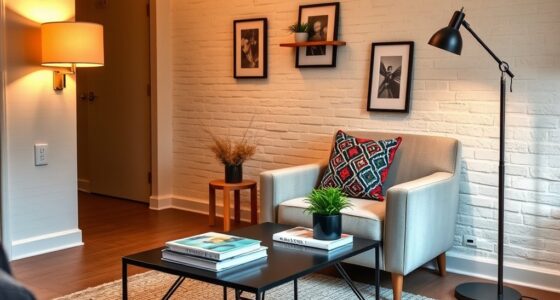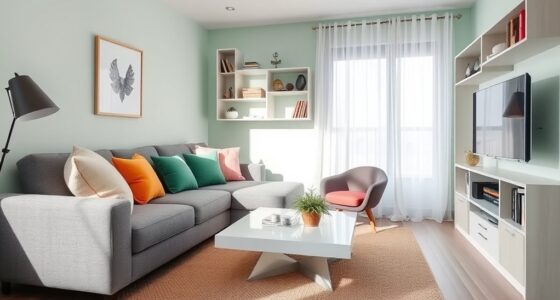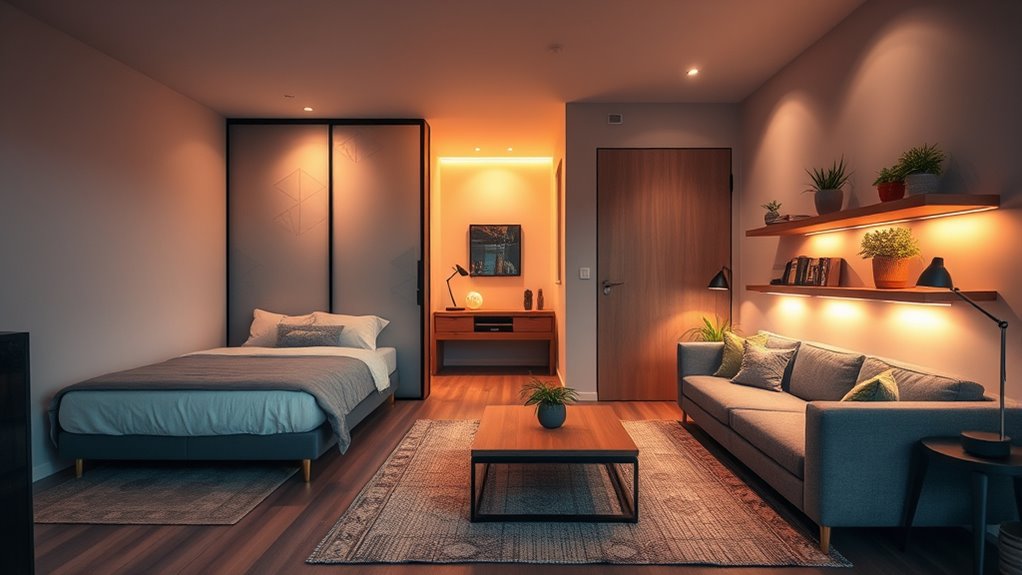

To divide your studio apartment into functional zones, evaluate your space and identify your needs for sleeping, working, and relaxing areas. Use furniture like open shelves, sofas, or bookcases as natural dividers, and consider creative partitions such as curtains or foldable screens. Enhance privacy with textiles and lighting, and optimize storage with vertical options. Playing with color and decor helps define each space further. Keep exploring ways to create a cozy, organized layout that feels larger—there’s more to discover below.
Key Takeaways
- Use furniture like bookcases, sofas, or open shelving to create visual and functional zones without permanent walls.
- Incorporate room dividers such as folding screens, curtains, or repurposed partitions for flexible separation.
- Employ lighting and textiles, like layered curtains and ambient lighting, to define and enhance different areas.
- Optimize space with multi-functional furniture, storage solutions, and strategic placement to maximize usability.
- Apply color schemes and decorative elements to visually distinguish living and sleeping zones for a cohesive look.
Assessing Your Space and Identifying Needs

Before you begin planning your studio apartment, it’s essential to evaluate your space and identify your needs. Start by analyzing your current floor plan, noting the available square footage and layout. Consider how you naturally move through the space and where you spend most of your time. Think about your daily routines and how much room you require for sleeping, working, relaxing, and storage. Use zoning strategies to visualize how different areas can be separated without walls, maximizing the flow and functionality. Identifying your priorities ensures you create a practical layout that suits your lifestyle. Incorporating space optimization techniques can further enhance functionality and comfort. This initial assessment helps you make informed decisions about furniture placement and zone creation, making your studio feel more spacious and organized. Understanding local zoning laws can also influence how you divide your space effectively and legally. Additionally, considering your furnishing preferences will help tailor the layout to reflect your personal style and needs. Engaging in this process can also contribute to mental well-being by reducing clutter and creating a more calming environment. Conducting a thorough space analysis can reveal unexpected opportunities for better layout utilization and storage solutions.
Using Furniture to Create Distinct Zones
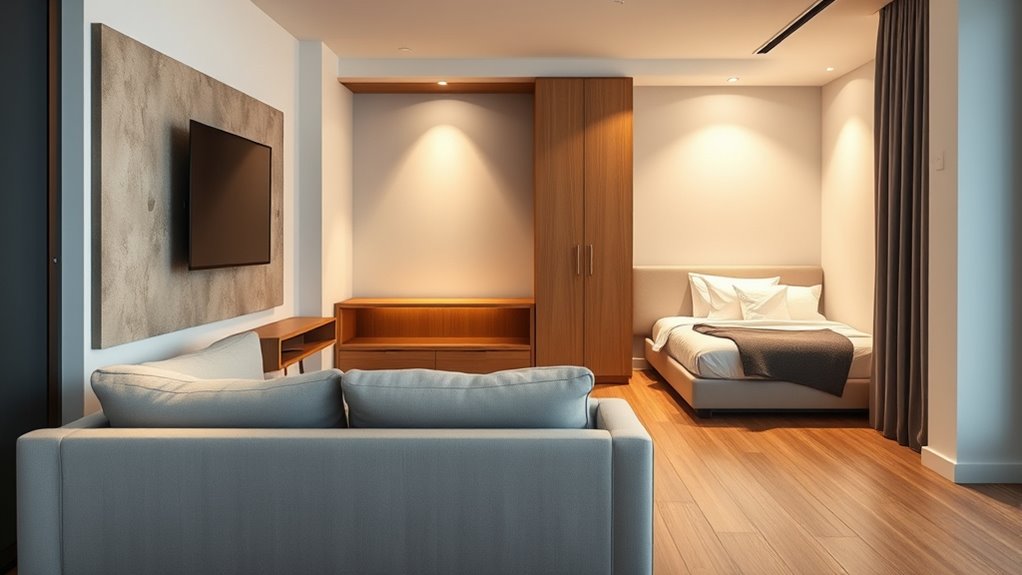
Using furniture to create distinct zones is an effective way to define different areas within your studio without building walls. You can use pieces like bookcases, sofas, or open shelving units to act as artificial walls that separate your sleeping space from your living area. Sliding panels are another versatile option; they allow you to conceal or reveal zones as needed, providing flexibility and privacy. For example, a bookshelf placed strategically can serve as a visual divider while still offering storage. Similarly, a sofa positioned to face away from your bed helps create a clear boundary. Incorporating rustic decor elements such as vintage signs or farmhouse accessories can further enhance the cozy separation. These furniture choices not only define your zones but also add functionality and style, making your studio feel more organized and cozy.
Implementing Room Dividers and Partitions
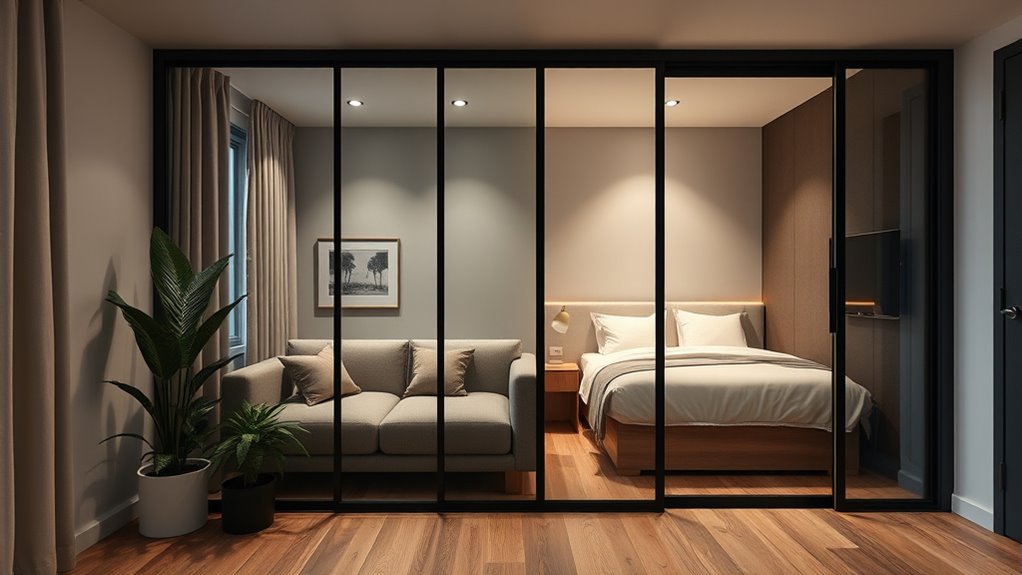
Choosing the right divider can transform your space and create clear boundaries. You might consider options like folding screens, bookcases, or curtains to suit your style and needs. Creative partition ideas can add personality while maintaining an open, functional layout. For example, a room divider made from a repurposed electric bike parts can serve as a unique and eco-friendly focal point. Additionally, incorporating safety considerations such as ensuring the divider is stable and non-toxic can enhance both safety and aesthetics in your apartment. Using sizing and load‑planning tools can help you select a divider that fits well without overcrowding your space. Involving DIY techniques can also allow you to customize partitions for a truly personalized touch.
Choosing the Right Divider
Selecting the right room divider can transform your studio apartment from a single open space into distinct functional zones. Consider artistic murals or painted panels to add visual interest while subtly dividing areas without blocking light. If you prefer a portable solution, outdoor dividers like folding screens or lattice panels work well, especially if you want flexibility. For a more permanent separation, bookshelves or open shelving units can define spaces while providing storage. Think about your style and needs—do you want a decorative element, privacy, or both? The key is choosing a divider that complements your decor and fits your lifestyle. Whether artistic murals or outdoor-inspired dividers, the right choice makes your space functional and visually appealing. Additionally, understanding Self Watering Plant Pots can help you incorporate greenery into your space, enhancing the ambiance and air quality. Recognizing the importance of tire size and terrain compatibility can also help you optimize your bike setup for different surfaces. Incorporating Bitcoin IRA insights can inspire innovative ways to organize your living area with tech-savvy solutions that reflect your financial acumen. Exploring arcade game mechanics can also offer creative ideas for designing versatile and engaging zones within your studio. Recognizing the importance of family background and personal history can also influence how you design your personal space to reflect your heritage and identity.
Creative Partition Ideas
Creative partition ideas can instantly redefine your studio apartment, turning an open space into functional zones that suit your lifestyle. Using wall murals as room dividers adds visual interest while creating separation without sacrificing openness. Choose murals with bold patterns or calming nature scenes to define areas like your sleeping nook or workspace. Incorporate color schemes strategically—darker shades can create a cozy sleeping zone, while lighter hues brighten the living area. Freestanding shelves, curtains, or folding screens also work well as versatile partitions. Combining these elements with wall murals and thoughtful color choices allows you to craft distinct zones that feel intentional and inviting. The key is to balance style and function, making your small space feel larger and more organized. Additionally, understanding retail hours today can inspire innovative approaches to maximizing space and value in your living environment. Incorporating materials for room dividers such as lightweight wood or fabric can add texture and warmth to your space. Being aware of automated solutions in business can also help you implement smart organization systems that enhance your apartment’s efficiency and comfort.
Incorporating Multifunctional Furniture
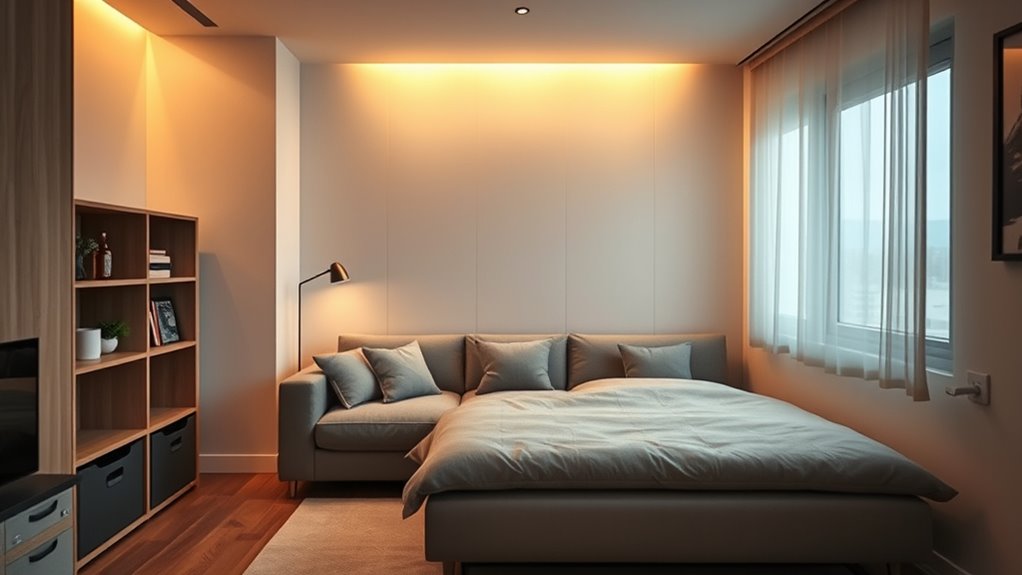
In a small space, choosing furniture that serves multiple purposes can make a big difference. You can maximize your area by selecting pieces that are both functional and space-efficient. Think about multi-use furniture ideas that help you stay organized without cluttering your studio. Incorporating compact designs can further enhance your living environment by making every inch count. To improve your space efficiency, consider modular furniture that can be easily reconfigured to suit different needs throughout the day.
Choosing Space-Saving Pieces
To maximize your limited space, choosing multifunctional furniture is essential. It helps you optimize every square foot while adding style. Consider these options:
- Sofa beds that serve as seating by day and a bed at night, freeing up space.
- Storage ottomans that double as seating and hidden compartments for essentials.
- Foldable dining tables that tuck away when not in use, keeping your area open.
- Vertical storage units with shelves for artificial plants and decor, enhancing your color schemes without clutter.
- Incorporating sound design principles, such as creating a comfortable acoustic environment, can also improve your studio’s ambiance and functionality.
Selecting pieces that blend form and function keeps your apartment feeling spacious. Incorporate artificial plants to add greenery without taking up extra room, and choose a cohesive color scheme to unify your space visually. These smart choices make your studio feel open and inviting.
Multi-Use Furniture Ideas
Multifunctional furniture transforms your small space into a versatile and stylish home. With clever pieces like sofa beds, storage ottomans, and fold-out desks, you can maximize every square inch. Choose furniture that complements your color schemes to create a cohesive look, whether you prefer bold, vibrant hues or soft neutrals. Incorporate wall art that doubles as functional decor, such as wall-mounted shelves or foldable mirrors, to add personality without cluttering your space. These versatile pieces not only save space but also serve multiple purposes, making your studio feel larger and more organized. Additionally, understanding the principles of personal development can help you cultivate a mindset that embraces adaptability and creativity in your living space. By carefully selecting multi-use furniture, you can easily define zones within your apartment and maintain a clean, inviting atmosphere.
Enhancing Privacy With Textiles and Curtains

Have you ever noticed how curtains and textiles can instantly transform the privacy of a studio apartment? Using textile layering and curtain styles, you can create flexible dividing lines that add both privacy and style. Here are four ways to enhance your space:
- Pick sheer curtains for a light, airy feel that still offers some separation.
- Use blackout curtains to block visibility when needed, perfect for sleeping areas.
- Combine different textures for visual interest and added privacy through textile layering.
- Opt for adjustable curtain styles, like sliding panels or hanging dividers, to customize your space on the fly. Incorporating professional equipment or high-quality textiles can further improve the overall aesthetic and functionality of your space. Additionally, understanding space division techniques can help you design a more functional layout that maximizes your limited area.
Optimizing Storage to Define Areas
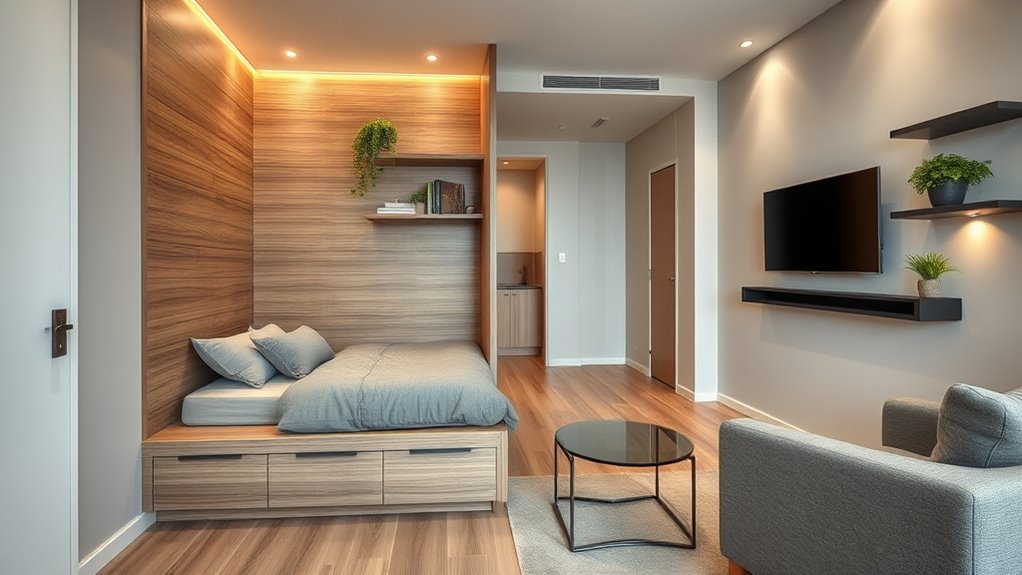
Using smart storage solutions can substantially enhance the way you define and organize different areas within your studio apartment. Incorporate decorative shelving to create visual boundaries without sacrificing style. Place shelves strategically to separate your sleeping zone from the living space while adding a decorative touch. Choose storage furniture that doubles as room dividers, like bookcases or open cabinets, to maximize space and functionality. Color schemes also play a pivotal role; using contrasting or complementary hues can subtly delineate areas. For example, a different wall color behind your bed or a bold-colored storage unit can signal a shift between zones. Keep clutter out of sight by utilizing vertical storage options, which help maintain a clean, organized look while clearly defining each area.
Playing With Lighting to Differentiate Spaces

Lighting is one of the most effective tools to visually distinguish different areas within your studio apartment. By playing with ambient lighting and color schemes, you can create distinct zones without physical barriers. Here are four ways to achieve this:
Lighting creatively defines and separates your studio zones effortlessly.
- Use warm-colored ambient lighting in the sleeping area to evoke coziness.
- Install bright, cool-toned lights in the living space for an energetic vibe.
- Incorporate dimmable fixtures to adjust lighting based on activity and mood.
- Highlight specific zones with accent lighting, like a pendant over the dining area or a floor lamp near your reading nook.
These techniques help you separate your spaces subtly, making your studio feel larger and more organized while adding visual interest.
Adding Decorative Elements for Visual Separation

Decorative elements can considerably enhance the sense of separation in your studio apartment by adding visual interest and defining distinct areas. Artistic murals are a bold choice that can create a focal point and visually divide your space without physical barriers. Wall decals offer versatile, easy-to-apply options to delineate zones subtly, such as placing a decal behind your bed to separate it from the living area. You can also use different colors or patterns in murals and decals to reinforce the division. These elements not only add personality but also serve as visual cues, guiding the eye and making your space feel more organized. Incorporate these decorative touches thoughtfully to achieve a clear, stylish separation that maximizes your studio’s functionality.
Frequently Asked Questions
What Are the Legal Considerations for Zoning in a Studio Apartment?
You need to guarantee your studio apartment complies with building codes and landlord restrictions. Check local zoning laws to confirm the space can be legally used as a dwelling. Your landlord may have specific rules about dividing or modifying the layout, so get their approval before making changes. Staying informed about these legal considerations helps you avoid fines, eviction, or costly modifications down the line.
How Can I Ensure Safety When Using Room Dividers?
To guarantee safety when using room dividers, choose ones made from fire-safe, durable materials like metal or treated wood. Always keep fire safety in mind by avoiding fabric dividers near heat sources or open flames. Secure the dividers firmly to prevent tipping, and regularly check their stability. Avoid blocking emergency exits, and keep pathways clear for quick evacuation if needed. Prioritize safety to create a secure, functional space.
What Are Cost-Effective Ways to Create Distinct Zones?
You can create distinct zones cost-effectively using modular furniture and DIY solutions. Opt for affordable modular pieces like foldable screens or stackable shelves that you can rearrange easily. Get creative with DIY room dividers, such as curtains, pallets, or repurposed furniture, to define separate areas without breaking the bank. These options let you customize your space while keeping costs low and flexibility high.
How Do I Balance Openness and Privacy Effectively?
Balancing openness and privacy is like walking a tightrope—you want both stability and freedom. Use privacy screens to carve out intimate zones without blocking light, and open shelving to create visual separation while keeping your space airy. Position these elements thoughtfully to maintain flow and privacy, so your studio feels spacious yet cozy. This way, you enjoy the best of both worlds, seamlessly blending openness with personal retreat.
Can Zoning Techniques Impact the Apartment’s Resale Value?
Yes, zoning techniques can impact your apartment’s resale value by enhancing interior aesthetics and offering zoning flexibility. When you create distinct areas for living and sleeping, it makes the space more functional and visually appealing. Potential buyers see the added versatility and improved design, making your apartment more attractive. This thoughtful zoning can boost resale value, as it demonstrates a well-designed, flexible living environment that appeals to a broader range of buyers.
Conclusion
By strategically dividing your studio, you can boost both comfort and functionality. Did you know that 78% of apartment dwellers report feeling more organized and relaxed when their space is properly zoned? Whether you use furniture, lighting, or textiles, creating distinct areas helps maximize your limited space. Take the time to plan your layout, and you’ll enjoy a stylish, private, and efficient living environment tailored just for you.