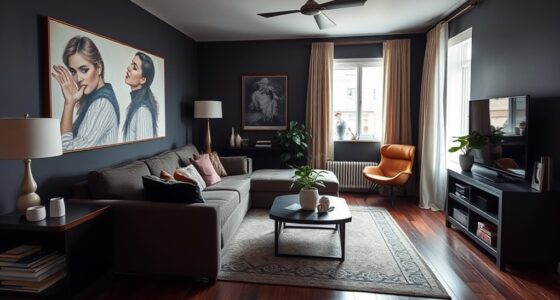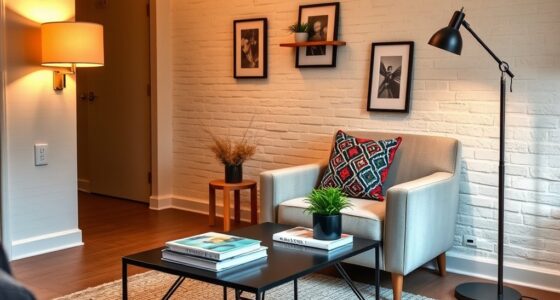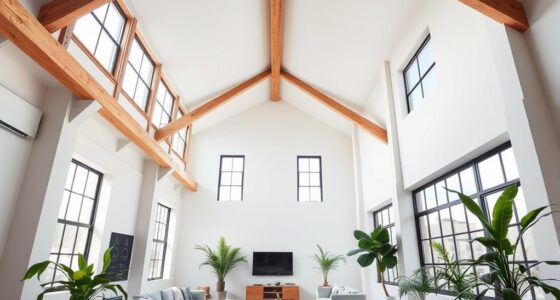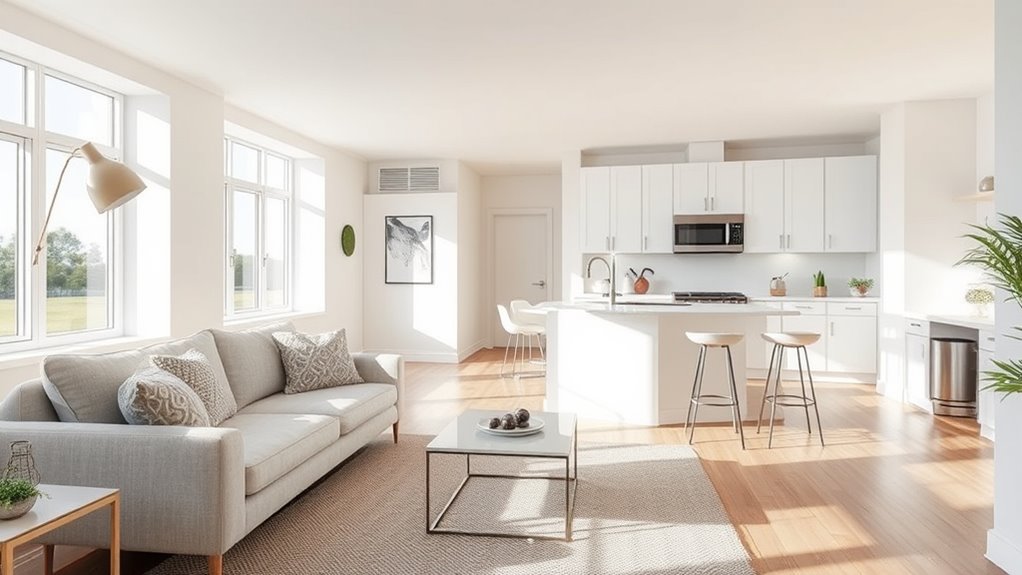

To blend a small living room and kitchen seamlessly, focus on creating an open, airy layout with strategic furniture placement. Use multi-functional pieces and clever storage to keep the space uncluttered. Incorporate consistent colors and layered lighting to unify the environment. Define zones with subtle design cues like rugs or furniture arrangement, while maintaining flow. With thoughtful planning, you’ll maximize space and create a welcoming atmosphere—if you want to learn more about achieving this, keep exploring.
Key Takeaways
- Use strategic furniture placement to naturally define and separate living and kitchen zones.
- Incorporate multi-functional furniture and hidden storage to maximize space and reduce clutter.
- Maintain a cohesive color palette and consistent materials to unify the open plan environment.
- Layer lighting with overhead, task, and ambient options to enhance flow and warmth.
- Balance aesthetics and functionality by planning efficient layouts that promote openness and comfort.
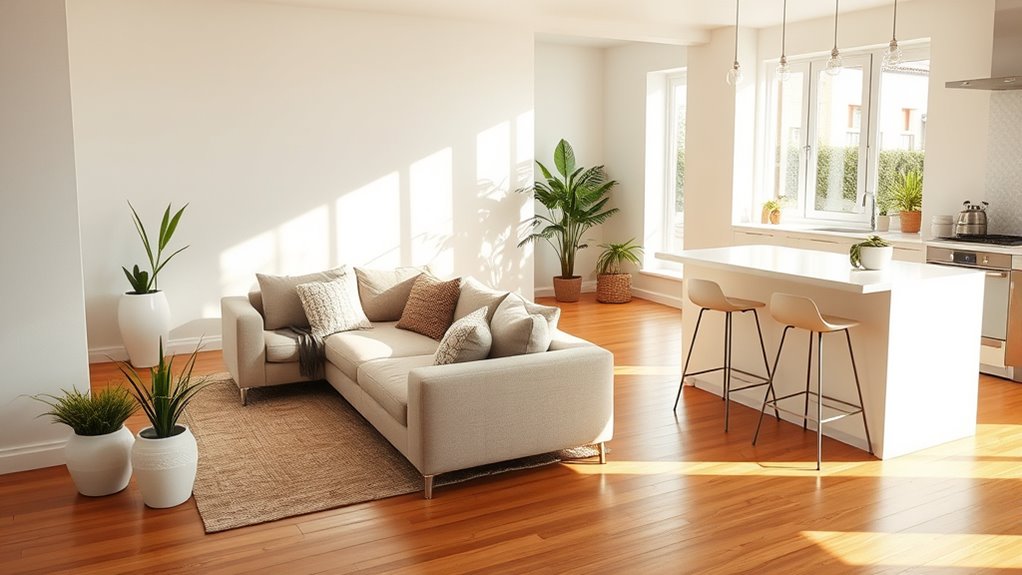
Have you ever wondered why open plan living has become so popular? It’s all about creating a space that feels more connected, functional, and welcoming. When your small living room and kitchen blend seamlessly, it gives you the freedom to entertain, relax, and cook without feeling confined or disconnected. The key is to design the space thoughtfully, ensuring it remains practical and uncluttered. One of the biggest challenges in open plan setups is defining different zones, especially when space is limited. You want your dining area to be inviting without encroaching on the living or kitchen areas. Using furniture placement, like a compact dining table or a movable island, helps delineate the space naturally. It also creates a dedicated spot for meals while maintaining an airy feel.
Another essential aspect is storage solutions. In small open plans, clutter can quickly take over and make the space feel chaotic. To combat this, you need clever storage ideas that maximize every inch of your home. Built-in shelves, multi-functional furniture, and hidden compartments are excellent options. For example, using a sofa with storage underneath or a coffee table with drawers keeps essential items out of sight but easily accessible. Wall-mounted cabinets or floating shelves not only provide extra storage but also free up floor space, making your living room look more spacious. When choosing storage solutions, aim for those that serve dual purposes—like a sideboard that doubles as a buffet or a kitchen island with integrated cabinets. This approach helps you maintain a clean, organized environment without sacrificing style. Incorporating multi-functional furniture is a smart way to maximize utility and save space in a small open plan.
Lighting also plays a pivotal role in tying the open plan together. Incorporate layered lighting—overhead fixtures, task lighting in the kitchen, and soft lamps in the living area—to create a warm, inviting atmosphere. Proper lighting highlights different zones while keeping the overall space bright and welcoming. To enhance the flow, choose a cohesive color palette and consistent materials throughout the space. This helps the entire area feel unified rather than segmented.
Ultimately, blending a small living room and kitchen into a seamless open plan requires balancing functionality with aesthetics. Prioritize efficient storage, define your dining and living zones clearly, and pay attention to lighting and color schemes. With thoughtful planning, you can enjoy a space that feels larger, more connected, and perfectly suited to your lifestyle. Open plan living isn’t just about removing walls; it’s about creating a harmonious environment where everything has its place, and you feel at home.
Top picks for "open plan blend"
Open Amazon search results for this keyword.
As an affiliate, we earn on qualifying purchases.
Frequently Asked Questions
How Can I Maximize Space in a Small Open Plan Area?
You can maximize space by carefully arranging your furniture to create an open flow and avoid clutter. Opt for multi-functional pieces that serve dual purposes, like a sofa bed or storage ottomans. Use light, neutral color schemes to make the area feel larger and more airy. Keep your layout simple and strategic, ensuring pathways remain clear, which enhances the sense of spaciousness in your small open plan area.
What Are the Best Lighting Options for Open Plan Living?
You should use a mix of ambient lighting and task illumination to brighten your open plan space effectively. Install ceiling lights or recessed fixtures for overall brightness, creating a warm, inviting atmosphere. Add task lighting, like under-cabinet lights or pendant lamps, where you need focused light, such as in the kitchen or reading areas. This layered approach guarantees your space feels open, functional, and well-lit at all times.
How Do I Define Separate Zones Without Walls?
You can define separate zones by using dividing furniture like sofas, bookcases, or dining tables to create visual cues that separate spaces without walls. Arranging furniture in a way that naturally guides movement helps establish distinct areas. Rugs also provide visual cues, anchoring each zone. Play with lighting and color to enhance separation, ensuring each space feels unique while maintaining an open, cohesive flow.
What Are Some Affordable Ways to Update an Open Plan Layout?
You can update your open plan layout affordably by adding decorative accessories like colorful rugs, cushions, and artwork to define zones and add personality. Refresh your space with a new color scheme—perhaps through painted accents or furniture—to create visual separation. Rearrange furniture to carve out distinct areas, and incorporate lighting or plants as natural dividers. These simple, budget-friendly touches enhance your space without the need for major renovations.
How Can I Improve Acoustics in a Combined Living and Kitchen Space?
Imagine you’re trying to have a quiet conversation while dinner cooks; soundproofing strategies can help. You could add acoustic panel options like decorative wall tiles or fabric-covered panels to absorb sound and reduce echo. For instance, installing these panels behind the sofa and near the kitchen area can markedly improve acoustics. These simple steps make your combined space more comfortable, turning noise into a thing of the past.
Conclusion
By blending your small living room and kitchen into an open plan, you create a space that feels like a gust of fresh air—a place where conversation flows effortlessly and your home breathes with life. Embrace the versatility and warmth this layout offers, turning your compact area into a vibrant hub of activity. With a little creativity, your open plan can transform your small space into an inviting panoramic canvas of comfort and connection.