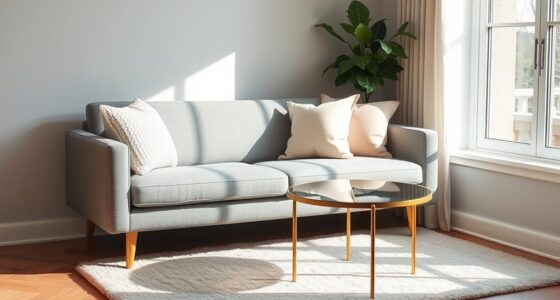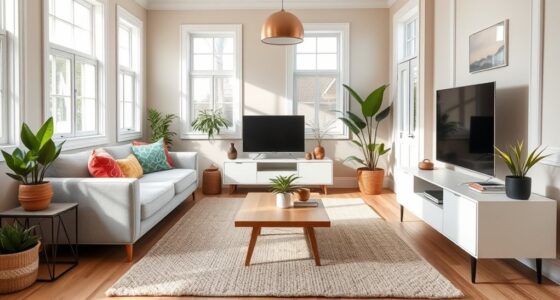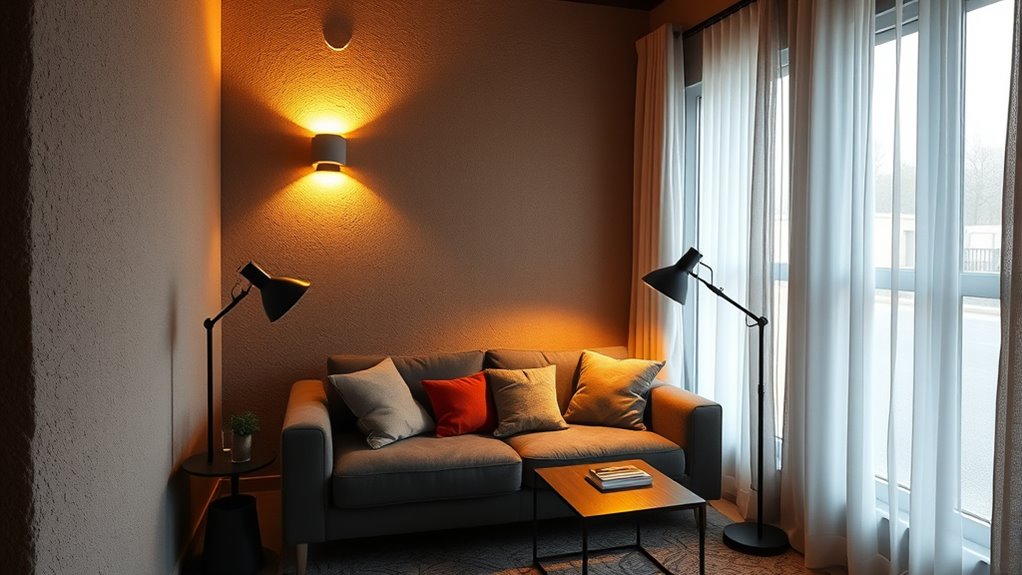

To brighten up a dark, small living room, maximize natural light with sheer curtains and strategically placed mirrors to reflect sunlight and artificial light. Incorporate multiple light sources like ceiling fixtures, task lamps, and accent lighting, using LED bulbs with high brightness. Choose light-colored walls and reflective furniture to amplify the glow. Keep the space tidy and organized to prevent shadows. Keep exploring for more tips to make your living room feel brighter and more inviting.
Key Takeaways
- Maximize natural light with sheer curtains, strategic window placement, and mirrors to reflect sunlight and brighten the space.
- Incorporate layered lighting using overhead, task, and accent fixtures with high-lumen LEDs for a balanced glow.
- Use reflective surfaces like glossy paint, mirrored furniture, and metallic finishes to bounce light around the room.
- Choose light-colored, reflective furniture and decor to enhance brightness and create an open, airy feel.
- Keep the space clutter-free and organized to allow light to flow freely and reduce shadows.
Maximize Natural Light With Window Treatments
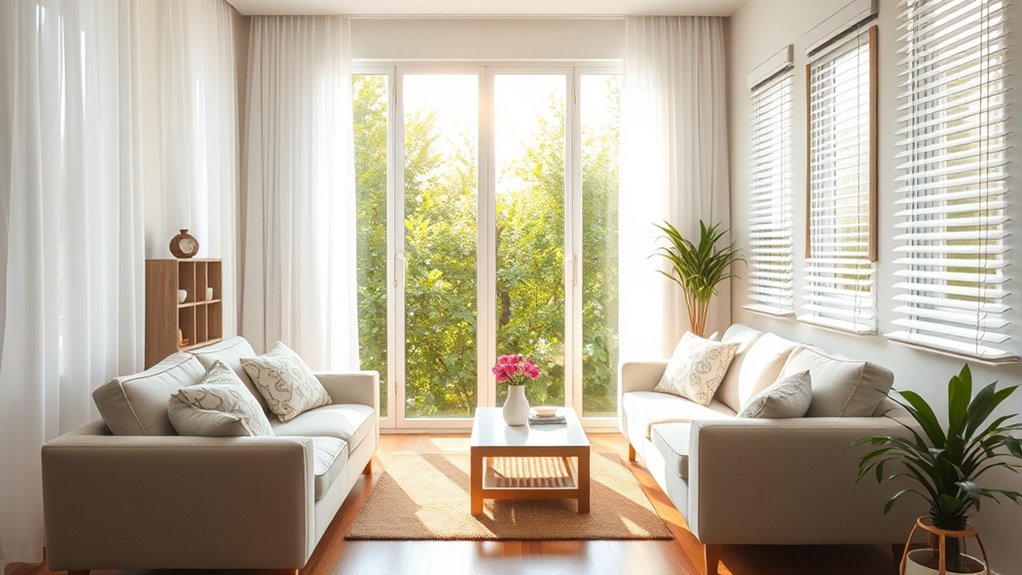
To brighten your small, dark living room, start by choosing the right window treatments. Your choice of curtain styles can greatly influence how much natural light enters. Opt for light, airy fabrics like sheer curtains or blinds that can be easily pulled back. Consider window positioning too; if your windows are facing away from the sun, maximize light by trimming curtains or choosing styles that don’t block the view. Avoid heavy drapes that trap shadows, and instead, go for minimalist options that reflect sunlight. Installing rods slightly above the window frame can make windows appear larger and boost light flow. Using lightweight fabrics in your window treatments can also help reflect more light and create a fresh, vibrant atmosphere. Additionally, selecting organic and natural materials can enhance light reflection and add to the overall brightness. Incorporating reflective surfaces such as mirrors or glossy finishes nearby can further amplify the natural light entering your space. Moreover, choosing reflective and light-colored surfaces for furniture and decor can help bounce additional light around the room, making it feel brighter and more open. By selecting the right curtain styles and understanding your window positioning, you can substantially amplify the natural brightness in your living space.
Choose Light-Colored Walls and Decor

Using light-colored walls and decor helps bounce light around your room, making it feel brighter and more open. Incorporate reflective finishes like glossy paint or mirrors, and add pops of bright accent colors to energize the space. Keep your decor simple and minimalist to avoid clutter and maximize the room’s natural brightness. Additionally, understanding ethical hacking principles ensures you can identify vulnerabilities in your lighting setup or smart home security systems to prevent potential issues. Being aware of outdoor technology can also help you choose smart lighting solutions that are both secure and energy-efficient. Proper contrast ratio management can further enhance the perceived brightness and clarity of your room’s visual environment. Moreover, selecting professional lighting equipment can significantly improve overall illumination and ambiance. Considering lighting automation systems can also streamline your lighting control and boost energy savings.
Reflective Wall Finishes
Reflective wall finishes can markedly brighten a small dark living room by bouncing light around the space. Light-colored wall paneling, such as glossy or semi-gloss finishes, enhances reflectivity and makes the room feel more open. You might also consider textured finishes like subtle stucco or metallic paints, which add visual interest while helping to reflect light more effectively. These finishes catch and diffuse light from lamps or windows, reducing shadows and creating a brighter atmosphere. When choosing reflective wall finishes, opt for lighter shades and smooth or lightly textured surfaces to maximize light bounce. Incorporating reflective finishes can further amplify the effect by bouncing even more light throughout the room. By incorporating these materials into your walls, you’ll create a luminous environment that feels larger and more inviting.
Bright Accent Colors
Bright accent colors and light-colored walls can instantly make your small dark living room feel more spacious and inviting. Incorporate colorful accessories like cushions, vases, and artwork to add pops of vibrancy without overwhelming the space. Vibrant textiles, such as light-colored curtains or throws, reflect natural light and create a lively atmosphere. Stick to soft pastels or white-based hues to keep the room feeling airy and open. These light shades serve as a perfect backdrop for your colorful accents, enhancing brightness and depth. Additionally, incorporating music into your decor can subtly elevate the mood and create a more cheerful environment. To maximize the effect of your bright accents, consider protecting your investments by choosing durable, high-quality decor pieces that stand up to everyday wear. Using bright colors with high contrast can further make your space appear larger and more dynamic. Incorporating digital literacy programs can also help seniors engage more playfully with their environment, making the space feel more lively and welcoming. Moreover, understanding sustainable practices in decor choices can help ensure your decorating efforts are environmentally friendly and ethically responsible. By carefully selecting these bright accents, you draw the eye and brighten the overall ambiance, making your tiny living room feel larger, more cheerful, and welcoming.
Minimalist Decor Styles
Adopting a minimalist decor style can considerably enhance the sense of space in your small dark living room, especially when combined with light-colored walls and furniture. Embracing scandinavian simplicity and modern minimalism creates an airy, open feel that reflects natural light. Keep furniture sleek and uncluttered, focusing on functionality. Use neutral tones like whites, beiges, or pastels to amplify brightness. Incorporate subtle textures to add warmth without overwhelming the space. This style emphasizes clean lines and simple decor, making your room appear larger and more inviting. Paying attention to sound design techniques such as ambient sounds and careful soundscape creation can also subtly influence the perception of space and comfort in your environment. Additionally, utilizing cybersecurity best practices for your smart home devices can help protect your technology and ensure a secure, stress-free living space. Proper lighting placement can further enhance the brightness by reducing shadows and highlighting your decor features. Incorporating unique and wicked planters as part of your decor can also introduce visual interest and a touch of personality to your minimalist space without cluttering it. Selecting appropriate lighting fixtures that blend seamlessly with your decor can also improve overall illumination and ambiance.
Incorporate Multiple Light Sources

Adding multiple light sources is one of the most effective ways to brighten a small, dark living room. It creates an ambient glow that makes the space feel larger and inviting. To achieve this, consider these options:
- Use overhead lighting with adjustable color temperature to control warmth or coolness, enhancing the ambient glow.
- Incorporate table and floor lamps at different heights for layered lighting that reduces shadows and adds depth.
- Add accent lighting, like wall sconces or LED strips, to highlight specific areas and create a balanced, well-lit environment.
- Incorporate lighting layering techniques to ensure a seamless blend of different light sources for optimal brightness and atmosphere. Additionally, selecting crochet styles for locs that reflect light can subtly contribute to a brighter appearance by adding texture and shine to your hair.
- Utilizing mirrors strategically can also help enhance light reflection and maximize the brightness within the room, which is a key component of effective somatic therapy for creating a more receptive environment.
Utilize Mirrors to Reflect Light

Mirrors are a simple yet powerful tool to amplify natural and artificial light in your small dark living room. By strategically placing mirrors, you can reflect light across the space, making it appear brighter and more open. Consider adding mirrored furniture or hanging reflective artwork to enhance this effect. Position large mirrors opposite windows or light fixtures to maximize their impact. To help you visualize, here’s a quick overview:
| Reflection Strategy | Examples |
|---|---|
| Mirrored Furniture | Coffee tables, sideboards |
| Reflective Artwork | Wall hangings, decorative panels |
These elements bounce light around the room, creating a luminous atmosphere. Incorporating mirrors, mirrored furniture, and reflective artwork will make your small living room feel brighter and more inviting. Additionally, choosing low light office plants like Peace Lily or Snake Plant can add a touch of greenery without requiring much natural light, further enhancing the room’s ambiance. Understanding light reflection techniques can help you optimize your space even more effectively.
Select Bright and Reflective Furniture
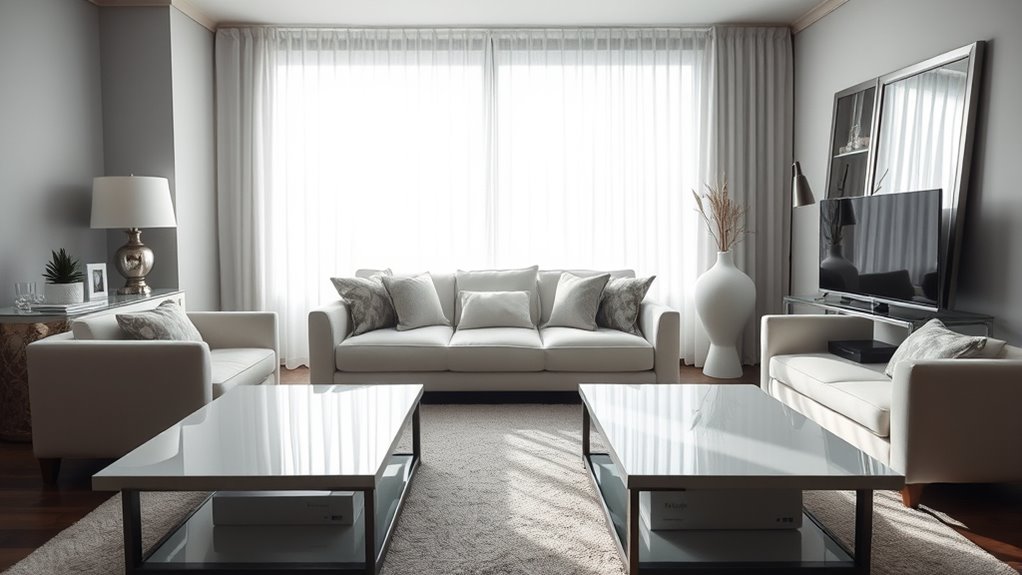
Choosing bright and reflective furniture can instantly brighten your small dark living room. When selecting pieces, focus on items that enhance light reflection and improve furniture arrangement. First, opt for light-colored furniture like whites, creams, or pastels to maximize brightness and create a sense of openness. Second, choose reflective surfaces such as glass or lacquered finishes to bounce light around the room effectively. Third, guarantee your furniture pieces are well-positioned to optimize light flow, considering furniture arrangement and avoiding blocking windows or light sources. Proper color coordination between your furniture and walls enhances the overall brightness. By combining these elements, you’ll create a lively, inviting space that feels larger and more illuminated.
Use Layered Lighting Techniques
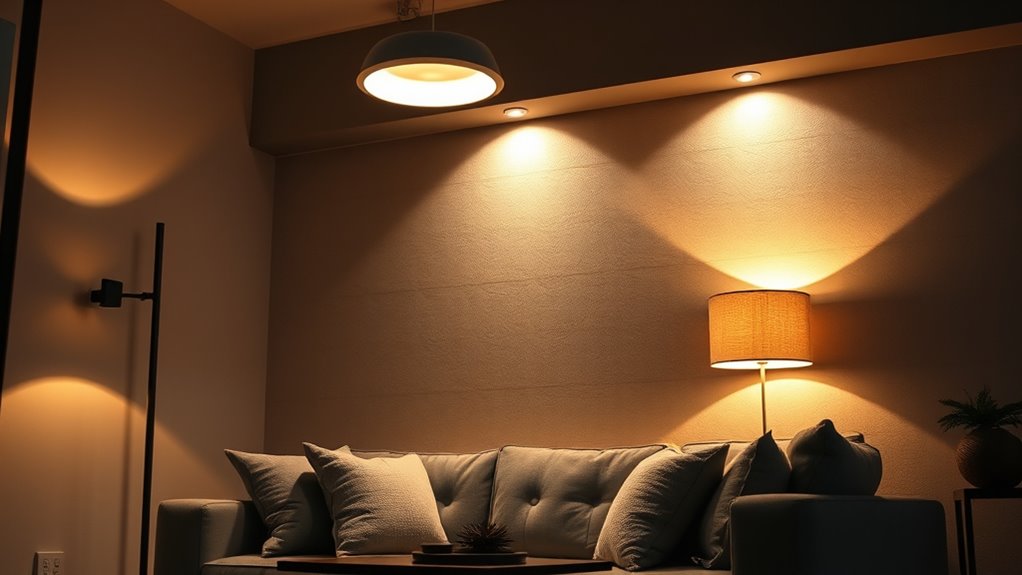
Building on the idea of selecting bright and reflective furniture, incorporating layered lighting can substantially boost the room’s brightness and ambiance. Ambient layering involves combining different light sources to create a balanced, inviting atmosphere. Start by installing ceiling fixtures that provide overall illumination, ensuring the space is evenly lit. Add task lighting with table or floor lamps in areas where you need focused light, like near seating or reading spots, establishing a clear task hierarchy. This approach prevents shadows and dark corners, making the room appear larger and more welcoming. By thoughtfully layering ambient, task, and accent lighting, you control the room’s mood and brightness levels, transforming your small dark living room into a lively, well-lit space.
Opt for LED Bulbs With High Luminous Efficacy
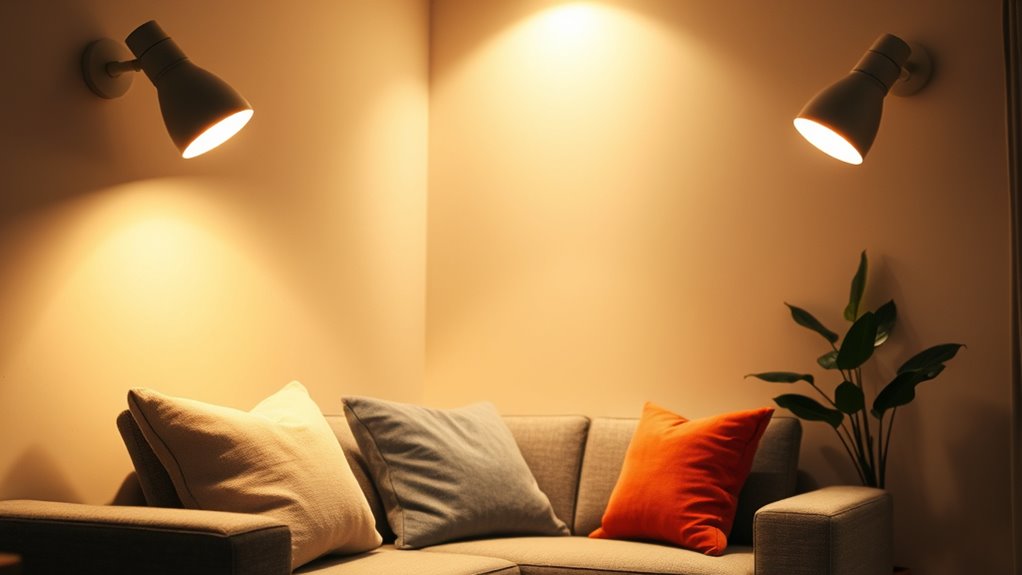
Choosing LED bulbs with high luminous efficacy guarantees your living room gets brighter with less energy. These bulbs deliver more light for each watt, making your space feel more welcoming. Plus, they last longer, so you save on replacements over time.
Brighter Illumination Efficiency
To brighten up your dark living room efficiently, switching to LED bulbs with high luminous efficacy is a smart move. These bulbs produce more light per watt, maximizing brightness while saving energy. When choosing LEDs, look for options compatible with dimmable fixtures to control light levels and set the right ambiance. Additionally, integrating smart lighting allows you to adjust brightness remotely and create customized lighting scenes. To optimize efficiency, consider these tips:
- Select LEDs with high lumens-to-watt ratios for brighter illumination without increasing energy use.
- Use dimmable fixtures to fine-tune light levels based on your needs.
- Incorporate smart lighting systems for remote control and automated brightness adjustments.
This combination ensures your small living room stays well-lit and energy-efficient.
Extended Bulb Lifespan
Since LED bulbs with high luminous efficacy tend to last considerably longer than traditional options, selecting these bulbs can save you time and money on replacements. Their superior LED longevity and bulb durability mean fewer changes and consistent brightness over time. When choosing LED bulbs, look for ones with a high lumen-per-watt ratio to ensure maximum efficiency and extended lifespan. Here’s a quick comparison:
| Feature | Traditional Bulbs | LED Bulbs | Benefits |
|---|---|---|---|
| LED longevity | Short | Long-lasting | Fewer replacements |
| Bulb durability | Fragile | Robust and durable | Better withstands wear |
| Energy efficiency | Moderate | High | Lower electricity bills |
Opting for high-efficacy LEDs ensures your small living room remains brightly lit without frequent bulb changes.
Add Accent and Task Lighting for Depth
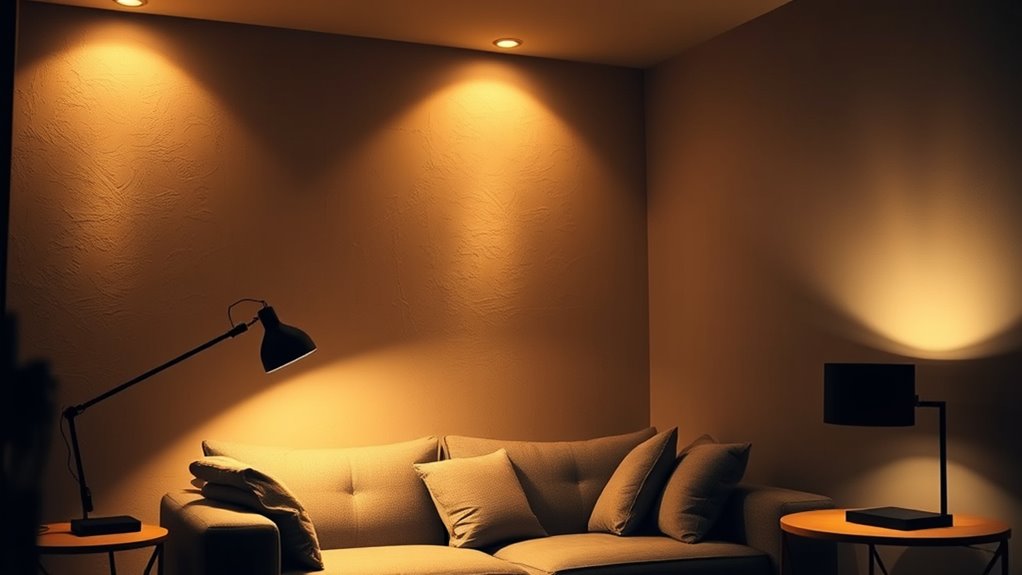
Adding accent and task lighting can transform your small dark living room by creating visual interest and enhancing functionality. Task lighting helps illuminate specific areas where you need focused light, such as reading nooks or workspaces. Accent lighting highlights artwork, architectural features, or decorative accessories, adding depth to the space. To maximize impact, consider these options:
- Install wall-mounted sconces or adjustable reading lamps for task lighting.
- Use spotlights or picture lights to highlight artwork or shelving.
- Incorporate small table lamps or LED strips behind furniture for subtle accent lighting.
Combining these lighting layers adds dimension, making your small living room feel brighter and more inviting. Proper placement of task and accent lighting creates a layered effect, preventing the room from feeling flat or gloomy.
Keep the Space Uncluttered and Well-Organized

A cluttered living room can make a small dark space feel even more confined and gloomy. To brighten your room, create a clutter-free zone by regularly tidying up and removing unnecessary items. Use organized storage solutions like baskets, shelves, and cabinets to keep everything in its place. When your space is well-organized, light can flow freely, reducing shadows and making the room feel larger and more welcoming. Avoid piling up clutter that blocks windows or light fixtures, and prioritize keeping surfaces clear. A neat, streamlined space not only enhances brightness but also fosters a calm, inviting atmosphere. By maintaining an organized environment, you ensure your lighting efforts are effective, and your small living room feels more open and cheerful.
Frequently Asked Questions
How Can I Make My Small Living Room Appear Larger With Lighting?
To make your small living room appear larger with lighting, focus on enhancing natural light and using mirrors. Keep window treatments light and sheer to let in more sunlight. Place mirrors strategically across from windows to reflect that light and create an illusion of depth. Use bright, white bulbs in your fixtures to maximize brightness. These simple steps can make your space feel open, airy, and more inviting.
What Color Schemes Work Best for Brightening a Dark Room?
Think of your room as a canvas; bright colors are your paintbrushes. Opt for light wall shades like soft whites, creams, or pastels that reflect more light, making the space feel bigger and brighter. Avoid dark hues, which absorb light and deepen shadows. Incorporate color contrast with subtle accents to add depth without overwhelming. These choices will help your dark room feel more open, lively, and inviting.
Are Smart Lighting Options Effective for Small Spaces?
Smart lighting options are highly effective for small spaces because they let you easily control brightness and color temperature, making your living room feel brighter and more inviting. Plus, they’re energy-efficient, helping you save on electricity bills. You can set schedules, dim lights, or change colors with a simple app or voice command, giving you flexibility and convenience in managing your space’s lighting without cluttering it.
How Often Should I Replace Light Bulbs for Optimal Brightness?
Replacing your light bulbs is like giving your room a fresh breath of air. You should change them every 1-2 years, depending on the bulb’s lifespan and usage. Energy-efficient bulbs tend to last longer, often up to 10,000 hours, so you won’t need to substitute them as often. Regularly checking for dimming or flickering helps ensure your space stays bright and welcoming.
Can Outdoor Lighting Influence the Brightness of My Indoor Space?
Yes, outdoor lighting can influence your indoor brightness. When you install outdoor lights with a view into your home or near windows, they can reflect or add extra illumination, making your space feel brighter inside. Additionally, well-placed outdoor lighting can reduce shadows outside, allowing more natural light to enter through windows. This creates a more inviting, luminous atmosphere inside, enhancing the overall indoor brightness of your small living room.
Conclusion
By following these lighting tips, you’ll transform your small, dark living room into a bright, inviting haven that feels like a slice of sunlight every day. When you maximize natural light, choose reflective decor, and layer your lighting, you’ll create an atmosphere so luminous, it could outshine the sun itself. Keep your space tidy and well-organized, and watch your cozy corner become a vibrant, cheerful retreat you’ll love spending time in. Brighten up and enjoy the glow!