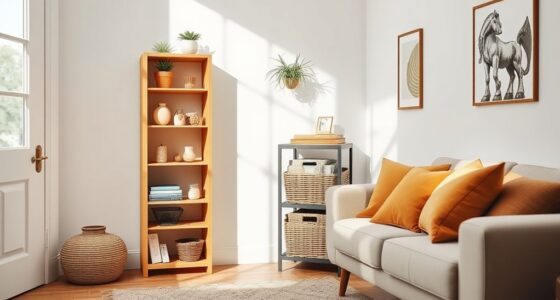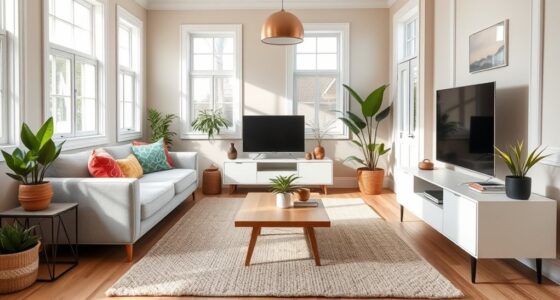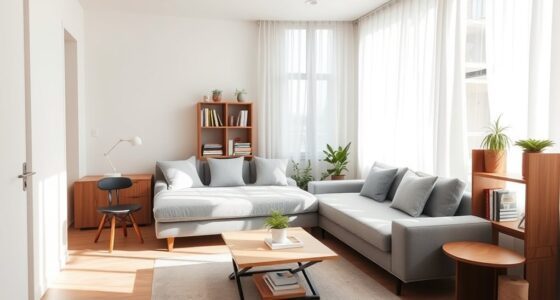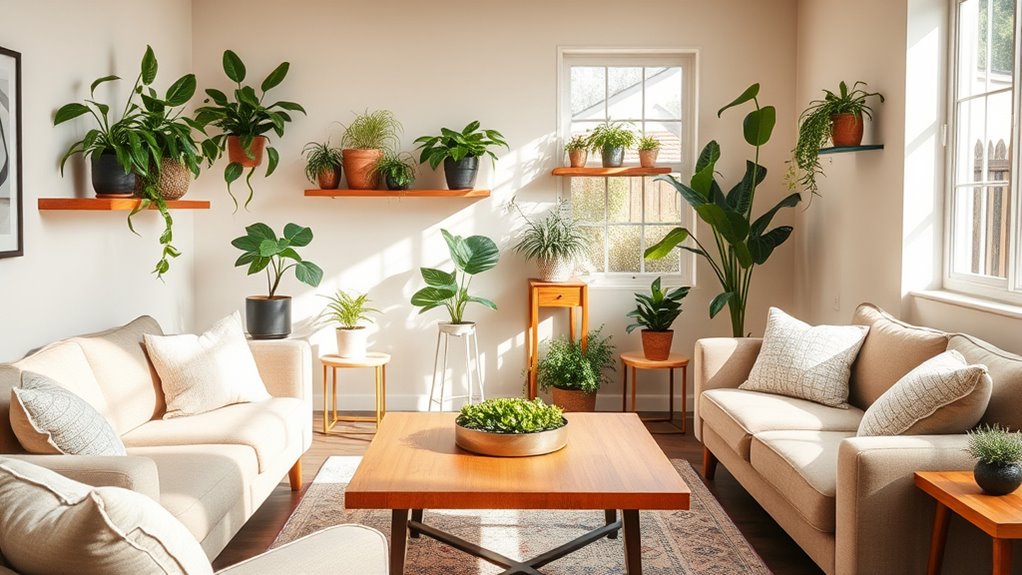

To maximize space, incorporate vertical arrangements by hanging plants or wall-mounted planters, and use tiered stands to add height without clutter. Group plants together in decorative clusters, mixing different sizes and styles for visual interest, while keeping the overall layout balanced. Select low-maintenance, space-efficient plants suited to your lighting, and use multifunctional furniture with built-in plant spots. Staying organized and strategic in your plant placement lets you enjoy greenery without sacrificing roominess—learn more to perfect your setup.
Key Takeaways
- Use vertical space with wall-mounted planters and hanging baskets to free up floor and surface areas.
- Group plants together in decorative clusters to create a lush, cohesive focal point without cluttering the room.
- Opt for small, low-maintenance plants like succulents or pothos that fit compactly and thrive in limited space.
- Incorporate multi-functional furniture with built-in plant storage or open shelves to maximize space and decor.
- Maintain balance by placing plants at varied heights and avoiding overloading any single area to preserve room openness.

When you have a small living room, arranging houseplants can be a fun challenge that adds life and personality to your space. You want your plants to thrive, but you also need to make sure they don’t overwhelm or clutter your room. To do this effectively, focus on smart plant care tips and creative decorative plant arrangements that maximize your space without sacrificing style. Start by choosing plants that suit the lighting conditions of your living room. For example, select low-maintenance, space-efficient plants like pothos, snake plants, or succulents if sunlight is limited. These varieties are not only easy to care for but also lend themselves well to decorative arrangements.
Next, consider vertical planting options. Wall-mounted planters, hanging baskets, or tiered plant stands help you utilize vertical space, leaving your floors and surfaces free. This approach creates visual interest and makes your room appear larger. When arranging your plants, think about grouping them in clusters rather than spreading them out individually. Grouping creates a lush, cohesive look and allows you to create decorative plant arrangements that serve as focal points. Use different heights and containers to add depth and dimension, but keep the overall design balanced to avoid clutter.
To optimize your tiny space further, incorporate multi-functional furniture that doubles as plant stands. For instance, placing a tall bookshelf or a side table with open shelves can provide a perfect spot for potted plants. This not only saves space but also adds to your room’s decor. Remember to pay attention to plant care tips—overwatering is a common mistake, so make certain each plant’s needs are met without excess. Proper watering, lighting, and occasional fertilizing keep your plants healthy and vibrant, enhancing your decorative arrangements’ appeal.
Additionally, understanding home theatre projector technology can inspire creative ways to incorporate visual elements that complement your greenery, such as projecting calming images or patterns onto blank walls to create a soothing ambiance. Lastly, don’t forget to weigh up the visual flow. Use plants to create pathways or natural dividers that define different areas without walls. This technique makes your small living room feel more expansive and inviting. Keep your decorative plant arrangements uncluttered by regularly pruning and rotating plants to maintain their shape and health. When you approach your plant selection and arrangement with intention, your small living room transforms into a lively, personalized sanctuary that’s both functional and beautiful. With thoughtful plant care tips and clever decor ideas, you’ll find it easy to enjoy the greenery without sacrificing space.

2 Pack Wooden Wall Vase Set, Boho Hanging Planter for Indoor Plants & Flowers, Wood Wall-Mounted Planters for Living Room, Modern Farmhouse Entryway or Bathroom, Rustic Art for Home (Brown)
Modern Wall Decor: Bathroom wall art, Enhance your space with this contemporary wood wall decor piece that effortlessly…
As an affiliate, we earn on qualifying purchases.
As an affiliate, we earn on qualifying purchases.
Frequently Asked Questions
How Do I Choose Low-Maintenance Houseplants for Small Spaces?
To choose low-maintenance houseplants for small spaces, pick succulent varieties and air purifying plants. Succulents require minimal watering and thrive in limited soil, making them perfect for tight spots. Air purifying plants like snake plants or pothos are easy to care for and improve air quality. Look for compact varieties that fit your space, and you’ll enjoy greenery without extra hassle or clutter.
What Are the Best Lighting Options for Indoor Plants in Small Rooms?
You should prioritize natural sunlight, placing your plants near windows to maximize their growth. If sunlight is limited, supplement with artificial grow lights to provide consistent illumination. Opt for full-spectrum LED lights that mimic natural sunlight and are energy-efficient. Adjust the height and duration of light exposure based on your plants’ needs, ensuring they get enough light without overcrowding your small space. This keeps your plants healthy and thriving.
How Can I Prevent My Plants From Overcrowding the Space?
To prevent your plants from overcrowding, choose plants with varying plant heights to create visual interest and space. Use decorative containers that elevate smaller plants or hang trailing varieties to free up surface area. Arrange taller plants at the back and shorter ones in front, maintaining openness. Regularly prune and rotate your plants to keep the arrangement fresh, ensuring your small living room remains functional and inviting.
Are Hanging Plants Suitable for Small Living Rooms?
Hanging plants are perfect for small living rooms because they save space and add greenery without cluttering. You can explore plant shelf ideas to display decorative plant arrangements at different heights, creating visual interest. Use hanging planters to optimize vertical space, and consider wall-mounted pots for a stylish touch. This way, you enjoy lush plants without overcrowding, making your small room feel fresh and inviting.
How Do I Water Houseplants Without Creating Clutter or Mess?
Watering your houseplants is like gentle art; use watering containers with narrow spouts to control flow and avoid spills. Stick to consistent watering schedules to prevent over- or under-watering, which keeps messes at bay. Place your plants on trays or waterproof mats to catch drips. This way, you keep your space tidy while ensuring your plants stay healthy and happy without clutter or mess.

IOTXY 5-Tier Wooden Shelf Bookcase – Modern Open Bookshelf, Free Standing Storage Rack, Multifunctional Display Stand for Home and Office, Oak, Rectangle
MINIMALIST STYLE: With its simple and clean-lined design, this book shelf will suit almost any style and will…
As an affiliate, we earn on qualifying purchases.
As an affiliate, we earn on qualifying purchases.
Conclusion
By thoughtfully arranging your houseplants, you create a vibrant, inviting space without sacrificing square footage. Remember, plants aren’t just decor; they bring life and balance, proving the theory that nature thrives best when integrated into our daily environments. When you prioritize placement and variety, you’ll find your small living room becomes a lush oasis that feels spacious and fresh. Embrace the idea that even tiny spaces can bloom beautifully with a little creativity and care.

Bamworld Plant Stand Indoor, Corner 4 Tier Metal Plant Shelf for Multiple Plants, Tiered Flower Pot Stands for Patio Garden Balcony Living Room Bedroom, Brown
Space-Saving Corner Design: Maximize space with this 4-tier corner plant stand, perfect for indoor plant stand or plant…
As an affiliate, we earn on qualifying purchases.
As an affiliate, we earn on qualifying purchases.

Othonna Capensis Ruby Necklace Live Succulent Plant (4-inch), Fully Rooted Trailing Houseplant for Hanging Baskets, Low Maintenance Home & Office Decor, Ideal Gift for Plant Lovers
Easy Care & Drought-Tolerant Succulent: Ruby Necklace is a low-maintenance succulent. Water only when the soil is completely…
As an affiliate, we earn on qualifying purchases.
As an affiliate, we earn on qualifying purchases.