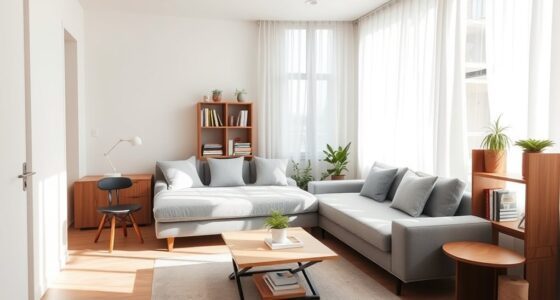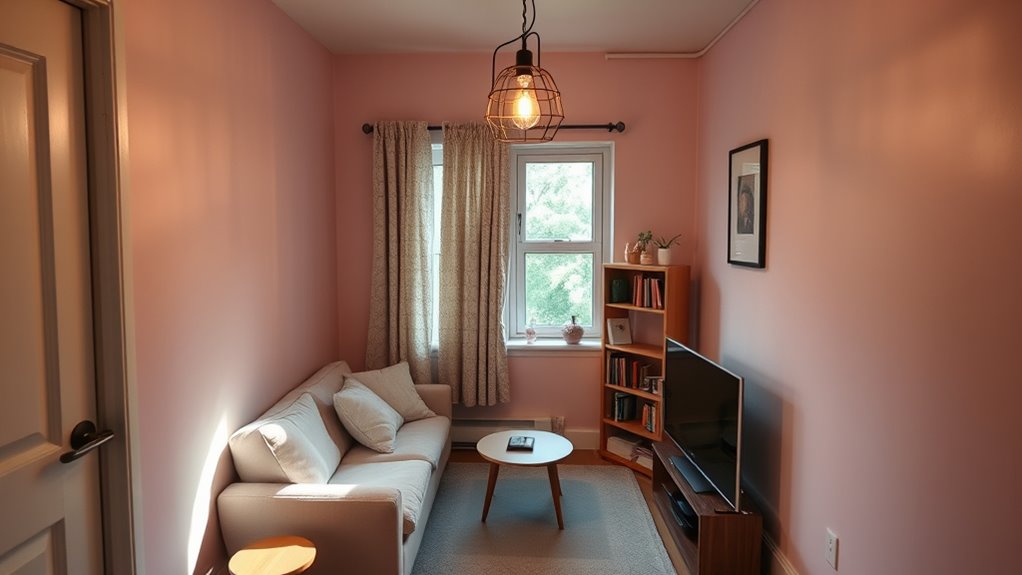

To arrange furniture in an awkwardly shaped small living room, start by evaluating the space and identifying challenges like tight corners or unusual angles. Choose appropriately scaled, multi-functional furniture that fits your layout and enhances flow. Use rugs, lighting, and natural elements to define zones and make the space feel larger. Mirrors and smart placement help improve light and perception. For more tips on transforming your small, awkward space, keep exploring these ideas.
Key Takeaways
- Use multi-functional furniture and space-saving pieces to maximize utility in limited, awkwardly shaped areas.
- Define zones with rugs, furniture placement, and natural light to create visual separation and functional flow.
- Incorporate corner shelves and angled furniture to fit irregular spaces and improve overall layout.
- Utilize semi-partitions or open shelving to delineate areas without cluttering small, awkward rooms.
- Choose proportionate, cohesive furniture that complements the room’s shape and enhances visual harmony.
Assessing Your Space and Identifying Challenges
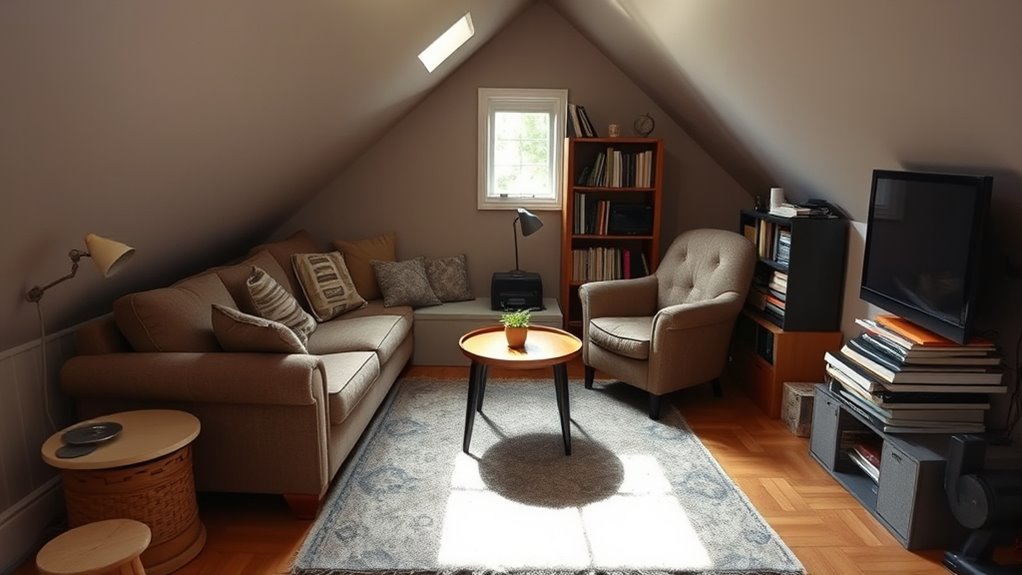
Before arranging furniture, it’s essential to carefully assess your space to understand its limitations and opportunities. Start with a thorough spatial analysis, noting the room’s shape, existing features, and focal points. Identify any awkward angles, narrow passages, or obstructions that could affect furniture placement. Measure the room’s dimensions precisely, including doorways, windows, and built-in elements. This helps you determine what size furniture will fit comfortably and where to position it. Recognizing these constraints early allows you to plan more effectively, avoiding overcrowding or blocking natural pathways. Understanding color accuracy and contrast ratios can also influence how you arrange lighting and furniture to optimize visual comfort and ambiance within your space. Additionally, considering the room’s layout flow ensures that movement is smooth and functional throughout the area. Being aware of furniture proportions helps in selecting pieces that complement the space without overwhelming it. For example, incorporating visual weight considerations can help balance the room’s aesthetics and functionality. By understanding your space’s unique qualities through careful assessment, you’ll be better equipped to create a functional, inviting small living room that maximizes every inch of available space.
Choosing the Right Furniture Size and Style
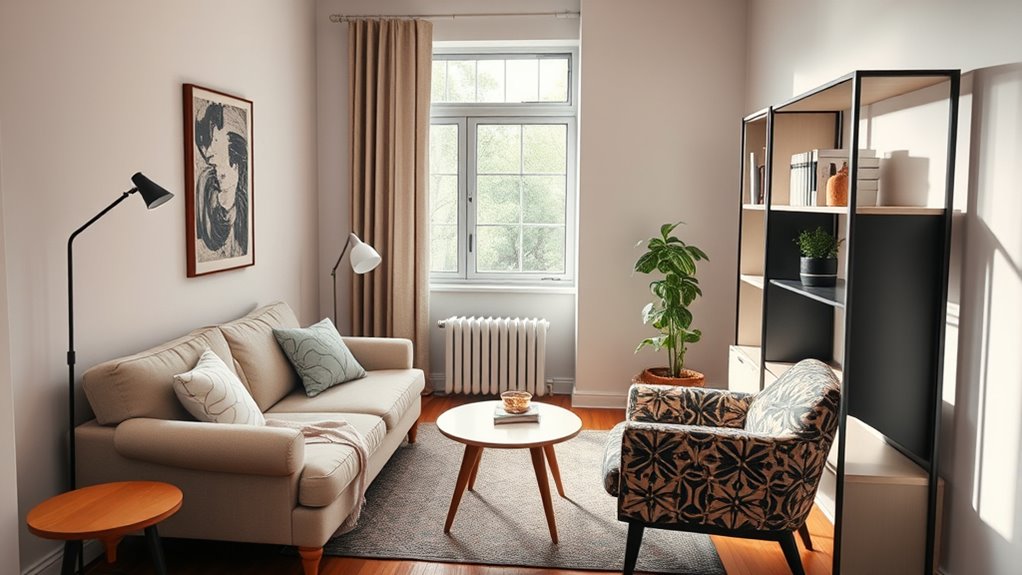
Choosing furniture that fits your room is key to making the space feel open and comfortable. Focus on selecting pieces that match the room’s scale and keep the style cohesive with your decor. Multi-functional furniture can also help maximize your space without sacrificing style or comfort. Incorporating rustic lighting can enhance the farmhouse charm while providing practical illumination. Additionally, selecting self-watering plant pots that complement your furniture can add a touch of greenery and improve air quality in small spaces. Incorporating antiques can add character and charm, creating focal points that make the room feel more inviting. Being mindful of leadership skills such as adaptability and strategic thinking can also help you creatively approach space challenges. Remember to consider bicycle tire longevity in storage to keep your accessories in good condition when not in use.
Scale to Room Size
Selecting furniture that fits your small living room is essential for creating a balanced and functional space. When choosing pieces, focus on scale to room size by opting for proportionate furniture that doesn’t overwhelm or underwhelm the area. Oversized furniture can make the room feel cramped, while tiny pieces may look out of place. Measure your space carefully and select items that leave enough room to move comfortably. Incorporating organic materials can also add a natural touch to your décor, enhancing the overall aesthetic. Multi-functional furniture, like a sofa bed or nesting tables, can maximize utility without sacrificing scale. Keep in mind that smaller, streamlined pieces often work best in awkwardly shaped rooms, helping to open up the space visually. Incorporating water-efficient furniture options can also contribute to sustainability and comfort. By matching your furniture size to the room’s dimensions, you create a harmonious, inviting environment.
Style Cohesion Tips
To create a cohesive look in a small living room, it’s important to match your furniture’s size and style seamlessly. Choose pieces with similar design elements to maintain visual harmony. Stick to a consistent color coordination scheme by selecting furniture in complementary or neutral tones, which helps unify the space. Avoid mixing overly ornate or contrasting styles that can make the room feel chaotic. Instead, opt for simple, clean-lined furniture that fits well within the room’s proportions. Incorporate decorative accessories thoughtfully, using matching or coordinating accents to enhance the overall style. These details strengthen the room’s cohesion, making it feel more spacious and inviting despite its awkward shape. Additionally, understanding furniture arrangement principles can also help you optimize small spaces and improve flow. Being mindful of cybersecurity vulnerabilities can help you safeguard your home network and connected devices, ensuring your space remains secure. Ensuring consistent furniture style and thoughtful accessories are key to a polished, harmonious small living room. Incorporating space-saving furniture solutions can further maximize the usability of your limited area. Moreover, choosing versatile furniture with multi-functional features can add flexibility to your layout and storage options.
Multi-Functional Pieces
In a small living room, multi-functional furniture can maximize space and enhance practicality without sacrificing style. To choose the right pieces, consider their size and style carefully. First, opt for a sofa bed or ottoman with storage to serve multiple purposes. Second, select pieces that complement your existing decor and wall art, ensuring visual cohesion. Third, incorporate decorative accessories that enhance functionality, like side tables with built-in shelves or foldable tables. These choices should blend seamlessly with your space, adding versatility without clutter. When selecting furniture, keep in mind that multi-functional pieces should support your layout and reflect your style, while also accommodating decorative accessories that personalize your room. Additionally, paying attention to interior design principles can help you create a balanced and harmonious environment. This approach guarantees your small living room remains stylish, functional, and inviting.
Creating Defined Zones for Functionality
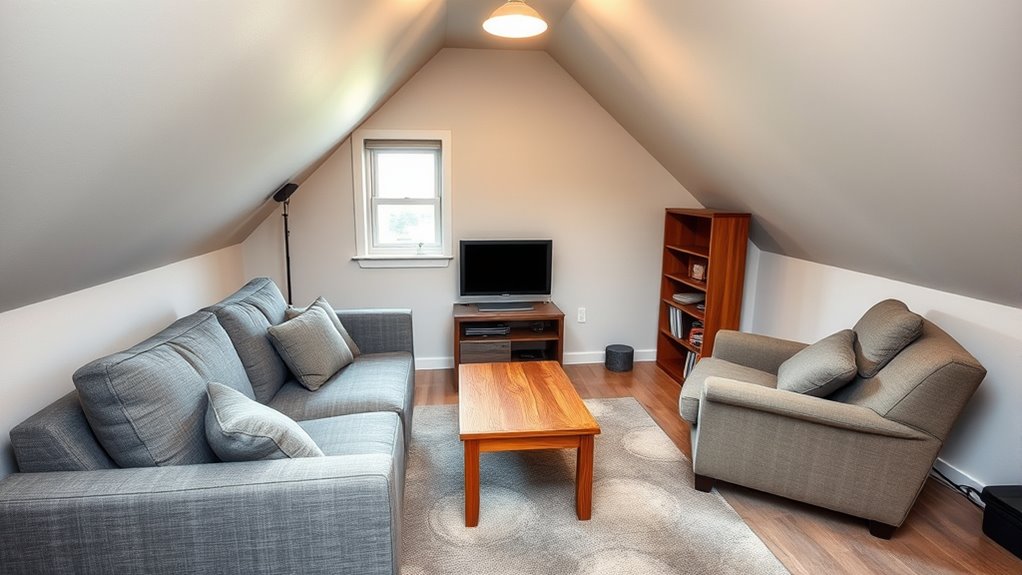
To make your small living room more functional, start by designating clear zones for activities like relaxing, working, or entertaining. Use area rugs to visually separate these spaces without cluttering the room, and consider furniture partitions or strategic placement to enhance privacy and flow. Creating distinct zones helps maximize your space and keeps everything organized. Additionally, incorporating natural light can brighten different areas, making them feel more open and inviting. Utilizing furniture arrangement techniques can further improve the overall layout and usability of your small living room. Understanding beach destinations can inspire you to create a relaxing, airy ambiance reminiscent of coastal escapes, even indoors.
Designate Distinct Areas
Creating distinct zones within your small living room helps maximize functionality and makes the space feel organized. To effectively define areas, consider using decorating accessories and color schemes to create visual separation. Incorporating artificial intelligence tools can also help you plan optimal layouts based on your room’s unique dimensions. Additionally, you can analyze solar system concepts to understand spatial harmony and balance, enhancing your design choices. Understanding room proportions can guide you in selecting appropriately scaled furniture to improve flow and comfort. You can also explore space planning techniques that optimize furniture placement for better utility and aesthetics. 1. Use different wall colors or accent walls to set apart areas, making each zone feel intentional. 2. Incorporate decorative accessories like lamps, artwork, or plants to anchor specific zones and add personality. 3. Choose coordinated color schemes for furniture and accessories that subtly differentiate sections without cluttering the space. Additionally, being aware of store hours in your area can help you schedule your shopping trips efficiently to avoid congestion and ensure you find the items you need for your decorating project.
Use Area Rugs Wisely
Area rugs are a powerful tool for defining different zones within your small living room, making each space feel purposeful and organized. To maximize their impact, focus on proper area rug placement; position rugs so they anchor key furniture groupings, like the seating area or coffee table. When selecting rug size, opt for a size that complements the space—too small, and it won’t unify the zone; too large, and it might overwhelm the room. A good rule is to have the front legs of your furniture on the rug, creating a cohesive look. This strategy not only improves flow but also visually separates functional areas without cluttering the limited space. Thoughtful rug placement and size selection can transform your awkwardly shaped room into a harmonious, well-defined living area.
Incorporate Furniture Partitions
Using furniture as natural partitions can considerably enhance the functionality of a small living room. A room divider or a sleek partition wall visually separates areas, creating distinct zones for lounging, working, or dining. To maximize this strategy, consider:
- Positioning a tall bookshelf or open shelving as a semi-partition that offers storage and separates spaces without blocking light.
- Using a folding screen or a fabric room divider to quickly define a cozy reading nook or workspace.
- Installing a low, open partition wall that delineates the living area while maintaining an open feel.
These furniture partitions help organize your space efficiently, making the small room feel more spacious and purposeful without sacrificing style or flow.
Optimizing Corners and Unusual Angles

Corners and unusual angles can seem challenging when arranging furniture in a small living room, but they also present unique opportunities to maximize space and functionality. Use corner shelving to make the most of tight spots, providing extra storage without cluttering the room. Angled furniture, such as a diagonal sofa or a sectional, can complement irregular layouts and create a cozy seating area. These pieces fit snugly into awkward corners, making the space feel intentional and open. Consider placing a tall, narrow bookshelf or a corner cabinet to add storage while maintaining an open feel. By thoughtfully selecting furniture that fits the angles and utilizing corner shelving, you turn difficult spaces into practical, stylish features that enhance your small living room.
Using Multi-Functional and Flexible Furniture Pieces
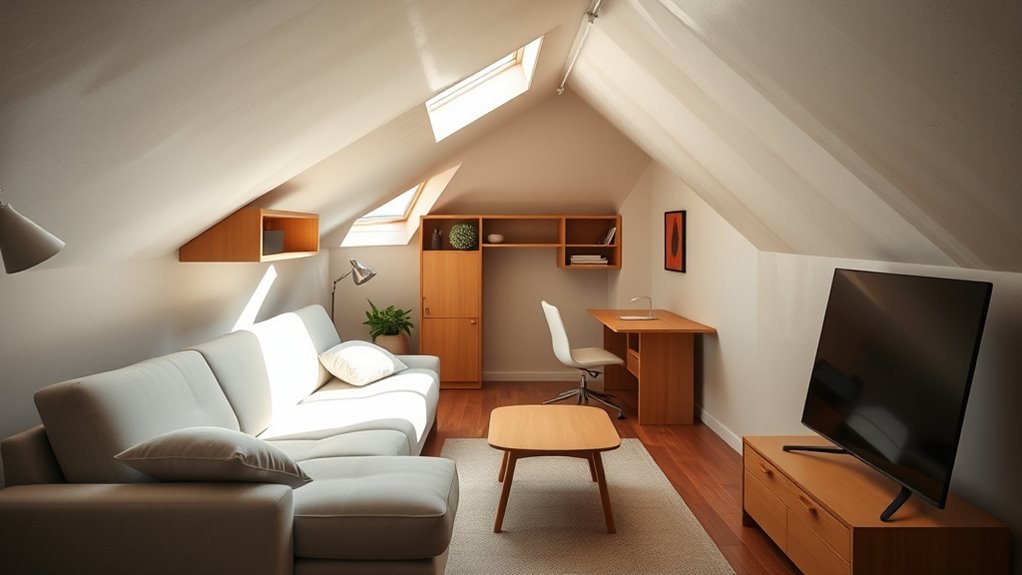
Maximizing space in a small living room often depends on choosing furniture that serves multiple purposes. Multi-functional and flexible pieces help you optimize limited space efficiently. Consider these options:
Opt for multi-purpose furniture to maximize small living room space efficiently.
- Sofa beds – They provide comfortable seating during the day and convert into beds for guests.
- Ottomans with hidden storage – Perfect for keeping blankets, books, or other essentials out of sight yet easily accessible.
- Convertible coffee tables – These can elevate for dining or work and fold down when not in use, saving space.
Using such furniture allows you to reduce clutter and make the room feel more open. These versatile pieces adapt to your needs, providing both style and practicality in an awkwardly shaped small living room.
Enhancing Space Perception With Color and Lighting

Choosing the right colors and lighting can dramatically alter how spacious your small living room feels. Using color psychology, opt for light, neutral shades like whites, creams, or pastels to create an airy, open atmosphere. These colors reflect more light, making the room appear larger. Incorporate lighting techniques such as layered lighting—combining ambient, task, and accent lights—to eliminate dark corners and add depth. Bright, well-placed lighting enhances the perception of space and highlights your furniture arrangements. Avoid overly dark or heavy colors, which can make the room feel cramped. Instead, focus on bright, reflective surfaces and strategic lighting to boost openness. Small adjustments in color and lighting can make a significant difference in how spacious and inviting your living room feels.
Incorporating Mirrors and Reflective Surfaces
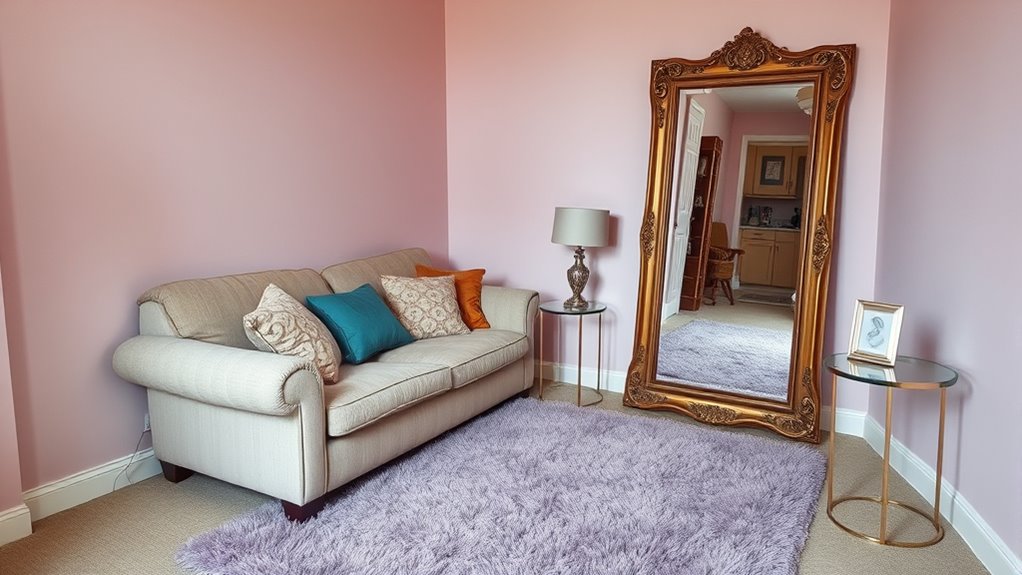
Mirrors and reflective surfaces are powerful tools for making a small living room feel larger and more open. They bounce light and create the illusion of depth. Consider wall-mounted options, which save space and can be strategically placed to reflect natural light or key areas. Using decorative accents, like ornate frames or unique shapes, adds personality and style while enhancing the room’s brightness. Here are some ideas to incorporate these surfaces effectively:
- Hang a large mirror opposite a window to maximize natural light.
- Use wall-mounted mirrors near seating areas for a sense of spaciousness.
- Include decorative reflective accents, such as metallic wall art, to add visual interest without cluttering the space.
These choices help you achieve a more open, inviting atmosphere.
Arranging for Flow and Accessibility

After incorporating mirrors and reflective surfaces to create a sense of openness, it’s important to arrange your furniture to promote smooth flow and easy access. Prioritize clear traffic flow by leaving pathways at least 24 inches wide, so movement feels natural. Avoid blocking doorways or windows, which can hinder accessibility considerations. Position larger pieces, like sofas and chairs, against walls or in corners to open up the center of the room. Use rugs to define zones without obstructing pathways. Keep frequently used items within easy reach and guarantee there’s enough space to navigate around furniture comfortably. Thoughtful arrangement minimizes congestion and enhances functionality, making your small, awkwardly shaped living room feel more open and accessible for everyday use.
Frequently Asked Questions
How Can I Maximize Storage in a Tiny, Awkward-Shaped Living Room?
You can maximize storage by using wall-mounted solutions like shelves and cabinets to free up floor space. Opt for multi-functional furniture, such as a sofa bed or ottomans with hidden storage, to serve dual purposes. Position these smart pieces strategically in corners or along walls to make the most of your space. This approach keeps your living room organized, functional, and feels less cramped despite its awkward shape.
What Are the Best Furniture Materials for Small, Oddly Shaped Spaces?
Imagine your space as a blank canvas—lighter furniture materials, like bamboo or aluminum, become your brushstrokes. Opt for multifunctional furniture crafted from lightweight materials that are easy to move and adapt. These choices maximize functionality without overwhelming your tiny, oddly shaped room. You get flexibility, style, and practicality, turning your awkward space into a cozy, organized oasis with furniture that’s as versatile as your needs.
How Do I Incorporate Personal Style Without Cluttering the Room?
You can incorporate your personal style by choosing artistic decor that reflects your personality and adding pops of color through accessories. Keep clutter at bay by coordinating colors in your furniture and decor, creating a cohesive look. Select a few statement pieces that stand out, and arrange them thoughtfully to avoid overcrowding. This way, your space feels personalized and stylish without feeling cramped or cluttered.
Are There Specific Layout Tips for Low-Ceiling or Uneven Floors?
To optimize your space with low ceilings or uneven floors, focus on ceiling height adjustments by choosing vertical decor and wall-mounted shelves to draw the eye upward. For uneven flooring, use furniture with adjustable legs or add area rugs to create a level surface. Keep furniture proportionate to the room’s size, and avoid clutter, so the space feels open and balanced despite the architectural quirks.
How Can I Make a Small Living Room Feel More Spacious Instantly?
You can make your small living room feel instantly more spacious by choosing light color schemes and maximizing lighting strategies. Use airy, neutral tones to reflect light and create an open feel. Incorporate layered lighting—like floor lamps, wall sconces, and mirrors—to brighten dark corners and add depth. Keep furniture minimal and avoid clutter. Combining these techniques, you’ll foster a sense of openness, making your space appear larger and more inviting.
Conclusion
With these tips, your small, awkwardly shaped living room will transform into a stylish sanctuary that feels twice its size. By cleverly arranging furniture, using mirrors, and choosing the right pieces, you’ll create a space so inviting, it might just become your favorite room in the universe. Remember, even the tiniest corners can hold big personality when you get creative. Soon, you’ll be living in a space that’s as functional as it is fabulous—ready to impress anyone who walks through the door.