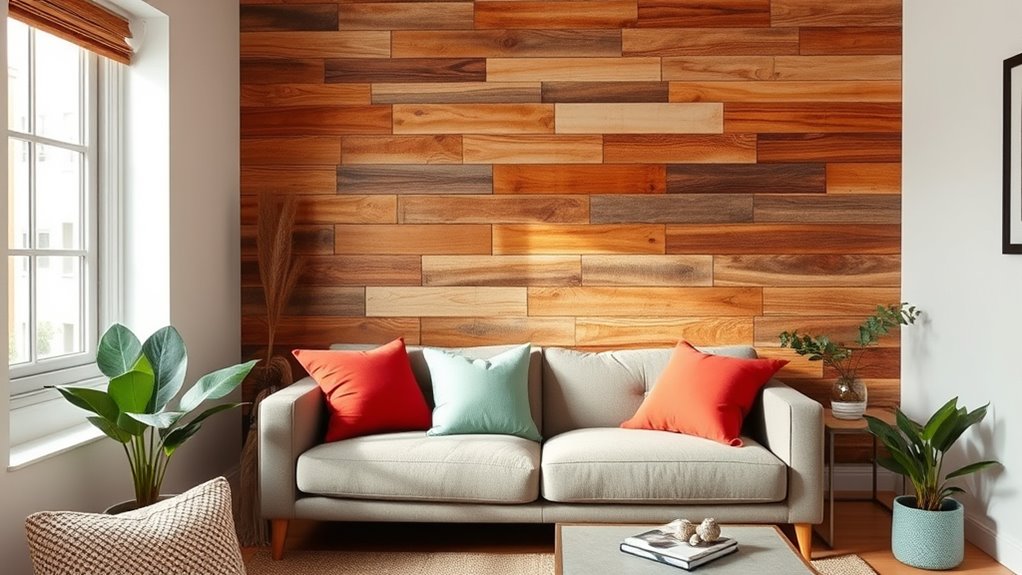

For small living spaces, DIY accent walls can instantly add personality and depth. Consider painting a bold or soft hue that complements your decor, or try wallpaper with fun patterns or textures. You could also create a gallery wall with framed photos or art, or use removable wall decals for easy updates. Combining these ideas with thoughtful placement can make your room feel larger and more inviting. Keep exploring to discover more ways to transform your space effortlessly.
Key Takeaways
- Use bold paint colors or textured wallpaper to create a striking focal point without overwhelming small rooms.
- Incorporate gallery walls with framed photos, art, or mirrors to add depth and personality to the accent wall.
- Choose light, reflective colors or materials to make the space feel larger and more open.
- Experiment with geometric patterns or stenciled designs for a personalized, DIY textured effect.
- Combine different decor elements like wall art and lighting to enhance the accent wall’s visual impact.
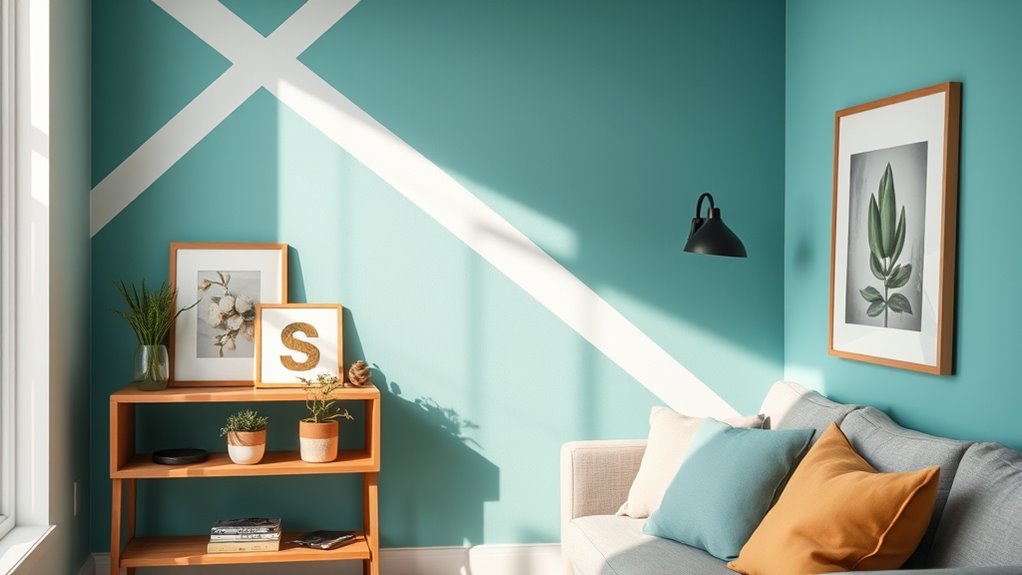
Are you looking to transform a plain wall into a stunning focal point? Small living spaces often lack the room for large, overpowering decor, but that doesn’t mean you can’t make a big impact. An accent wall is a perfect solution to add personality and style without overwhelming the space. When considering your options, think about your color schemes and wall art. These elements work together to create a cohesive and eye-catching feature that elevates your room’s overall vibe.
Start by choosing the right color scheme for your accent wall. You want a hue that complements the existing decor while giving the room a fresh, lively feel. Bright, bold colors like deep blues, vibrant reds, or sunny yellows can add energy, but if your space is already busy, opt for softer, muted tones like pastel greens or warm beiges. These create a subtle contrast that still draws attention without feeling overwhelming. Remember, in small rooms, darker shades can make the space feel cozy and intimate, while lighter shades open things up. So, choose your palette based on the mood you want to create and how much natural light your room receives. Incorporating color psychology can help you select shades that influence the room’s atmosphere positively.
Choose colors that complement your decor and set the mood, balancing bold and muted tones for a lively or cozy feel.
Once your color scheme is set, add wall art that enhances the focal point. You don’t need large, expensive pieces; even a series of smaller prints or framed photographs can make a statement. Consider creating a gallery wall with a mix of art, mirrors, and decorative objects for a layered look. Alternatively, a single, large piece of wall art—like an abstract painting or a textured tapestry—can serve as the centerpiece. If you prefer a more minimalist style, opt for sleek, monochrome artwork that matches your chosen colors. The key is to balance the wall art with the rest of your decor, ensuring it stands out without cluttering the space.
In small living areas, the right combination of color schemes and wall art can make a modest room feel larger, more inviting, and uniquely yours. Use paint or wallpaper to define your accent wall, then add art that speaks to your personality. This approach not only creates a focal point but also reflects your style and taste. With a little planning and creativity, you can turn a simple wall into a mesmerizing feature that transforms your entire living space into something special.
Frequently Asked Questions
Can I Install an Accent Wall Without Damaging the Wall?
Yes, you can install an accent wall without damaging the wall. Start with proper wall preparation by cleaning and patching any holes or marks. Use damage prevention techniques like painter’s tape along edges and a removable adhesive or temporary wallpaper for easy removal. Avoid heavy tools or aggressive adhesives that could harm the surface. This way, you protect your wall while creating a stunning accent feature.
What Are Budget-Friendly Materials for Accent Walls?
You can create an accent wall with budget options like paint samples and peel-and-stick wallpaper. Paint samples are affordable, easy to apply, and allow you to test colors before committing. Peel-and-stick wallpaper offers a quick, damage-free option that’s removable and cost-effective. Both options help you achieve a stylish focal point without overspending, making them perfect for small spaces where budget-friendly solutions matter most.
How Do I Choose the Right Color for a Small Space?
Did you know that small spaces can feel 20% larger with the right color choice? To pick the perfect color, focus on color coordination and your existing decor. Opt for light, neutral shades to open up the room or bold hues for a striking accent. When selecting paint, consider finishes that reflect light and complement your style. Trust your instincts, and don’t be afraid to test samples before committing!
Are There Temporary Options for Accent Walls?
Yes, you can easily create a temporary accent wall using removable wallpaper or peel and stick decals. These options are perfect because you can apply them without damaging your walls and remove them when you’re ready for a change. Just choose a bold pattern or color, stick it up, and enjoy your new look. When you want to switch things up, peel it off effortlessly and try a new design.
How Much Time Does DIY Installation Typically Take?
You might worry installation takes too long, but typically, it takes around one to two days. Your preparation work duration, including cleaning and priming, usually lasts a few hours, depending on the wall’s condition. The actual DIY installation timeline depends on the design complexity and your experience. If you keep it simple and organized, you can complete the project efficiently, transforming your space without a lengthy process.
Conclusion
Creating an accent wall is a simple way to transform your small living space without breaking the bank. Did you know that a well-designed accent wall can increase your room’s visual appeal by up to 40%? So, don’t hesitate to get creative with paint, wallpaper, or textures. With just a little effort, you can make your space feel more personalized and inviting—proving that small changes truly make a big impact!