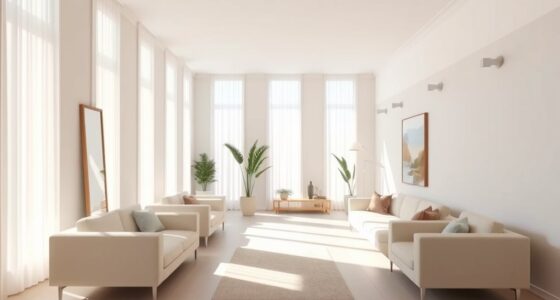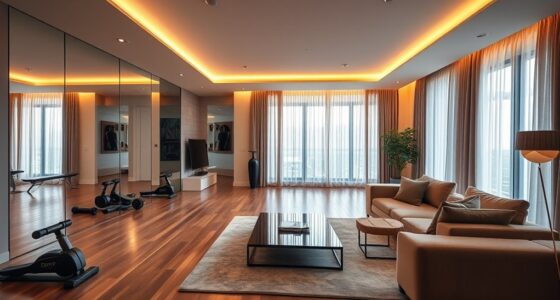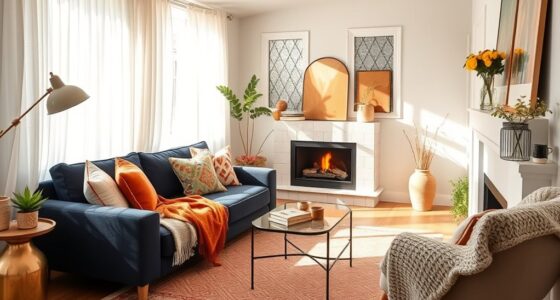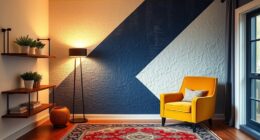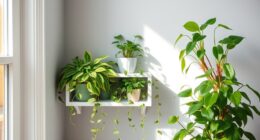
To successfully combine decor styles in a small shared space, choose a cohesive color palette with neutral shades and accent colors to unify everything. Incorporate multi-functional furniture and vertical storage to maximize space, while positioning larger pieces against walls for open pathways. Balance different styles by mixing sleek modern pieces with rustic touches, keeping decor minimal but meaningful. With thoughtful coordination, you’ll create a harmonious environment that showcases personality without feeling cluttered—if you keep exploring, you’ll find even more tips to make it work.
Key Takeaways
- Balance different decor styles by mixing complementary elements, ensuring neither overwhelms the small space.
- Use a cohesive color palette to unify diverse styles and create visual harmony.
- Incorporate multi-functional furniture that blends aesthetic elements from various styles for versatility.
- Highlight each style with intentional accessories and decor pieces to avoid clutter and maintain clarity.
- Maintain consistency in design principles like balance and proportion to seamlessly integrate multiple decor styles.
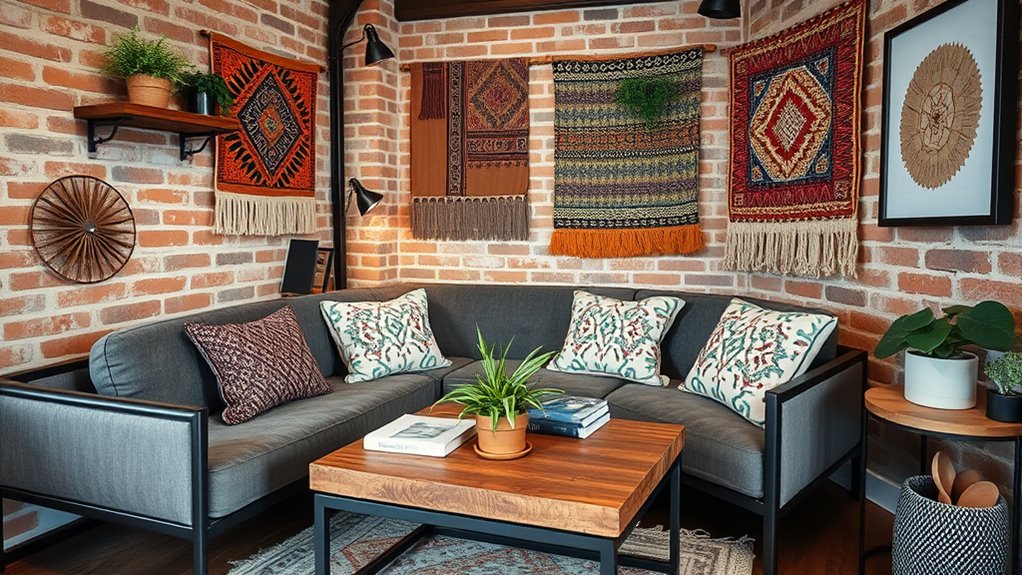
Living in a small shared space can be a challenge, but choosing the right decor style makes it easier to create a comfortable and stylish environment. When you’re dealing with limited square footage, every detail counts—especially how you coordinate colors and arrange furniture. The goal is to make the space feel cohesive and functional without feeling cramped or cluttered. To start, focus on color coordination. Using a consistent color palette across your walls, furniture, and accessories helps unify the space, making it appear larger and more intentional. Light, neutral shades like whites, beiges, or pastels reflect natural light and open up the room, while pops of accent colors add personality without overwhelming the space. Keep in mind that contrasting colors can create visual interest, but too many bold shades might make the area feel chaotic. Instead, choose harmonious hues that complement each other.
Color coordination unifies small spaces, making them feel larger, brighter, and more intentional.
Next, pay close attention to furniture placement. In a small shared environment, how you position your furniture can make all the difference. Opt for multi-functional pieces—like a sofa bed or storage ottoman—that save space and serve dual purposes. When arranging furniture, aim for open pathways to keep the room feeling airy and accessible. Avoid blocking windows or doorways, and try to keep larger pieces against the walls to maximize floor space. Consider creating zones within the room—such as a sleeping area and a small workspace—by strategically placing furniture to define each area without the need for partitions. This approach maintains an open feel while making each zone functional. Incorporating multi-purpose furniture can further enhance space efficiency and adaptability.
Additionally, think vertically. Use wall-mounted shelves, hanging organizers, and tall storage units to keep belongings off the floor and free up living space. Mirrors are your friends too; they reflect light and give the illusion of more space, especially when positioned opposite windows. When combining decor styles, aim for a balanced mix that reflects your personality but doesn’t clash visually. For example, pairing sleek modern furniture with rustic accessories can add character without cluttering the aesthetic. Keep decor minimal but meaningful, and make sure each piece has a purpose, whether for storage or style.
Ultimately, you want your space to feel like a reflection of you—cohesive, functional, and inviting. By carefully selecting a color scheme and arranging your furniture thoughtfully, you can blend different decor styles seamlessly in a small shared space. It’s about creating harmony and maximizing every inch while showcasing your unique taste. When you pay attention to these details, your small space becomes not just livable but a place you genuinely enjoy coming home to.
Frequently Asked Questions
How Do You Prevent Style Clash in Shared Spaces?
You prevent style clashes in shared spaces by carefully balancing artwork placement and texture mixing. Choose a unifying color palette to tie different styles together, and incorporate varied textures to add depth without overwhelming the space. When placing artwork, opt for complementary frames and sizes, ensuring they don’t compete. This approach creates harmony, making your shared space feel cohesive and inviting, despite diverse decor styles.
What Are the Best Color Schemes for Mixed Decor?
Ever wondered what makes a mixed decor look cohesive? You should choose color schemes that promote color harmony, like neutrals with pops of bold hues or analogous shades for a seamless flow. Incorporate pattern mixing carefully by balancing busy prints with solid colors, ensuring they complement rather than clash. This approach creates visual interest while maintaining harmony, making your space feel unified and stylish despite diverse decor styles.
How Can Furniture Be Both Functional and Stylish?
You can make furniture both functional and stylish by choosing multifunctional pieces like sofas with storage or fold-out beds. Incorporate decorative accents such as colorful cushions or stylish rugs to add personality without cluttering the space. Prioritize clean lines and cohesive designs to blend different decor styles seamlessly. This approach guarantees your furniture serves practical needs while elevating the overall aesthetic, making your small shared space both comfortable and visually appealing.
What Lighting Options Suit Diverse Decor Styles?
Lighting options are the icing on the cake for diverse decor styles. You should mix ambient lighting for warmth and functionality with statement fixtures to add personality. Using adjustable lighting helps you set the mood and highlight different decor elements. Don’t be afraid to blend modern pendant lights with vintage lamps; this way, your space stays cohesive yet interesting, showing that a well-lit room truly shines.
How to Incorporate Personal Touches for Each Occupant?
You can incorporate personal touches by displaying each occupant’s personal memorabilia in designated areas, like shelves or frames. Encourage DIY decor projects that reflect individual personalities, such as customized wall art or handmade accessories. Use different colors or themes to distinguish personal spaces, making everyone feel at home. This approach maintains harmony while celebrating each person’s unique style, creating a cozy, personalized shared environment.
Conclusion
By blending decor styles in your small shared space, you create more than just a room—you craft a reflection of your personalities. Remember, like a puzzle with pieces from different puzzles, the beauty lies in how they fit together. Embrace the contrast, let each style speak, and watch your space transform into a vibrant tapestry of life. After all, it’s not just about design; it’s about making your home a story only you can tell.