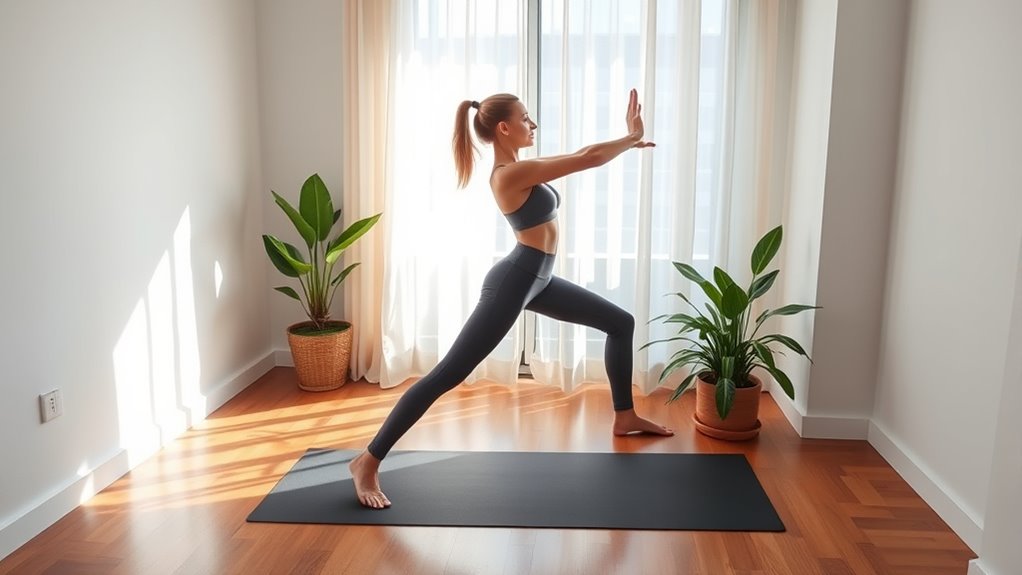

You can stay fit at home with simple yoga and stretching routines that fit into small spaces. Focus on exercises that target key areas like hamstrings, shoulders, and back, using minimal equipment like yoga mats. Keep your movements gentle and controlled, emphasizing proper form and deep breathing. Incorporating these quick routines into your daily schedule can boost flexibility and relaxation. If you keep exploring, you’ll discover more effective tips to maximize your limited space.
Key Takeaways
- Utilize minimal equipment like yoga mats and soft surfaces to maximize comfort and safety in limited spaces.
- Focus on targeted stretches for major muscle groups such as hamstrings, calves, shoulders, and back.
- Incorporate slow, controlled movements and deep breathing to enhance relaxation and effectiveness.
- Designate specific zones in your space to stay organized and motivated during workouts.
- Combine stretching with other indoor exercises for a comprehensive, low-impact fitness routine without a home gym.
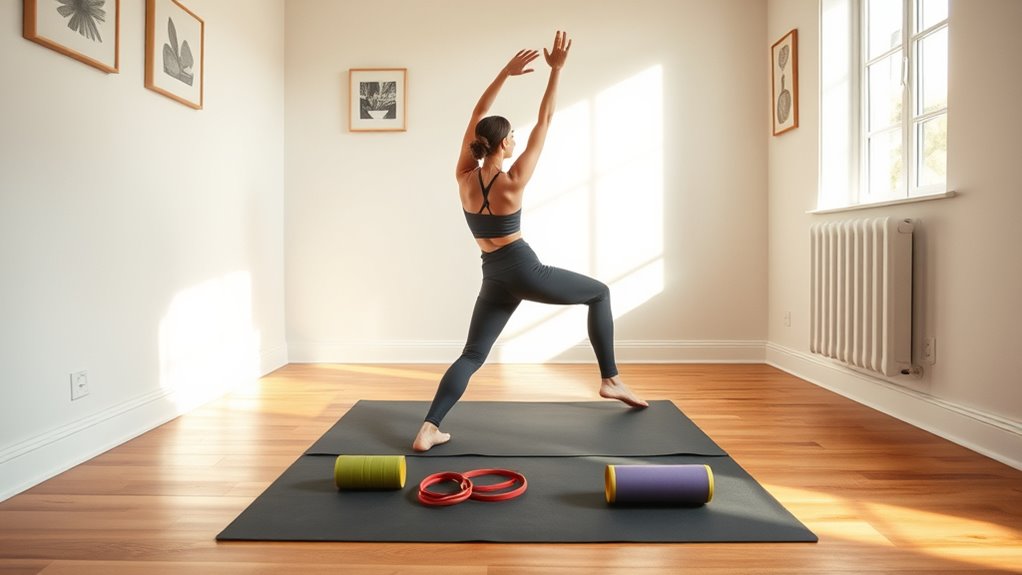
Indoor stretching is another key component of exercising in confined spaces. It requires minimal space and equipment, making it perfect for small environments. Stretching helps improve flexibility, reduce muscle tension, and prepare your body for more intense workouts. You can perform a series of stretches targeting different muscle groups—hamstrings, calves, shoulders, and back—without needing much room to move. To maximize your indoor stretching routines, consider using a yoga mat or a soft surface to provide comfort and stability. Keep your movements gentle and controlled, focusing on breathing deeply to enhance relaxation and release stress. Incorporating stretching into your daily routine is a simple yet effective way to stay limber and prevent injuries, especially when space and equipment are limited. Creating designated exercise zones within your small space can help you stay organized and motivated for your workouts.
Frequently Asked Questions
Can I Do High-Intensity Workouts in a Small Space?
Yes, you can do high-intensity workouts in a small space. Focus on bodyweight cardio routines like jumping jacks, burpees, and mountain climbers to get your heart pumping. Incorporate strength training moves such as push-ups, squats, and lunges to build muscle. Keep your movements quick and efficient, and use minimal equipment to maximize your limited space. With dedication, you’ll get a great workout without needing a large area.
What Equipment Is Essential for Small-Space Yoga?
Think of your small space like a cozy nook—perfect for yoga with just a few essentials. You’ll need a compact yoga mat that’s easy to roll up and store. Yoga props, like blocks and straps, are also essential—they help deepen poses and improve alignment. Keep your gear simple, lightweight, and versatile, so you can quickly set up and flow without clutter. This way, your space stays open and inviting for every session.
How Do I Stay Motivated Without a Dedicated Workout Area?
To stay motivated without a dedicated workout area, try using motivational strategies like setting clear goals and tracking your progress. Incorporate space optimization techniques by creating a designated corner for your workouts, even if it’s small. Keep your routine fresh with new exercises, and play upbeat music to energize you. Reminding yourself of the benefits and celebrating small victories will also help maintain your motivation and make exercising feel rewarding.
Are Online Classes Effective for Small-Space Workouts?
Yes, online classes are effective for small-space workouts. Virtual coaching and fitness apps provide structured routines and real-time feedback that keep you motivated and on track. You can easily follow along in limited space without needing extra equipment. Plus, the flexibility to choose classes that fit your schedule makes it easier to stay consistent. With these tools, you can achieve your fitness goals right at home, regardless of space constraints.
How Can I Prevent Injuries in a Limited Space?
To prevent injuries in a limited space, start with stretching routines to warm up your muscles and improve flexibility. Make sure you wear proper footwear to provide support and reduce the risk of slips or strains. Keep your workout area clear of obstacles, and focus on controlled movements. Listening to your body and stopping if you feel pain helps avoid injuries, making your small-space workouts safer and more effective.
Conclusion
Even in the smallest space, your commitment is a seed that grows into strength and balance. With each yoga pose and workout, you’re tending to this seed, nurturing resilience and peace within. Remember, your space isn’t limited—it’s a symbol of your determination to prioritize health, no matter the surroundings. Embrace the simplicity; let your dedication blossom like a quiet garden, proving that even the tiniest room can hold the potential for transformation.