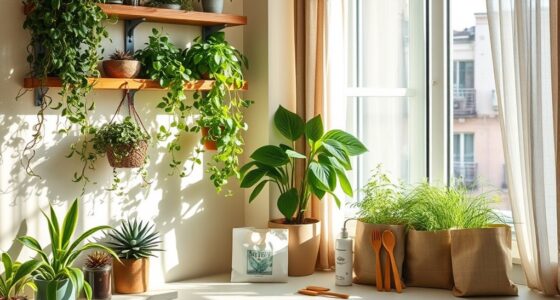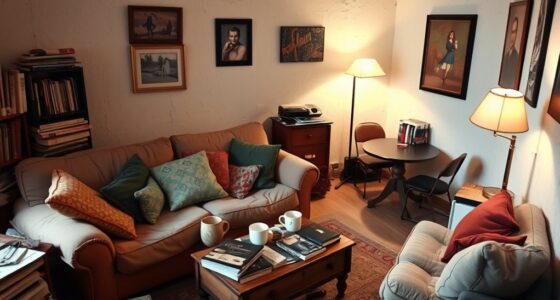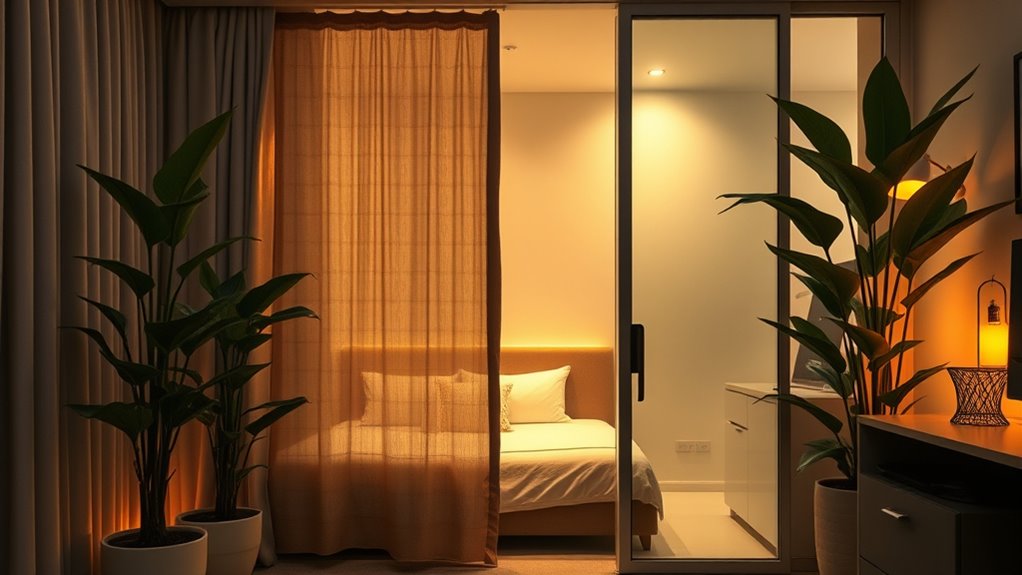
To create privacy in your studio apartment, use room dividers like screens, bookshelves, or tall plants to separate spaces visually. Incorporate furniture as natural barriers, such as high-backed sofas or storage beds, to block views and reduce noise. Hang curtains or layered drapes to add flexible privacy and light control. Vertical storage keeps things organized while freeing up space. For more ideas on making your studio feel private and cozy, keep exploring tips and tricks that suit your style.
Key Takeaways
- Use room dividers, screens, or tall furniture to visually separate sleeping and living areas.
- Incorporate heavy curtains or layered drapes to block sightlines and enhance privacy.
- Position furniture strategically to create natural barriers and block direct views into private zones.
- Add acoustic panels, thick textiles, or rugs to reduce noise transfer and increase sound privacy.
- Utilize natural elements like plants or bamboo screens to serve as stylish, natural privacy barriers.
Using Room Dividers and Screens to Define Spaces
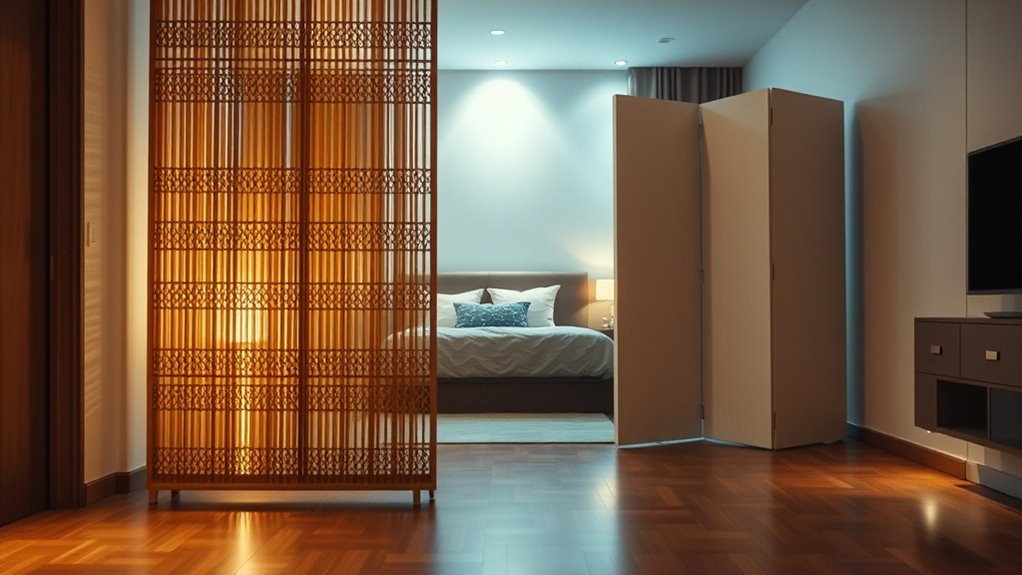
Room dividers and screens are practical tools for creating distinct zones within a studio apartment. They help define private areas without permanent construction, making your space more functional. To enhance privacy further, consider soundproofing techniques, like adding fabric panels or thick screens that absorb noise. These can reduce sound transfer between zones, making your space quieter and more comfortable. Window treatments, such as heavy curtains or layered drapes, also serve dual purposes—blocking light and adding a visual barrier that separates your sleeping area from the living space. When choosing room dividers, opt for lightweight, movable options for flexibility. Combining these strategies allows you to customize your layout, improve privacy, and create a cozy, well-organized studio environment.
Incorporating Furniture as Natural Barriers
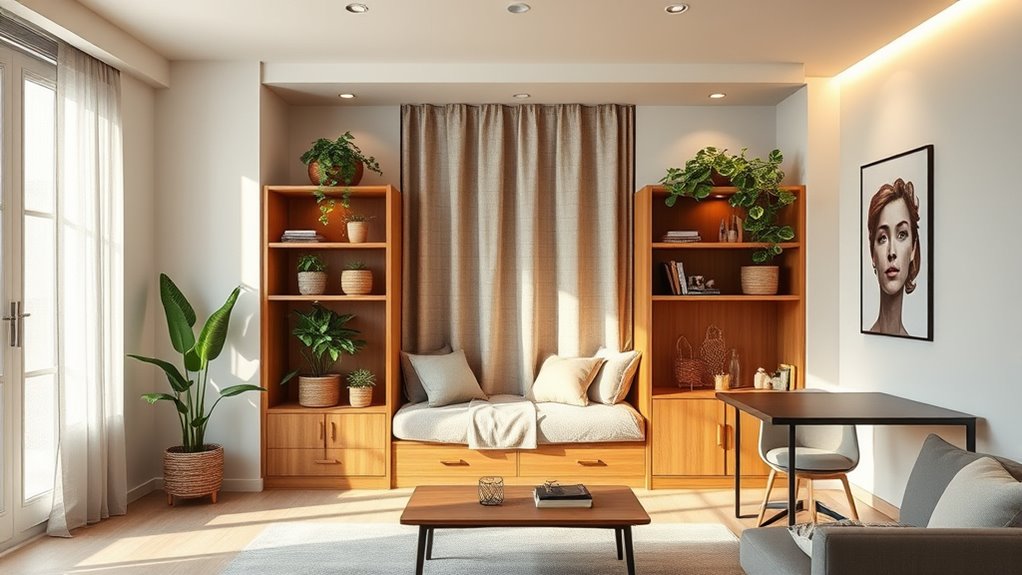
You can create privacy by choosing furniture that serves multiple purposes, like a sofa bed or storage ottoman. Strategic placement of bookshelves or tall cabinets acts as natural barriers between areas. Vertical storage solutions not only save space but also help define separate zones effortlessly. Incorporating rustic decor elements such as vintage signs or farmhouse accessories can further enhance the sense of separation and coziness within the studio. Additionally, using self watering plant pots as decorative dividers can add greenery while subtly partitioning your space. Utilizing multi-functional furniture can maximize space efficiency and privacy in your studio apartment. Moreover, selecting furniture with integrated storage options can further optimize your limited space and reinforce privacy, especially when these options include modular designs that can be rearranged as needed.
Multi-functional Furniture Uses
Have you considered how multi-functional furniture can double as natural barriers in a studio apartment? Using pieces like bookshelf dividers, storage beds, or fold-out screens helps create separation without sacrificing space. These items can serve as noise reduction tools, muffling sounds between zones, and enhancing visual privacy by blocking direct lines of sight. For example, a tall bookshelf can shield your sleeping area from the living space, reducing distractions and maintaining a sense of privacy. Similarly, furniture with built-in storage allows you to tuck away personal items, further increasing privacy and decluttering your space. Incorporating spatial planning into your layout ensures that your furniture choices effectively define zones while maintaining an open feel. This approach maximizes functionality while subtly defining different areas, making your studio feel more organized, private, and comfortable without the need for permanent walls or large dividers.
Strategic Room Dividers
Strategic furniture placement can effectively create natural barriers that define different areas in a studio apartment. Using large bookcases, open shelving, or even a row of tall plants can act as room dividers without closing off space. These pieces serve as soundproofing options, helping reduce noise transfer between zones, which enhances privacy. Incorporate multi-functional furniture like a sofa with a high back or a foldable screen to add visual separation and block sound. Noise reduction techniques, such as placing soft textiles or rugs near these dividers, further dampen sound. Additionally, selecting interior design elements that complement the overall aesthetic ensures the space remains cohesive. By thoughtfully selecting and positioning furniture, you create distinct zones that feel private and separate, all while maintaining an open, airy feel. This approach blends functionality with style, maximizing your limited space. Understanding family dynamics and how they influence personal space can help in designing environments that promote comfort and privacy. Proper placement of these dividers can also help control airflow, improving ventilation and comfort in the space. Incorporating technology, such as smart climate controls, can further enhance privacy and comfort by regulating temperature and air quality. Furthermore, choosing soundproof materials for certain furniture pieces can increase the effectiveness of noise reduction in different zones.
Vertical Storage Solutions
Vertical storage solutions can serve as effective natural barriers in a studio apartment by maximizing space and creating visual separation. Using tall bookshelves or storage units with closed cabinets helps block sound and define areas. To enhance privacy, choose furniture in privacy-enhancing colors like deep blues or warm neutrals. Incorporate soundproofing techniques, such as adding fabric-lined shelves or placing plants on top, to reduce noise transfer. These solutions also increase storage while maintaining an open feel. Consider the following options:
| Furniture Type | Function | Style Tips |
|---|---|---|
| Tall Bookcases | Divide space, add storage | Use dark or muted tones |
| Modular Shelving | Flexibility for changing needs | Incorporate vibrant colors |
| Storage Cabinets | Conceal clutter, create barriers | Match wall colors |
| Loft Beds/Lofts | Maximize vertical space, privacy | Use soundproofing techniques |
Additionally, integrating smart-home features like automated lighting or sound masking devices can further improve privacy and comfort in your studio.
Creating Privacy With Curtains and Drapes
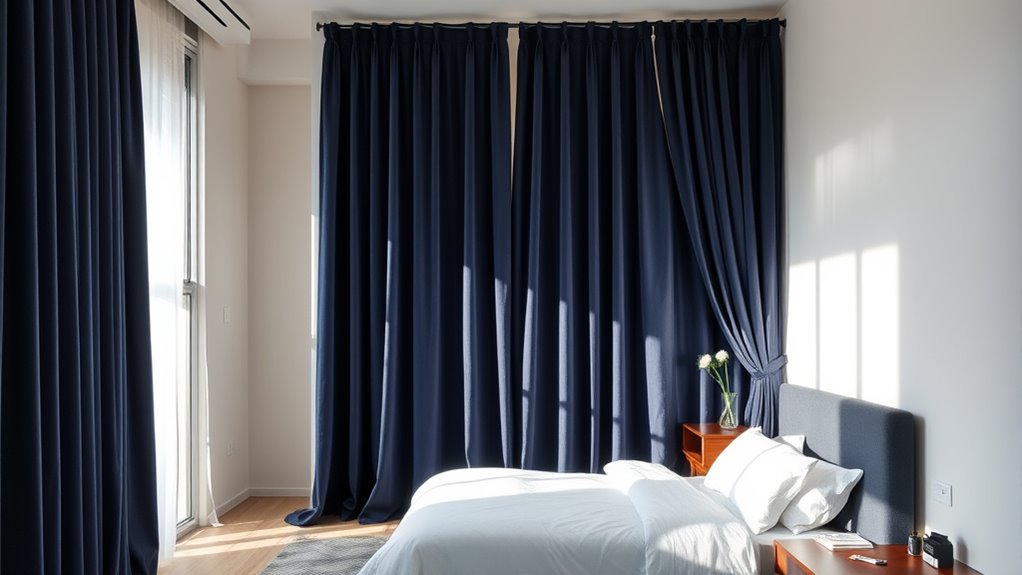
Choosing the right fabrics and colors can make your curtains both functional and stylish. Strategic placement helps create separate zones without sacrificing light or openness. By selecting curtains that control light effectively, you can enjoy privacy while keeping your space bright and inviting. Incorporating odor control features in your curtains can further enhance comfort by reducing unwanted smells in your studio apartment. Additionally, selecting materials with soundproofing properties can help minimize noise transfer, enhancing your privacy and overall comfort. Considering the financial impact of well-chosen window treatments can also add value to your living space, making it both cozy and investment-worthy. Utilizing curtains with necessary cookies tracking can also help monitor and improve your space’s privacy features over time. Being aware of the Louisiana Alimony Laws can also help you plan your space and privacy needs around legal considerations if your situation involves divorce or separation.
Choosing Suitable Fabrics
Have you ever wondered how the right fabric can transform your studio’s privacy? The material you choose for your curtains or drapes can make a big difference. Opt for fabrics with soundproofing options if you want to reduce noise and create a quieter space. Heavyweight fabrics like velvet or thick linen offer better privacy and block out light effectively. For privacy window treatments, look for fabrics that are opaque or lined, ensuring your space stays secluded. Sheer fabrics may look airy, but they won’t provide much privacy or noise reduction. By selecting the right fabric, you enhance both the privacy and comfort of your studio, making it feel more like a personal retreat rather than an open space. Incorporating soundproofing materials principles, such as choosing fabrics with specific frequencies, can further improve the acoustic environment of your studio. Additionally, considering fabrics with sound absorption qualities can help create a more serene and private atmosphere. Choosing textiles that are specially designed for acoustic treatment can significantly improve sound insulation in small spaces.
Strategic Curtain Placement
Proper curtain placement can considerably enhance your studio’s privacy by covering key sightlines and noise sources. Use window treatments strategically to block viewlines from outside or neighboring units, especially on large windows or open areas. Hang curtains close to the ceiling to maximize coverage and create a sense of separation. For added noise reduction, combine curtains with acoustic panels installed on shared walls to dampen sound transmission. Layering different window treatments, such as blinds behind curtains, provides flexibility for privacy and light control. Ascertain curtains are long enough to reach the floor for a seamless look and maximum coverage. Incorporating soundproofing techniques can further improve privacy by minimizing noise transfer. Additionally, selecting appropriate fabric materials can greatly influence both the sound absorption and aesthetic appeal of your window treatments. Using dog quotes for reflection and humor as inspiration, consider choosing curtains with playful or cozy patterns that reflect your personality and create a welcoming environment. By thoughtfully positioning your curtains and integrating acoustic panels, you create a private, cozy environment without sacrificing style or functionality. Incorporating energy-efficient window coverings can also help maintain comfortable temperatures and reduce noise infiltration, enhancing overall privacy.
Enhancing Light Control
To effectively control the amount of light entering your studio, you can use curtains and drapes that serve dual purposes—privacy and illumination. Choose thick, layered curtains to block out unwanted light and enhance soundproofing techniques, reducing noise intrusion. Consider blackout drapes for complete darkness during the day or at night. Additionally, lightweight sheer curtains allow natural light to filter in while maintaining privacy. Incorporate acoustic treatments like fabric-lined curtains to absorb sound and improve privacy further. Here are some options to visualize:
- Heavy blackout drapes that double as soundproofing barriers
- Sheer curtains for gentle light and privacy
- Layered window treatments combining both for versatile light control and acoustic benefits
Utilizing Vertical Storage and Shelving
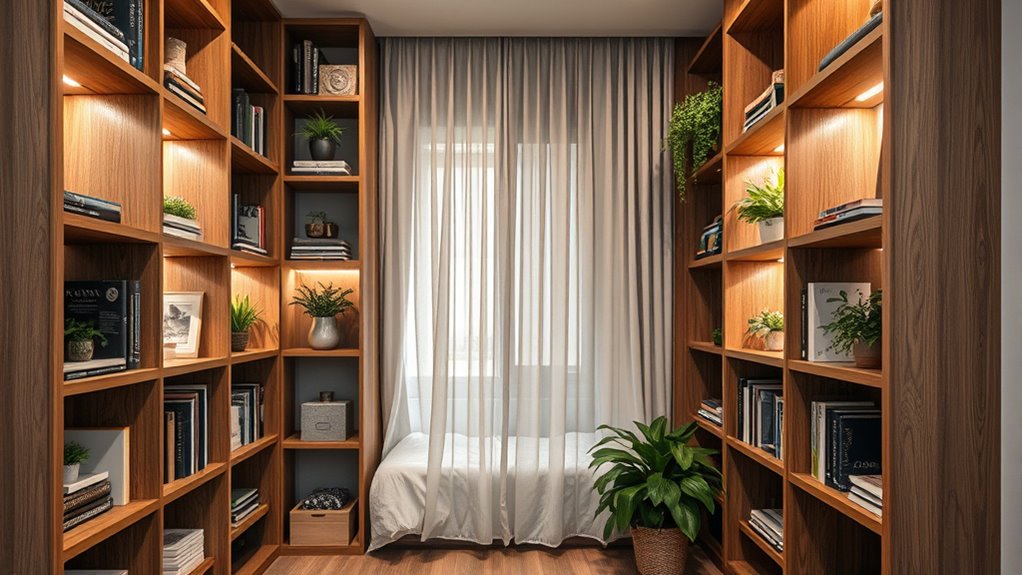
Maximizing vertical storage is essential in a studio apartment where space is limited. You can make the most of your walls by installing shelves and cabinets that go up to the ceiling. Consider using ceiling mounted storage to keep items out of sight, freeing up valuable floor space. Hidden compartments within shelving units or furniture serve a dual purpose: they hide clutter and create visual separation, subtly defining different areas. Vertical storage solutions help you optimize every inch of your apartment, making it easier to maintain privacy. By stacking and organizing vertically, you avoid clutter and create designated zones for sleeping, working, or relaxing. This approach not only adds storage but also enhances your apartment’s privacy and flow.
Implementing Smart Layouts for Better Separation
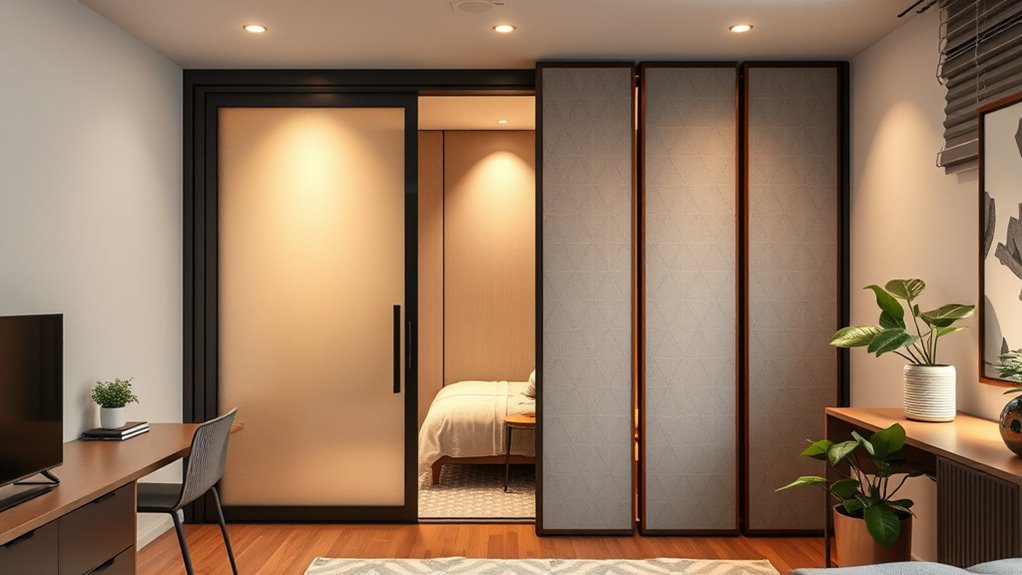
After installing vertical storage to free up floor space, the next step is to arrange your layout thoughtfully. Use smart design to create distinct zones that enhance privacy. Consider these strategies:
- Place furniture to block direct sightlines, using screens or bookcases as room dividers.
- Incorporate soundproofing techniques like acoustic treatments or thick curtains to reduce noise transfer.
- Position your bed and workspace away from high-traffic areas to minimize disturbances and maximize acoustic separation.
This layout not only maximizes space but also enhances privacy by controlling sound flow and visual openness. Thoughtful placement of furniture and soundproofing elements helps you carve out a sense of separation, making your studio feel more like a private retreat rather than a single open room.
Adding Plants and Decorative Elements for Privacy
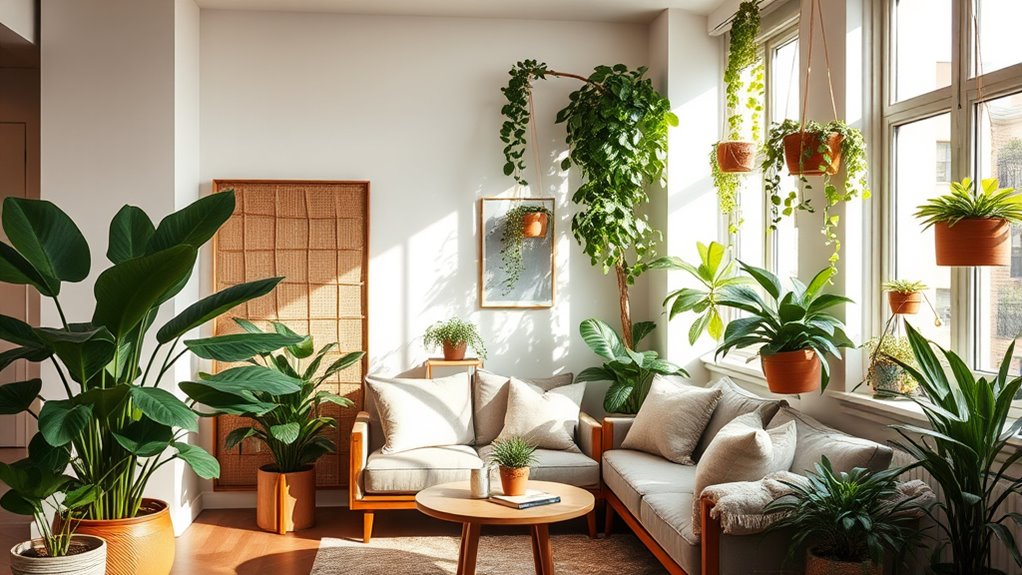
Adding plants and decorative elements can considerably boost your studio’s privacy by creating natural barriers and visual cues that define separate zones. Tall plants, such as potted trees or bamboo screens, serve as artificial privacy, blocking views and creating distinct areas without permanent walls. Incorporate decorative screens or fabric curtains to add layers of soundproofing techniques, reducing noise transfer between spaces. Hanging planters or wall-mounted greenery also help absorb sound and add aesthetic appeal. These elements not only enhance privacy but also bring a lively, inviting atmosphere to your studio. By thoughtfully choosing plants and decorative pieces, you can effectively establish private zones, minimize visual clutter, and improve acoustic separation—all while maintaining a stylish, cohesive look.
Frequently Asked Questions
How Can I Ensure Privacy Without Making the Space Feel Smaller?
To guarantee privacy without making your space feel smaller, use lightweight privacy screens or movable partitions. These can be easily repositioned to create separate zones when needed and tucked away when not in use. Opt for transparent or semi-transparent options to maintain openness. Strategically place them near your bed or workspace, and choose designs that complement your decor, so your apartment stays spacious and stylish.
What Are the Best Materials for Soundproofing in a Studio?
Soundproofing your studio is like building a fortress for your peace. Use soundproof panels on shared walls to block noise effectively. Acoustic curtains are a flexible option to absorb sound and add privacy, especially around windows or dividing spaces. Combining these materials creates a layered defense against unwanted noise, helping you enjoy your space without feeling like you’re shouting from a distance.
How Do I Maintain Privacy While Maximizing Natural Light?
You can maintain privacy while maximizing natural light by choosing light-filtering window coverings like sheer curtains or blinds that let sunlight in but obscure your space. Add decorative screens or folding room dividers to create private zones without blocking light. Position these screens strategically near windows or in open areas. This way, you enjoy bright, airy spaces and maintain your privacy effortlessly.
Can I Use Technology to Enhance Privacy in a Studio Apartment?
Yes, you can definitely use technology to boost privacy in your studio apartment. Smart curtains allow you to easily control privacy and natural light at the tap of a button or via voice commands, giving you flexibility throughout the day. Privacy screens are another great option; they can be moved or adjusted to block views while maintaining an open feel. Combining these tech solutions helps you enjoy privacy without sacrificing style or light.
What Are Affordable DIY Solutions for Creating Privacy?
Imagine transforming your space with simple, affordable DIY solutions. You can easily use portable dividers or decorative screens to carve out private zones, adding both style and functionality. These options are budget-friendly and flexible, allowing you to rearrange as needed. Just place a folding screen behind your bed or craft your own using fabric and a lightweight frame. With a little creativity, privacy becomes effortless and chic.
Conclusion
Balancing openness with privacy in your studio is like blending a puzzle’s pieces—you want harmony without losing individual space. By smartly using room dividers, furniture, and plants, you create secluded zones amid an open layout. It’s about making your small space feel spacious yet private, like a cozy retreat within a bustling city. With these simple tricks, you’ll enjoy both connection and solitude, proving that privacy and openness can coexist beautifully in your studio apartment.