
To keep your tiny kitchen safe, choose compact appliances with safety features like automatic shut-off and keep counters clear of clutter. Use vertical storage solutions and always unplug appliances when not in use. Guarantee proper lighting, keep a fire extinguisher nearby, and never leave cooking unattended. Regularly clean grease and maintain working smoke detectors. Following these tips helps prevent fires and accidents—stick around to discover more ways to make your kitchen both safe and efficient.
Key Takeaways
- Use compact, safety-feature-equipped appliances to prevent overloads and reduce fire hazards.
- Keep counters clear and store flammable items away from heat sources for safety.
- Always follow manufacturer instructions and unplug appliances when not in use.
- Install proper lighting and keep a fire extinguisher accessible for quick response.
- Maintain cleanliness by regularly cleaning grease and clutter to minimize fire risks.

Cooking in a tiny kitchen can be challenging, but with the right safety tips, you can minimize risks and make the most of your space. One of the most effective ways to do this is by investing in compact appliances that fit comfortably without overcrowding your countertops. These appliances are designed to be space-efficient, helping you avoid clutter that can lead to accidents or fires. For example, a small microwave or a slim toaster oven can be just as functional as larger models but take up less room. When choosing these appliances, prioritize safety features like automatic shut-off and cool-touch exteriors to prevent burns or overheating.
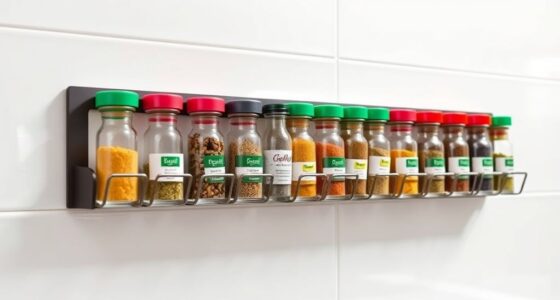
Equally important is your approach to storage solutions. In tiny kitchens, disorganization can be dangerous, increasing the chance of knocking items over or leaving things near heat sources. Use vertical storage options such as wall-mounted racks, magnetic strips for knives, or hanging baskets to keep your counters clear and your essentials within reach. Properly storing flammable items, like paper towels and dishcloths, away from stove burners is vital to prevent accidental fires. Also, ensure your pots, pans, and utensils are stored securely to avoid spills or accidents while cooking.
When it comes to operating your appliances, always read the manufacturer’s safety instructions. Keep cords away from water and heat sources, and avoid overloading outlets to prevent electrical fires. Make it a habit to unplug appliances when not in use, especially those with heating elements. This simple step reduces the risk of fires caused by electrical faults or unattended cooking. Using timers can also help you keep track of cooking times and prevent the accidental burning of food, which can ignite if left unattended.
Always unplug appliances after use and follow safety instructions to prevent fires and accidents.
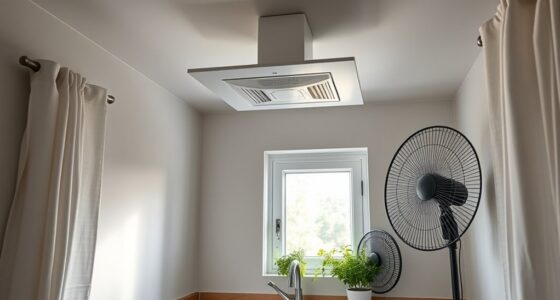
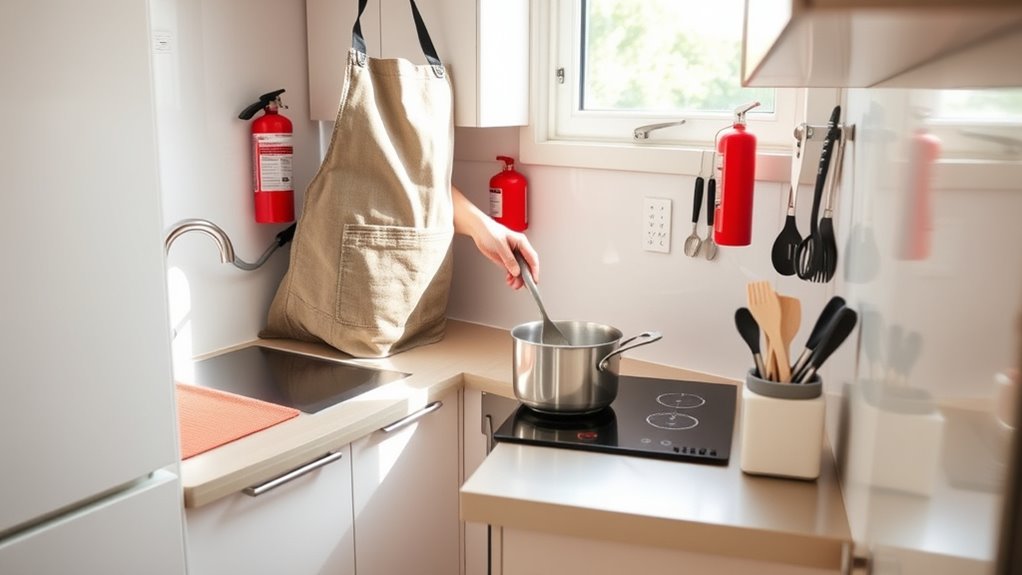
Lighting is another essential safety aspect. Proper illumination ensures you can see what you’re doing, preventing accidental cuts or burns. In a tiny kitchen, consider installing under-cabinet lighting or bright LED bulbs to illuminate all work surfaces effectively. When working near heat sources, keep a fire extinguisher nearby and know how to use it. Regularly check your smoke detectors to verify they’re functioning correctly, and never leave cooking unattended, especially when working with open flames or high heat.
Lastly, develop a routine of cleaning as you go. Grease buildup around your stove or on appliances increases fire risk. Keeping your space tidy and free of clutter not only makes cooking safer but also more enjoyable. Additionally, choosing appliances with proper contrast ratios and accurate color rendering can help you better identify potential hazards like spills or smoke. By combining compact appliances, smart storage solutions, and vigilant habits, you can create a safe, functional kitchen where risks are minimized, and cooking remains a pleasure.
Frequently Asked Questions
How Can I Prevent Clutter From Causing Fire Hazards?
To prevent clutter from causing fire hazards, focus on clutter management by regularly cleaning and organizing your kitchen. Use smart storage solutions like stackable containers, wall-mounted shelves, and hooks to maximize space. Keep flammable items away from heat sources, and never leave cooking unattended. By maintaining a tidy kitchen, you reduce fire risks and create a safer environment, making it easier to spot potential hazards before they become serious problems.
What Are the Best Fire Extinguishers for Small Kitchens?
Think of your small kitchen as a battlefield, and a fire extinguisher as your trusted shield. For kitchen safety, choose a multipurpose ABC extinguisher, effective on all fire types, especially grease fires. A compact, lightweight model fits easily in tight spaces. Make sure it’s easily accessible, and familiarize yourself with its use. Regularly check the pressure gauge to keep your shield ready, protecting your tiny kitchen from unexpected flames.
How Do I Safely Store Flammable Items in Tiny Spaces?
You should store flammable items in dedicated safety containers away from heat sources. Keep flammable storage in cool, well-ventilated areas, ideally in cabinets that are fire-resistant. Use clearly labeled safety containers to prevent accidental misuse. Avoid clutter near your stove or oven, and always check that containers are sealed tightly. By following these steps, you minimize fire risks and keep your tiny kitchen safe and organized.
Are There Specific Appliances That Are Safer in Small Kitchens?
Think of your tiny kitchen as a well-orchestrated symphony where each appliance plays a essential role. Opt for compact appliances and energy-efficient models, because they’re designed to fit seamlessly and operate safely in small spaces. These appliances reduce clutter, lower fire risks, and conserve energy, making your cooking experience safer and more efficient. Always choose quality, safety-certified models to keep your culinary performance smooth and accident-free.
How Can I Quickly Turn off Appliances During Emergencies?
In emergencies, you should quickly turn off appliances by locating their power switches or unplugging them directly. Practice cooking shortcuts like keeping appliances with easily accessible switches nearby, so you can shut them off swiftly. Incorporate emergency preparedness into your routine by familiarizing yourself with appliance locations and switch functions. This quick action minimizes fire risks and keeps your tiny kitchen safe during unexpected situations.
Conclusion
To keep your tiny kitchen safe, always stay attentive while cooking and keep flammable items away from heat sources. Think of your kitchen as a small forest—fire can spread quickly if you’re not cautious. By practicing these simple tips, you’ll prevent accidents and create a secure cooking space. Remember, staying alert and organized turns your tiny kitchen into a safe haven where delicious meals and peace of mind go hand in hand.