
To ventilate your small kitchen without a range hood, open windows on opposite sides to create cross-ventilation and encourage fresh air flow. Use window fans or portable oscillating fans to help expel smoke and odors while cooking. Placing an air purifier with HEPA and activated carbon filters near the cooking area can also improve air quality. Combining these strategies guarantees your kitchen stays fresh and odor-free—discover more ways to optimize ventilation effectively.
Key Takeaways
- Open windows on opposite sides to create cross-ventilation and expel cooking fumes effectively.
- Use window fans to enhance airflow, directing stale air outside during and after cooking.
- Place air purifiers with HEPA and activated carbon filters near the cooking area to remove odors and particles.
- Employ portable fans to disperse smoke and heat, supplementing natural ventilation efforts.
- Keep windows open regularly to prevent stagnation, ensuring fresh air circulates continuously in the small kitchen.
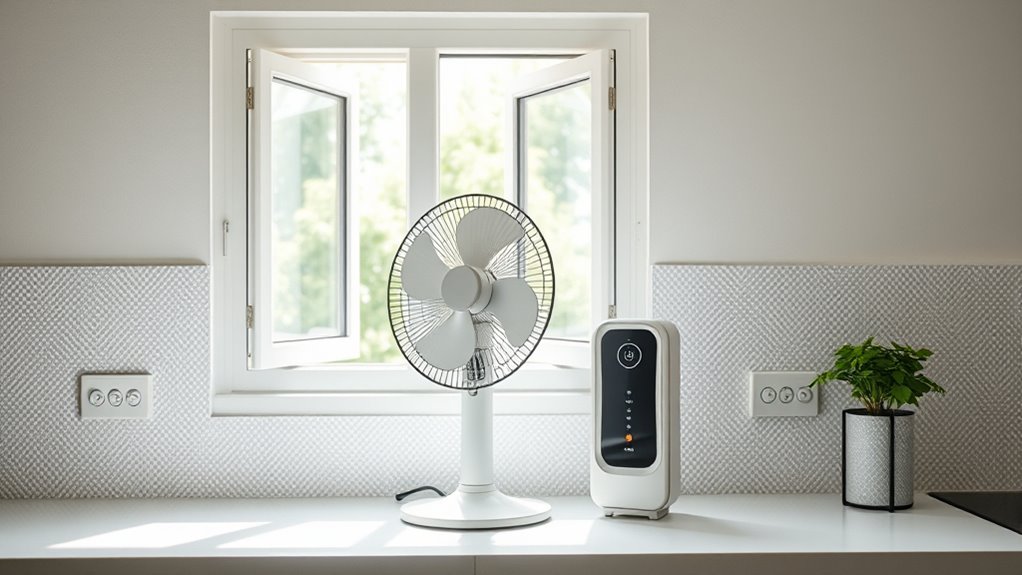
A small kitchen can quickly become stuffy and smoky without proper ventilation. Even if you don’t have a range hood, you can still keep the air fresh and safe by using simple strategies. One effective tool is an air purifier. It helps remove airborne grease, smoke, and odors that tend to linger when cooking. Look for an air purifier with a HEPA filter and activated carbon to maximize its ability to filter out particles and smells. Place it near your cooking area for the best results, especially if ventilation options are limited. An air purifier won’t replace good airflow, but it can considerably improve indoor air quality in a compact space.
In addition to an air purifier, window fans can be a game-changer. If your kitchen has a window, installing a window fan can help create a cross-breeze that pulls stale air out and pulls fresh air in. Position the fan in a way that exhausts air outward when you’re cooking, especially during high-heat or smoky moments. If you have multiple windows, use them to establish a natural airflow through your kitchen, opening one window to let in fresh air while the other vents out the smoky air. This simple setup encourages circulation without the need for complicated or costly ventilation systems.
You should also consider using your existing windows strategically. Opening a window on one side of your kitchen while using a window fan on the opposite side can dramatically improve air exchange. This cross-ventilation helps clear out cooking fumes quickly and keeps the space from feeling stagnant. Remember, even without a range hood, consistent airflow is key to maintaining a comfortable, smoke-free environment. Keep windows open during and after cooking to allow the air to clear out lingering odors and smoke.
Another tip is to use portable fans to boost air movement. Placing a small oscillating fan near your cooking area can help disperse smoke and heat, making the space more comfortable. While not a substitute for proper ventilation, these fans can supplement your efforts, especially during intense cooking sessions. Combining these tools—air purifiers, window fans, and strategic window use—creates a more effective ventilation system suited for small kitchens without range hoods. Additionally, choosing ventilation-focused devices designed for small spaces can optimize airflow and air quality even further.
With a little planning and the right equipment, you can keep your small kitchen fresh, odor-free, and safe. It’s all about maximizing the airflow you have and supplementing it with devices designed to improve indoor air quality. These simple measures ensure you won’t be overwhelmed by smoke or cooking odors, making your small kitchen a more pleasant space to work in every day.
Frequently Asked Questions
Can Opening Windows Alone Adequately Ventilate a Small Kitchen?
Opening windows alone can help ventilate your small kitchen, but it depends on natural airflow and window placement. If you position windows across from each other or near the cooking area, fresh air can circulate and remove odors effectively. However, on still days or in enclosed spaces, relying solely on windows might not be enough. Consider using fans alongside open windows for better ventilation and odor control.
What Are the Best Portable Air Purifiers for Small Kitchens?
You should consider portable air purifier types like HEPA models for your small kitchen. Portable air purifiers are ideal because they’re easy to move and don’t require installation, unlike stationary units. Look for compact designs with high CADR ratings to effectively remove smoke, odors, and airborne particles. These devices improve air quality quickly, making your small kitchen healthier and more comfortable without the need for a range hood or constant window opening.
How Often Should I Clean Kitchen Exhaust Fans or Vents?
You should clean your kitchen exhaust fans and vents at least every three to six months to maintain proper vent maintenance. Regular cleaning prevents grease buildup and ensures your ventilation stays effective. Follow a consistent cleaning schedule, especially if you cook frequently or notice reduced airflow or odors lingering. Use appropriate cleaning tools and solutions, and always turn off power before cleaning to stay safe and keep your vent system working efficiently.
Are There Eco-Friendly Alternatives to Traditional Kitchen Ventilation?
You can explore energy efficient options like window fans, ceiling vents, or eco-friendly exhaust fans that promote sustainable ventilation. These alternatives reduce power consumption and improve air circulation without relying on traditional range hoods. By choosing products made from eco-friendly materials and ensuring proper installation, you create a healthier kitchen environment while minimizing your carbon footprint. Sustainable ventilation options help you maintain good indoor air quality responsibly.
How Do I Reduce Cooking Odors Without a Range Hood?
Think of your kitchen as a garden needing fresh air. To reduce cooking odors, open windows for natural ventilation, letting in a breeze that carries away smells. Use odor absorption tools like baking soda or activated charcoal to trap lingering aromas. Cover pots while cooking to contain smells, and turn on a fan or create cross-ventilation. These simple steps help keep your small kitchen fresh without a range hood.
Conclusion
Proper ventilation keeps your small kitchen fresh and odor-free. Without a range hood, simple solutions like opening windows or using fans can make a big difference. Did you know that poor kitchen ventilation can increase indoor air pollution by up to 50%? By taking these easy steps, you not only improve air quality but also protect your health. Stay proactive and keep your kitchen breezy—your lungs will thank you!