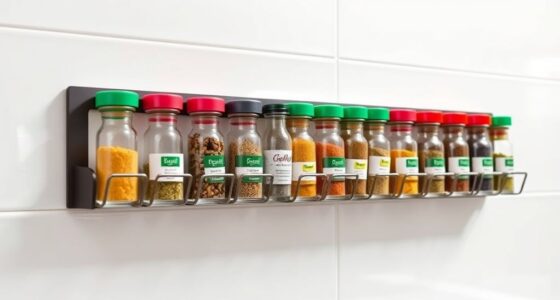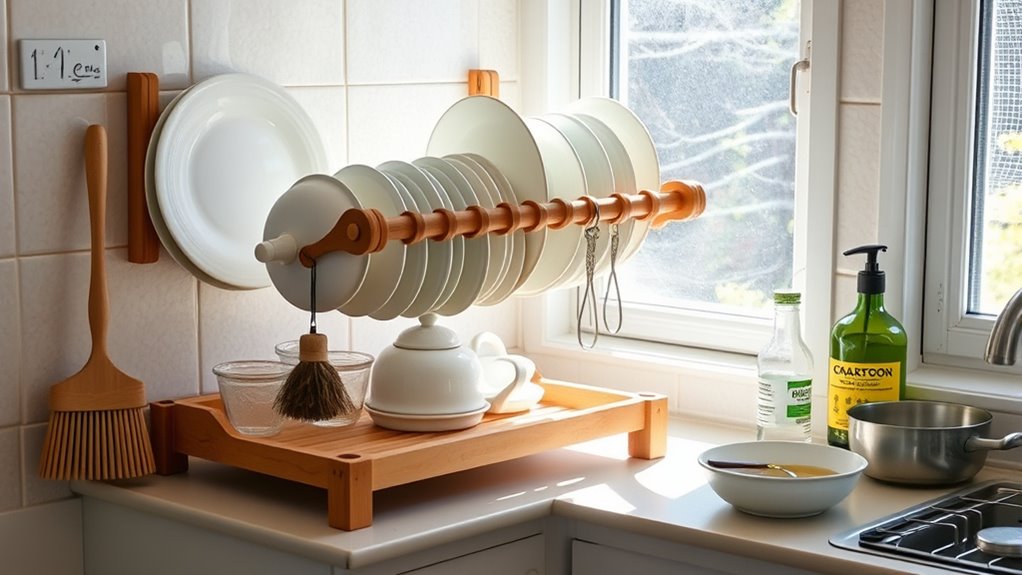

Living without a dishwasher means adopting efficient hand-washing routines to save space and time. Scrape leftover food, organize your workspace, and wash items from least to most soiled using warm, soapy water. Use quick-drying towels or air-dry dishes to save space. Keep your small kitchen tidy with compact racks and designated tools. With some simple habits, you can manage clean dishes effectively—stay with us to discover more clever hacks for small kitchens.
Key Takeaways
- Organize your workspace with dedicated zones for scraping, washing, rinsing, and drying to improve efficiency.
- Use a basin with warm, soapy water and non-abrasive tools to clean dishes thoroughly and quickly.
- Implement air drying on racks or mats and use absorbent towels to save space and speed up the drying process.
- Maximize small kitchen space by keeping tools organized, using compact drying racks, and maintaining a clutter-free environment.
- Establish a consistent, streamlined routine to ensure cleanliness and efficiency without a dishwasher.
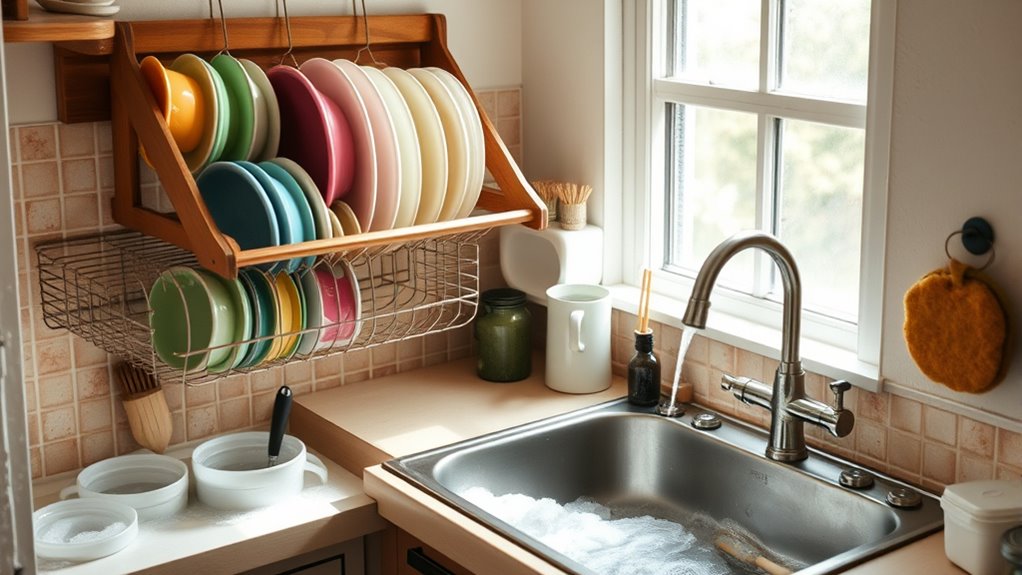
Have you ever considered how life might change if you lived without a dishwasher? For many, the idea of washing dishes by hand can seem daunting at first, especially if you’re used to the convenience of machine cleaning. But with a few simple strategies, you can keep your small kitchen organized and your dishes spotless without relying on an appliance. Manual dishwashing becomes your primary method, so it’s important to develop efficient habits that save time and water. Start by scraping off leftover food from plates and utensils before loading them into a basin of warm, soapy water. Use a non-abrasive sponge or brush to clean each piece thoroughly, paying attention to stubborn spots. Rinsing should be done with clean, hot water to remove soap residue and ensure your dishes are truly clean. This process, though manual, can be quick if you organize your workflow well. For example, wash items in order from least to most soiled, and set up a rinse station to streamline your routine. Incorporating the right tools, like a quality dish rack or drying mat, can further enhance efficiency and organization. Drying techniques are just as vital as washing. After rinsing, you can air dry your dishes, which is an effective space-saver in small kitchens. Placing dishes on a clean rack allows excess water to drip off naturally, reducing the need for towel drying. If you prefer faster results, use a clean, absorbent towel to dry each item immediately after rinsing. Be sure to use a dedicated dish towel for drying to prevent cross-contamination. When drying, hold each dish by the edges to avoid fingerprints or water spots, and wipe down surfaces often to keep your workspace tidy. If you’re drying glasses or delicate items, hold them securely and avoid stacking them in a way that could cause breakage. In small kitchens, space is limited, so integrating effective manual dishwashing and drying techniques becomes essential. Keep your sink area organized—use caddies or trays to hold sponges, brushes, and towels so everything’s within reach. Consider investing in a compact dish rack that can double as storage when not in use, freeing up counter space. Remember, the key to living without a dishwasher isn’t just about washing and drying but creating a workflow that minimizes clutter and maximizes efficiency. With practice, you’ll find that manual dishwashing can be just as quick and satisfying as using a machine, especially when paired with smart drying techniques. Embrace the simplicity, and your small kitchen will stay functional and clean without the need for an appliance. Developing a good cleaning routine can make all the difference in maintaining a tidy space.
Frequently Asked Questions
How Can I Dry Dishes Quickly Without a Dishwasher?
To dry dishes quickly without a dishwasher, start with air drying techniques by placing dishes on a clean dish rack to let excess water evaporate naturally. For faster results, use a quick towel drying method, carefully patting dishes dry with a clean, absorbent towel. Combining these methods guarantees your dishes dry efficiently, saving time and keeping your small kitchen organized and clutter-free.
What Are Eco-Friendly Alternatives to Dishwasher Detergent?
Think of biodegradable soaps and homemade cleaning solutions as the gentle rain that refreshes a garden. They’re eco-friendly alternatives to harsh dishwasher detergents, helping you reduce environmental impact. You can easily make your own with vinegar, baking soda, or lemon juice, or choose biodegradable soaps from stores. These options clean effectively without harming ecosystems, turning your dishwashing routine into a sustainable practice that benefits both your home and the planet.
How Often Should I Disinfect My Sink and Dishware?
You should disinfect your sink and sterilize your dishware daily to maintain good sink sanitation and prevent bacteria buildup. After each use, rinse your dishware thoroughly and use a disinfectant or vinegar solution to sanitize the sink. Regularly sterilize your dishware by boiling or using a dishwasher with a sterilizing cycle if available. Consistent cleaning ensures a hygienic space and safe, bacteria-free dishware for everyday use.
Can I Use a Portable Dishwasher in a Small Kitchen?
Think of a portable dishwasher as a secret weapon for your small kitchen. Yes, you can use it as a space-saving device that brings the convenience of cleaning solutions without sacrificing precious counter space. Its portability lets you tuck it away when not in use, making it perfect for limited spaces. Embrace this versatile solution, and you’ll find washing dishes becomes less of a chore and more of a seamless part of your routine.
What Are the Best Storage Tips for Dirty Dishes?
To keep your dirty dishes organized, use effective stacking techniques to maximize space in your sink or temporary storage area. Place heavily soiled items at the bottom and lighter ones on top, making it easier to manage. Additionally, store dishes in designated storage containers with lids to contain messes and prevent odors. This approach keeps your small kitchen tidy and guarantees your dishes are ready for cleaning when you need them.
Conclusion
Living without a dishwasher might feel like trying to tame a wild beast at first, but with these simple hacks, you’ll find your rhythm. Embrace the art of quick hand-washing and clever organization, turning your small kitchen into a well-oiled machine. Remember, a little elbow grease often outshines high-tech gadgets. So roll up your sleeves and see how you can turn dish duty into a manageable, even satisfying, part of your daily routine.