In a kitchenette without a full stove, you can still prepare tasty meals by using portable appliances like mini rice cookers, hot plates, or electric skillets. Focus on quick, one-pot dishes, and prep ingredients ahead of time to save space. Opt for energy-efficient gadgets and batch cook to streamline your routines. Keep tools organized and store appliances when not in use to maximize your limited space. Keep exploring to discover more space-saving tips and tricks.
Key Takeaways
- Utilize portable appliances like mini rice cookers and hot plates for versatile, space-saving cooking options.
- Plan quick, one-pot meals to minimize cookware and simplify cleanup.
- Prepare ingredients in advance to streamline cooking and reduce time spent in a limited space.
- Incorporate multi-functional devices such as blenders or electric skillet to maximize utility.
- Practice batch cooking and store portions to save time and reduce daily appliance use.
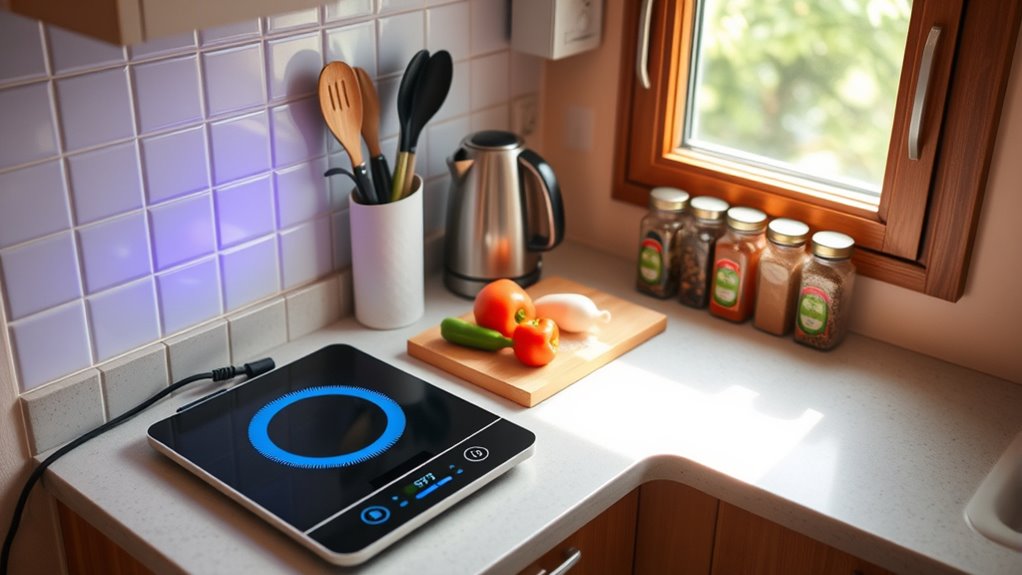
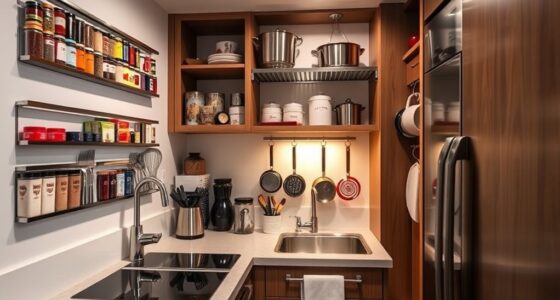
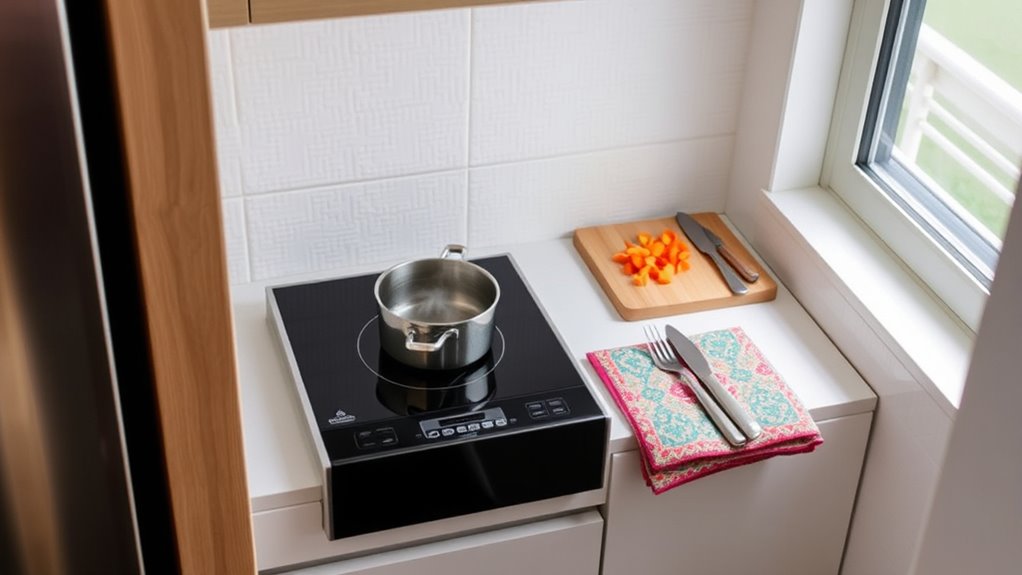
Have you recently moved into a small space or a new place with a kitchenette? If so, you might be finding that cooking without a full stove can be a bit tricky at first. Luckily, you can make it work with a few smart strategies. One of the easiest ways to expand your cooking options is by using portable appliances. These compact tools are perfect for small spaces because they don’t require a lot of room and can be stored away easily when not in use. Think about investing in a mini rice cooker, a hot plate, or an electric skillet. These devices allow you to prepare a variety of meals without needing a traditional stove, giving you more flexibility in your meal prep routines.
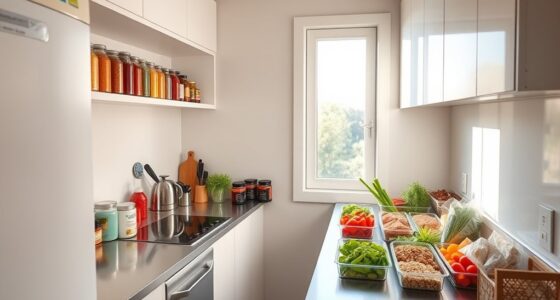
When it comes to meal prep, planning becomes even more essential. Since your options are limited, you’ll want to focus on dishes that can be made quickly or in one pot. Prepare ingredients in advance, such as chopping vegetables or marinating proteins, so you can toss everything together easily when you’re ready to cook. Using portable appliances, you can sauté, boil, or even bake small batches of food, making it easier to stay on top of your nutrition without the usual kitchen setup. For example, a small slow cooker can be your best friend; you can throw in ingredients in the morning and come home to a hot, ready meal. Incorporating energy-efficient appliances can also help reduce your carbon footprint while cooking in a kitchenette aligned with sustainable solutions.
Another tip is to maximize your space and tools. Keep your countertops clear by storing appliances when you’re not using them, and choose multi-functional devices that can handle different tasks. A blender, for instance, can be used for smoothies, soups, or sauces, reducing the need for multiple gadgets. When meal prepping, consider batch cooking and storing portions in containers. This way, you can avoid cooking every day and make the most of your appliances without feeling overwhelmed.
Frequently Asked Questions
Can I Cook Frozen Meals Without a Stove?
Yes, you can cook frozen meals without a stove by using your microwave. Microwave recipes are perfect for quickly preparing frozen foods, and you can also make no-cook meals like salads or wraps. Just follow the instructions on packaging or find simple microwave tips online. This way, you’ll enjoy warm, delicious meals without needing a full stove, making your kitchenette setup more convenient and versatile.
What Are Quick Breakfast Options Without a Full Kitchen?
Did you know that over 60% of people prefer quick, no-cook breakfasts? You can easily enjoy a microwave breakfast by microwaving oatmeal, eggs, or even breakfast sandwiches. No-cook options like yogurt with granola, fruit, or overnight oats are also great choices. These methods save time and effort, making your morning routine smoother without needing a full kitchen or stove.
How Do I Store Perishable Ingredients in a Small Space?
To store perishable ingredients in a small space, focus on food preservation by using airtight containers and vacuum-sealed bags to extend freshness. Keep your shelf organization tight by dedicating specific spots for dairy, produce, and leftovers. Consider a compact mini-fridge or a cooler with ice packs if space allows. Regularly check expiration dates and prioritize items that need immediate use, ensuring your perishables stay fresh longer and your space stays tidy.
Are There Safe Methods to Boil Water Without a Stove?
Yes, you can boil water safely without a stove using alternative boiling techniques. Use a kettle, electric kettle, or a microwave-safe container in the microwave to heat water until it reaches a rolling boil. Always guarantee water safety by boiling it for at least one minute to kill bacteria. Keep an eye on your equipment and avoid overfilling to prevent spills or accidents. These methods are effective and safe for everyday use.
What Are Alternative Cooking Appliances for Limited Kitchens?
Did you know that over 40% of apartment dwellers use portable appliances daily? You can explore compact cookware like mini rice cookers or electric skillets, perfect for limited spaces. Portable appliances such as electric grills, hot plates, or induction burners let you cook comfortably without a full stove. They’re easy to store, energy-efficient, and versatile, helping you prepare a variety of meals while maximizing your small kitchen’s potential.
Conclusion
Just like a skilled sailor navigates stormy seas with limited tools, you can master your kitchenette with creativity and confidence. Embrace the challenge as an opportunity to discover new flavors and techniques, turning a small space into a bustling culinary harbor. Remember, even in tight quarters, your culinary voyage can be bold and satisfying. With a little ingenuity, you’ll find that every meal becomes a triumph, proof that great things often come in small, adaptable packages.