
Without a range hood, you can still vent your kitchen effectively by opening windows and creating cross-breezes to improve airflow. Use exhaust fans placed near cooking areas to pull out smoke and odors, and consider adding air purifiers with HEPA and carbon filters to trap airborne particles and neutralize smells. Combining natural ventilation, mechanical exhausts, and air purifiers can make a noticeable difference. Keep in mind, there are more simple solutions to keep your kitchen fresh—discover them below.
Key Takeaways
- Use natural ventilation by opening windows and doors to promote airflow during and after cooking.
- Install wall-mounted exhaust fans near cooktops to vent smoke and odors outside effectively.
- Incorporate air purifiers with HEPA and activated carbon filters to reduce airborne pollutants and odors.
- Utilize ceiling or wall fans to circulate air and prevent stagnation in the absence of a range hood.
- Maintain cleanliness, seal containers, and dispose of trash regularly to minimize odor buildup and improve air quality.
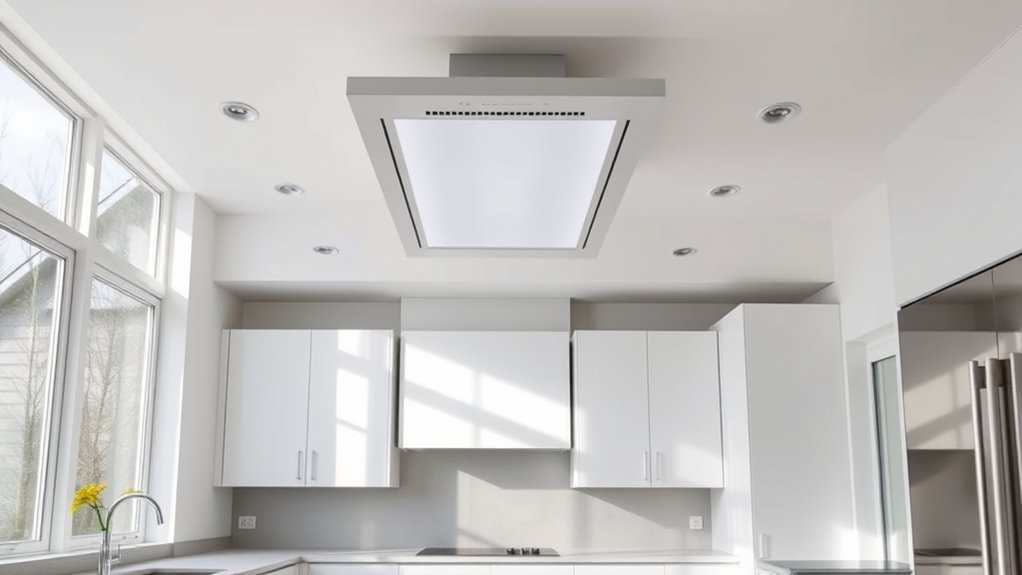
A well-ventilated kitchen is essential for maintaining a healthy and comfortable cooking environment. Without a range hood, it’s even more important to pay attention to how you manage air quality and odor control. Good ventilation helps remove smoke, steam, and airborne pollutants, preventing them from lingering and degrading the air you breathe. When you cook without a range hood, you become responsible for ensuring your kitchen remains fresh and safe.
Start by considering natural ventilation options. Opening windows and doors during and after cooking can considerably improve airflow, helping to dilute and carry away odors and airborne contaminants. If you have windows on opposite sides of your kitchen, open them simultaneously to create a cross-breeze that pulls stale air out and pulls fresh air in. This simple step can be surprisingly effective in maintaining good air quality and reducing lingering smells.
In addition to natural ventilation, installing exhaust fans is a smart move. Wall-mounted exhaust fans, especially those with adjustable speeds, can help vent out smoke, steam, and odors quickly. Position the fan near your cooking area for maximum effect, and ensure it vents directly outside rather than into an attic or crawl space. This direct venting prevents odors from recirculating into your home, keeping your kitchen fresher longer.
Another effective solution involves using air purifiers equipped with HEPA filters and activated carbon. These devices are designed to clean the air by trapping airborne particles, including smoke, grease particles, and odors. Placing an air purifier in your kitchen creates a continuous filtration system that improves overall air quality and odor control, especially during heavy cooking sessions. Be sure to choose a model suitable for your kitchen size and run it during and after cooking to maintain ideal air conditions.
Ceiling or wall-mounted fans can also assist in circulating air within the space. While they don’t remove odors directly, they help distribute fresh air and prevent stagnant pockets of smoke or steam from settling. When used in combination with exhaust fans and natural ventilation, these fans enhance overall airflow and help keep the kitchen environment healthier.
Managing the air quality and controlling odors effectively is essential, especially when relying on alternative ventilation methods. Properly sealing containers and disposing of trash frequently also helps prevent unpleasant smells from developing. By combining these strategies—natural airflow, exhaust fans, air purifiers, and source control—you can maintain excellent air quality and odor control, even without a traditional range hood. Staying proactive ensures your kitchen remains a clean, odor-free, and welcoming space for cooking and gathering.
Frequently Asked Questions
Can Portable Air Purifiers Effectively Replace Range Hoods?
Portable air purifiers can’t effectively replace range hoods because their air purifier effectiveness is limited to airborne particles and odors, not the grease and smoke that rise during cooking. Unlike fixed range hoods, portable units lack the power and proper venting to handle heavy cooking fumes. For better kitchen air quality, use a dedicated range hood or combine a portable air purifier with good ventilation practices.
What Are the Best Window Ventilation Options for Small Kitchens?
You should consider installing window vents or exhaust fans to improve ventilation in your small kitchen. Window vents allow fresh air to flow in while letting stale air escape, keeping your space fresh. Exhaust fans, particularly those installed above cooking areas, effectively remove smoke, steam, and odors. Combining both options provides ideal airflow, ensuring your kitchen stays well-ventilated and comfortable, even without a range hood.
How Does Indoor Air Quality Impact Health in Kitchens Without Hoods?
Indoor air quality directly impacts your health, especially in kitchens without hoods. Studies show that airborne pollutants can linger, increasing the risk of respiratory issues. Poor ventilation hampers odor control and allows harmful particles to accumulate. This can lead to allergies, asthma, and other health problems. Ensuring proper airflow reduces airborne pollutants, improves odor control, and creates a healthier cooking environment for you and your family.
Are There Energy-Efficient Ventilation Systems Suitable for Limited Spaces?
Yes, you can find energy-efficient, compact ventilation solutions that fit limited spaces. Look for models with high airflow efficiency and low power consumption, such as wall-mounted exhaust fans or inline duct fans. These systems are designed to be space-saving while effectively removing cooking fumes and odors. Choose units with adjustable speeds and energy-saving modes to optimize performance and minimize energy use, ensuring your kitchen stays fresh without increasing your energy bills.
What Maintenance Is Required for Alternative Ventilation Solutions?
Imagine your ventilation system as the lungs of your kitchen, quietly working to keep air fresh. You’ll need to replace filters regularly to prevent buildup and guarantee the best airflow. Schedule system inspections to catch any issues early, like loose connections or clogged vents. Keep an eye on performance, and clean or replace parts as needed. Consistent maintenance keeps your ventilation system breathing easily, safeguarding your kitchen environment.
Conclusion
Remember, where there’s a will, there’s a way. Even if your kitchen lacks a range hood, you can still keep the air fresh with proper ventilation solutions like exhaust fans, window vents, or air purifiers. These options help remove cooking odors and improve air quality. Don’t wait until poor air quality becomes a problem—take action now. With a bit of effort, you’ll create a healthier, more comfortable cooking space that you can enjoy every day.