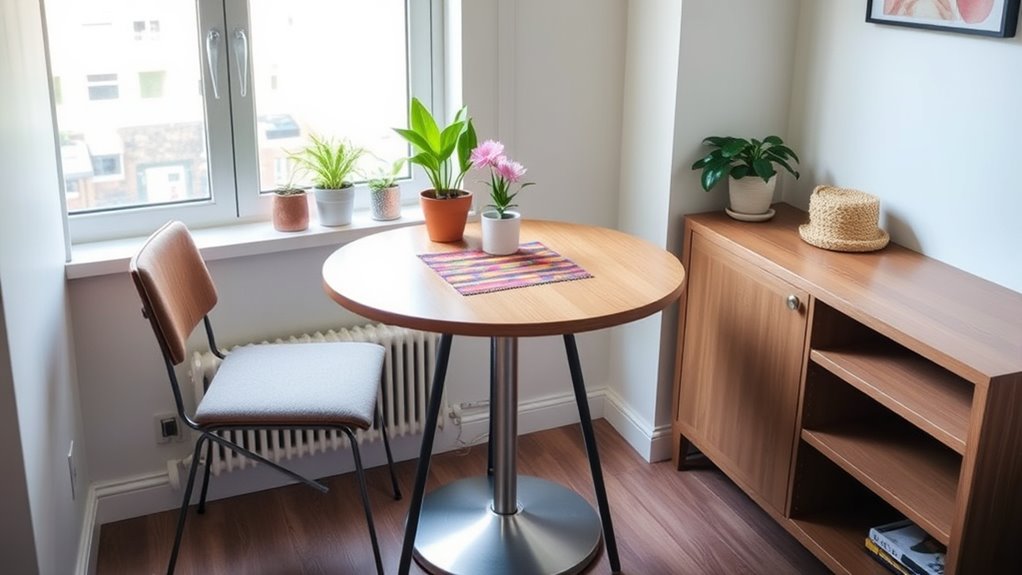

To create a functional dining space in a small apartment, assess your area and choose compact, multi-purpose furniture like foldable tables and storage benches. Optimize your layout by maximizing vertical storage with wall-mounted shelves, keeping pathways clear, and using lighting and color schemes that make the space feel larger. Add decor and smart storage solutions to boost style and organization. Keep clutter at bay by maintaining an organized, cozy dining spot—learn more tips to make the most of your space.
Key Takeaways
- Opt for space-saving, foldable, or extendable furniture to maximize functionality without clutter.
- Use vertical storage solutions like wall-mounted shelves and tall cabinets to free up floor space.
- Choose light, neutral color schemes and strategic lighting to visually expand the dining area.
- Incorporate multi-functional furniture, such as storage benches or tables with hidden compartments.
- Keep the space organized with smart storage solutions and regular decluttering to maintain a clutter-free environment.
Assessing Your Space and Setting Priorities

Before you begin designing your dining space, it’s essential to assess the available area and determine your priorities. Measure the space carefully and note any architectural features that could influence layout. Consider how much artificial lighting you’ll need; good lighting can make a small space feel larger and more inviting. Think about color schemes that expand the room visually—lighter shades or neutral tones can create an open feel, while bold accents add personality. Prioritize your needs: do you want a cozy spot for intimate dinners or a versatile area that doubles as a workspace? Understanding these factors helps you make informed decisions about furniture placement, lighting, and color choices, ensuring your small dining area is both functional and appealing. Additionally, being mindful of sustainable design principles can help you select eco-friendly materials and energy-efficient lighting options that contribute to a more sustainable living space. Incorporating energy-efficient lighting and eco-friendly materials not only benefits the environment but can also reduce your long-term energy costs. Integrating space-saving furniture solutions and multi-functional pieces can further optimize your limited area and enhance usability. Moreover, considering natural light sources can significantly improve the overall ambiance and reduce the need for artificial lighting during the day.
Choosing Compact and Multi-Functional Furniture
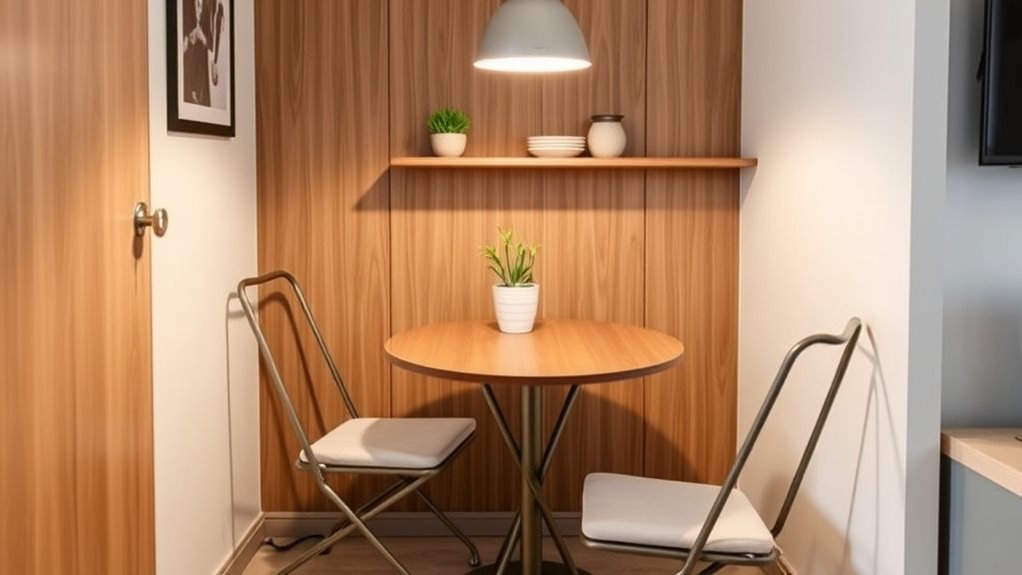
Selecting the right furniture is key to maximizing your small dining space. Opt for compact tables that fold or extend, allowing flexibility for different occasions. Multi-functional furniture, like a bench with storage or a dining table that doubles as a workspace, helps you save space while adding practicality. Incorporate space-saving appliances, such as slim refrigerators or slim dishwashers, to keep clutter at bay. Choose decorative accents that complement your furniture without overwhelming the area, like small plants or sleek lighting fixtures. These elements add personality without sacrificing functionality. Consider space optimization techniques to further enhance your layout and make the most of your limited square footage. Remember, every piece should serve a purpose and enhance your space’s versatility. Thoughtful furniture choices make your dining area more efficient, inviting, and perfectly suited to your small apartment. Creating efficient spaces is essential for maximizing functionality and comfort in small living areas.
Optimizing Layout and Flow for Small Spaces

To make the most of your small dining area, focus on maximizing floor space by choosing furniture that fits well and doesn’t clutter the room. Incorporate multi-functional pieces to save space and add versatility. Pay attention to traffic flow, ensuring pathways are clear and movement feels natural. Additionally, consider efficient space utilization techniques, such as using vertical storage or wall-mounted options, to further optimize your layout.
Maximize Floor Space
Optimizing the layout and flow of your dining space is essential when working with limited square footage. To maximize floor space, consider using wall mounted tables that fold away when not in use, freeing up valuable area. Incorporate compact storage solutions like slim cabinets or wall-mounted shelves to keep essentials accessible without cluttering the floor. Arrange furniture to create clear pathways, avoiding blocking entry points or windows. Choose multi-purpose pieces that serve dual functions, but avoid bulky furniture that consumes too much space. Below is a table to help you visualize some options:
| Space-saving options | Benefits |
|---|---|
| Wall mounted tables | Flexibility and saving space |
| Compact storage | Keeps area tidy |
| Foldable chairs | Easy to store when not used |
| Slim cabinets | Efficient storage |
| Clear pathways | Improves flow and accessibility |
Use Multi-Functional Furniture
Have you considered how multi-functional furniture can transform your small dining space? Wall mounted tables are perfect because they save floor space and can be folded away when not in use. Pair this with fold away chairs that can be tucked neatly against the wall, creating a clean and open look. These pieces allow you to easily expand your dining area for guests or fold everything away for everyday use. Multi-functional furniture makes your space adaptable, giving you flexibility without sacrificing style. By choosing pieces that serve dual purposes, you maximize functionality while maintaining a clutter-free environment. This approach ensures your small apartment remains practical, comfortable, and visually appealing, making the most of every inch of your limited space. Additionally, understanding the weight of furniture is crucial when selecting pieces to ensure safe and easy installation. Considering celebrity interior trends, such as minimalist and eco-friendly decor, can also inspire your design choices to create an inviting atmosphere. Incorporating smart solutions like robotic cleaning devices can help maintain cleanliness effortlessly, further enhancing your small space. For example, choosing lightweight furniture made from durable materials can make rearranging and cleaning even easier, especially when considering structural wall features that may influence placement options.
Enhance Traffic Flow
Multi-functional furniture not only saves space but also helps create a smooth flow within your dining area. To optimize traffic flow, arrange your furniture to allow easy movement around the space. Keep pathways clear and avoid clutter, ensuring you can navigate comfortably. Incorporate artificial lighting strategically—use wall-mounted lights or pendant fixtures to illuminate key zones without obstructing pathways. Choose color schemes that promote openness, such as light or neutral tones, which visually expand the space and guide the eye smoothly through the room. Avoid dark or heavy colors that can make the area feel cramped. By combining thoughtful layout, strategic lighting, and cohesive colors, you create an inviting, functional dining space where movement feels natural and effortless. Additionally, selecting high-water-content vegetables for your meal preparation can inspire a fresh and lively atmosphere, subtly enhancing the room’s energy and ambiance. Incorporating lighting options that can be easily adjusted allows you to modify the mood and functionality of the space as needed. Emphasizing space-saving solutions can further maximize your limited area and enhance overall usability. Furthermore, implementing storage solutions helps keep the space organized and clutter-free, contributing to a seamless flow.
Incorporating Storage Solutions to Maximize Space
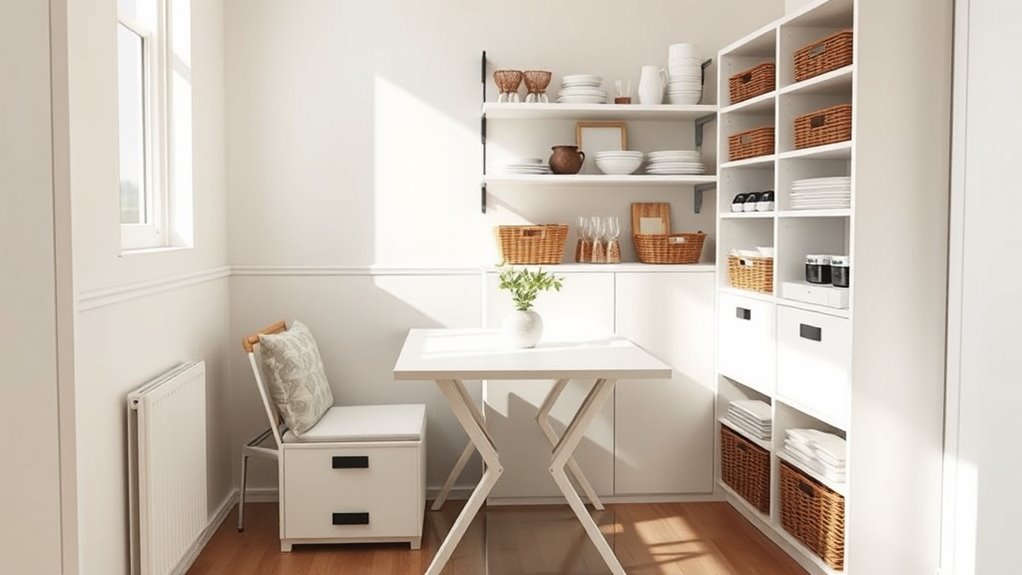
To make the most of your dining space, incorporating smart storage solutions is essential. Hidden compartments in tables or benches can provide discreet storage for utensils, placemats, or chargers, keeping surfaces clutter-free. Vertical storage is also highly effective; install wall-mounted shelves or tall cabinets to maximize height without sacrificing floor space. Consider multi-purpose furniture, like a dining table with built-in drawers or storage underneath, to store linens or serveware. Using these approaches helps you keep essentials within reach while maintaining a clean, open look. Additionally, self watering plant pots can be placed on shelves or corners to add greenery without taking up extra space. Incorporating space-saving furniture options, such as foldable or extendable pieces, can further enhance your layout’s flexibility. Strategic organization and compact storage solutions are key to creating a clutter-free environment. With thoughtful planning, you’ll create a tidy, functional dining area that feels spacious and inviting.
Using Lighting and Decor to Enhance the Area
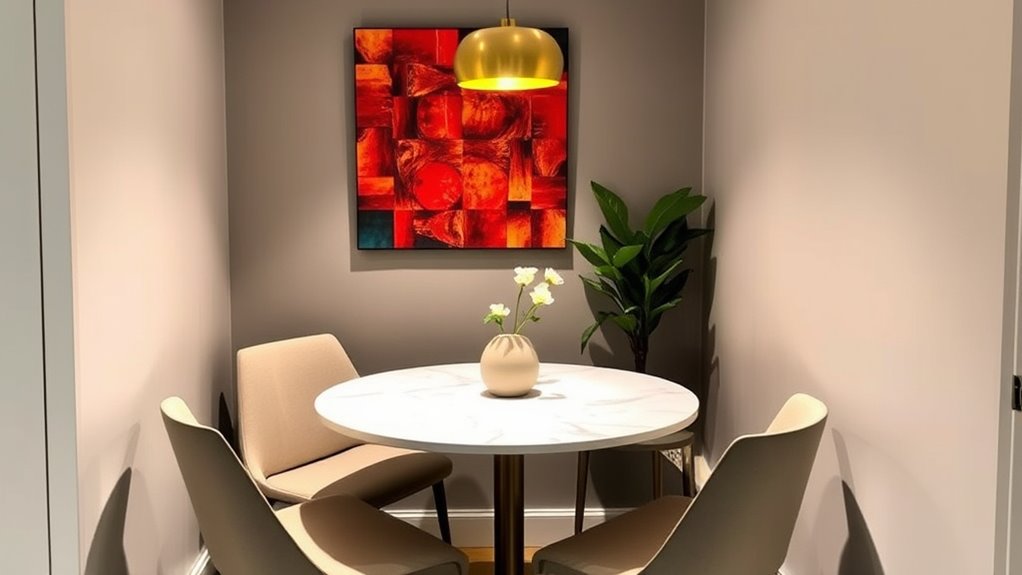
Lighting and decor play a essential role in transforming your dining area into a warm, inviting space. Start with ambient lighting, such as pendant lights or a soft ceiling fixture, to create a cozy atmosphere. Use dimmable options to adjust the mood for different occasions. Incorporate decorative accents like colorful tableware, textured placemats, or a stylish centerpiece to add personality and charm. Mirrors can reflect light and make the space feel larger, while wall art or framed photos offer visual interest without cluttering. Keep decor minimal but meaningful to avoid overwhelming your small space. Thoughtful lighting and well-chosen decorative accents work together to make your dining area both functional and inviting. Additionally, selecting best furniture pieces can maximize space efficiency and comfort in a small apartment setting. Incorporating innovative materials inspired by sneaker trends can also add a modern touch and durability to your decor. Using ice cream flavors as inspiration for color schemes and decorative themes can create a playful and inviting atmosphere, making your space feel more personalized and lively. Incorporating cybersecurity best practices into your design can help protect your digital devices and personal information, especially in small living spaces where technology is central. Adding proper lighting techniques can further enhance the ambiance and perceived space of your dining area.
Tips for Maintaining a Clutter-Free Dining Zone
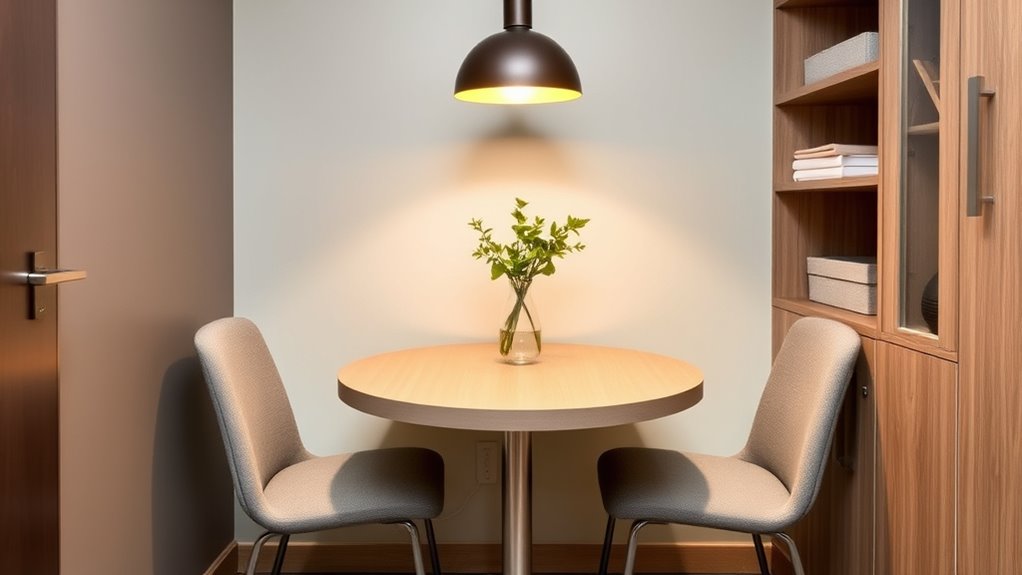
Keeping your dining space tidy starts with smart storage solutions that hide away clutter. Multi-functional furniture can help maximize space and keep everything organized, while regular decluttering prevents mess from piling up. Implementing these tips makes maintaining a clutter-free zone quick and easy. Practicing mindful decluttering strategies can also help you make better choices about what to keep, donate, or discard, ensuring your space remains functional and serene.
Maximize Storage Solutions
Maximizing storage is essential for keeping your dining space organized and functional. Efficient storage solutions help maintain a clutter-free environment, making your dining area feel spacious and inviting. To achieve this, consider smart options like wall-mounted shelves, hidden cabinets, or multi-purpose furniture. When selecting artwork placement, keep artwork minimal and hung at eye level to avoid visual clutter. Consistent color schemes across storage pieces and decor create a cohesive look that enhances your space’s sophistication. Use decorative baskets or boxes to conceal small items, and opt for vertical storage to maximize limited space. These strategies streamline your dining zone, making it easier to maintain order and enjoy your meals without distraction.
- Wall-mounted shelves with decorative accents
- Hidden storage in extendable tables
- Multi-functional sideboards
- Coordinated color schemes for storage units
- Artwork placement that complements storage areas
Use Multi-Functional Furniture
Incorporating multi-functional furniture into your dining space allows you to make the most of limited square footage while maintaining a tidy environment. Choose pieces like extendable tables with built-in storage or benches that double as hidden compartments. These options help keep appliances organized, ensuring appliance placement doesn’t clutter the area. When selecting furniture, consider your color schemes; neutral tones can blend seamlessly, making the space feel larger and more cohesive. Multi-purpose furniture also reduces the need for extra pieces, which can lead to clutter. Keep surfaces clear by storing less-used items inside furniture. By thoughtfully choosing multi-functional pieces that align with your color schemes and optimize appliance placement, you create a streamlined, clutter-free dining zone that feels spacious and inviting.
Implement Regular Decluttering
Regularly decluttering your dining space is essential for maintaining its functionality and inviting atmosphere. By consistently removing unnecessary items, you prevent clutter from accumulating and ensure your space remains practical. Use smart storage solutions like baskets, shelves, or hidden cabinets to keep everyday essentials organized. Incorporate decorative accents such as elegant vases or artwork to add personality without overcrowding. Schedule a quick declutter session weekly to reassess what’s on surfaces and in drawers. Keep only items that serve a purpose or enhance the aesthetic. Regular tidying creates a clean environment, making your dining area more welcoming. Small habits like these help sustain a clutter-free zone, maximizing your limited space efficiently and beautifully.
- Use decorative accents to enhance style without adding clutter
- Invest in versatile storage solutions for easy organization
- Clear surfaces after each meal to maintain tidiness
- Regularly review and donate unused items
- Incorporate storage furniture that doubles as decor
Frequently Asked Questions
How Can I Make My Small Dining Area Feel More Open?
To make your small dining area feel more open, use lighting techniques like wall sconces or pendant lights to brighten the space. Opt for light color schemes such as whites, pastels, or neutrals to create an airy feel. Keep furniture minimal and choose pieces with slim profiles. Mirrors can also reflect light and give the illusion of more space. These tips will help your dining area appear larger and more inviting.
What Are Space-Saving Tips for Hosting Guests Comfortably?
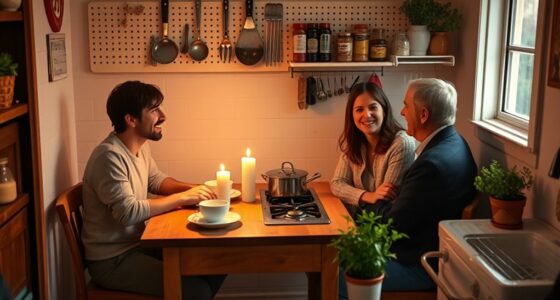
To host guests comfortably in a small space, use artful table settings to make the area inviting without taking up extra room. Incorporate ambient lighting, like string lights or candles, to create a warm atmosphere. Foldable or stackable chairs save space when not in use, and opt for a multi-functional table that can serve as both dining and work space. Keep decor minimal to avoid clutter and maintain an open feel.
How Do I Choose Durable Furniture for Small Spaces?
You should prioritize durable furniture by choosing materials like hardwood, metal, or high-quality composites that withstand daily use. Look for pieces with sturdy construction and scratch-resistant finishes. Consider maintenance tips like regular cleaning with gentle products and avoiding harsh chemicals to keep your furniture looking new. Opt for multi-functional pieces that save space and last longer, ensuring your small apartment remains stylish and practical without frequent replacements.
Can I Incorporate a Dining Area in a Multi-Purpose Room?
Think of your multi-purpose room as a Swiss Army knife—adaptable and versatile. You can definitely incorporate a dining area by choosing multi-purpose furniture that doubles as a table and storage, like fold-away or extendable tables. Flexible layouts allow you to seamlessly switch from dining to living space, making your room both functional and stylish. With creative arrangement, your small apartment becomes a space that adapts to your needs effortlessly.
What Are Affordable Ways to Update My Small Dining Space?
You can update your small dining space with budget decor and DIY projects. Paint a wall for a fresh look, add inexpensive peel-and-stick wallpaper, or repurpose furniture with a new coat of paint. Use affordable accessories like colorful placemats, fairy lights, or a statement centerpiece. These simple, cost-effective updates make your dining area more inviting without breaking the bank, giving it a stylish, personalized touch.
Conclusion
By carefully evaluating your space and choosing versatile furniture, you can create a cozy, functional dining area even in a small apartment. For example, imagine swapping a bulky table for a fold-down wall-mounted one that’s tucked away when not in use. With smart storage and thoughtful decor, your dining zone stays clutter-free and inviting. Remember, small spaces demand clever solutions—so get creative and make your dining area a true extension of your home.