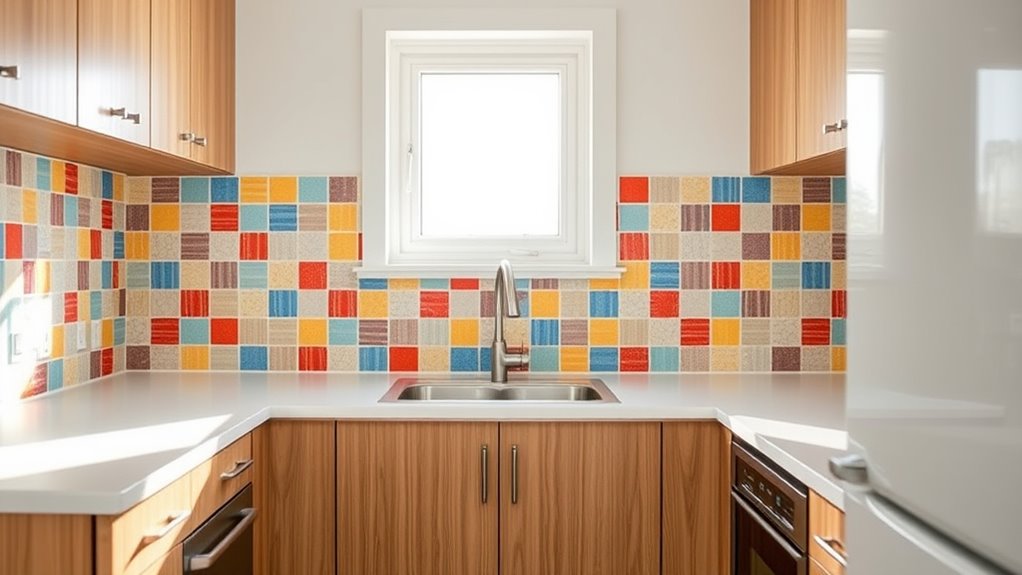
To create a stylish, damage-free backsplash in your rental kitchen, try using removable wallpaper or peel-and-stick tiles that mimic real tile patterns. These options are easy to install and peel off when you move. You can also layer decor like wire grids or chalkboards for a personal touch. Combine these with stylish storage solutions and decorative accents to boost both function and appearance. Keep exploring to discover more simple and creative ways to upgrade your space.
Key Takeaways
- Use peel-and-stick tiles or removable wallpaper to create stylish, damage-free backsplash designs.
- Layer decorative elements like framed fabric or wall decals for added texture and personalization.
- Incorporate adhesive hooks or tension rods to hang utensils or small plants, enhancing functionality and decor.
- Opt for magnetic strips or freestanding shelves for organized storage without wall damage.
- Choose colors and patterns that complement your kitchen’s style for a cohesive, visually appealing look.

Are you tired of dull, uninspired kitchen backsplashes that don’t reflect your style? If you’re renting and can’t make permanent changes, it’s time to get creative with DIY solutions that transform your small kitchen into a vibrant space. You don’t need to demolish or spend a fortune—simple, removable ideas can make a huge difference. Start by thinking about wall decor that adds personality without damaging the walls. Peel-and-stick tiles are a popular choice, offering a wide range of patterns and colors that mimic real tile but are easy to remove later. They instantly upgrade the look and provide a stylish backdrop for your cooking adventures. If you prefer a more artsy touch, consider framing fabric or decorative paper with washi tape or removable adhesive strips. This approach is budget-friendly, customizable, and portable, perfect for renters who want a quick refresh.
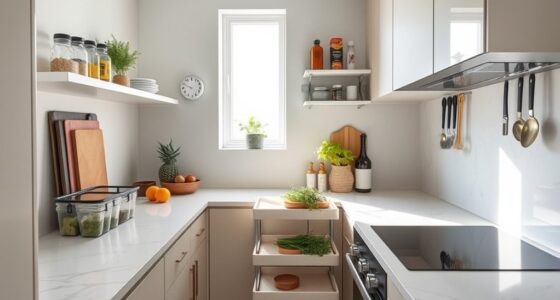
In addition to wall decor, focus on clever storage solutions that double as aesthetic upgrades. Use adhesive hooks or tension rods to hang lightweight utensils, pots, or decorative items, freeing up counter space and creating a more organized, inviting environment. Magnetic strips installed with removable adhesive can hold knives or metal utensils, keeping essentials within reach while adding a sleek, modern touch. For a more substantial look, consider a freestanding or over-the-sink shelf that sticks to the wall with strong, damage-free adhesive pads. Not only does this increase storage, but it also provides a spot for decorative vases, small plants, or stylish jars filled with spices, making your small kitchen feel more put together.
Another idea is to incorporate wall decals or removable wallpaper that mimics the appearance of a traditional backsplash. These options come in various designs—from subway tiles to geometric patterns—and are easy to peel off when it’s time to move. To add some texture and depth, you can layer different wall decor elements, like hanging a small chalkboard or a decorative wire grid to display photos, notes, or kitchen essentials. This not only personalizes your space but also keeps frequently used items accessible. Additionally, understanding color temperature adjustments can help you create the perfect ambiance and enhance your DIY backsplash’s visual appeal.
Frequently Asked Questions
Can I Install a Backsplash Without Damaging the Walls?
Yes, you can install a backsplash without damaging your walls by using removable options with strong adhesive strength designed for wall protection. Opt for peel-and-stick tiles or decals that easily adhere without nails or screws, and guarantee they have a reliable adhesive. This way, you protect your walls from damage, and when you move out, you can simply peel them off without leaving residue or marks behind.
Are Peel-And-Stick Tiles Safe for All Wall Types?
Think of peel-and-stick tiles like a suit tailored to fit most walls, but not all. They’re generally safe if you prepare the wall properly and check the adhesive compatibility. I once tried them over textured drywall, and they peeled off in days. So, make certain your wall is smooth, clean, and dry before applying. Proper wall preparation guarantees the adhesive sticks well, giving you a beautiful, damage-free backsplash.
How Do I Remove a Temporary Backsplash Without Residue?
To remove a temporary backsplash without residue, gently peel it off starting at a corner. Use an adhesive removal solution or rubbing alcohol if any sticky residue remains, ensuring you follow the product instructions. Then, clean the wall thoroughly with a mild wall cleaner to remove any leftover adhesive or dirt. This method helps keep your wall in good condition, making redecoration or touch-ups easier.
What Materials Are Best for Renters on a Budget?
Ironically, your best bet for temporary solutions on a budget is cheap, easy-to-remove materials. Think peel-and-stick tiles, contact paper, or adhesive vinyl—they’re super budget-friendly and renter-friendly. These options are designed for easy installation and removal, so you won’t damage your walls. Plus, they come in various styles, giving your kitchen a fresh look without breaking the bank or risking your security deposit.
Can I Customize a Temporary Backsplash to Match My Decor?
Yes, you can customize a temporary backsplash to match your decor. Use wall color coordination by choosing peel-and-stick tiles or decals that complement your walls and cabinets. Add decorative accents like metallic trims or patterned stickers to personalize the look. You can easily change these elements whenever you want, making it a flexible, stylish solution that enhances your small kitchen without damaging walls.
Conclusion
So, while you might think renters can’t truly personalize their space, these DIY backsplash ideas prove you wrong. Who knew temporary fixes could make such a lasting impression? It’s almost ironic—your creative touches turn a bland kitchen into a stylish haven, all without breaking any lease rules. So go ahead, flaunt your DIY skills. After all, who needs permanence when you’ve got ingenuity? Your rental may never look the same—and honestly, that’s kind of the point.