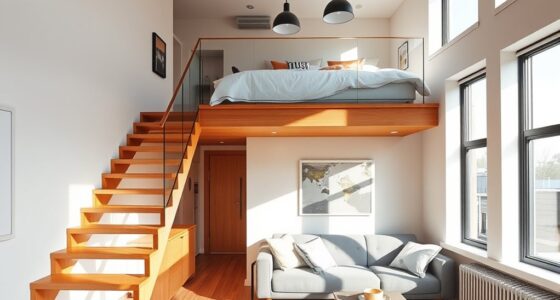
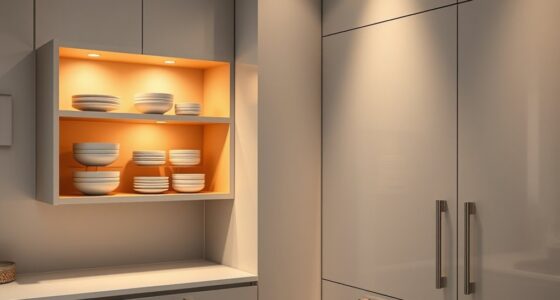
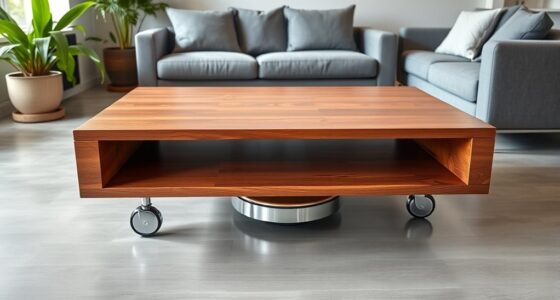
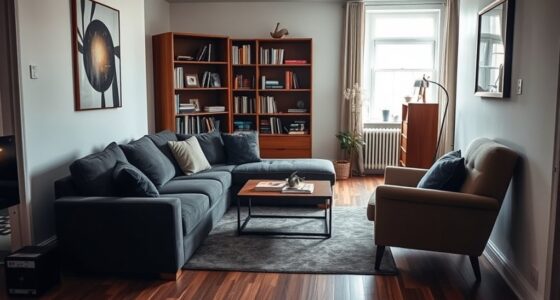
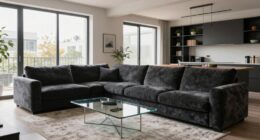
If you’re looking for modular furniture ideas for ever-changing small spaces, focus on versatile pieces that can adapt to your evolving needs. Opt for reconfigurable sofas, storage-integrated tables, or multi-functional units that transform easily from seating to sleeping areas. Choose customizable finishes and easy-to-assemble designs to keep your space flexible and stylish. Exploring these options further will help you discover innovative ways to maximize your limited space while staying adaptable.
Key Takeaways
- Opt for modular furniture with reconfigurable sections to adapt layouts as your space and needs evolve.
- Incorporate multi-functional pieces like sofa beds and storage ottomans to maximize utility in limited areas.
- Choose customizable designs with various finishes and colors to match changing aesthetic preferences.
- Utilize built-in storage solutions within furniture to reduce clutter and optimize space efficiency.
- Prioritize easy-to-assemble and adjustable furniture for quick setup and modifications over time.
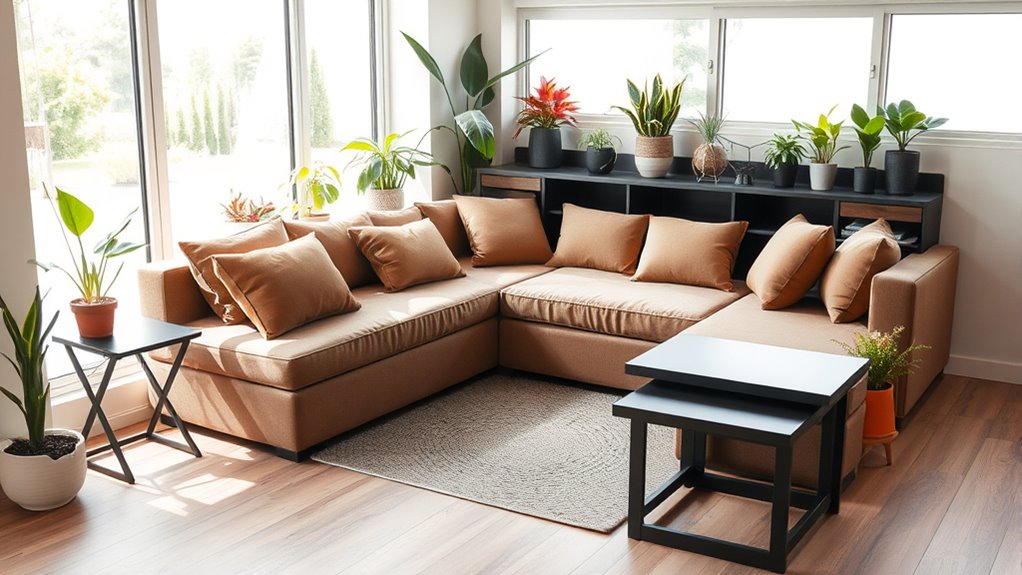
Modular furniture offers a versatile and practical solution for optimizing your living space. When you’re dealing with a small apartment or a room that needs to serve multiple purposes, these pieces become essential. They adapt to your evolving needs, helping you maximize every square inch without sacrificing style. One of the key advantages of modular furniture is its ability to integrate multi functional storage. Instead of cluttering your space with separate pieces, these units often combine storage compartments with seating or tables, allowing you to keep your belongings organized and out of sight. For instance, a modular sofa might include built-in drawers or shelves underneath, perfect for stashing blankets, books, or other essentials. This way, you gain extra storage without taking up additional space, making your environment cleaner and more streamlined.
Convertible seating is another feature that makes modular furniture incredibly practical for small spaces. You can transform a compact sofa into a bed overnight, or rearrange a section of seating to accommodate guests comfortably. These pieces often come with hidden mechanisms or flexible components that let you switch between different forms easily. You might have a modular ottoman that doubles as a coffee table or a set of cubes that can be arranged into a sectional or separated into individual seats. This adaptability ensures that your furniture can serve multiple functions throughout the day and night, saving you from having to buy separate furniture for each purpose. Plus, the ability to reconfigure your furniture allows you to experiment with different layouts, so your space always feels fresh and functional. Additionally, many self-watering pots incorporate innovative designs that complement modular arrangements and make space management even more efficient.
You’ll find that modular furniture is also intuitive to assemble and customize. You can start with a basic configuration and add or remove sections as your needs change, which is especially useful if your living situation is temporary or you anticipate future changes. This flexibility extends to style as well, since many modular pieces come in various finishes and colors, enabling you to create a look that reflects your personality. Whether you prefer a minimalist aesthetic or something more eclectic, modular furniture adapts to your taste. The fact that these pieces are designed to be multifunctional and adjustable makes them an ideal choice for anyone looking to make the most of limited space without sacrificing comfort or style. Overall, integrating modular furniture into your home means smarter, more flexible living that evolves along with you.
Top picks for "modular furniture idea"
Open Amazon search results for this keyword.
As an affiliate, we earn on qualifying purchases.
Frequently Asked Questions
How Do Modular Furniture Prices Compare to Traditional Options?
You’ll find that modular furniture often costs more upfront than traditional options, but the cost comparison can be favorable over time. Modular pieces offer flexibility, so you don’t need to buy new furniture for different spaces or needs. If you’re on a budget, there are budget options within modular collections that provide versatility without breaking the bank. Overall, modular furniture can be a smart investment for adaptable living spaces.
What Are the Best Materials for Durable Modular Pieces?
Think of your modular furniture as a sturdy tree, rooted in durability yet flexible. Opt for sustainable materials like bamboo or reclaimed wood for strength and eco-friendliness. Lightweight options such as aluminum or high-quality plastic make your pieces easy to move and adapt. These materials guarantee your furniture withstands daily life’s storms while remaining environmentally conscious, so your space stays versatile and resilient through every change.
Can Modular Furniture Be Easily Transported Between Rooms?
Yes, modular furniture can be easily transported between rooms. To tackle transportation challenges, opt for lightweight pieces and modular designs that disassemble easily. Use room change tips like labeling parts and using protective covers to prevent damage. With these strategies, you can quickly reconfigure your space, making movement seamless and hassle-free, ensuring your furniture adapts to your changing needs without stress or complications.
How to Maintain and Clean Modular Furniture Effectively?
To maintain your modular furniture looking great, follow simple care tips and cleaning routines. Regularly dust and wipe surfaces with a damp cloth, avoiding harsh chemicals that could damage finishes. For deeper cleaning, use mild soap and water, then dry thoroughly. Check joints and connectors periodically to ensure stability. By staying consistent with these care tips, your modular pieces will stay functional and stylish as your space evolves.
Are There Customizable Modular Furniture Options for Specific Needs?
Yes, there are customizable modular furniture options tailored to your specific needs. You can choose from various customization options, allowing you to adapt pieces for different functions or spaces. Design flexibility is key, so you can easily reconfigure or add modules as your requirements change. This way, your furniture remains practical and stylish, perfectly fitting your lifestyle and space constraints without sacrificing functionality or aesthetics.
Conclusion
Embrace versatility, maximize space, and let your furniture adapt with you. Choose pieces that move, transform, and serve multiple functions. Think open shelves that expand, fold-away beds that save room, and modular units that rearrange effortlessly. By doing so, you’re creating an environment that breathes with your needs, shifting seamlessly from work to relaxation, from storage to style. With modular furniture, your small space becomes a canvas for endless possibilities, a place that grows and changes as you do.