Floating desks and tables are excellent space-saving solutions for small rooms. They’re wall-mounted, which frees up floor space and creates a clean, modern look. You can customize them to fit your needs, whether as a workspace, a dining surface, or a laundry station. Made from durable materials, they’re easy to install and maintain. If you want to explore how these smart furniture ideas can transform your space, keep going for more details.
Key Takeaways
- Floating desks maximize space in small rooms by eliminating bulky furniture and creating a minimalist, open environment.
- Wall-mounted surfaces are versatile, serving as workstations, dining areas, or laundry folding stations.
- Easy installation with wall anchors allows flexible height and placement options to suit various needs.
- Made from durable materials like wood, glass, or metal, ensuring stability and long-lasting use.
- They seamlessly integrate into modern interiors, enhancing aesthetics while maintaining functionality in compact spaces.
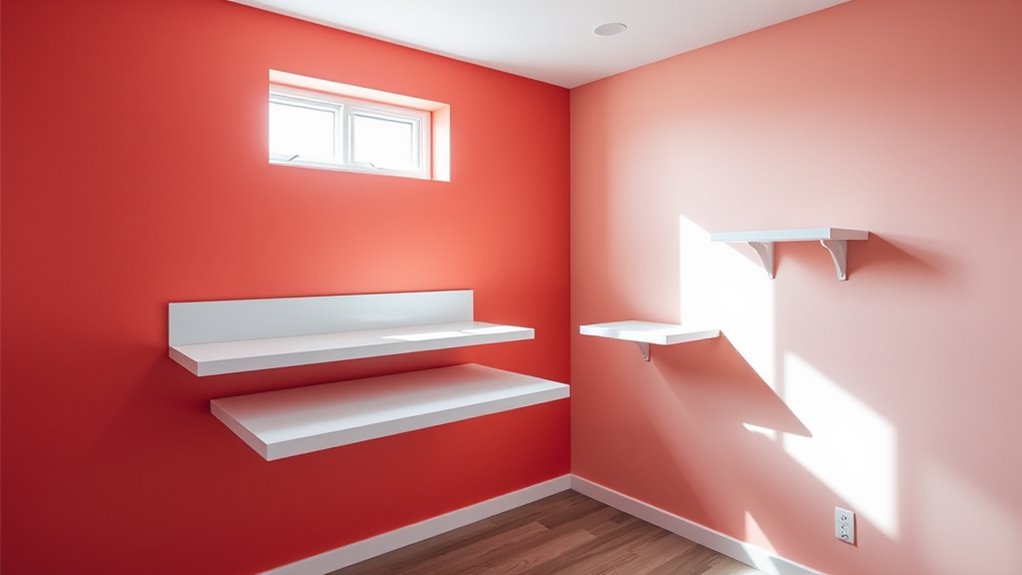
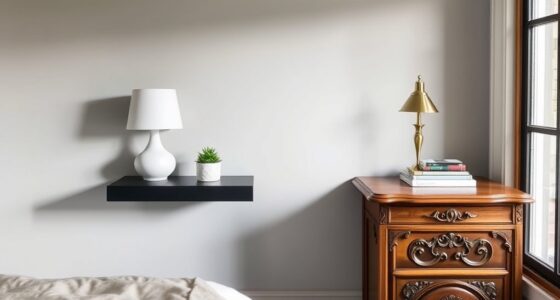
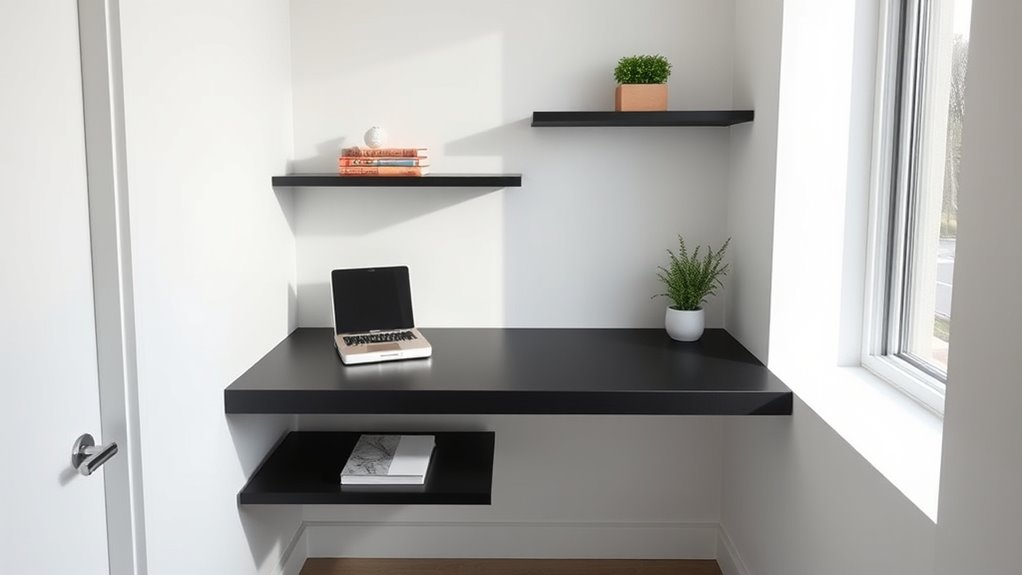
Floating desks and tables have become a popular choice for modern interiors because they combine sleek design with functional space-saving solutions. If you’re working with a small room, these wall-mounted surfaces are a game-changer. They free up valuable floor space, making your room appear larger and less cluttered. With their clean lines and minimalist aesthetic, floating desks perfectly embody modern minimalist design, giving your space a fresh, uncluttered look. You won’t have to worry about bulky legs or traditional furniture taking up room—just a simple, streamlined surface that does the job.
Floating desks save space and add modern minimalist style to small rooms.
Because they’re mounted directly to the wall, floating desks are incredibly versatile. You can install them at any height, tailoring the workspace to your needs. Whether you want a compact writing area, a sleek workspace for your laptop, or a place to fold laundry, these surfaces adapt effortlessly. Many floating desks come with built-in storage or hidden compartments, helping you keep essentials out of sight but within reach. This is especially useful if you’re trying to maintain a tidy look without sacrificing functionality.
Another benefit is that floating tables and desks create a sense of openness. Without bulky supports or bulky furniture, your room feels more spacious and airy. This is a key advantage in small apartments or rooms with limited square footage. Plus, the minimalist design isn’t just about aesthetics—it’s about practicality. The simplicity of a floating surface means less dust accumulation, easier cleaning, and a less cluttered visual impact, which is *vital* when space is tight. Additionally, choosing simple, durable materials can enhance the longevity and ease of maintenance of your floating surfaces.
Installation is straightforward, often requiring just a few wall anchors and screws. Once mounted, you get a sturdy surface that can support your essentials without compromising your room’s style. You can even customize the look by choosing materials like wood, glass, or metal, depending on your decor. Floating desks and tables work well in various settings—home offices, bedrooms, entryways, or kitchens—because they blend seamlessly into any modern interior.
Frequently Asked Questions
How Much Weight Can a Floating Desk Support Safely?
A floating desk can typically support between 15 to 200 pounds, depending on its weight capacity and material strength. If you choose a sturdy material like solid wood or metal, it can hold more weight safely. Always check the manufacturer’s specifications to make certain you’re not exceeding the recommended weight capacity. Proper installation into wall studs also enhances stability and safety, ensuring your workspace remains secure under load.
Can Floating Desks Be Installed on Textured or Uneven Walls?
Yes, you can install floating desks on textured or uneven walls. First, guarantee proper wall preparation by cleaning and possibly smoothing the surface with joint compound or wall filler. Use sturdy anchors and longer screws for secure installation. Follow installation tips like marking precise drill points and using a level to ensure the desk sits evenly. Taking these steps helps your floating desk stay stable and safe despite wall irregularities.
What Maintenance Is Required for Floating Wall-Mounted Furniture?
Ever wondered how to keep your floating furniture looking new? You should regularly dust it with a soft cloth and wipe spills immediately to prevent damage. Cleaning tips include using mild cleaners that won’t harm the finish. Are durability concerns weighing on your mind? Make sure the mounting hardware stays secure and check periodically for loose screws. Proper maintenance boosts lifespan and keeps your wall-mounted pieces sturdy and stylish.
Are There Child-Safe Options for Floating Desks?
Yes, there are child-safe options for floating desks. You can incorporate child proofing options like safety locks to prevent accidental openings or adjustments. Additionally, choose desks with rounded edges and smooth finishes to minimize injury risks. Secure the floating desk firmly to the wall, ensuring it can’t be pulled or tipped over. These precautions help create a safer environment for children while maintaining functionality in your small room.
How Do I Choose the Right Size for My Small Room?
You can’t afford to choose a desk that’s a skyscraper in your tiny room! Opt for a size that maximizes space optimization without overwhelming your space. Measure carefully, leaving enough room to move comfortably and consider aesthetic considerations like matching your decor. A compact, well-proportioned floating desk will make your small room feel larger, functional, and stylish. Keep it simple, functional, and in harmony with your room’s vibe.
Conclusion
In small rooms, floating desks and tables prove that less is more. By choosing wall-mounted surfaces, you create a sleek, functional space that feels bigger and more open. Remember, “A place for everything, and everything in its place”—these floating pieces help you stay organized while maximizing your room’s potential. With a little creativity, your compact space can feel stylish and efficient, proving that smart design truly makes all the difference.