To add depth in small spaces, layer textured textiles like cushions, rugs, and curtains to create visual interest and tactile contrast. Mix fabrics such as velvet, burlap, or silk to break up flat surfaces and catch light differently, making the room feel more dynamic. Draping throws or hanging textured tapestries further enhances dimension. By balancing these elements with your color scheme, you’ll craft a cozy, layered environment that feels more spacious—discover how further techniques can transform your space.
Key Takeaways
- Layer different fabrics like velvet, burlap, and silk to create visual interest and depth.
- Use textured cushions, curtains, and rugs to add tactile variety and contrast.
- Incorporate textured wall hangings or tapestries to draw attention and build dimension.
- Drape chunky throws or fabric collages over furniture for layered, cozy effects.
- Balance textures with your color palette to enhance cohesion and emphasize depth.

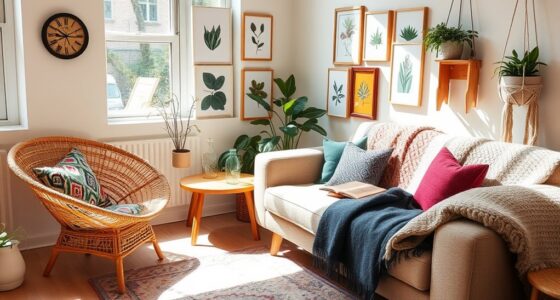
Have you ever wondered how to make your designs pop or add depth to your artwork? One of the most effective ways to achieve this is by incorporating textured textiles into your space. Layered fabrics immediately catch the eye and create visual interest, especially in small rooms where every detail counts. When you combine different fabrics—think plush velvet, rough burlap, sleek silk—you introduce a variety of tactile accents that invite touch and exploration. These tactile accents aren’t just decorative; they serve to break up flat surfaces, giving your space dimension and personality. Layering techniques can enhance the overall effect by emphasizing different textures and creating a cohesive look. Using layered fabrics is a simple but powerful trick. For example, draping a chunky knit throw over a smooth sofa instantly adds depth, making the furniture look more inviting and layered. You can also layer different textiles in your wall art, like framing a fabric collage with varying textures or hanging a tapestry that combines multiple materials. This technique draws the eye inward, creating a sense of richness without overwhelming the space. It’s about balancing the tactile elements with your overall color palette to keep your décor cohesive.
Layer textured textiles to add depth, personality, and tactile interest to small spaces.
Tactile accents are especially useful in small spaces because they add a sensory element that gives the room a sense of coziness and dimension. Think of using textured cushions or pillows with varied fabrics—sometimes combining a silky pillow with a rougher, woven one creates a visual and tactile contrast that feels dynamic. Incorporate tactile accents into your curtains, rugs, or upholstery to build layers of fabric that catch the light differently and add depth. Even small details like embroidered or textured trims can make a significant impact, giving your space a sophisticated, curated look.
Moreover, layering fabrics doesn’t have to be limited to furniture accessories. Consider mixing textured wallpapers with fabric-covered headboards or adding textured wall hangings. These elements draw attention to different levels within the room, making the space feel larger and more intricate despite its limited size. When you combine these techniques, you’re engaging multiple senses, which enhances the overall perception of depth and richness.
In essence, the secret to elevating your small space with textiles lies in layering fabrics and incorporating tactile accents. These tricks help you create a multidimensional environment that feels inviting and thoughtfully designed. With a keen eye for texture and a playful approach to layering, you’ll transform your small space into a visually compelling area that feels bigger, warmer, and more personalized.
Frequently Asked Questions
How Can Textiles Make Small Spaces Feel Larger?
You can make small spaces feel larger by layering patterns with textiles, which adds visual depth and interest. Select textiles with a larger scale for curtains, throws, or cushions to create a sense of openness. Mixing different textures and patterns draws the eye around the room, making it feel more expansive. Keep the color palette cohesive to avoid clutter, and choose textiles thoughtfully to enhance the space without overwhelming it.
What Textiles Are Best for Enhancing Natural Light?
Did you know that lighter fabrics can reflect up to 85% of natural light? To enhance natural light, choose fabrics with subtle fabric patterns and opt for sheer or lightweight textiles. Textile layering with sheer curtains and airy drapes creates depth while maximizing brightness. These textiles bounce light around your space, making it feel more open and inviting. So, select fabrics that are light in color and texture for the best effect.
Are There Low-Maintenance Fabrics Suitable for Busy Households?
Yes, there are easy care fabrics perfect for busy households. Look for stain-resistant textiles like microfiber or polyester blends, which withstand spills and dirt effortlessly. These fabrics are low-maintenance, quick to clean, and durable, making them ideal for everyday use. By choosing these low-maintenance textiles, you can enjoy stylish textiles without worrying about frequent cleaning, keeping your space looking fresh and inviting with minimal effort.
How Do Color Choices in Textiles Affect Space Perception?
Your color choices in textiles substantially influence how your space feels. Bright, warm shades like reds and yellows can make a small room feel more energetic and cozy, while cool tones like blues and greens create a calming, spacious vibe. Color psychology guides these effects, and fabric patterns also matter—large patterns can make a space seem busier, whereas subtle textures add depth without overwhelming. Choose wisely to enhance your room’s perception.
Can Textured Textiles Improve Acoustics in Small Rooms?
Yes, textured textiles can improve acoustics in small rooms by enhancing sound absorption and reducing noise. When you add thick, textured fabrics like rugs, upholstered furniture, or wall hangings, they break up sound waves, minimizing echoes and creating a quieter environment. These textiles act as natural sound dampeners, making your space more comfortable and reducing unwanted noise, especially in tight areas where sound tends to bounce around.
Conclusion
Just as Monet’s brushstrokes bring a canvas to life, incorporating varied textures transforms your small space into a dynamic, inviting oasis. By layering textiles thoughtfully, you channel the timeless dance of light and shadow, creating depth where there once was only flatness. Remember, texture is your secret weapon—an echo of the universe’s intricate design. Embrace it, and watch your space become a masterpiece in its own right, full of subtle, enthralling complexity.