Using the rule of thirds in small room styling helps you create a balanced, visually interesting space by carefully placing furniture, artwork, and color accents along imaginary grid lines. This approach guides your eye to focal points and prevents clutter, making the room feel larger and more inviting. By strategically arranging elements, you’ll achieve harmony without sacrificing style or comfort—if you keep exploring, you’ll discover even more ways to optimize your space effectively.
Key Takeaways
- Use the rule of thirds to position focal points like artwork or furniture along grid lines for balanced visual interest.
- Distribute color accents strategically along the grid to create harmony and prevent visual overload in small spaces.
- Arrange furniture and decor using the grid to ensure functional flow without blocking pathways or overwhelming the room.
- Create visual balance by placing key elements, such as mirrors or lighting, on the grid lines to enhance room cohesion.
- Apply the rule to maximize space, making small rooms feel open, balanced, and aesthetically pleasing through intentional placement.

The rule of thirds is a powerful design principle that can transform your interior spaces. When applied thoughtfully, it guides you in creating balanced and visually interesting rooms, even small ones. In tight spaces, establishing strong focal points becomes essential. These focal points act as visual anchors, drawing attention and giving your room a sense of purpose. Whether it’s a bold piece of artwork, an eye-catching piece of furniture, or an interesting decorative element, positioning your focal points along the grid lines of the rule of thirds ensures they’re naturally engaging. This strategic placement prevents your small room from feeling cluttered or chaotic, helping you highlight what matters most without overwhelming the space. Additionally, understanding the scientific skepticism surrounding design principles can aid in making more informed choices.
Color balance also plays a significant role in making the rule of thirds work effectively in your interior styling. Instead of overwhelming a small room with too many bold colors, you can use the rule of thirds to distribute color accents thoughtfully. For example, if you choose a dominant neutral palette for the walls, furniture, and larger elements, then add pops of color at key points aligned with the grid lines. This creates harmony and prevents visual overload, making the space feel lively but balanced. When you place colorful accessories, art, or textiles along these lines, your eye naturally flows across the room, making it feel more spacious and inviting. The balance of color, guided by the rule of thirds, helps your small room feel intentional and well-designed, rather than haphazard or cramped.
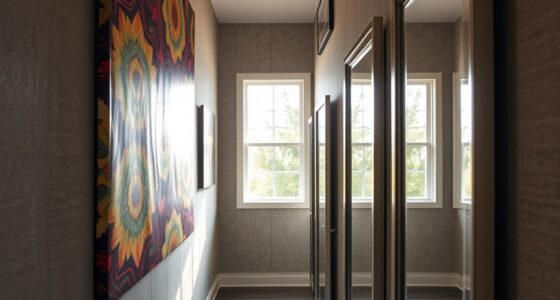
You can also use the rule of thirds to plan the placement of furniture and decor. By imagining a grid over your room, you’ll naturally find the best spots for larger pieces, ensuring they don’t block pathways or dominate the space. For instance, positioning a mirror or artwork along a vertical or horizontal line can create a more dynamic visual flow. This technique also helps you avoid symmetry that might make a small room feel stiff or boring. Instead, it encourages asymmetry that feels natural and engaging, giving your space depth and character.
In essence, applying the rule of thirds in your small room design guides you in creating focal points, maintaining color balance, and organizing furniture thoughtfully. It helps you maximize every inch of your space without sacrificing style or comfort. When you keep these principles in mind, your small room will feel more open, balanced, and visually appealing—proof that good design doesn’t depend on size but on smart, intentional choices.
Frequently Asked Questions
Can the Rule of Thirds Be Applied to Window Placement?
Yes, you can apply the rule of thirds to window placement to enhance window symmetry and maximize natural light. Position your windows along imaginary grid lines, aligning key features like curtains or windowpanes with these points. This creates a balanced look while allowing ample natural light to fill your small room. Thoughtful window placement following the rule of thirds makes your space feel more harmonious and inviting.
How Do I Adapt the Rule for Multi-Functional Small Rooms?
To adapt the rule for multi-functional small rooms, you should divide the space into distinct zones, like sleeping, working, and relaxing areas, aligning key features along the grid lines. Incorporate storage integration into each zone to maximize space and maintain balance. Use furniture placement and decor to visually separate these zones while keeping the overall layout harmonious, ensuring each function feels intentional and uncluttered.
Are There Color Schemes That Work Best With the Rule of Thirds?
Ever wonder if certain color schemes enhance the rule of thirds? Bright, contrasting colors create dynamic focal points, while monochromatic or analogous palettes promote harmony and calm. Choosing colors that align with your desired mood boosts overall harmony and makes the space feel balanced. Remember, thoughtful color harmony not only complements your layout but also amplifies mood enhancement, making small rooms feel larger and more inviting.
How Can Lighting Enhance the Rule of Thirds in Small Spaces?
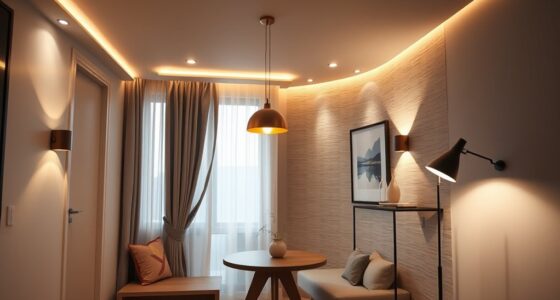
You can enhance the rule of thirds in small spaces by using strategic lighting techniques, like spotlights or layered lighting, to highlight key areas. Place accent lighting on focal points, such as artwork or architectural features, to draw the eye naturally across the room. This not only creates visual interest but also balances the composition, making your small space feel more harmonious and thoughtfully styled.
Is the Rule of Thirds Suitable for Eclectic or Bohemian Interior Styles?
Is the rule of thirds compatible with eclectic or bohemian styles? Absolutely. It helps create eclectic harmony and bohemian balance by guiding your eye across diverse patterns, colors, and textures. You can intentionally place quirky art, vibrant textiles, or vintage finds along grid points to achieve a cohesive look. Wouldn’t it be satisfying to blend chaos and order seamlessly? The rule of thirds can make your eclectic or bohemian interiors feel both lively and harmonious.
Conclusion
By applying the rule of thirds, you paint your small room with a sense of balance and harmony, turning cluttered corners into inviting nooks. Visualize your space as a carefully composed photograph, where each element finds its place, creating a pleasing rhythm. With this simple technique, you transform your cramped quarters into a cozy haven—an artful sanctuary where every piece plays its part, inviting you to relax and breathe easy amidst the thoughtfully arranged beauty.