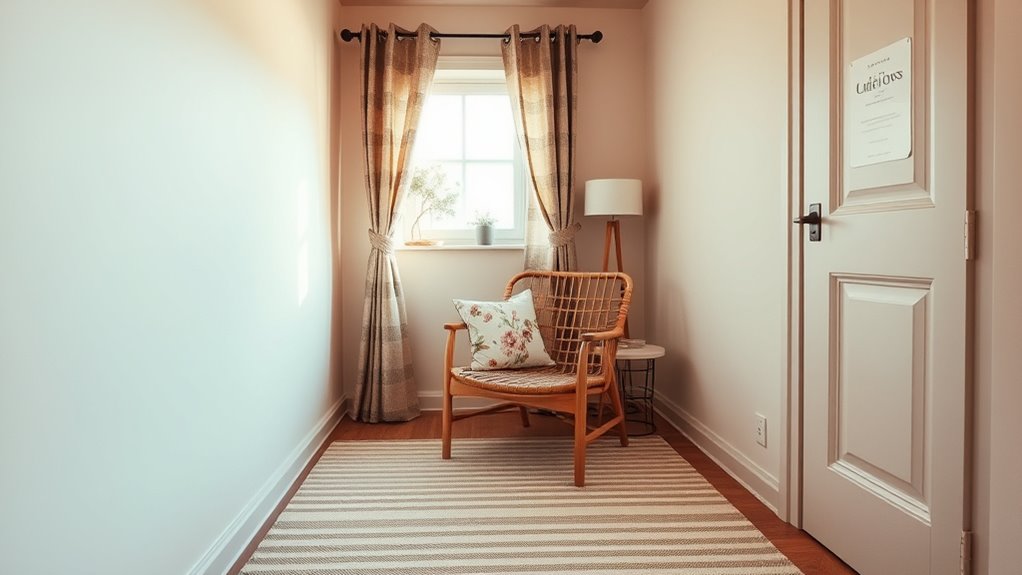

To mix patterns in a small room without overwhelming, stick to a neutral or soft wall color to create a calm background. Use no more than three patterns in cohesive shades, varying their scale—pairing larger prints with smaller ones for contrast. Focus on accent pieces like pillows, rugs, or curtains, and keep the overall look balanced with simple decor. By following these tips, you’ll create a lively space that feels thoughtfully curated—plus, you’ll discover more tips if you keep exploring.
Key Takeaways
- Use a neutral or soft wall color to create a calm backdrop that allows patterns to stand out subtly.
- Limit pattern mixing to three or fewer different patterns to maintain visual balance.
- Choose patterns with a common color to create cohesion and prevent a cluttered look.
- Vary the scale of patterns, pairing large with small designs to add depth without overwhelming.
- Focus on a single statement patterned piece as a focal point, keeping other decor simple.
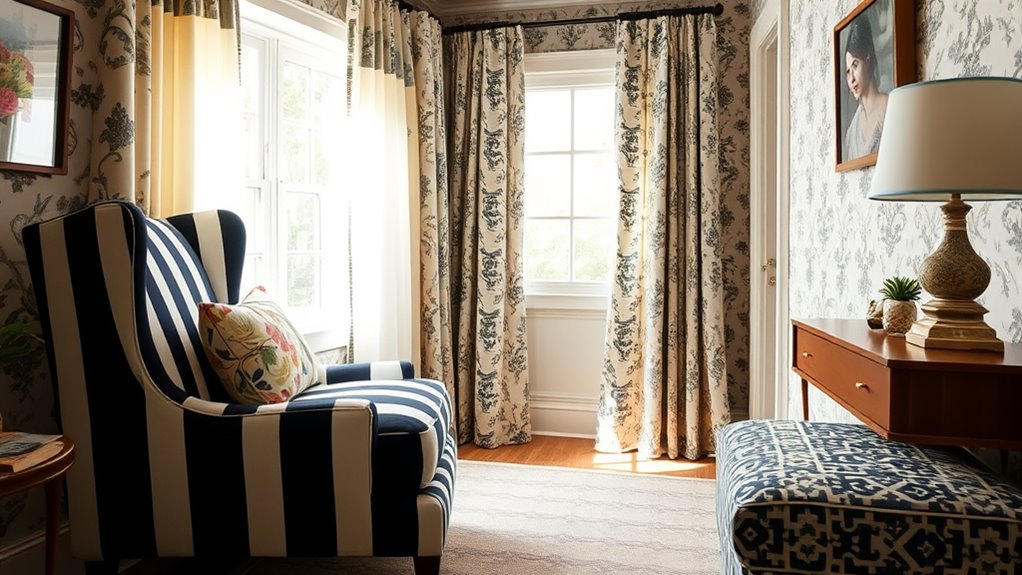
When decorating a small room, mixing patterns can instantly add personality and visual interest, but it requires a careful balance to avoid overwhelming the space. The key is to start with a solid foundation, particularly your wall color. A neutral or soft hue on the walls provides a calm backdrop that allows patterned elements to stand out without creating chaos. Light shades like beige, pale gray, or muted pastels work well because they don’t compete with the patterns you choose and help keep the room feeling open and airy.
Once you’ve picked a wall color, focus on your accent pieces. These are your opportunity to introduce patterns intentionally. Think throw pillows, rugs, curtains, or even art frames. When selecting these accent pieces, aim for a common color palette or complementary tones. For example, if your wall color is a cool gray, incorporate accent pillows or a rug with hints of blush, navy, or mustard. This creates cohesion and prevents the patterns from clashing. Mixing small, subtle patterns with larger, bolder ones works best because it creates contrast without overwhelming the eye.
Choose accent pieces in a cohesive color palette to create harmony and prevent pattern clashes.
To keep the space balanced, stick to a maximum of three different patterns. For instance, pair a geometric patterned pillow with a striped rug and floral curtains, but make sure they share at least one color. This common hue acts as a visual anchor, tying everything together and making the pattern mix feel intentional rather than chaotic. When you vary the scale of the patterns—small with large—you add depth and interest without clutter. For example, a large floral curtain can be paired with tiny polka dots on a throw pillow; the differences in size keep the patterns from competing.
Incorporate these patterns gradually. Start with one statement piece, like a patterned accent chair or a vibrant rug, then build around it. Don’t feel pressured to fill every surface with pattern; sometimes, a single bold piece is enough to make a statement. Keep the rest of your decor simple and let the patterns be the focal point. It’s also helpful to add texture—think woven baskets or velvet cushions—to complement the patterns and add a layer of richness without adding visual clutter.
Additionally, understanding how contrast ratio influences visual perception can help you select patterned pieces that enhance the overall look without overwhelming the space. Finally, always step back and assess your space. If it feels too busy, pare down by removing one pattern or switching out an accent piece for something more subdued. Remember, in a small room, less is often more, especially when mixing patterns. With thoughtful choices around wall color and accent pieces, you can create a vibrant, stylish space that feels lively but not overwhelming.
neutral color patterned throw pillows
As an affiliate, we earn on qualifying purchases.
As an affiliate, we earn on qualifying purchases.
Frequently Asked Questions
How Can I Incorporate Bold Patterns Without Cluttering the Space?
You can incorporate bold patterns by using pattern contrast thoughtfully; pick one or two dominant patterns to avoid clutter. Place a striking pattern as a focal point, like a patterned throw pillow or wall art, to draw attention without overwhelming the space. Keep other elements simple and neutral to balance the look. This approach guarantees your room feels lively yet cohesive, with each bold pattern serving as an intentional design choice.
What Are the Best Color Combinations for Small Patterned Rooms?
Did you know that rooms with balanced color contrast and pattern layering feel more spacious? For small patterned rooms, opt for soft neutrals paired with bold accents. Use subtle color contrast in your patterns to avoid overwhelming the space, and layer patterns thoughtfully by varying scales. This approach keeps your room lively without clutter, making it feel larger and more inviting. Stay playful with your palette while maintaining harmony.
How Do I Balance Multiple Patterns in a Tiny Room?
To balance multiple patterns in a tiny room, focus on pattern contrast by mixing different scales and styles to create visual interest. Keep the color palette cohesive to maintain visual harmony, avoiding clashing designs. Use neutral backgrounds and introduce bold patterns sparingly, such as on throw pillows or rugs. This approach guarantees your small space looks lively without feeling overwhelming, making it inviting and stylish.
Can Textured Patterns Make a Small Room Feel Larger?
Yes, textured patterns can make a small room feel larger by adding depth without overwhelming. Use texture contrast strategically to create visual flow, guiding the eye smoothly across the space. Incorporate textured fabrics, rugs, or wall accents in a balanced way, ensuring they complement other patterns. This approach enhances the room’s sense of openness, making it feel more inviting and less cluttered.
What Pattern Sizes Work Best for Small Spaces?
In small spaces, opt for medium to large pattern scales to create a balanced visual flow without overwhelming the room. Avoid tiny patterns that can clutter the space or large, bold designs that dominate it. Instead, choose patterns that complement each other with varied sizes, ensuring they work together harmoniously. This approach helps your small room feel open and inviting while maintaining an interesting, cohesive look.
small area rug with subtle patterns
As an affiliate, we earn on qualifying purchases.
As an affiliate, we earn on qualifying purchases.
Conclusion
Now that you know how to mix patterns in your small room, go ahead and get creative. Remember, a well-balanced pattern combo can transform your space from tiny to stunning—like a splash of color on a blank canvas. Don’t hold back; your room deserves a bold, lively personality. With just a little effort, you can turn chaos into harmony, making your space feel twice as big and infinitely more inviting.
curtains with mixed patterns for small rooms
As an affiliate, we earn on qualifying purchases.
As an affiliate, we earn on qualifying purchases.
cohesive accent wall art
As an affiliate, we earn on qualifying purchases.
As an affiliate, we earn on qualifying purchases.