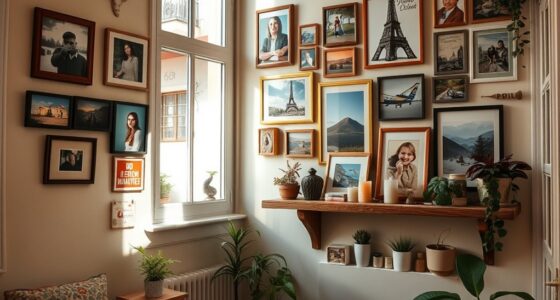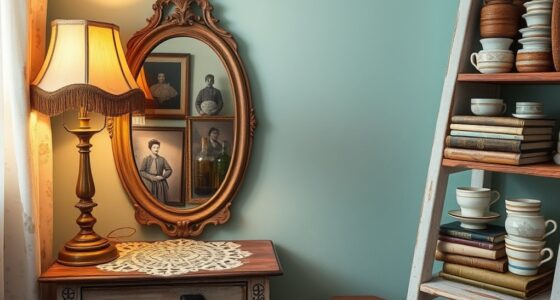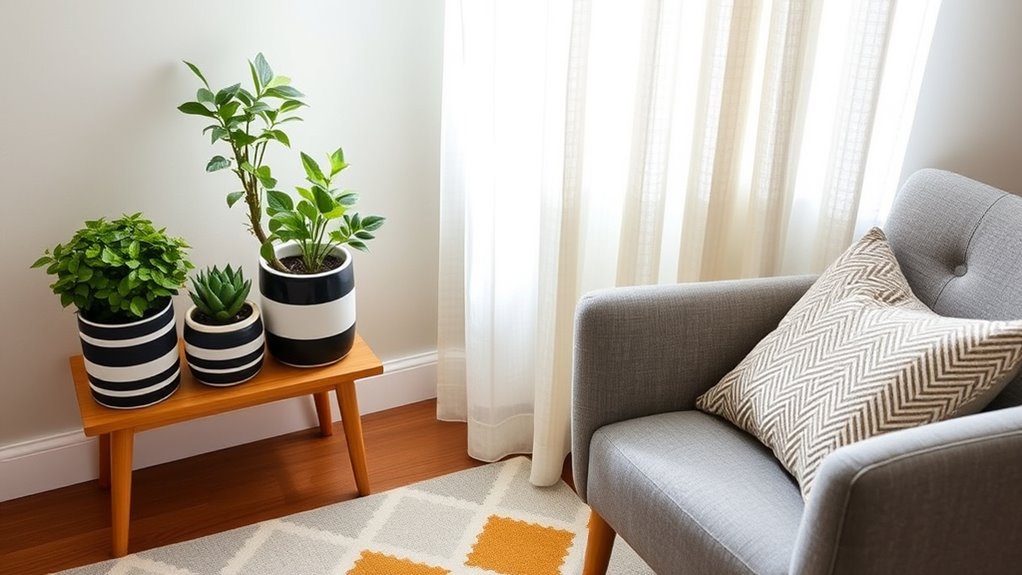

To mix patterns in a small space without overwhelming it, keep your color palette neutral and cohesive, choosing patterns that complement rather than clash. Limit yourself to two or three patterns, with one serving as the focal point. Balance bold patterns with smaller, subtler designs and pay attention to scale—large patterns add interest, while smaller ones provide texture. Smart furniture placement and layering accessories help maintain harmony; explore these strategies to master the look.
Key Takeaways
- Limit pattern variety to two or three, choosing one dominant pattern to prevent visual clutter.
- Use a consistent color palette across patterns to create harmony and cohesion.
- Incorporate larger patterns as focal points, balancing with smaller, subdued patterns.
- Arrange furniture to maximize open space and avoid overcrowding, enhancing pattern placement.
- Layer accessories like pillows and curtains with matching or coordinating patterns for subtle visual interest.
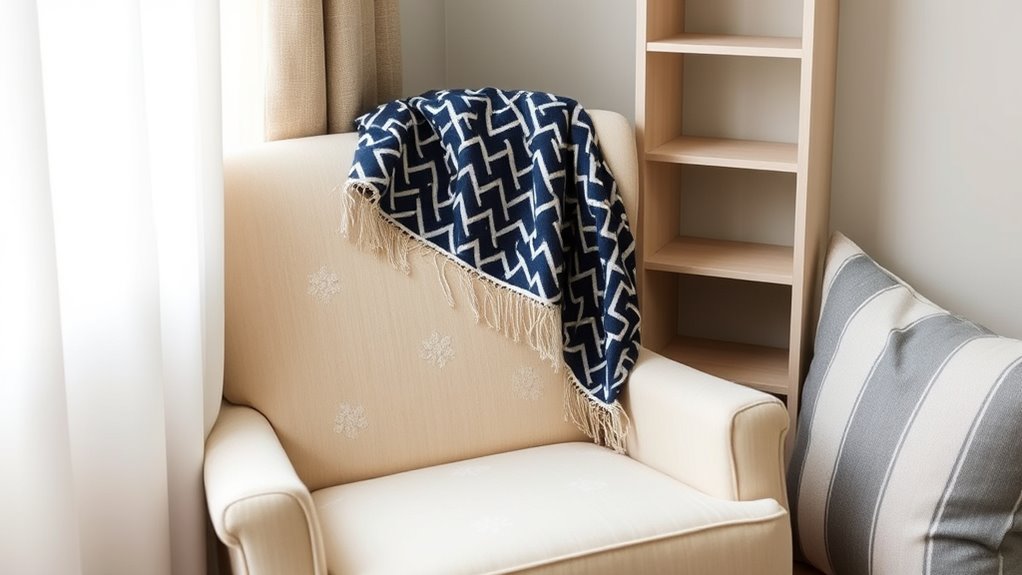
Mixing patterns in a small space can seem intimidating, but with the right approach, you can create a lively and stylish environment that feels both cozy and dynamic. The key is balancing visual interest without overwhelming the room. Start by focusing on color coordination. Choose a neutral base color for your walls and larger furniture pieces, such as a sofa or bed, to serve as a calm backdrop. Then, select patterns that complement this foundation—think subtle stripes, soft florals, or geometric shapes in shades that tie back to your main palette. This way, the patterns enhance the space without clashing or creating chaos.
Next, consider your furniture arrangement. In a small room, how you position your pieces influences the overall flow and perception of space. Keep larger items like sofas, beds, or tables against the walls to maximize open areas. When mixing patterns, try to keep the furniture in solid colors or simple textures so they don’t compete with the patterns on your textiles and decor. Use the furniture arrangement to create zones or focal points, which helps guide the eye and prevents the patterns from feeling scattered. For instance, a patterned throw pillow on a neutral sofa or a patterned rug under a clear area can anchor the space and give it cohesion.
While you want to introduce variety through different patterns, avoid going overboard. Limit yourself to two or three patterns at a time—this prevents visual clutter. To keep these patterns harmonious, choose one dominant pattern and support it with smaller, more subdued ones. For example, a bold geometric rug can be paired with smaller floral cushions, both sharing a common color scheme. Incorporate accessories like curtains, throw blankets, or accent pillows with varying but coordinating patterns to layer visual interest without creating chaos. Additionally, paying attention to scale and proportion helps ensure your patterns are balanced and harmonious within the space.
Finally, pay attention to scale. Larger patterns can make a small room feel more dynamic if balanced properly, but they shouldn’t overpower the space. Smaller, more delicate patterns can add texture and depth without overwhelming. When combining different patterns, ensure they share a common color thread to unify the look. With thoughtful color coordination and strategic furniture arrangement, you can successfully mix patterns in a small space, creating a lively, inviting environment that feels thoughtfully curated rather than cluttered.
Frequently Asked Questions
How Can I Incorporate Bold Patterns Without Cluttering the Room?
To incorporate bold patterns without cluttering, focus on pattern balancing by choosing one dominant pattern and pairing it with subtle, solid-colored accessories. Use focal point techniques by highlighting a single feature, like a statement pillow or art piece, to draw attention. Keep other elements simple and neutral, so the bold patterns stand out without overwhelming the room. This approach creates visual interest while maintaining a cohesive, spacious feel.
What Are the Best Color Combinations for Small Spaces?
You should choose color combinations that create a striking contrast, like deep navy with crisp white, to add depth without overwhelming your small space. Neutral tones, such as beige, soft gray, or ivory, serve as calming bases that make bold patterns pop without cluttering. Use these contrasting or neutral hues strategically on walls, furniture, and accessories to keep the room feeling bright, balanced, and visually appealing.
How Many Different Patterns Should I Mix in a Small Room?
You should aim for 2-3 patterns in a small room to keep things balanced. Too many can create visual chaos, but a little pattern contrast and texture mixing add depth. Think of it as walking a tightrope—balance is key. Stick with varying scales and complementary colors, and you’ll create a lively, cohesive space without overwhelming it. Less truly is more when mixing patterns in tight quarters.
Are There Specific Patterns to Avoid in Compact Areas?
Avoid clashing patterns that create overwhelming designs in a small space. Steer clear of busy prints like large florals or bold geometric shapes that compete for attention. Instead, choose patterns with similar color palettes or subtle contrasts to keep the room balanced. Stick to one or two bold patterns and pair them with solid colors or smaller prints to prevent the space from feeling cluttered or chaotic.
How Can Patterns Create the Illusion of More Space?
Patterns can boost your space’s visual flow and enhance spatial perception, making it seem larger. Use vertical stripes or large-scale patterns to draw the eye upward or outward, creating a sense of height and depth. Mix subtle patterns with solid colors to avoid clutter, maintaining balance. Incorporating these techniques helps your small room feel more open and inviting without overwhelming the space.
Conclusion
So, now you’re officially a pattern master in your tiny retreat. Who knew that juggling stripes, florals, and polka dots without turning your room into a circus was possible? Just remember, chaos can be chic—if you pretend you meant to do it all along. So go ahead, mix those patterns boldly. After all, if your small space looks lively enough to distract guests from your questionable decorating skills, you’ve nailed it.