Yes, furniture height matters, especially in small spaces, because it affects visual balance and how spacious your room feels. Tall furniture draws the eye upward and can create a sense of grandeur, but too much can make a space look cluttered or cramped. Low furniture grounds the room and enhances openness, making it feel larger. Striking the right balance between tall and low pieces helps your space look harmonious and inviting—so, keep exploring to discover how to choose the best heights for your room.
Key Takeaways
- Furniture height influences room balance, impacting visual harmony and perceived space.
- Tall furniture can create a sense of grandeur but may overwhelm small rooms if not balanced.
- Low furniture grounds the space, making small rooms feel cozy and open.
- Proper proportion and placement of furniture enhance functionality and prevent clutter.
- Combining different heights thoughtfully achieves a balanced, inviting small space.
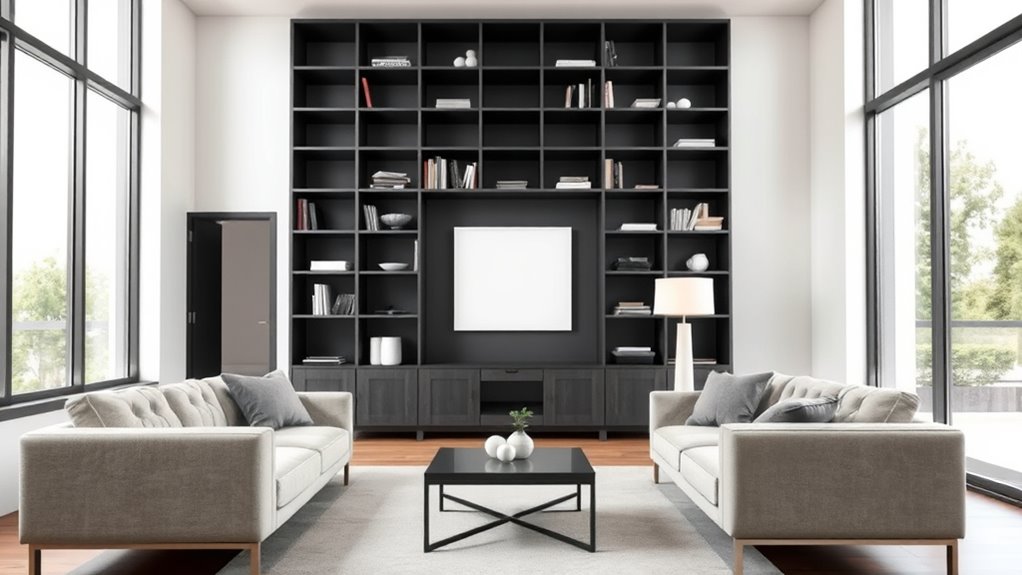
Choosing the right furniture height is vital for comfort and functionality in your space. When you’re designing or redecorating, paying attention to proportional design can make a significant difference. Furniture that’s too tall or too low can disrupt the visual balance of your room, making it feel chaotic or cramped. In small spaces especially, the height of your furniture can either enhance or hinder the sense of openness. Tall furniture, like high bookshelves or oversized cabinets, can draw the eye upward, emphasizing the room’s vertical dimension. This can create a feeling of grandeur and make the space seem taller, but only if it’s proportionate to the overall size of the room. Conversely, low furniture, such as short sofas or low-profile coffee tables, can ground the space, making it feel cozy and inviting without overwhelming it.
The key is to consider how each piece relates to the rest of your decor. When furniture is proportionate to the room’s size, it helps maintain visual balance. For example, in a small living area, a tall bookcase might seem imposing or cluttered, especially if it extends beyond the eye level or blocks natural light. On the other hand, a low bookshelf or media console can open up the space, allowing your eye to travel freely across the room. If you opt for tall furniture, ensure it doesn’t overpower the space by balancing it with lighter, smaller pieces elsewhere. This proportional design approach prevents any one element from dominating visually, which is vital in small rooms where every inch counts. Understanding how furniture height impacts room perception can help guide your choices for a more harmonious and functional space.
Your goal should be to create a harmonious flow where furniture doesn’t compete but complements each other. When you choose pieces that are appropriately scaled, you’ll notice how the room feels more balanced and inviting. Tall furniture can be perfect for storage or display, but it needs to be carefully placed so it doesn’t block pathways or make the room feel crowded. Low furniture, on the other hand, can help maximize the perception of space, especially when it’s lightweight and streamlined. Keep in mind that combining different heights thoughtfully can add visual interest and depth, but always aim for a cohesive look that respects the room’s proportions. Ultimately, the right furniture height enhances both comfort and aesthetics, making your small space feel thoughtfully designed and balanced.
Top picks for "furniture height matter"
Open Amazon search results for this keyword.
As an affiliate, we earn on qualifying purchases.
Frequently Asked Questions
How Does Furniture Height Affect Room Acoustics?
Furniture height directly impacts room acoustics by influencing sound reflection and absorption. Taller furniture can reflect sound waves, creating echoes, while lower pieces help absorb sound, reducing noise. When you choose furniture heights thoughtfully, you can control how sound behaves, making your space more comfortable. Opt for a mix of heights to balance reflection and absorption, ensuring your room feels cozy and sounds clear without unwanted echoes or muffled noise.
Can Adjustable Furniture Optimize Space in Small Rooms?
Imagine a room where space feels limitless—that’s what adjustable furniture offers you. Yes, it can optimize your small room, making it more functional and adaptable. Multi-purpose furniture with ergonomic design allows you to transform your space effortlessly, whether you need extra seating, a workspace, or storage. By customizing height and layout, you gain flexibility, ensuring your small room feels spacious and organized without sacrificing style or comfort.
Does Furniture Height Influence Furniture Durability?
Yes, furniture height can influence durability. Taller pieces may experience more stress on joints and materials, potentially affecting material longevity. Conversely, low furniture often offers greater structural stability, reducing wobbling or breaking risks. When choosing furniture, consider how height impacts the overall strength and durability, especially in small spaces where sturdy, long-lasting pieces are essential to withstand daily use. Proper construction and quality materials also play vital roles.
How Do Different Furniture Heights Impact Energy Efficiency?
Did you know that choosing the right furniture height can boost energy efficiency by up to 15%? When you select ergonomic and appropriately tall or low pieces, you enhance comfort and reduce strain, leading to better energy use. Taller furniture often encourages better posture, while lower pieces can create aesthetic balance, making your space feel more comfortable and efficient. So, your choice of furniture height directly impacts both your well-being and energy savings.
Are There Cultural Preferences for Furniture Height in Small Spaces?
Cultural preferences definitely influence furniture height choices in small spaces. You might notice that some cultures favor low, ground-hugging furniture aligning with their aesthetic preferences for intimacy and tradition. Others prefer taller pieces for a modern, open feel, reflecting their cultural norms around space and status. By understanding these cultural influences, you can select furniture that resonates with your aesthetic preferences and enhances your small space’s comfort and style.
Conclusion
Ultimately, choosing furniture height is like planting seeds in your space—what you select shapes the future of your home. Low pieces symbolize grounded comfort, while tall ones reach for the sky, inspiring openness. When you strike the right balance, you create a sanctuary that reflects your style and needs. Remember, your furniture’s height isn’t just about space—it’s a reflection of your vision, turning your small space into a canvas where every piece tells a story.