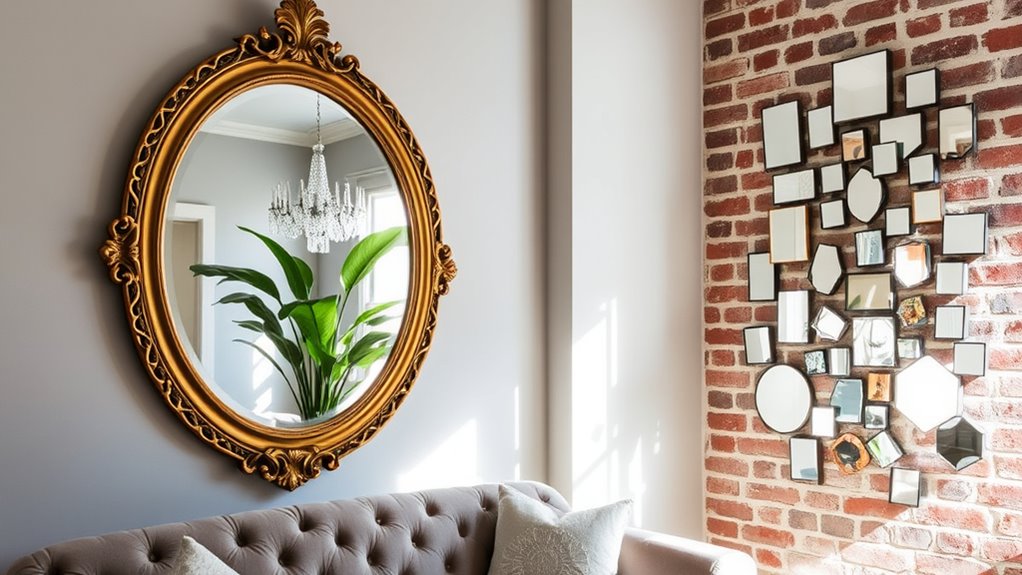

Explore creative ways to use mirrors beyond traditional placements. Lean a large mirror against a wall for an artful feel, or incorporate multiple small mirrors in a grid or pattern to add visual interest. Try using mirrored furniture like side tables or cabinets to subtly reflect light, or hang mirrors at unexpected heights to create focal points. Mixing shapes and styles can energize your space, and experimenting with these ideas will reveal even more innovative decorating tips.
Key Takeaways
- Experiment with leaning oversized mirrors against walls for an artistic, informal look.
- Incorporate mirrors into gallery walls alongside artwork or photos for added depth.
- Hang series of small, uniquely framed mirrors in geometric patterns to create visual interest.
- Use mirrored furniture or incorporate reflective surfaces into cabinets and side tables for subtle space expansion.
- Place mirrors at unconventional heights or angles to maximize light reflection and create focal points.
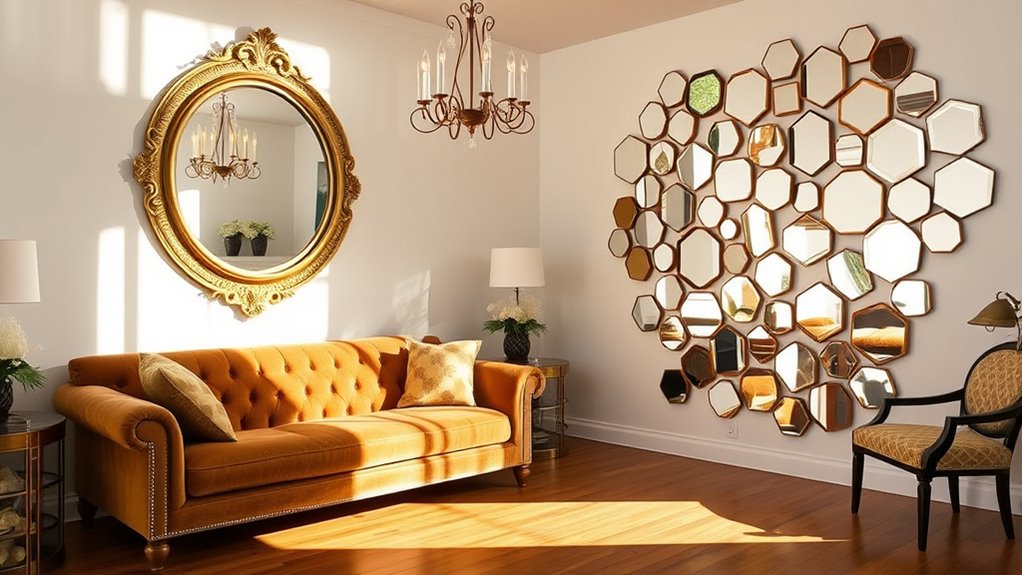
Have you ever considered how mirrors can transform a space? They aren’t just functional objects; they’re powerful design tools that reflect light, create illusions of space, and add personality to any room. When you start thinking about decorating with mirrors, one of the first things to consider is their shape. Mirror shapes can dramatically influence the vibe of a room. For example, round mirrors tend to soften a space, making it feel more inviting and cozy. Meanwhile, rectangular or square mirrors lend a sense of structure and formality, perfect for modern or minimalist decor. Unique shapes like oval or irregularly shaped mirrors can serve as eye-catching focal points, adding a touch of whimsy or artistic flair. The shape you choose should complement your overall aesthetic and the mood you want to evoke, whether it’s serenity, energy, or sophistication.
Along with shapes, frame styles play a crucial role in how a mirror fits into your decor. Frames come in countless styles—from sleek and minimalist to ornate and vintage. A thin, metal frame can give a contemporary look, emphasizing clean lines and simplicity. On the other hand, a thick, carved wood frame injects warmth and a sense of tradition, perfect for more classic or rustic settings. You might also opt for frameless mirrors if you prefer a seamless, modern appearance that blends into the wall. Alternatively, decorative frames with intricate details or bold colors can serve as statement pieces, drawing attention and adding character. Don’t shy away from mixing frame styles—pairing a modern mirror with a vintage frame, for example, can create a dynamic, eclectic vibe that reflects your personality.
When it comes to placement, think beyond traditional locations. Instead of hanging a mirror over a sofa or fireplace, try leaning a large mirror against a wall for a casual, artful look. You could also incorporate mirrors into gallery walls, interspersing them with artwork or photographs to add depth and dimension. Mirrored furniture, like a mirrored side table or cabinet, can subtly reflect light and expand visual space, especially in smaller rooms. For a more daring approach, consider hanging a series of small mirrors in different shapes and frame styles in a grid or pattern—this creates a dynamic, textured display that catches the eye from every angle. Whatever your choice, remember that the right mirror placement and style can elevate your decor from ordinary to extraordinary, making your space feel brighter, larger, and more uniquely yours. Additionally, understanding mirror placement principles can help maximize light reflection and spatial enhancement.
Frequently Asked Questions
How Do I Choose the Right Mirror Size for My Space?
To choose the right mirror size, consider your space’s dimensions and the mirror’s purpose. If you want a statement piece, pick a large mirror with interesting shapes or bold frame styles. For smaller areas, opt for a more modest size that complements the room without overwhelming it. Make sure the mirror’s shape—round, rectangular, or abstract—matches your decor, and choose frame styles that enhance your overall design aesthetic.
What Are the Best Lighting Options for Mirror Placement?
Think of lighting options for mirror placement like choosing a perfect spotlight—bright enough to illuminate but not overpower. You should opt for soft, warm lighting around your mirror, such as sconces or LED strips, to create a welcoming glow. Position these lights evenly on either side or above your mirror to minimize shadows. Good lighting enhances your reflection, making your mirror placement both functional and stylish.
Can Mirrors Be Used to Improve Room Acoustics?
Yes, you can use mirrors to improve room acoustics. By strategically placing mirrors, you enhance sound absorption and reduce echoes, creating a more balanced environment. They also serve as decorative accents, adding style while improving sound quality. Position them across from sound sources or on walls with hard surfaces to maximize their acoustic benefits. This clever use of mirrors combines functionality with aesthetics, elevating your space’s ambiance.
How Do I Prevent Mirrors From Causing Glare?
To prevent glare, focus on strategic mirror placement and glare reduction techniques. Position mirrors away from direct sunlight or strong light sources, such as lamps, to minimize reflections that cause glare. Use angled placements or place them opposite softer lighting to diffuse light evenly. Additionally, consider using textured or frosted mirrors in areas prone to glare, which helps reduce harsh reflections while still enhancing your decor.
Are There Safety Tips for Hanging Large or Heavy Mirrors?
You want to prevent a mirror from turning into a runaway projectile, so prioritize mirror maintenance and safety clearance. Always use heavy-duty hooks and anchors designed for the mirror’s weight, and verify it’s securely fastened to wall studs or anchors. Double-check the mounting hardware regularly, especially if you’re in a high-traffic area, to avoid any surprises. Safety first keeps your decor stunning without turning into a dangerous stunt.
Conclusion
Now that you know unique ways to use mirrors, it’s time to transform your space with a touch of thoughtful flair. Play with placements, patterns, and perspectives to turn ordinary into extraordinary. Remember, mirrors not only multiply your space but also magnify your style. So, be bold, be creative, and let your imagination shine—your stunning, stylish sanctuary is just a reflection away. Start small, experiment often, and see your space sparkle with personality and panache.