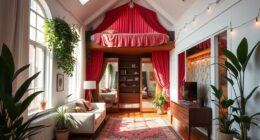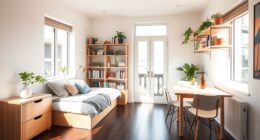

To bring big style to small spaces, focus on multi-functional furniture that maximizes utility without clutter. Use vertical storage, like tall shelves and wall-mounted cabinets, to free up floor space. Choose a cohesive color palette for a unified look and add statement pieces that create impact. Incorporate mirrors to reflect light and create illusions of depth. Keep decor minimal and purposeful, and enhance the atmosphere with smart lighting. Keep exploring for more expert tips to elevate your space.
Key Takeaways
- Use multi-functional furniture with clean lines to maximize utility without crowding small spaces.
- Incorporate mirrors strategically to reflect light and create the illusion of a larger, more open area.
- Opt for a cohesive color palette with soft neutrals and accents to enhance harmony and spaciousness.
- Utilize vertical space with tall shelves, wall-mounted storage, and ceiling treatments to add storage and visual interest.
- Highlight a single statement piece to add boldness and personality without overwhelming the space.
Embrace Multi-Functional Furniture
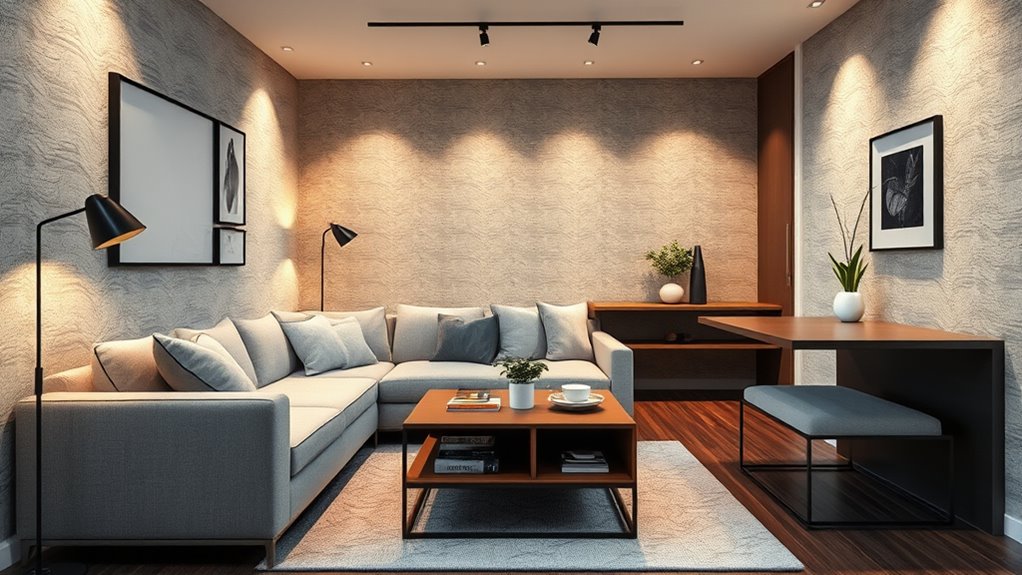
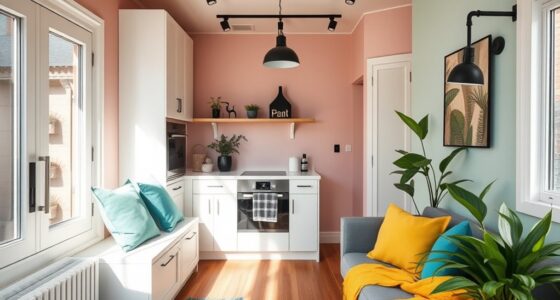
To make the most of limited space, you should consider embracing multi-functional furniture. These pieces combine storage solutions with essential functions, helping you maximize every inch. For example, a sofa bed or an ottoman with hidden compartments can serve dual purposes, reducing clutter and freeing up space. When choosing furniture placement, think vertically and strategically to avoid crowding. Position multi-purpose pieces where they can serve multiple roles without obstructing pathways or making the room feel cramped. Look for furniture that can double as storage or workspace, such as beds with drawers underneath or wall-mounted desks that fold away. This approach keeps your small space organized, functional, and visually open, making it easier to live comfortably without sacrificing style. Additionally, understanding how to optimize your space with strategic planning can further enhance the functionality of your small living area. Incorporating multi-purpose furniture with adjustable features can adapt to your changing needs and maximize versatility. Using appropriate lighting can also make your space feel larger and more inviting.
Optimize Vertical Space

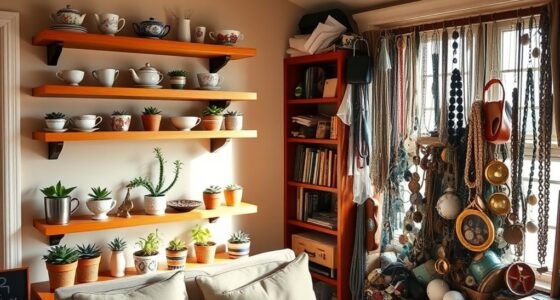
Maximizing vertical space is a smart way to expand your small room’s functionality without cluttering the floor. Use vertical storage solutions like tall shelves, wall-mounted cabinets, or hanging organizers to keep essentials within reach while freeing up surface area. Incorporate clever ceiling treatments such as suspended lighting, hanging planters, or decorative beams to add visual interest and draw the eye upward. These elements not only make the room feel larger but also create additional storage options without sacrificing floor space. Be strategic with your vertical storage; guarantee it’s accessible and matches your style. Additionally, considering self watering plant pots can help maintain your plants efficiently in limited space, ensuring healthy growth with minimal maintenance. Utilizing space-saving furniture can further optimize your room by providing multifunctional options that serve multiple purposes. Incorporating AI-powered smart home devices can also enhance your space’s efficiency by automating lighting, climate control, and security features seamlessly. Planning for vertical lighting options can also improve illumination and ambiance while maintaining that spacious feeling. By utilizing your walls and ceiling treatments thoughtfully, you’ll maximize every inch of your room while maintaining a clean, organized look.
Choose a Cohesive Color Palette
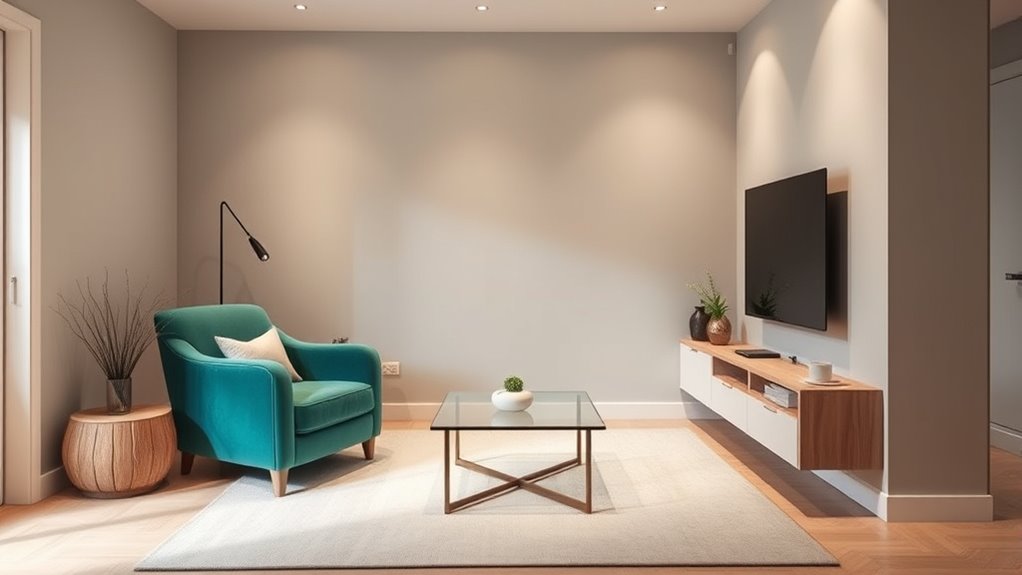
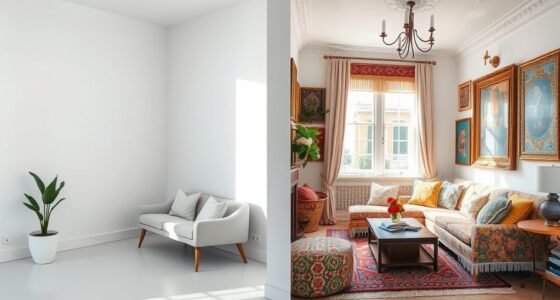
Choosing a cohesive color palette is essential for making a small space feel harmonious and inviting. When you select colors that complement each other, you create a seamless visual flow that guides the eye effortlessly through the room. This sense of color harmony makes your space feel larger and more put-together. To achieve this, consider sticking to a few main hues and varying their shades for depth. Use soft neutrals for walls, add pops of color in accessories, and keep furniture in similar tones. Think about how each color interacts, ensuring they blend smoothly. A well-curated palette avoids visual clutter, making your small space feel more open and cohesive rather than chaotic. Incorporating color harmony principles can further enhance the overall aesthetic and balance of your interior design. Paying attention to visual flow can help create a more unified and spacious feeling within your decor. Additionally, understanding how color contrast influences perception can help you make smarter choices in your color combinations. Incorporating the right color schemes can also dictate the mood and style of your space, making it feel more personalized and thoughtfully designed.
Incorporate Statement Pieces for Impact
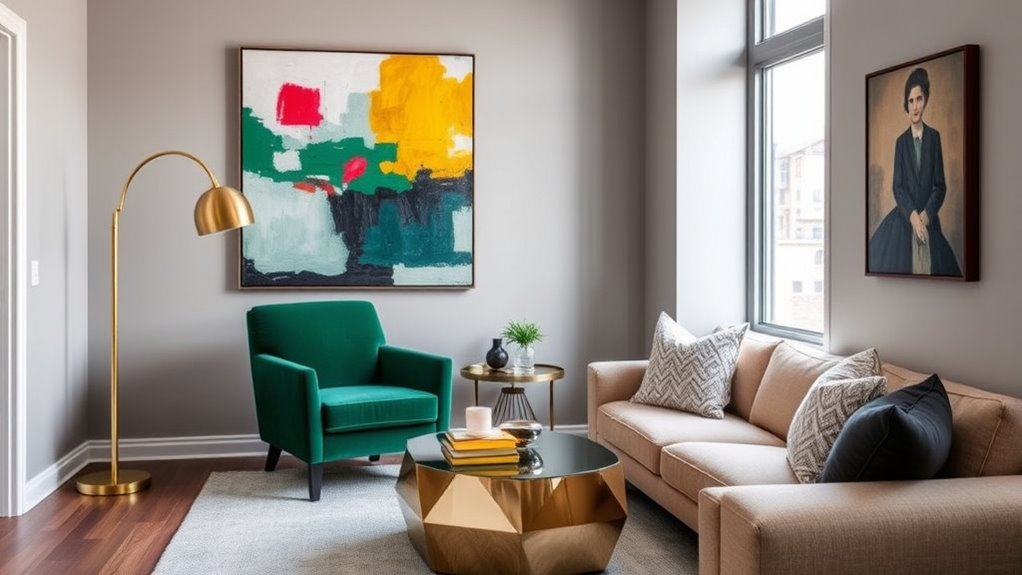
Adding a statement piece not only enhances the visual appeal but can also evoke a sense of mystery or intrigue, subtly hinting at stories or secrets behind the decor. Mystery or intrigue adds depth and character to your small space, making it more memorable and engaging. Incorporating a statement piece that draws attention can effectively anchor the room’s design and create a focal point. Keep it simple; one well-chosen piece makes more impact than cluttering the space with multiple items. By highlighting a single, striking element, you guide the eye and give your room a sense of purpose. Whether it’s a vibrant rug, a unique sculpture, or a statement wall, these accents transform a small area into a memorable, stylish space. Incorporating interior design principles, such as balance and emphasis, ensures your statement piece harmonizes with the overall decor. Utilizing design frameworks like focal points can help you better understand how different elements work together to create visual harmony. Understanding skincare ingredients, like glycolic acid, can also inspire similar principles of focus and harmony in your interior design by emphasizing key elements that bring cohesion and interest to your space. Remember, bold yet thoughtful choices are key to maximizing impact.
Use Mirrors to Create the Illusion of Space

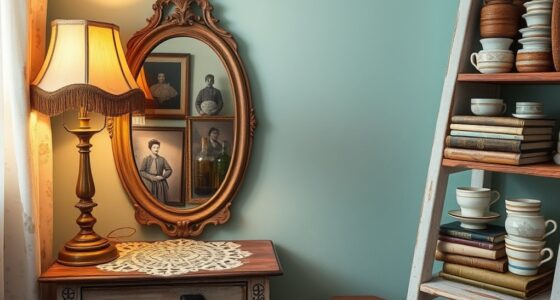
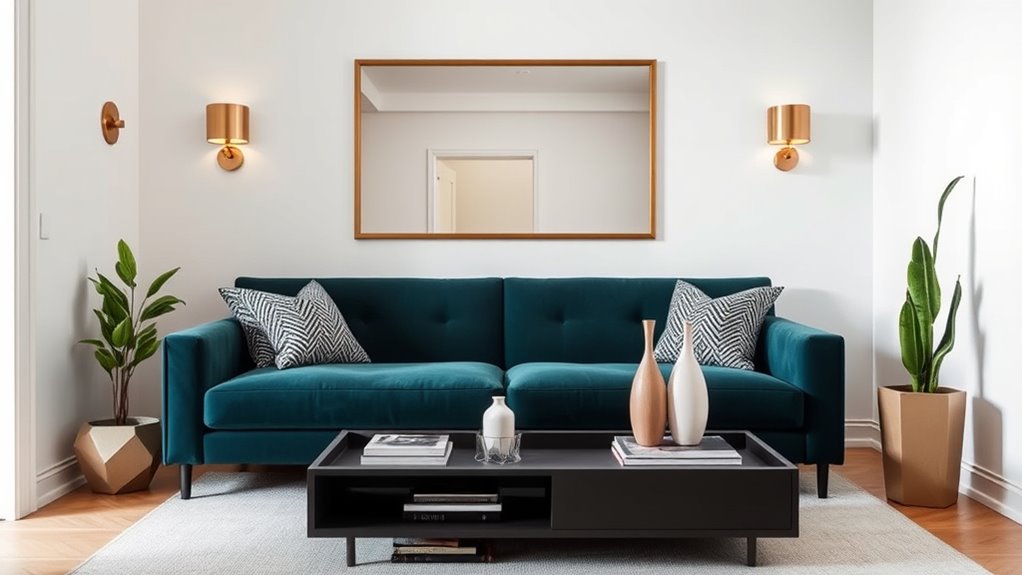
Mirrors are a powerful tool for making small spaces feel larger and more open. Proper mirror placement enhances reflection effects, doubling the visual space and bouncing light around the room. Position mirrors across from windows to maximize natural light and create a sense of depth. Use large, frameless mirrors to expand narrow hallways or compact living areas. Hang mirrors above furniture to reflect key design elements and add dimension. Incorporate multiple smaller mirrors in a gallery style for a dynamic, spacious feel. Strategic placement of mirrors not only amplifies light but also redirects attention, making your space seem bigger and brighter. Regular monitoring of production quantities and adjusting mirror placement accordingly can optimize space perception and lighting effects, transforming your small room into an airy retreat. Additionally, considering biodiversity principles like incorporating natural elements and reflective surfaces can enhance the environment by promoting a sense of harmony and tranquility. To further enhance the sense of openness, selecting appropriate mirror sizes based on room dimensions can create a more cohesive and expansive atmosphere. Incorporating natural materials into mirror frames can also subtly reinforce a connection to the outdoors and the farmhouse aesthetic. Exploring automation in business could lead to innovative ways to optimize layout planning and mirror placement for maximum effect.
Keep Decor Minimal and Purposeful
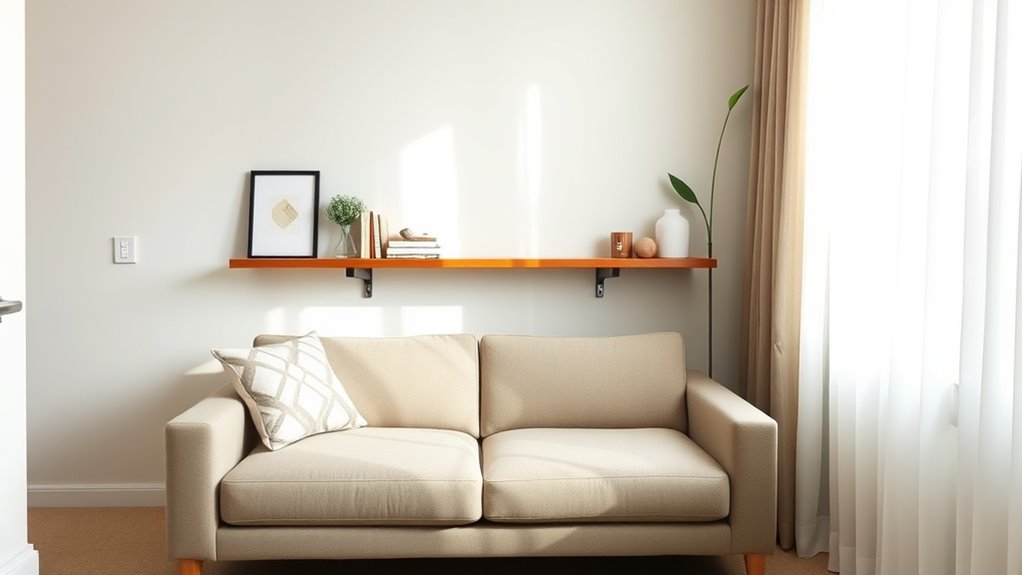
To make a small space feel open and uncluttered, keeping your decor minimal and purposeful is essential. Focus on artful layering by selecting a few statement pieces that add personality without overwhelming the room. Clutter control is key—avoid overcrowding surfaces, and store items out of sight when not in use. Opt for streamlined furniture with clean lines to maximize space and keep the area feeling airy. Each piece should serve a clear purpose, whether for utility or aesthetic appeal. Incorporating multi-functional furniture can further optimize your space by combining storage and seating in one piece. Regularly editing your decor and decluttering helps maintain a spacious feel. Developing a mindful approach to creative practice can inspire innovative ways to organize and decorate small spaces. Practicing intentional space planning allows you to make the most of every square inch and avoid unnecessary clutter. By editing your decor regularly and resisting the urge to add unnecessary items, you create a balanced environment. This approach ensures your small space remains functional, visually appealing, and free from visual chaos.
Focus on Lighting to Enhance the Atmosphere
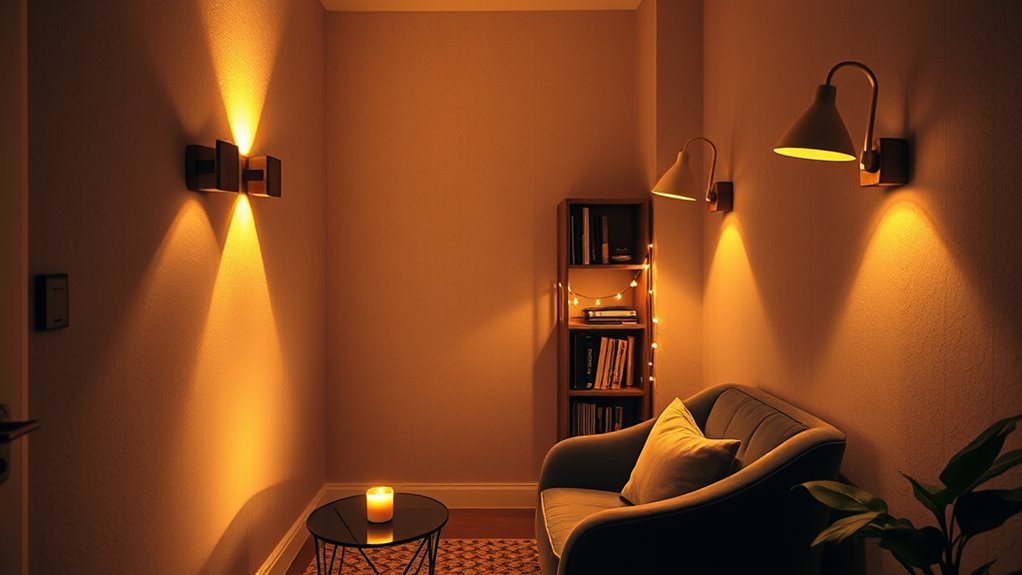
Lighting plays a crucial role in transforming small spaces by creating an inviting and spacious atmosphere. Proper lighting highlights your decor, adds warmth, and makes the room feel larger. Use ambient lighting to provide a soft, overall glow that covers the entire space, avoiding harsh shadows. Incorporate task lighting in areas like the kitchen or desk to guarantee functionality without clutter. Consider wall sconces or pendant lights to save surface space and add visual interest. Dimmer switches offer flexibility to adjust brightness for different moods. Strategically placed mirrors can reflect light to amplify the effect, making your small space feel bigger and brighter. Well-planned lighting elevates your decor while maximizing the room’s potential.
Frequently Asked Questions
How Can Small Spaces Improve Functionality Without Feeling Cluttered?
You can improve functionality in small spaces by using smart storage solutions like built-in shelves or hidden compartments to keep clutter at bay. Incorporate multipurpose furniture, such as a sofa bed or an ottoman with storage, to maximize utility without sacrificing style. Keep surfaces clear and choose lightweight, streamlined pieces. This way, your space remains practical and inviting, avoiding that cramped, cluttered feel.
What Are the Best Materials for Durable Multi-Use Furniture?
For durable multi-use furniture, you should choose materials like hardwood, metal, or high-quality composites. These multi-use materials withstand daily wear and tear, making your furniture last longer. Opt for solid wood or metal frames to guarantee durability, and look for high-density foam or reinforced upholstery for comfort and resilience. Combining these materials helps you create versatile, long-lasting pieces that fit your small space without sacrificing style or function.
How Do I Choose a Color Palette That Enlarges a Small Room Visually?
Did you know that light colors can make a room feel 25% larger? To choose a palette that enlarges your small space, focus on color harmony—stick to a monochromatic scheme or soft neutrals. Use visual balance by incorporating mirrors and consistent tones. Light shades reflect more light, opening up the area, while cohesive colors create a seamless flow that visually expands the room.
Which Statement Pieces Work Best in Tiny Apartments?
Choose a bold statement piece that instantly draws attention, like a vibrant artwork or a striking piece of furniture. This creates a focal point without overwhelming the space. Keep other decor simple to let your statement piece shine. Opt for pieces that reflect your personality and add character, making your tiny apartment feel unique and inviting. Remember, a well-chosen statement piece transforms a small space into a stylish, functional haven.
How Can Lighting Be Adjusted for Different Moods in Limited Space?
You can adjust lighting for different moods by using ambient lighting with adjustable fixtures. Install dimmer switches on your main lights to control brightness easily, creating a cozy or lively atmosphere as needed. Incorporate task lighting for specific areas, like reading lamps or under-cabinet lights, that you can turn on or off. Using flexible lighting options helps maximize your small space’s versatility and sets the perfect mood without cluttering your room.
Conclusion
By applying these tips, you can transform your small space into a stylish sanctuary. Think of your home as a tiny garden—every element, from furniture to decor, should work together to create harmony. Embrace multi-functional pieces, clever storage, and strategic lighting, like the brushstrokes of a skilled artist. With a bit of planning and creativity, your small space can feel as expansive and inviting as a warm hug.