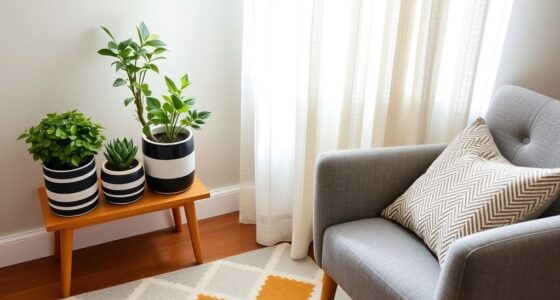
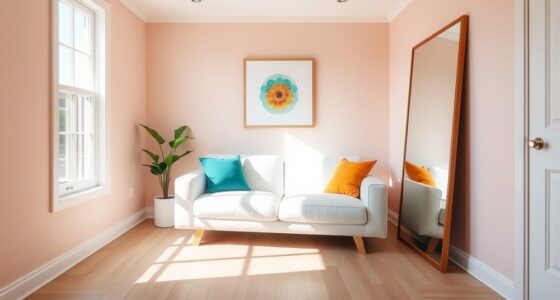
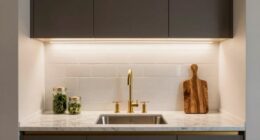
To achieve a minimalist aesthetic without feeling stark, focus on using neutral tones like soft grays, beiges, and subtle pastels to create a calming backdrop. Choose simple, functional furniture with clean lines, and incorporate meaningful decor sparingly to add warmth and personality. Incorporate textures through rugs, linen, or natural materials to soften the space. Maintaining empty space and balance fosters tranquility, while careful organization prevents clutter. Continuing this approach reveals even more ways to craft a welcoming minimalist environment.
Key Takeaways
- Incorporate warm, neutral tones and subtle textures to create a cozy, inviting atmosphere within the minimalist framework.
- Use meaningful decor and statement pieces that add personality without cluttering surfaces.
- Prioritize soft lighting and layered light sources to soften starkness and enhance warmth.
- Maintain open space with carefully selected furniture that balances functionality and comfort.
- Add natural materials like wood, linen, or plants to introduce warmth and a tactile, welcoming feel.
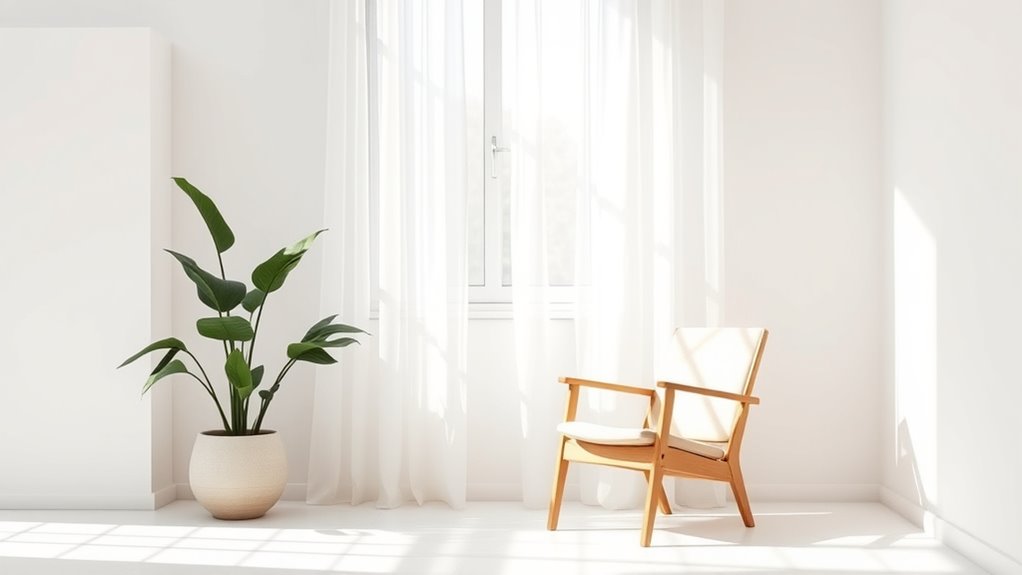
Achieving a minimalist aesthetic begins with understanding that less truly is more. When you embrace simplicity, your space can feel calm, organized, and effortlessly stylish. One of the first steps is choosing a cohesive color palette. Opt for neutral tones like whites, beiges, soft grays, or muted pastels, which create a serene backdrop and prevent your space from feeling chaotic. These colors serve as a foundation that’s easy to build upon, allowing you to add subtle accents without overwhelming the senses. Keep your palette limited; too many hues can detract from the minimalist vibe and make the room feel busy rather than peaceful.
Choose a neutral color palette to create a calm, cohesive, and clutter-free space.
Next, focus on furniture selection. Prioritize pieces that are functional, streamlined, and free of unnecessary ornamentation. Look for furniture with clean lines and simple shapes, avoiding overly ornate or bulky items. Multi-purpose furniture can help maximize space without clutter. For example, choose a bed with built-in storage or a sleek coffee table that doubles as storage. When selecting furniture, consider quality over quantity—well-made pieces tend to last longer and look more refined, elevating the overall aesthetic. Keep only what you need or truly love, and resist the urge to fill every corner with stuff. Remember, empty space is just as important as the furniture itself; it provides breathing room and enhances the minimalist feel. Incorporating visual balance helps ensure your space remains harmonious and inviting.
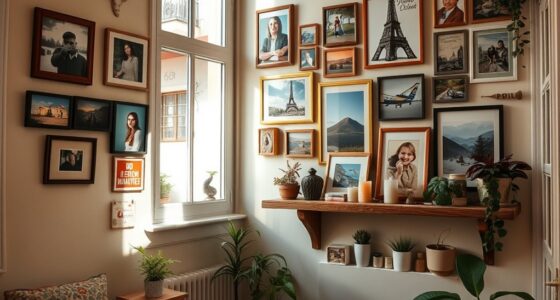
In addition to color and furniture, pay attention to the details. Use minimal decor, but choose meaningful or statement pieces—think a single piece of artwork or a striking vase—rather than cluttering surfaces. Incorporate textures through rugs, throw pillows, or natural materials like wood and linen to add warmth and visual interest without cluttering the space. Lighting also plays a pivotal role: opt for simple fixtures that provide ample illumination without ornate designs. Good lighting can soften the starkness and make your space feel inviting rather than cold.
Lastly, decluttering is essential. Regularly assess your belongings and remove anything that doesn’t serve a purpose or bring joy. Keep surfaces clear and storage solutions discreet, so everything has its place. Achieving a minimalist aesthetic isn’t about starkness but about intentionality. When you choose your color palette thoughtfully, select furniture carefully, and maintain a clutter-free environment, you create a space that’s both tranquil and stylish—without feeling sterile or unwelcoming. It’s about balance, simplicity, and making conscious choices that reflect your personal taste while fostering peace and clarity in your home.
Top picks for "achieve minimalist aesthetic"
Open Amazon search results for this keyword.
As an affiliate, we earn on qualifying purchases.
Frequently Asked Questions
Can Minimalist Design Work in Small Spaces?
Yes, minimalist design works perfectly in small spaces. You can maximize space with smart storage solutions like multi-functional furniture and wall-mounted shelves. Opt for lighting options that brighten the area, making it feel open and inviting. Keep surfaces clutter-free, and choose a neutral color palette to create a calming atmosphere. This approach helps your small space feel clean, organized, and effortlessly stylish without feeling cramped or stark.
How Do I Incorporate Color Without Cluttering?
Think of your space as a canvas, where subtle color accents become your brushstrokes. You can incorporate color without cluttering by choosing one or two vibrant accessories, like a bold pillow or a striking art piece. These pops of color add life and personality, transforming your minimalist space into a vibrant oasis. Keep the rest of your decor neutral, so your colorful accents truly stand out without overwhelming the simplicity.
Is Minimalism Suitable for Families With Children?
Yes, minimalism can work well for families with children. Focus on family-friendly decor that’s durable and easy to clean, and choose child-safe materials to keep everyone safe. Keep clutter minimal by using smart storage solutions, and opt for simple, functional furniture that can withstand busy family life. This approach creates a calm, stylish space that’s practical and inviting for all ages.
How Long Does It Take to Achieve a Minimalist Look?
Achieving a minimalist look is like planting a garden—timing considerations and your design evolution matter. It can take anywhere from a few weeks to several months, depending on how much you start with and how quickly you declutter. As you refine your space, your style naturally evolves, making the process feel more organic. Patience and consistency help turn your vision into reality, creating a serene, clutter-free environment you love.
Can Minimalism Be Adapted to Different Interior Styles?
Yes, you can adapt minimalism to different interior styles by blending elements like Scandinavian influence and vintage accents. You’ll want to keep your space clutter-free with clean lines, but add warmth through cozy textures or retro pieces. Incorporate subtle color palettes and functional furniture to maintain simplicity. This way, your space feels stylish and inviting, reflecting your unique personality without feeling stark or overwhelming.
Conclusion
By embracing simplicity, focusing on quality, and prioritizing comfort, you create a space that feels calm and inviting. By choosing intentional pieces, avoiding clutter, and maintaining balance, you achieve a minimalist aesthetic that reflects your personality without feeling stark. By simplifying your environment, enhancing your mood, and cultivating mindfulness, you turn minimalism into a lifestyle. Remember, it’s about intentional living, not deprivation—so design your space to be both beautiful and functional, and enjoy the serenity it brings.