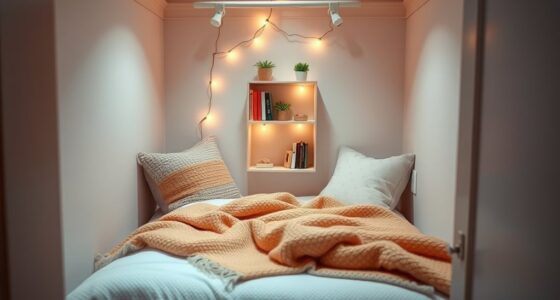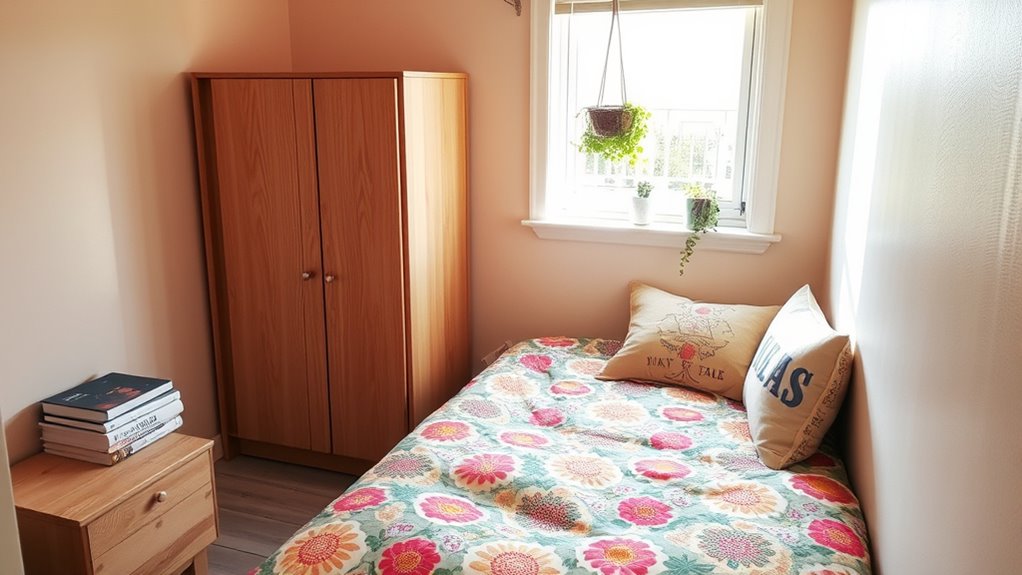

To make a small bedroom work for two, focus on maximizing vertical space with shelves and multi-functional furniture like beds with built-in storage. Create clear zones for each person using curtains or dividers, and use smart closet solutions to keep things organized. Use light colors to open up the room and add cozy touches for personal spaces. If you explore smart organization tricks and layout ideas, you’ll find ways to keep your shared space comfortable and clutter-free.
Key Takeaways
- Maximize vertical space with wall-mounted shelves, hooks, and multi-functional furniture to keep clutter off the floor.
- Create personal zones using curtains, dividers, or furniture placement to establish privacy and boundaries.
- Use clear, labeled storage bins and under-bed solutions to organize belongings and reduce visual clutter.
- Personalize shared spaces with decor, photos, and color coding to foster a sense of ownership and warmth.
- Incorporate sound-absorbing fabrics, rugs, and privacy curtains to enhance comfort and minimize noise.
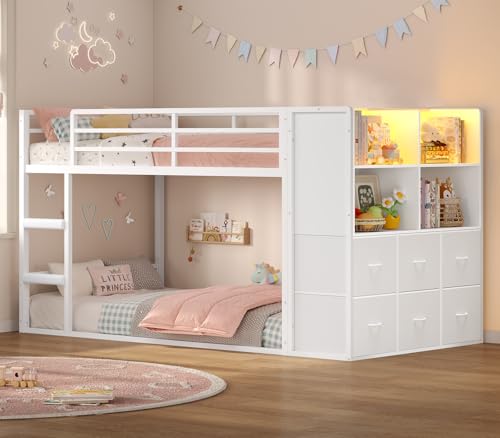
BTHFST Bunk Bed Twin Over Twin with 6 Large Fabric Drawers & 4 Wooden Storage Bookshelf Organizer, Metal Low Bunk Bed for Kids with LED Lights & Safety Ladder and Guardrail, Space Saving
Twin Bunk Beds: Twin-over-twin bunk bed provide ideal solution for small rooms. It integrates 2-tier wooden bookshelves, 6…
As an affiliate, we earn on qualifying purchases.
As an affiliate, we earn on qualifying purchases.
Maximizing Vertical Space for Storage
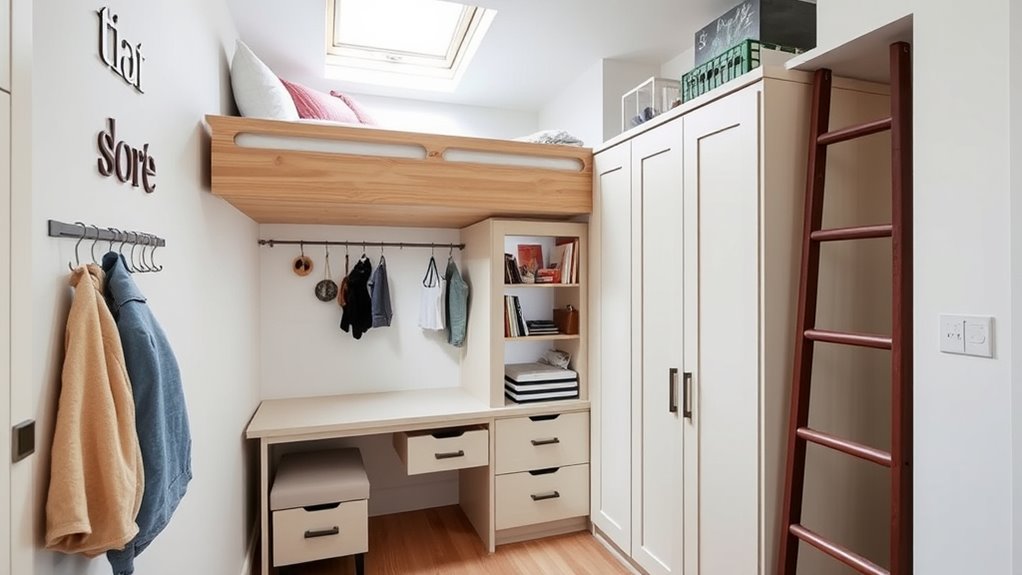
To make the most of a small bedroom, you should focus on maximizing vertical space for storage. Bunk bed ideas are perfect for saving floor space while offering extra sleeping options. Opt for a sturdy bunk bed with built-in drawers or shelves to keep essentials close at hand. Installing wall mounted shelves above beds or along empty walls provides additional storage without cluttering the floor. Use these shelves for books, decor, or small personal items, making everything accessible yet out of the way. Vertical storage solutions help keep your shared space organized and open, giving each person room to breathe. By thinking vertically, you create a more functional, less cramped environment, making your small bedroom feel larger and more comfortable for both of you. Additionally, incorporating farmhouse-style accessories into your decor can add charm and warmth to your shared space without sacrificing valuable room. Implementing sustainable organization strategies can further enhance your space by reducing clutter and promoting eco-friendly choices. Exploring multi-purpose furniture options can maximize utility and storage efficiency in your limited space. Considering local legal resources can also be helpful if you need assistance with lease agreements or shared property rules.

Fixwal Small Shelf for Wall, 5X5 Inches Floating Shelves Set of 4, Rustic Wood Small Wall Mounted Shelves for Bedroom, Living Room, Kitchen, Bathroom Decor (Dark Carbonized Black)
[Small Floating Shelves] – Set of 4 small wall shelves with 2 types of installation: up or down,…
As an affiliate, we earn on qualifying purchases.
As an affiliate, we earn on qualifying purchases.
Choosing Multi-Functional Furniture Pieces

In a small bedroom, every piece of furniture should serve more than one purpose to maximize space efficiency. Opt for multi-functional furniture like beds with built-in drawers or storage ottomans that double as seating. These pieces help keep clutter at bay and free up floor space. When selecting furniture, consider how decorative accents can enhance the room’s style without taking up extra room—think wall-mounted shelves or sleek mirrors. Lighting solutions are equally important; choose beds with integrated reading lights or wall-mounted lamps to save space and improve ambiance. Incorporating cybersecurity measures into your home technology setup can also help protect your personal data in shared spaces. Multi-purpose furniture not only maximizes your available area but also adds versatility and style, making the room feel organized yet cozy. This approach helps you create a functional and inviting shared space.

DUMOS 43in Storage Ottoman Bench, Storage Chest, End of Bed Foot Rest Stool with Padded Seat, Bedroom Bench for Living Room, Support 660lbs, Grey
【Sturdy & Comfortable】: This storage ottoman bench is supported by thick MDF panels for excellent stability. The top…
As an affiliate, we earn on qualifying purchases.
As an affiliate, we earn on qualifying purchases.
Creating Distinct Personal Zones
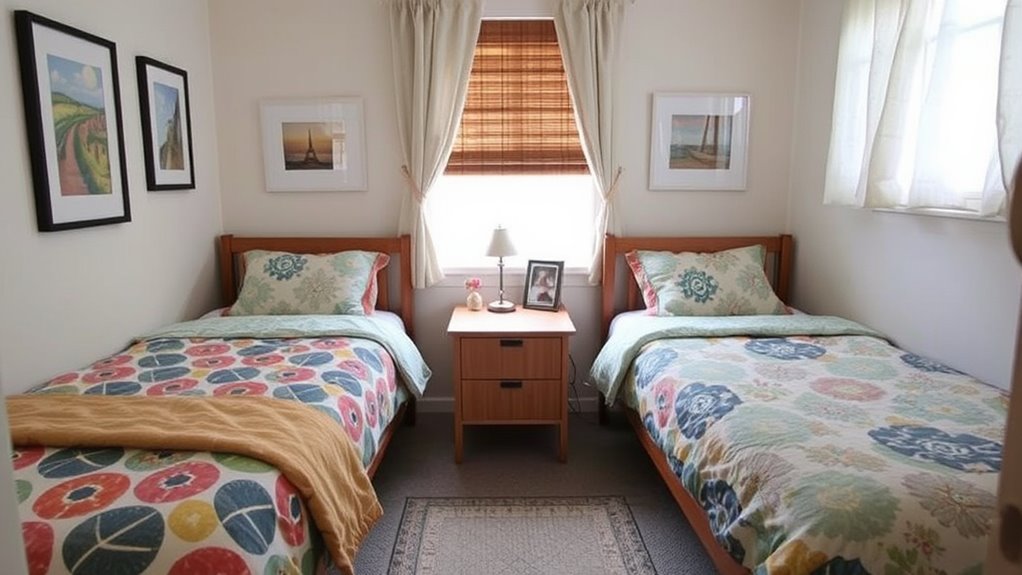
Even in a small bedroom, creating clear personal zones helps each occupant feel a sense of ownership and privacy. This encourages respect and reduces conflicts. To do this effectively, establish shared routines that outline when and how each person uses common areas, like a shared desk or closet. Use communication strategies to openly discuss boundaries and preferences, ensuring everyone’s needs are considered. Here are some ways to deepen this approach:
- Define specific areas for personal belongings and routines.
- Use physical dividers or furniture placement to visually separate spaces.
- Regularly check in with each other to adjust boundaries and routines as needed.
- Incorporate vacuum maintenance routines to keep shared spaces clean and comfortable for everyone, which fosters a healthier living environment. Engaging in mindful routines like progressive relaxation techniques can also promote calm and cooperation among roommates. Additionally, understanding the financial impact of shared living arrangements can help roommates plan better for their expenses, leading to more harmonious living conditions. Maintaining clean shared spaces involves consistent cleaning schedules to prevent clutter and ensure comfort for all occupants. These strategies foster understanding, support shared routines, and help maintain harmony in your small space.

RYB HOME Extra Wide Curtains Blackout – 100% Privacy Backdrop Curtains & Drapes for Sliding Glass Door Bedroom Large Window Decor Shared Office Partition Screen, W 100 x L 84, Black
Room Divider,Instant Privacy:Cut from a single,thick panel,this curtain creates a complete visual barrier. Without time-consuming or costly renovations,…
As an affiliate, we earn on qualifying purchases.
As an affiliate, we earn on qualifying purchases.
Implementing Smart Closet Solutions
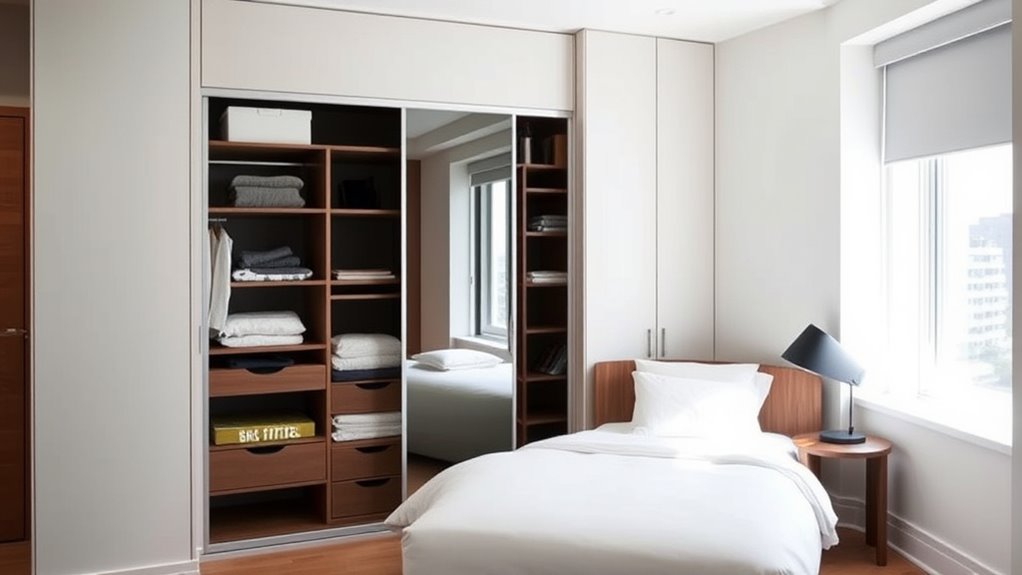
Smart closet solutions can make a significant difference in managing limited space efficiently. By organizing your clothing with smart systems, you can easily rotate outfits, keeping everyday wear accessible while storing off-season items elsewhere. Use hanging organizers or modular shelves to maximize vertical space, making room for more clothing without clutter. Implement seasonal storage bins for items like winter coats or summer dresses, freeing up closet space for current needs. Consider under-bed storage or vacuum-sealed bags to compress seasonal clothing, reducing clutter. Label everything clearly so you can quickly find what you need and switch out clothes as seasons change. Incorporating space-saving techniques can further optimize your closet organization and overall room functionality, especially when considering clutter management strategies that help prevent clutter-related issues. Employing organization principles rooted in efficient design can enhance your storage system’s effectiveness. Integrating smart storage solutions into your closet setup helps you stay organized, save space, and keep your shared bedroom neat and functional.
Using Light and Color to Open Up the Room
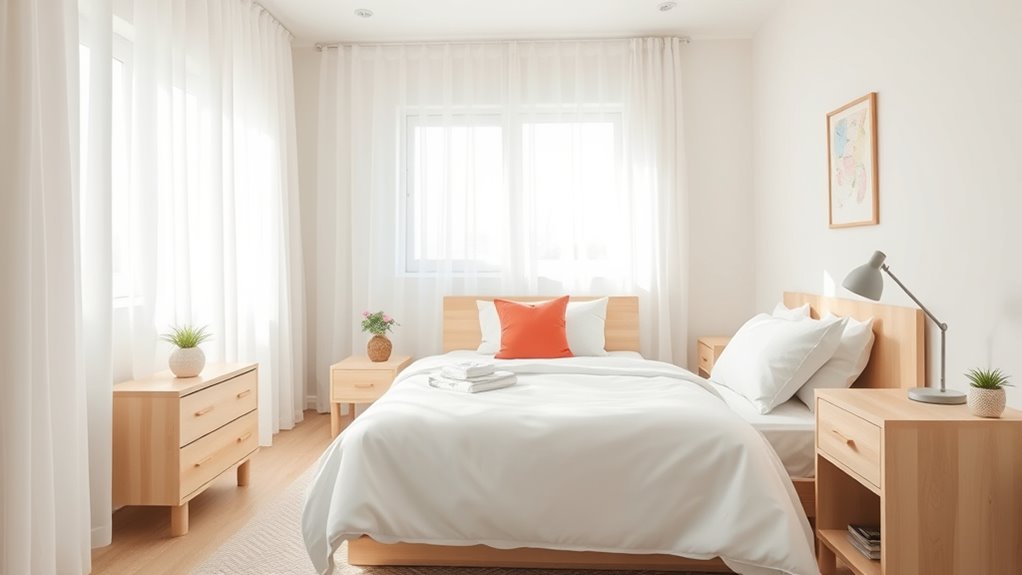
Maximizing natural light and choosing the right color schemes can considerably make a small bedroom feel more spacious. Use lighting techniques like sheer curtains or strategically placed mirrors to reflect light and brighten the space. Opt for soft, neutral colors such as whites, beiges, or pastels to create an airy atmosphere. Incorporate these ideas to enhance the room’s openness:
Maximize natural light and use soft neutrals to make your small bedroom feel more spacious.
- Use light-colored walls and bedding to reflect light and reduce visual clutter.
- Add layered lighting—overhead, task, and accent lights—to eliminate shadows and create depth.
- Choose monochromatic color schemes for furniture and accessories to unify the space and prevent it from feeling crowded.
- Consider color temperature adjustments to optimize the ambiance and make the room appear larger and more inviting.
- Incorporating space-saving furniture can further enhance the feeling of openness and functionality within a limited area.
- Experimenting with visual illusions through strategic design choices can subtly increase the perception of space.
Additionally, selecting AI-powered design tools can help visualize different layouts and color schemes before making physical changes, streamlining the decorating process. Using vertical storage solutions and multi-functional furniture can also maximize space and keep the room organized, making it feel more open and comfortable. These strategies help open up your small bedroom, making it feel larger and more inviting.
Incorporating Clever Organization Hacks
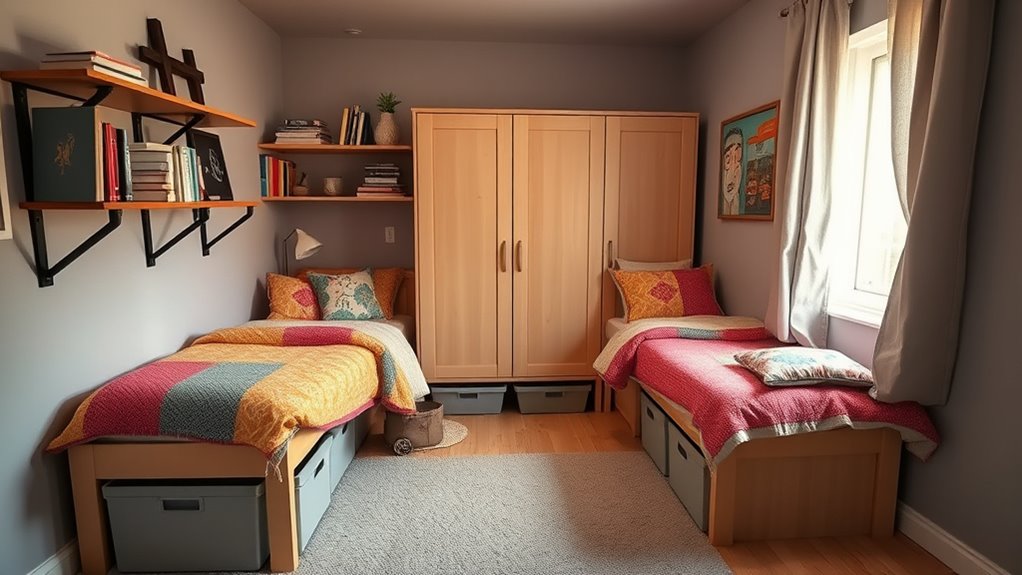
To make the most of limited space in a small bedroom, incorporating clever organization hacks is essential. Start by using decorative lighting, like wall-mounted sconces or string lights, to free up surface space while adding ambiance. Opt for multi-functional furniture, such as beds with built-in drawers or storage ottomans, to maximize storage without clutter. Use vertical space by installing shelves or hooks for clothes, accessories, and school supplies. To reduce noise and create a peaceful environment, add fabric panels or plush rugs that absorb sound. Keep clutter at bay with clear bins and labeled containers, making everything easy to find and put away. Incorporating sound-absorbing materials can further enhance the tranquility of your space. Additionally, adding biodiversity-friendly plants can improve air quality and bring a touch of nature indoors. Using self-watering plant pots can help keep your greenery healthy with less maintenance, which is especially useful in small spaces. Incorporating vertical gardening techniques allows you to enjoy fresh herbs and decorative plants without sacrificing floor space. Exploring compact furniture solutions designed specifically for small spaces can also significantly improve functionality. These tricks help you stay organized and create a calming, functional space that feels much larger than it is.
Maintaining Privacy and Personal Space
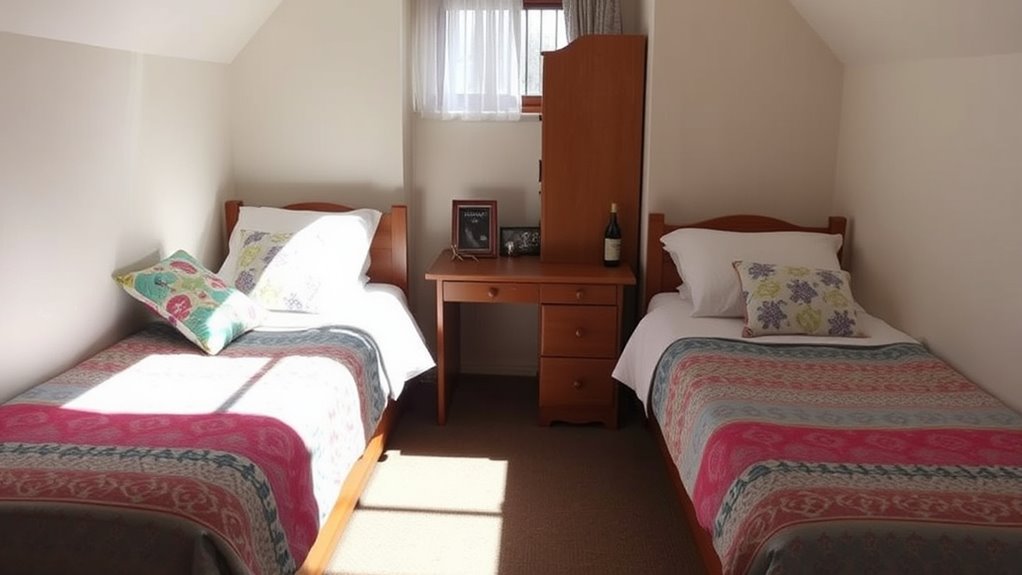
To keep your personal space intact, start by designating specific zones for each person. Using privacy partitions or curtains can create a sense of separation without taking up extra space. Setting clear boundaries helps everyone respect each other’s privacy and feel comfortable in a shared room.
Designate Personal Zones
Ever wondered how to create a sense of privacy in a small bedroom shared with someone else? The key is to designate personal zones. Start by assigning specific areas for each person’s belongings, like shelves or drawers, so everyone has a defined space. Use bedroom lighting strategically—install bedside lamps or adjustable fixtures to create subtle boundaries and reduce visual clutter. If you share a bathroom, coordinate your schedules to avoid congestion, making each person feel more in control of their space. Consider adding small dividers or curtains around personal zones if possible, even without full partitions, to reinforce boundaries. These simple steps help maintain privacy, reduce conflicts, and make shared living feel more comfortable and organized.
Use Privacy Partitions
Are you looking for an easy way to add privacy and define personal space in a small bedroom? Privacy screens are a simple solution that creates visual separation without taking up much space. You can position them to carve out individual zones, giving each person a sense of their own area. Soundproof curtains are another effective option, blocking noise and reducing distractions. Hang them around beds or designated zones to enhance privacy and create a cozy, personal retreat. These partitions are versatile, affordable, and easy to move or adjust as needed. Using privacy screens and soundproof curtains helps you maintain boundaries and feel more comfortable in a shared space, making your small bedroom feel more organized and less chaotic.
Establish Clear Boundaries
Establishing clear boundaries in a small bedroom is essential for maintaining privacy and personal space. When boundaries are defined, both of you can enjoy shared responsibilities while respecting each other’s needs. To create effective boundaries:
- Designate personal zones with physical markers like shelves or curtains, signaling whose space is whose.
- Set expectations around shared responsibilities, such as cleaning or organization, to prevent conflicts.
- Communicate openly about your needs and listen actively to your roommate’s, fostering mutual respect.
Personalizing the Shared Environment
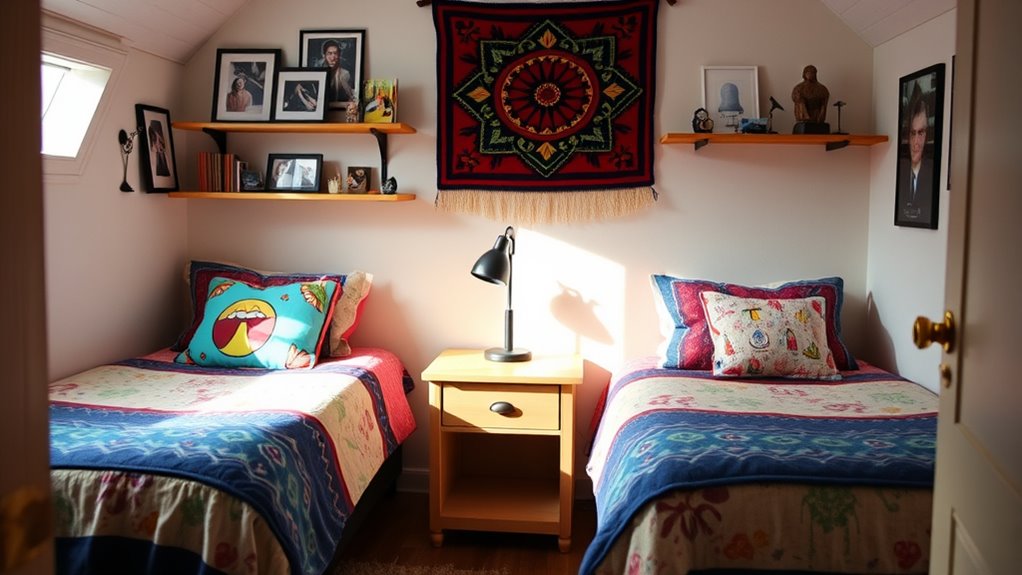
You can make the space feel more like your own by displaying personal items that mean something to you. Using color coding for your belongings helps keep everything organized and easy to find. These small touches make sharing a small bedroom more comfortable for both of you.
Display Personal Items
How can you make a shared bedroom feel more personal? One way is to thoughtfully display personal items. Use bedroom wall décor to showcase photos, artwork, or mementos that reflect your personality. Creating a dedicated space for personal item display helps both of you feel at home.
Consider these options:
- Hang a corkboard or string lights to showcase photos and small keepsakes.
- Use a small shelf for displaying favorite books, trophies, or collectibles.
- Dedicate a corner or a framed area for personal memorabilia, making it clear whose space it is.
These touches add character and make the space uniquely yours, fostering a sense of ownership and comfort without cluttering the room.
Use Color Coding
Have you considered using color coding to personalize your shared bedroom? Color blocking is a simple way to assign each person a designated space, making the room feel organized and balanced. By choosing different colors for each side or storage area, you create clear boundaries without physical barriers. Plus, color coding can be mood boosting—calming blues for relaxation and energetic reds for activity. Incorporate this technique with bedding, wall accents, or storage bins to reinforce individual spaces. It helps both of you feel more at home while maintaining a cohesive look. This visual cue reduces clutter and confusion, making shared living more harmonious. With intentional color choices, you’ll foster a lively, personalized environment that’s easy to navigate.
Frequently Asked Questions
How Can I Reduce Noise Between Shared Sleeping Areas?
To reduce noise between shared sleeping areas, you should use soundproofing techniques like adding thick rugs, curtains, and fabric panels to absorb sound. Noise canceling solutions such as white noise machines or earplugs can also help minimize disruptions. Position furniture strategically to block sound paths, and consider installing bookshelves or headboards filled with soft materials. These methods create a quieter environment, making sharing a small bedroom more comfortable for everyone.
What Are Budget-Friendly Ways to Optimize Small Bedrooms?
Think of your small bedroom as a canvas waiting to be transformed. You can optimize space with budget-friendly storage solutions like under-bed bins or wall-mounted shelves. Add decorative accents that double as functional pieces, such as colorful baskets or multi-purpose furniture, to make the room feel cozy without clutter. These simple changes maximize your space and style, making your tiny room both practical and inviting.
How Do I Handle Different Sleep Schedules in a Shared Room?
To handle sleep schedule conflicts, communicate openly about your routines and find compromises. Use blackout curtains or earplugs to block noise and light during different sleep times. You can also adjust your morning routine to minimize disturbances, like waking up earlier or later. Creating designated quiet zones or using white noise machines helps both of you sleep peacefully, making shared space more comfortable despite differing schedules.
What Safety Considerations Are Important in Small Shared Bedrooms?
They say safety first, and that’s especially true in small shared bedrooms. You should prioritize fire safety by keeping exits clear, installing smoke detectors, and avoiding clutter that could block escape routes. Guarantee proper ventilation tips like opening windows regularly and using fans to prevent stuffiness and mold. These steps help create a safe, comfortable space where you can share without worry. Remember, a stitch in time saves nine!
How Can I Involve My Roommate in Organizing the Space?
You can involve your roommate in organizing the space by brainstorming decorating ideas together and choosing privacy solutions that work for both of you. Ask for their input on storage and layout, making it a team effort. Share your thoughts, listen to theirs, and decide on furniture arrangements or curtains that enhance privacy. This collaborative approach fosters respect and helps create a cozy, functional shared bedroom.
Conclusion
Sharing a small bedroom is like fitting a puzzle together—you find creative ways to make everything click. When you maximize vertical space and choose smart furniture, you create a room that feels bigger and more organized. Remember, it’s about blending your styles and respecting boundaries, turning your shared space into a cozy sanctuary. With a little effort, you’ll discover that even a tiny room can hold big comfort—like a snug, perfectly fitting puzzle piece.